Attractions and Places To See around Plougonvelin - Top 20
Best attractions and places to see around Plougonvelin include a blend of historical landmarks, natural landscapes, and coastal features. This coastal town in Finistère, Brittany, offers visitors opportunities to explore ancient fortifications, dramatic coastlines, and sites steeped in maritime history. The region is characterized by its rugged cliffs, sandy beaches, and significant historical sites, providing diverse points of interest.
Best attractions and places to see around Plougonvelin
- The most popular attractions is Corréjou cliffs, a natural monument that offers magnificent views of Camaret-sur-Mer and its port. These cliffs are also a geological highlight, featuring unique pebble beds.
- Another must-see spot is Anse de Pen Hat, a beach located between rugged cliffs. This sandy beach is popular with experienced surfers due to its waves and strong undertows.
- Visitors also love Kermovan Lighthouse, a historical lighthouse built in 1849. It is notable as the westernmost land-based lighthouse in France, offering views of the surrounding coast.
- Plougonvelin is known for its historical sites, natural coastal features, and scenic viewpoints. The area provides a variety of attractions to see and explore, including lighthouses, beaches, and geological formations.
- The attractions around Plougonvelin are appreciated by the komoot community, with more than 400 upvotes and over 100 photos shared.
Last updated: July 6, 2026
Anse de Pen Hat
Highlight • Beach
Translated by Google •
Tip by

Corréjou cliffs
Highlight • Other
Translated by Google •
Tip by

Sign up now to discover places like this
Get recommendations on the best single tracks, peaks, & plenty of other exciting outdoor places.
Sign up for free
Croaë Footbridge
Highlight • Bridge
From 1864 there was ferry service. The first bridge (wooden) was built at this point by the Germans during the occupation to ease the crossing for troops - the current bridge has been there since 1950.
Translated by Google •
Tip by

Coecilian Manor - Saint-Pol-Roux
Highlight • Other
A petition in January 2019 from the company created in 2009 is disseminated for heritage awareness. François Sénéchal, mayor of Camaret, replies: “The municipality does not have the financial means nor the intention to intervene in this file. The SASPR is free to offer crowdfunding that would allow this consolidation work to be carried out”. A municipal lack of interest which surprises some in view of the subsidies and budgets obtained for work of a completely different magnitude - the guardhouse - the Quai Kléber...
Every day, we come to see the sea, watch the sunsets, appreciate the unique atmosphere of the place... We come from the neighborhood to walk our dog and from all over Europe... In January 2019, at the time of the refusal, a group of young South Korean women were ecstatic in front of the Lion Rock, the tip of Toulinguet and spoke in impressive French of the work of Saint-Pol-Roux... The manor of Saint-Pol-Roux n t is not just a pile of loose stones but a rhyme of respect for the world's intangible heritage. The devotion of yesteryear of the forgotten poet is therefore not rewarded by the slightest effect of material memory...
presqu-ile-de-crozon.com
Translated by Google •
Tip by
Kermovan Lighthouse
Highlight • Structure
The Lighthouse was built in 1849 and had a height of 20m.
Translated by Google •
Tip by

Sign up for free to discover even more attractions around Plougonvelin.
Sign up for free
Already have an account?
Start today with a free account
Your next adventure awaits.
Login or Signup
Popular around Plougonvelin
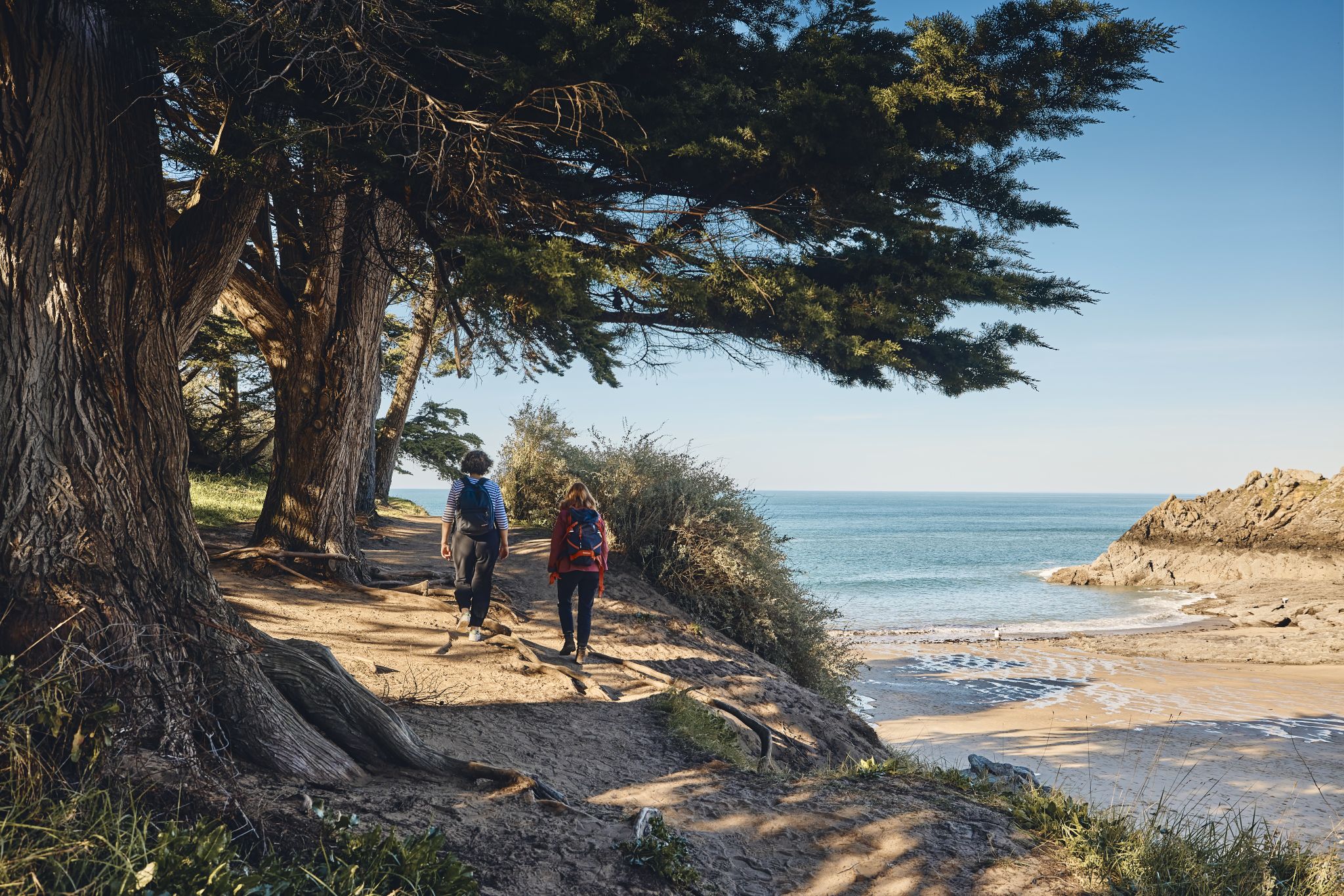
10 of the most beautiful walks in Brittany
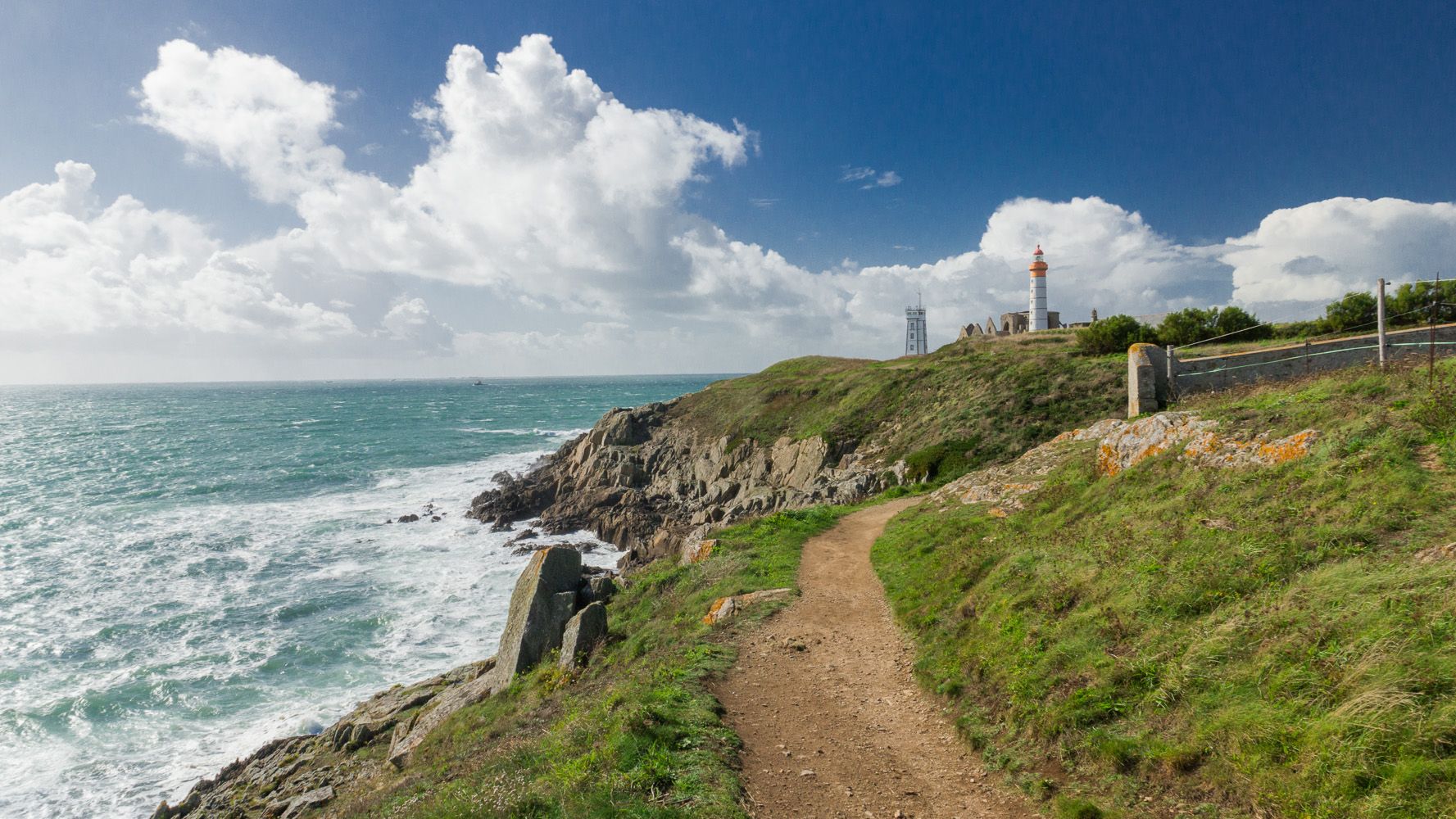
Running along the edge of the world – Trail du Bout du Monde in Finistère
Running Trails around Plougonvelin
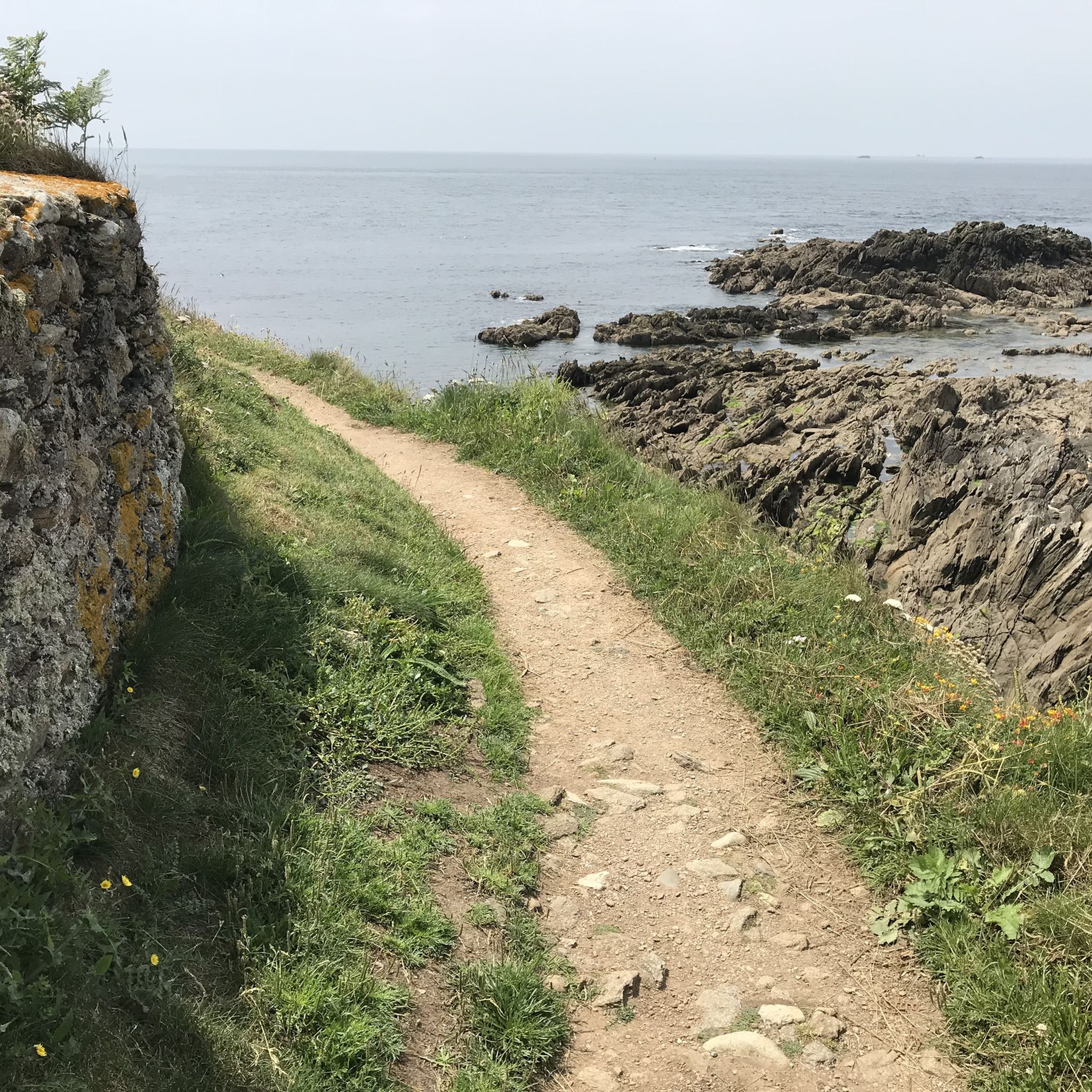
Hiking around Plougonvelin
Cycling around Plougonvelin
Road Cycling Routes around Plougonvelin
MTB Trails around Plougonvelin

Gravel biking around Plougonvelin


Tips from the Community

The ruins of "du manoir de Pierre Paul Roux", also called Saint Paul Roux and also Le Magnifique.
0
0
This place is a tip for all weather conditions. In fog, it appears almost mystical and mysterious, and in sunshine, the beach invites a visit. You can often observe surfers on the beach. Swimming is forbidden there due to the strong Atlantic current.
0
0

A sign says: everyone travels at the same speed here. So cycling is allowed, but at walking pace.
1
0
Located between Pointe de Pen Hir and Pointe de Toulinguet, Plage Pen Hat is a stunning sandy beach surrounded by rugged cliffs. However, swimming out is not recommended, as there are sometimes high surf waves and strong undertows that should not be underestimated. Pen Hat is particularly popular with experienced surfers from all over the world. Above Pen Hat runs a coastal path offering magnificent views of Pen Hir and the Atlantic Ocean.
3
0

practical footbridge over the harbor allowing you to reach Le Conquet
0
0

The ruins “du manoir de Pierre Paul Roux”, also called Saint Paul Roux and also Le Magnifique. Saint Paul Roux was a great poet and had a “manoir” built here, which he and his family moved into in 1905. A manor is a building that is somewhere between a castle and a manor farm. The structure was destroyed during bombings in 1944.
2
0

Plage de Pen Hat, a highlight near Camaret sur mer. At low tide it is a huge, wide, firm sandy beach and at high tide it is a hotspot for surfers. If you are lucky enough to be here at Gande Maree, you can also get into caves on the cliffs at the extreme low tide, which are inaccessible the rest of the year. Above the beach, at the Manoir Saint Pol Roux, the ruins of a former manor house, you have an incomparable view of the bay and in the evening, if the weather is right, it is the spot for some great sunset photos.
0
0

Welcome to Le Conquet, where the echoes of the past meet the majestic waves of the present. Here, on the nature-protected Kermorvan Peninsula, the Phare de Kermorvan stands proudly - the westernmost land-based lighthouse in France. Built in 1849 under the watchful supervision of Louis Plantier, this 20 meter high tower is an impressive architectural masterpiece. With a square floor plan, it stands firmly on a rock and the sturdy granite bridging provides safe access for all who want to Looking for adventure. The lighthouse's eventful history can be felt in every corner. A fog bell installed in 1874 commemorates days when visibility was cloudy and ships sought their way in the fog. A fortress, once built to defend against enemy fleets, was later converted into a comfortable home for the lighthouse keeper and his family. Amazingly, the lighthouse remained untouched during the turmoil of 1944, a testament to the times that tells stories of bravery and hope. Although the Phare de Kermorvan is now automated and remotely controlled, its presence along the Four-Passage (Chenal du Four) remains essential. This important sea route, which connects the mainland with the Molène archipelago, is made safer by the light of this tower. For those looking for a unique experience, the lighthouse offers guided tours during the summer months. A small donation of €5 gives you the opportunity to climb the tower and enjoy breathtaking views of the Brittany coast.
1
0
Frequently Asked Questions
What historical landmarks can I explore in Plougonvelin?
Plougonvelin is rich in history. You can visit Kermovan Lighthouse, the westernmost land-based lighthouse in France, built in 1849. Another significant site is Pointe Saint-Mathieu, featuring the Saint-Mathieu lighthouse, the evocative ruins of Saint-Mathieu de Fine-Terre Abbey, and the Memorial to sailors who died for France. The restored 17th-century Fort de Bertheaume, perched on a rocky islet, also offers a glimpse into the region's past.
Where can I find scenic coastal views and natural beauty?
For breathtaking coastal vistas, head to the Corréjou cliffs, which offer magnificent views towards Camaret-sur-Mer. Pointe Saint-Mathieu also provides panoramic views of the Iroise Sea. The Presqu'île de Kermorvan, home to Kermovan Lighthouse, is a protected natural peninsula perfect for coastal walks.
Are there good beaches for relaxation or water sports in Plougonvelin?
Yes, Plougonvelin boasts several beautiful beaches. Anse de Pen Hat is popular with experienced surfers due to its waves, though swimming is not recommended due to strong undertows. Other notable options for relaxation include Trez Hir Beach, Sainte-Anne Beach, and Porsmilin Beach.
What hiking opportunities are available around Plougonvelin?
The GR34 hiking trail, also known as the 'Customs Officers' Path,' runs along the stunning Plougonvelin coastline, offering spectacular sea views. For specific routes, you can explore options like the Pointe Saint-Mathieu loop or the Cosquer Beach – Portez Beach loop. Find more details on these and other trails in the Hiking around Plougonvelin guide.
Are there any significant WWII sites to visit?
Yes, the Musée Mémoires 39-45, located near Pointe Saint-Mathieu, is housed in a former German blockhouse. It offers an immersive experience into the history of World War II in Brittany, featuring thousands of objects, documents, and reconstructions detailing life on the Atlantic Wall.
What is the history behind Fort de Bertheaume?
Fort de Bertheaume is a 17th-century fort built by the renowned architect Vauban to protect the harbor of Brest. Perched on a rocky islet, it has been meticulously restored and now serves as a significant historical site. It hosts historical reenactments and offers access to scenic coastal trails.
Are there family-friendly attractions in Plougonvelin?
Families can enjoy exploring Fort de Bertheaume, which sometimes offers zip-line experiences. The Croaë Footbridge is also a family-friendly spot, offering an original view of the Conquet estuary. Additionally, the various beaches provide opportunities for relaxation and play.
What unique geological features can I see?
The Corréjou cliffs are a geological highlight, featuring unique pebble beds known as 'Plage suspendue' (hanging beach) that can be seen at low tide. This site is classified as an Espace Remarquable de Bretagne (ERB).
What do visitors enjoy the most about Plougonvelin?
Visitors frequently praise the stunning coastal views and the rich historical sites. The path along the Corréjou cliffs is noted for its magnificent panoramas. Many also appreciate the unique atmosphere and beautiful sunsets from places like the ruins of Coecilian Manor - Saint-Pol-Roux.
Are there running trails available around Plougonvelin?
Yes, the area offers several running trails, including challenging routes like the 'Trail du Bout du Monde' or longer loops connecting the Saint-Mathieu Point and Fort Bertheaume. You can find detailed information and routes in the Running Trails around Plougonvelin guide.
Can I find cycling routes near Plougonvelin's attractions?
For gravel biking enthusiasts, there are several routes available, such as the Portez Beach – Trégana Beach loop or longer rides connecting the Croaë Footbridge and Plage des Blancs Sablons. Explore these and other options in the Gravel biking around Plougonvelin guide.
What is the best time to visit Plougonvelin for outdoor activities?
The coastal paths and outdoor sites are generally enjoyable from spring through early autumn, when the weather is milder and more conducive to hiking, cycling, and beach activities. Summer offers the warmest temperatures for water sports, while spring and autumn provide pleasant conditions for exploring historical sites and natural landscapes without the peak crowds.
Are there any nearby towns or cities worth visiting from Plougonvelin?
Yes, several interesting places are within a short distance. Le Conquet is a nearby town with a picturesque rocky coastline. The city of Brest offers attractions like the National Navy Museum and Oceanopolis. The Crozon Peninsula is also easily accessible, known for its dramatic landscapes and numerous hiking trails.
Most popular routes around Plougonvelin
Most popular attractions around Plougonvelin

Get inspired with the komoot mobile app


Explore more
Still not found the Highlight you’re looking for? See guides of the top attractions in other regions:
