Attractions and Places To See around Chevrières - Top 20
Best attractions and places to see around Chevrières (Oise) include historical landmarks and natural features within the Hauts-de-France region. This area is situated approximately 15 kilometers southwest of Compiègne. Visitors can explore sites of historical significance and natural landscapes, including forests and viewpoints. The region offers a blend of cultural heritage and outdoor exploration opportunities.
Best attractions and places to see around Chevrières
- The most popular attractions is King of Rome Obelisk, an obelisk that commemorates the birth of…
Last updated: May 9, 2026
Royal Abbey of Moncel
Highlight • Historical Site
Translated by Google •
Tip by

Mont Pagnotte viewpoint
Highlight • Forest
Translated by Google •
Tip by

Sign up now to discover places like this
Get recommendations on the best single tracks, peaks, & plenty of other exciting outdoor places.
Sign up for free
King of Rome Obelisk
Highlight • Other
Translated by Google •
Tip by

Ognon Gallo-Roman temple
Highlight • Monument
Translated by Google •
Tip by
Douye Castle
Highlight • Historical Site
Translated by Google •
Tip by
Sign up for free to discover even more attractions around Chevrières.
Sign up for free
Already have an account?
Start today with a free account
Your next adventure awaits.
Login or Signup
Tips from the Community

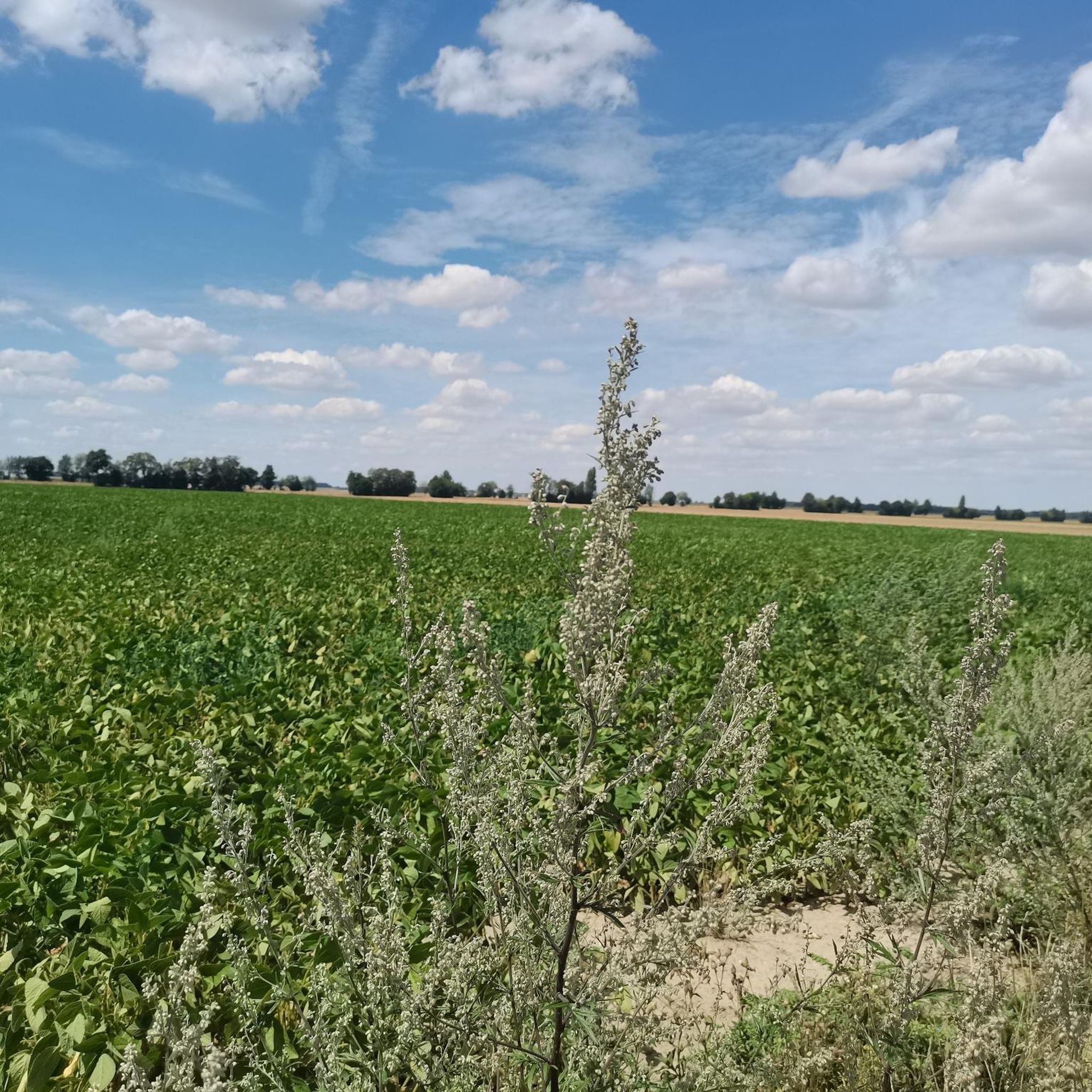
The orientation table that previously existed and the wooden terrace have been removed. The trees have grown, making the view non-existent. Before, on a clear day, it was possible to make out the Eiffel Tower.
0
0


Gallo-Roman site to see while enjoying the Halatte forest
1
0


This obelisk was built in 1811 to commemorate the birth of the son of Napoleon I and Marie-Louise of Austria, made king of Rome by his father to defy Pope Pius VII. Why here and by whom? We don't know anything about it. This tribute was perhaps paid to Napoleon for the relaunch of healthy management of the Halatte forest after a period of abandonment following the revolution of 1789. In any case, he met his future wife Marie-Louise d'Halatte. Austria, nearby, at the castle of Compiègne where he installed his son the king of Rome.
0
0
In the middle of the halate forest the last 500 meters no bitumen
0
0

The oldest building within the grounds of the Château de la Douye is what appears to be part of the “Grand Hôtel” built by King John II the Good in 1344 and partially destroyed during the 100 Years' War. John II liked Bethisy which he called his “desert”. He made numerous stays there. The Château de la Douye is more recent. It is described as a composite manor, made up of two buildings at right angles: one very simple, is from the 17th century; the other contains the chapel whose window with flamboyant tracery retains stained glass. At the intersection a 15th century staircase turret. The history of the castle is little known. The first owners seem to have been the Anthonis, lords of Douye. Around 1475, Gilles Anthonis, Lord of Douye, Baron and Vémars, was Notary and Secretary to King Louis XI and hereditary Gruyer of Béthisy, in the forest of Cuise. Subsequently, for example, it was the turn of Berthelemy (1570), Le Doux (1655) and Beaurain (1762). More recently, La Douye welcomed the Missionary Sisters of the Holy Spirit. Numerous works have now completely transformed the interiors. The stained glass window is also more modern. Around 1820 the arms of Charles VI and VII were visible on the turret and in the chapel. Charles VI, the beloved or the madman, king of France from 1380 to 1422. Charles VII, the victorious, king of France from 1422 to 1461.
0
0

The Château de la Douye in Béthisy-Saint-Pierre is a composite manor, formed by two buildings at right angles: one very simple, from the 17th century; the other contains the chapel with flamboyant windows and stained glass. At the intersection there is a 15th century stair turret. The Château de la Douye is surrounded by a large park and faces the two turrets that remain from the medieval castle of King John II the Good, who built the "Grand Hôtel" in 1344 and partially destroyed it during the Hundred Years' War. You can also admire the old mill on the Automne river, which crosses the territory of the commune.
2
0
Frequently Asked Questions
What historical sites can I explore near Chevrières?
The area around Chevrières is rich in history. You can visit the Royal Abbey of Moncel, a significant 14th-century royal residence. Another notable site is the Douye Castle, a composite manor with 17th-century and 15th-century elements, including remnants of King John II the Good's medieval castle. Don't miss the Ognon Gallo-Roman temple, the remains of a 1st-century AD healing temple hidden in the forest.
Where can I find panoramic views or natural viewpoints?
For breathtaking views, head to the Mont Pagnotte viewpoint. As the highest point in Valois at 222 meters, it offers panoramic vistas of the surrounding Halatte Forest and countryside. It's also a site with ancient Celtic and Gallo-Roman ruins along its trails.
Are there family-friendly attractions in the Chevrières area?
Yes, several attractions are suitable for families. The Royal Abbey of Moncel and Douye Castle are listed as family-friendly historical sites. The Mont Pagnotte viewpoint, with its trails through Halatte Forest, is also an ideal spot for a family outing to enjoy nature and history.
What natural features can I explore around Chevrières?
The primary natural feature is the magnificent Halatte Forest, which surrounds many of the area's attractions. You can appreciate its diverse trees and wildlife. The Mont Pagnotte viewpoint is located within this forest, offering both natural beauty and historical significance.
What outdoor activities are available near Chevrières?
The region offers various outdoor activities. You can find numerous routes for hiking, gravel biking, and road cycling. For hiking, explore trails like the 'Mont Pagnotte Viewpoint – Mont Pagnotte viewpoint loop' or 'Forêt Communale de Pontpoint loop'. Cyclists can enjoy routes such as 'Senlis – Royal Abbey of Moncel loop' for gravel biking or 'Church of La Neuville-en-Hez – Pontpoint cycle path loop' for road cycling. You can find more details on these activities at Hiking around Chevrières, Gravel biking around Chevrières, and Road Cycling Routes around Chevrières.
Are there any unique monuments or landmarks to see?
Yes, the King of Rome Obelisk is a unique landmark erected in 1811 to commemorate the birth of Napoleon I's son. It is situated within the Halatte Forest and features a carved bust of a woman in the rock nearby.
What do visitors enjoy most about the attractions near Chevrières?
Visitors particularly appreciate the blend of history and nature. Many enjoy the spacious and impressive architecture of the Royal Abbey of Moncel and the panoramic views from the Mont Pagnotte viewpoint. The historical significance of sites like the Ognon Gallo-Roman temple, offering a journey back in time, is also highly valued.
Can I find ancient ruins or archaeological sites?
Absolutely. The Ognon Gallo-Roman temple consists of the remains of a 1st-century AD temple dedicated to healing. Additionally, Mont Pagnotte was an ancient Celtic and Gallo-Roman colony, and you can still see some ruins along its trails.
What towns are nearby for further exploration?
Several interesting towns are within a short distance. Compiègne, about 13 km away, offers a palace, museums, and historical monuments. Senlis, approximately 17 km distant, is known for its ruined castle, cathedral, and charming cobbled streets. You can also visit Pierrefonds, 22 km away, which boasts one of northern France's most beautiful castles.
Are there any castles or châteaux to visit?
Yes, the Douye Castle in Béthisy-Saint-Pierre is a notable composite manor with historical significance. Further afield, you can explore the extensive Château de Chantilly, about 22 km from Chevrières, or the impressive castle in Pierrefonds, 22 km away.
What kind of cycling routes are available near Chevrières?
There are diverse cycling options. For gravel biking, you can try routes like the 'Royal Abbey of Moncel – King of Rome Obelisk loop'. Road cyclists have choices such as the 'Raray Church – Raray Castle loop'. More routes and details can be found on the dedicated guide pages for Gravel biking around Chevrières and Road Cycling Routes around Chevrières.
Most popular routes around Chevrières

Get inspired with the komoot mobile app


Explore more
Still not found the Highlight you’re looking for? See guides of the top attractions in other regions:
