Attractions and Places To See around Sers - Top 20
Best attractions and places to see around Sers include a mix of historical sites and natural landscapes. The area features notable castles, ancient churches, and a valley known for its limestone cliffs and Mediterranean vegetation. These locations offer insights into the region's history and provide opportunities to explore diverse natural environments. The region around Sers is characterized by its historical architecture and varied terrain.
Best attractions and places to see around Sers
- The most popular attractions is Vallée des Eaux…
Last updated: July 2, 2026
Vallée des Eaux claires
Highlight (Segment) • Other
Translated by Google •
Tip by

Château de la Tranchade
Highlight • Castle
Translated by Google •
Tip by
Sign up now to discover places like this
Get recommendations on the best single tracks, peaks, & plenty of other exciting outdoor places.
Sign up for free
Château de la Mercerie
Highlight • Castle
Translated by Google •
Tip by

Saint Martin's Church, Mornac
Highlight • Other
This …
Translated by Google •
Tip by
Saint Paul's Church in Chazelles
Highlight • Other
Translated by Google •
Tip by
Sign up for free to discover even more attractions around Sers.
Sign up for free
Already have an account?
Start today with a free account
Your next adventure awaits.
Login or Signup



Tips from the Community

The extraordinary history of this grandiose residence began in 1924, in the heart of a small 19th century manor (to the left of the current façade): the troubadour castel of La Mercerie was then acquired by Alphonse and Raymond Réthoré. From then on, the two brothers, dreaming of the great Versailles, devoted all their resources to enlarging and embellishing the building. The work undertaken is commensurate with the ambition that drives it. Outside, colonnades and balusters in white stone soon extend the first building. the cut stone increases the gigantism and the rigor of a facade with a perfect rhythm. Inside, nothing is too beautiful for La Mercerie, Raymond brings back from his travels furniture and paintings, chandeliers and precious woods, marbles from Italy, azulejos from Portugal etc. He returns from Italy with a painter sculptor who will carry out on the spot the most monumental decorations with the assistance of the inhabitants of the country. The treasures are piling up, but 30 years of work will not be enough to complete the colossal project. The collections are dispersed during auctions in June 1987. When the two brothers died, the castle fell into oblivion, until the mobilization of the inhabitants of the town, who decided to found an association to safeguard this unique and prestigious heritage. The Béruges room, the central living room, the Vernet living room, the vestibule, the mahogany gallery and the large Azulejos gallery, each more impressive than the last, now fully conquers the visitor eager for cultural discoveries. A short tour of the belvedere of the castle allows you to admire it from the height. In the park of the castle, the rose garden and the arboretum can be visited by little train. The little train is random due to the health context and will be reserved for people with reduced mobility and children, and mainly on Sundays.
0
0

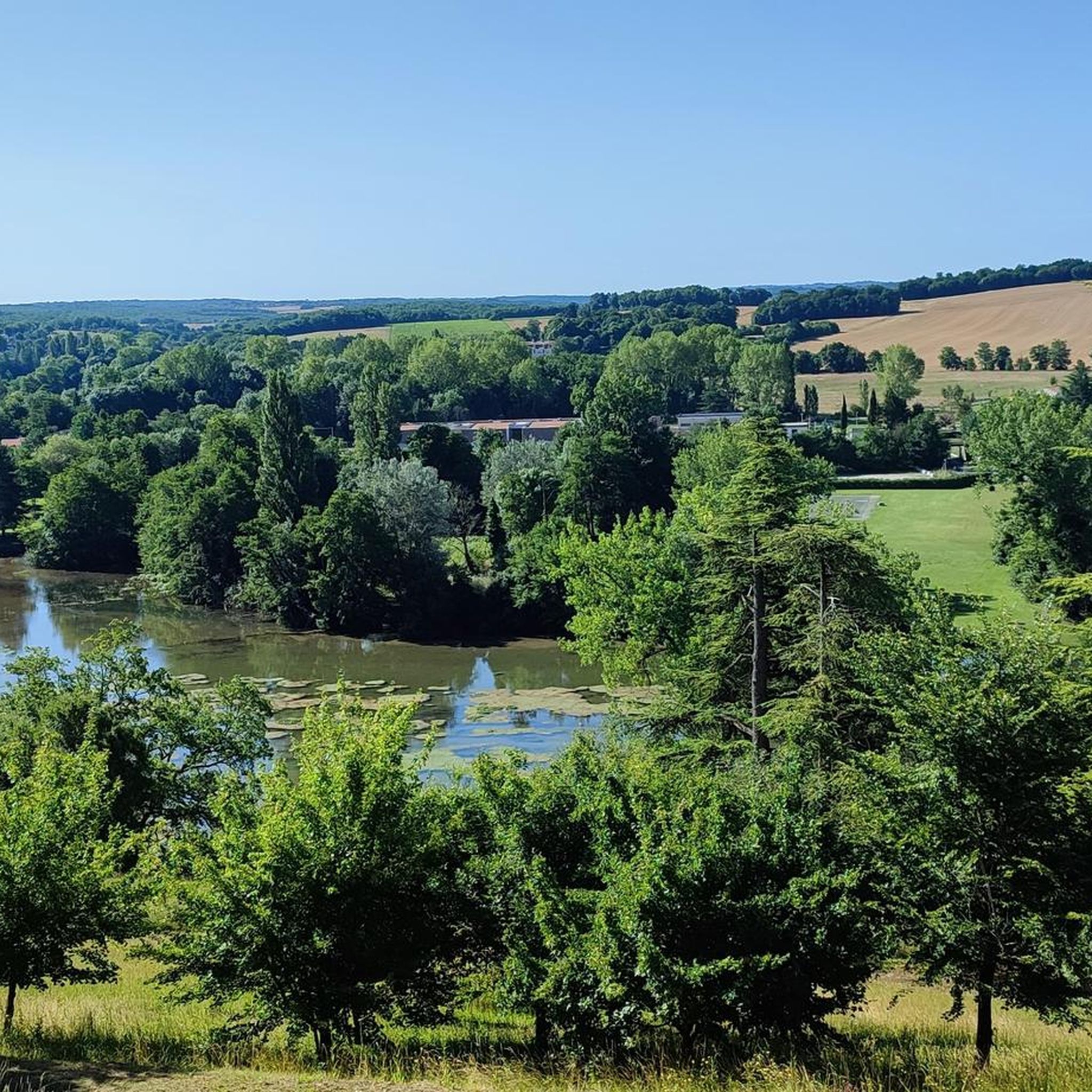
This beautiful valley is classified as a Site of European Interest due to its limestone cliffs and Mediterranean vegetation. The southern slopes are dry grassland which favors a warmer climate, while the northern slopes and valley floor are cooler and wetter. As a natural climbing site, it is known all over the world.
2
0
This beautiful valley is classified as a Site of European Interest due to its limestone cliffs and Mediterranean vegetation. The southern slopes are dry grassland which favors a warmer climate, while the northern slopes and valley floor are cooler and wetter. As a natural climbing site, it is known all over the world.
5
1
The Château de la Tranchade dominates the Anguienne valley on a rocky outcrop protecting the south-eastern access to Angoulême. A strategic stronghold to control Angoulême, La Tranchade has often been besieged.
4
0

Pretty castle in height after a climb from Angoulême
1
0
Its dazzling white stone facade extends over 220 meters in length, in the middle of a 50 Ha green setting. Some rare and remarkable trees adorn the walk through the park.
2
0
The castle was, in the Middle Ages, the seat of one of the most important seigneuries of Angoumois. In the 12th century, La Tranchade was part of the domains of the abbey of Saint-Cybard. In the 14th century, it belonged to the lords of Pressac. The entrance to the estate is via a postern flanked by two asymmetrical square towers, with a parapet on machicolations decorated with shells. A bridge replaced the old drawbridge and crosses the moat dug in the rock. The building is made up of two square buildings, backing onto the keep. The latter is the oldest part, built towards the end of the 14th century. It is rectangular with a blind facade. A hexagonal tower containing the spiral staircase is attached to it. Both are crowned with battlements. The other part of the main courtyard was built in the 17th century. The windows of the south-eastern facade are framed by flat pilasters resting on consoles.
1
0
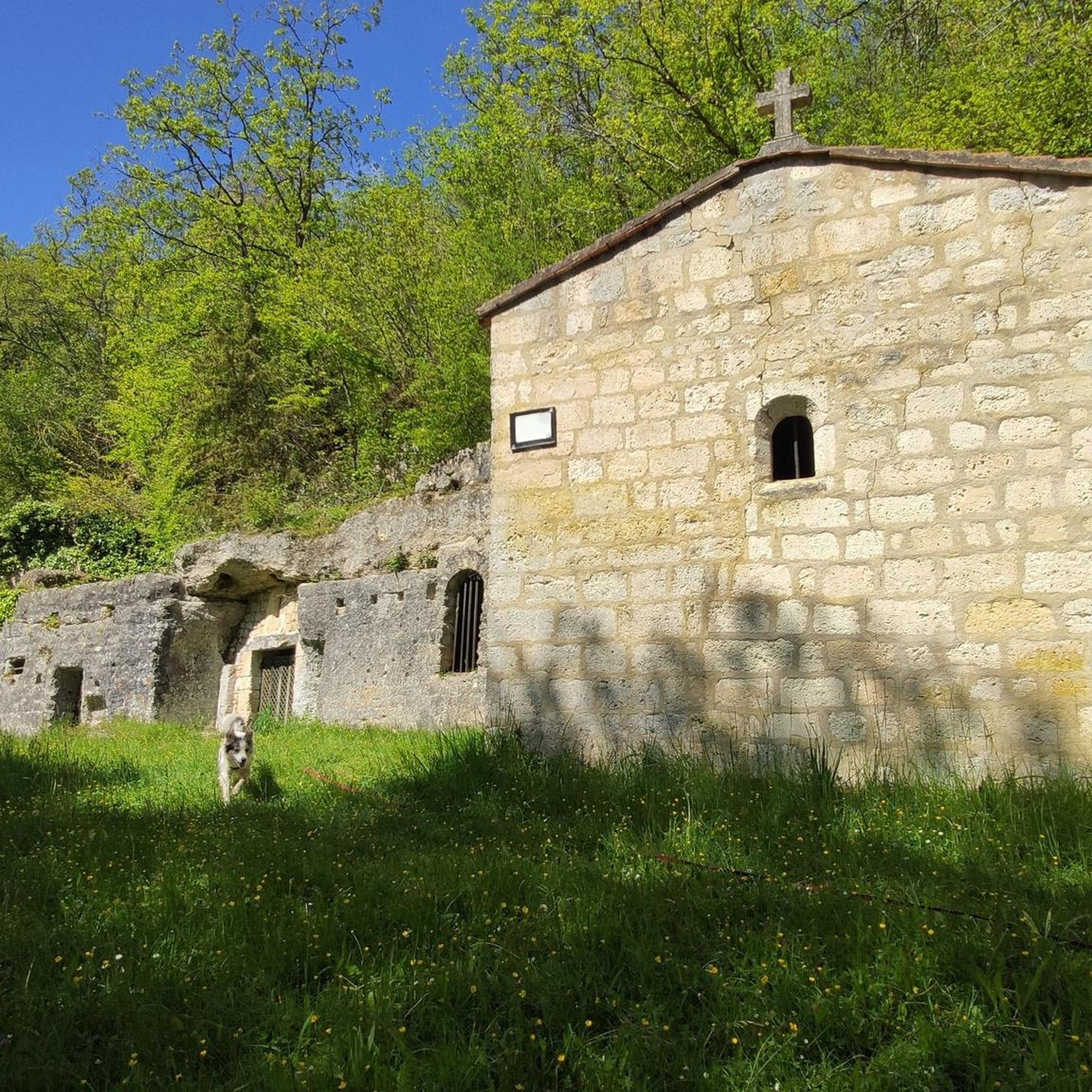
This building, known from 1110, was rebuilt for the first time around the middle of the 12th century and has undergone other transformations which have modified its original appearance. This building, known from 1110, was rebuilt for the first time around the middle of the 12th century and has undergone other transformations which have modified its original appearance. The history of the church reveals to us that two priests left a memory in the life of the parish: Jean Vergereau named in 1661, died on May 2, 1708 and was buried in the sanctuary; François Faunier du Plessis, who arrived in Mornac on January 18, 1778, was deported to Ile Madame. He died there on September 2, 1794 following ill-treatment inflicted by the revolutionaries. A commemorative plaque was awarded to him on April 28, 1929. The portal is framed by two fonts dating from the 17th century. A coat of arms decorates the first floor. The bell tower has two bells. The oldest dates from 1564 or 1584 and the second dates back to 1724. Some stones carved or engraved by the Compagnons du Tour de France, vestiges of these restorations, appear in the walls of the village. The sacristy has a paved floor made up of these small stones called "Dent de Loup" or "Cœurs de demoiselles".
0
0
Frequently Asked Questions
What natural attractions can I explore around Sers?
The most prominent natural attraction is the Vallée des Eaux claires. This beautiful valley is classified as a Site of European Interest due to its distinctive limestone cliffs and Mediterranean vegetation. It's also recognized globally as a natural climbing site, offering diverse landscapes from dry grasslands on southern slopes to cooler, wetter areas on northern slopes and the valley floor.
What historical castles can I visit around Sers?
You can explore two significant castles. The Château de la Tranchade, a strategic stronghold, dominates the Anguienne valley from a rocky outcrop and has a rich history of sieges. Another must-see is the Château de la Mercerie, known for its impressive 220-meter white stone facade set within a 50-hectare park. This grandiose residence was built with the ambition to rival Versailles.
Are there any ancient churches or religious sites worth seeing?
Yes, the region features historical churches. You can visit Saint Martin's Church, Mornac, which dates back to 1110 and has undergone several transformations, preserving elements like 17th-century fonts and bells from 1564 and 1724. Another notable site is Saint Paul's Church in Chazelles, a 12th-century Romanesque church with unique architectural features and funerary slabs inside.
What outdoor activities can I do near these attractions?
The area around Sers offers various outdoor activities. You can find numerous routes for gravel biking, running, and cycling. For example, there are challenging gravel biking routes like the 'Old station portico – La Coulée d'Oc loop' and moderate running trails such as the 'Running loop from Peugis'. You can explore more options on the dedicated guides for Gravel biking around Sers, Running Trails around Sers, and Cycling around Sers.
Are there family-friendly attractions around Sers?
While specific 'family-friendly' categories aren't listed for all attractions, the Château de la Mercerie offers a large 50-hectare park with rare trees, and a rose garden and arboretum that can be visited by a little train, which is particularly appealing for children and those with reduced mobility.
What do visitors enjoy most about the attractions around Sers?
Visitors particularly appreciate the diverse experiences offered. For instance, the Vallée des Eaux claires is loved for its stunning natural beauty, limestone cliffs, and opportunities for climbing, with high trails offering superb views. The historical significance and architectural grandeur of castles like Château de la Tranchade and Château de la Mercerie are also highly valued by the komoot community.
Can I find scenic viewpoints in the Sers area?
Yes, several locations offer scenic views. The Vallée des Eaux claires features high trails that provide superb panoramic views of the natural landscape. Additionally, the Château de la Tranchade is strategically positioned on a rocky outcrop, offering commanding views of the Anguienne valley. The Château de la Mercerie also has a belvedere that allows visitors to admire the castle and its surroundings from a height.
What is the historical significance of the castles in the region?
The castles around Sers hold significant historical importance. The Château de la Tranchade was a crucial medieval seigneury and a strategic stronghold controlling access to Angoulême, often besieged throughout its history. The Château de la Mercerie, though more recent in its grand expansion from the 1920s, represents an ambitious architectural project by two brothers who sought to create a residence rivaling Versailles, collecting treasures from around the world.
Are there any unique natural features or 'hidden gems' to discover?
The Vallée des Eaux claires can be considered a unique natural gem. It's classified as a Site of European Interest due to its distinct ecosystem, featuring limestone cliffs and Mediterranean vegetation. Its varied terrain, from dry grasslands to cooler valley floors, creates a rich biodiversity and offers a unique natural climbing experience.
Can I go running near the attractions in Sers?
Yes, there are several running trails available. You can find routes like the 'Lover's oak loop from Sers' which is a more difficult 18.7 km run, or moderate options such as the 'Running loop from Dirac - Les Pierres Rouges' (12.4 km) and the 'Running loop from Peugis' (7.5 km). More running options can be found in the Running Trails around Sers guide.
What kind of cycling routes are available around Sers?
The area offers a variety of cycling routes, from moderate to difficult. Examples include the 'Old station portico – Foulpougne Viaduct loop from Bouëx' (52.6 km, moderate) and the 'Saint-Martial Church – Château de Torsac loop from Bouëx' (50.3 km, difficult). For more options and details, refer to the Cycling around Sers guide.
Most popular attractions around Sers

Get inspired with the komoot mobile app


Explore more
Still not found the Highlight you’re looking for? See guides of the top attractions in other regions:
