The best cycling routes around Billancelles
4.5
(23)
186
riders
69
rides
Touring cycling around Billancelles offers a network of routes through the French countryside, characterized by rolling hills and agricultural landscapes. The region features a mix of quiet roads connecting small towns and historical sites, with varying elevation gains. These routes provide opportunities to explore local heritage and natural settings. The terrain is suitable for cyclists seeking longer distances and varied challenges.
Best touring cycling routes around Billancelles
- The most popular touring cycling route is Nogent-le-Rotrou Castle – Château de Frazé…
Last updated: July 2, 2026
5.0
(1)
37
riders
53.4km
03:46
300m
300m
Moderate bike ride. Good fitness required. Mostly paved surfaces. Suitable for all skill levels.
5.0
(6)
12
riders
Moderate bike ride. Good fitness required. Mostly paved surfaces. Suitable for all skill levels.

Sign up for free
4
riders
29.0km
01:43
130m
130m
Easy bike ride. Great for any fitness level. Mostly paved surfaces. Suitable for all skill levels.
3.0
(1)
4
riders
104km
06:36
1,060m
1,060m
Hard bike ride. Very good fitness required. You may need to push your bike for some segments of this route.
2
riders
27.1km
01:34
120m
120m
Easy bike ride. Great for any fitness level. Mostly paved surfaces. Suitable for all skill levels.
Get access to more routes and recommendations from other explorers.
Sign up for free
Already have an account?
Our route recommendations are based on thousands of hikes, rides, and runs completed by other people on komoot.
Start today with a free account
Your next adventure awaits.
Login or Signup




Tips from the Community

The current remains are those of the 15th-century gate and its barbican or artillery boulevard. The earliest remains on the site date back to the 1st century, with the remains of an ancient domus, a street, and its wooden gutter. The first Guillaume Gate was built around 1185; a wall can still be seen a little further along Rue de la Porte Guillaume. Source: https://journals.openedition.org/cem/14214?lang=en
0
0

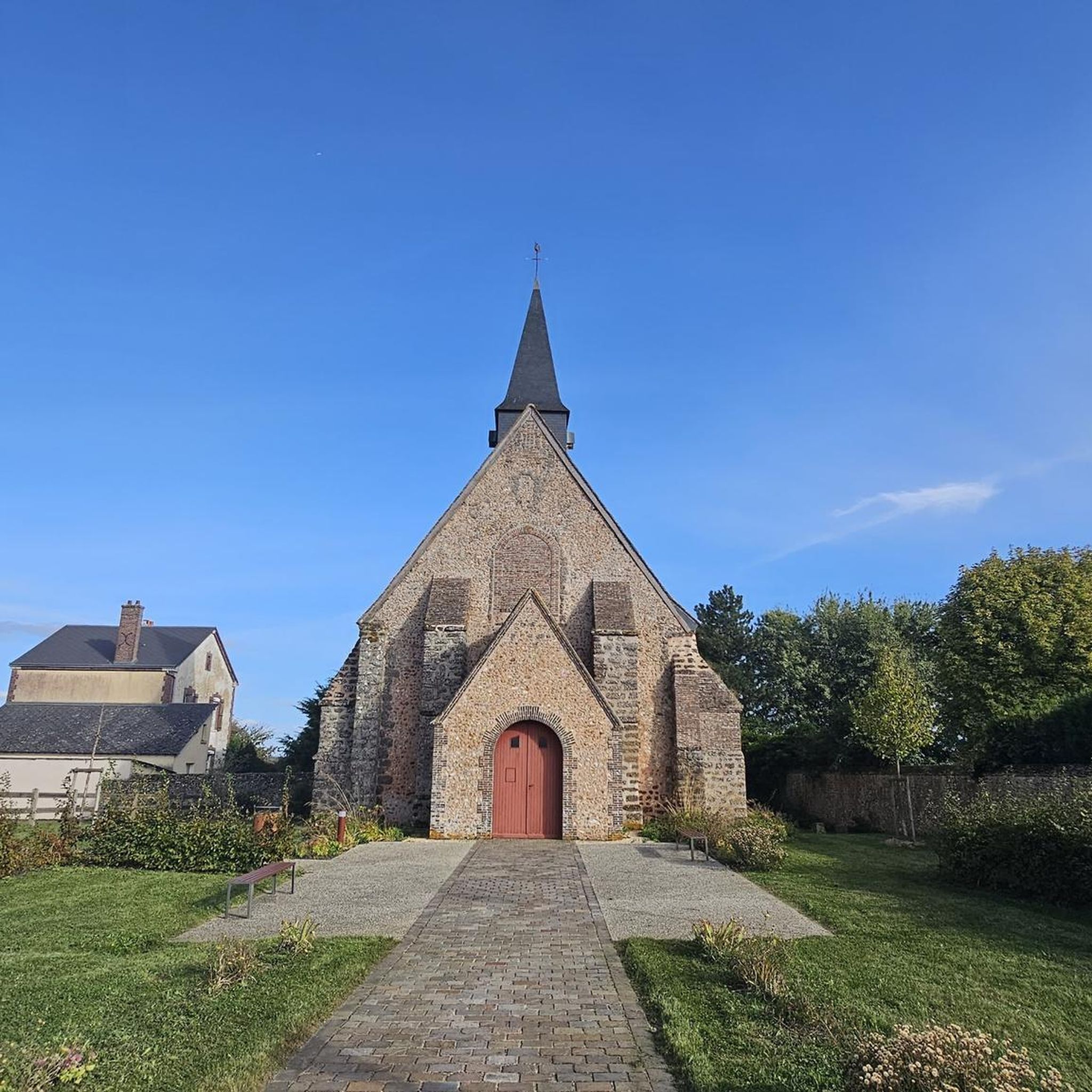
The Saint-Eloi Saint-Jean-Baptiste church in Crécy-Couvé is currently being restored. The spire of its bell tower, which was leaning dangerously, has been dismantled and is currently stored in the church awaiting restoration.
0
0

The Church of Saint-Éloi-Saint-Jean-Baptiste is believed to have originally been the chapel of the Château de Couvé, the first known mention of which dates back to 1215. This château belonged to the Abbey of Saint Père de Chartres. The layout of this chapel is currently unknown. Observing the architectural features of the current church allows us to place its construction between the 15th and 16th centuries. Improvement and modernization work were undertaken in the second half of the 18th century when Louis XV offered the Crécy estate to the Marquise de Pompadour: enlargement of the medieval windows, construction of an altarpiece forming a sacristy, a choir enclosure, and a gallery that could replace an older structure providing access to the attic. During this work, it is assumed that some of the bell tower's supports were removed to free up the nave and harmonize the interior spaces. After a prosperous period, the 19th and 20th centuries saw a slow deterioration of the building, despite some maintenance work being carried out on the roofs and other parts of the church that required it. It was only in 1901 that major work was undertaken, with the repair of the bell tower roof. This was followed in 1925 by work to consolidate the bell tower structures and repair the roofs of the western part of the nave. The bell tower and spire are tilting significantly to the south, linked to a failure of the old supports and the deterioration of the supporting structures, requiring urgent safety and restoration work.
0
0

Beautiful green space in the middle of the city. Sometimes flooded in winter.
0
0

Using the power of moving water to drive a mill wheel is an ancient invention that dates back to pre-Christian times. Thanks to such a construction, human or animal muscle power could be easily replaced by a watercourse - natural or artificially created - in order to grind grain into corn, for example. There are essentially two different ways of driving watermills: either the water simply hits the blades of the water wheel from below to set it in motion; or the water is guided above the wheel and falls onto the blades; this type of construction is more efficient due to natural gravity.
0
0

Eure River Banks Park
1
0
A medieval building has shaped the city's skyline for centuries: the cathedral's two towers reaching towards the sky can be seen from a long way away. This early example of Gothic architecture not only shaped Chartres itself, but was also a model for many other church buildings for a long time, not only in France, but also spread beyond its borders to other countries.
2
0

The cathedral is the seat of the bishop of the Roman Catholic diocese of Chartres
6
0
Frequently Asked Questions
How many touring cycling routes are available around Billancelles?
There are over 70 touring cycling routes around Billancelles, offering a wide range of options for different skill levels and preferences. You'll find everything from easy rides to more challenging long-distance tours.
What kind of terrain can I expect on touring bike routes near Billancelles?
The touring cycling routes around Billancelles are characterized by rolling hills and agricultural landscapes. You'll mostly ride on quiet roads connecting small towns and historical sites, providing a mix of varied challenges and scenic views through the French countryside.
Are there any easy touring bike routes suitable for beginners or families in Billancelles?
Yes, Billancelles offers several easy touring bike routes. For a pleasant and relatively flat ride, consider the Rond du Roi – Rond des Quatres Barrières loop from Favières. This 29 km route is ideal for those looking for a less strenuous cycling experience.
What are some longer, more challenging touring routes for experienced cyclists?
For experienced touring cyclists seeking a challenge, Billancelles has several demanding routes. The Nogent-le-Rotrou Castle – Château de Frazé loop from Courville-sur-Eure is a difficult 143 km trail connecting historical landmarks with significant elevation gain. Another option is The finish line in Chartres – Château de Frazé loop from Courville-sur-Eure, a 145 km route through varied terrain.
Are there any circular touring bike routes around Billancelles?
Yes, many of the touring cycling routes in Billancelles are designed as loops, allowing you to start and finish in the same location. For example, the Saulnières Town Hall loop from Favières is a moderate 52 km circular path that takes you through rural landscapes and local villages.
What historical sites or landmarks can I see along the touring cycling routes?
The region around Billancelles is rich in history. You can explore sites like Vérigny Castle, Château de Fontaine-la-Guyon, and the Orrouer Church. Some routes also pass by historical points of interest such as Rond du Roi.
Are there places to stop for refreshments or coffee along the routes?
Yes, as you cycle through the small towns and villages, you'll find opportunities to stop for refreshments. For instance, the Bar de la Rivière is a local spot where you can take a break.
What is the best time of year to go touring cycling in Billancelles?
The best time for touring cycling in Billancelles is generally from spring to early autumn (April to October). During these months, the weather is typically mild and pleasant, making for comfortable riding conditions through the agricultural landscapes. Winter cycling can be challenging due to colder temperatures and potentially wet conditions.
What do other touring cyclists enjoy most about cycling in Billancelles?
The touring cycling routes in Billancelles are highly rated by the komoot community, with an average score of 4.6 stars from over 30 reviews. Cyclists often praise the quiet roads, the charming rural landscapes, and the opportunity to connect with local heritage while enjoying varied challenges.
Are the touring cycling routes around Billancelles suitable for dogs?
While many routes are on quiet country roads, it's important to consider the safety and comfort of your dog. If you plan to bring a dog, ensure they are accustomed to cycling in a trailer or basket, and always keep them hydrated. Check local regulations for specific areas, as some historical sites or private properties may have restrictions.
Where can I find parking near the touring bike trails in Billancelles?
Parking is generally available in the small towns and villages that serve as starting points for many routes, such as Courville-sur-Eure or Favières. Look for public parking areas within these communities, often near town centers or local amenities, to begin your cycling adventure.
Most popular routes around Billancelles
Most popular attractions around Billancelles

Get inspired with the komoot mobile app


Explore more
Browse the best Cycling routes in other regions.
