Attractions and Places To See around Plogonnec - Top 20
Attractions and places to see around Plogonnec include a blend of historical religious sites, natural landscapes, and proximity to notable towns in Finistère, Brittany, France. The commune is situated near the Bois du Nevet and Montagne de Locronan, offering natural exploration opportunities. Visitors can find medieval towns like Locronan and the larger city of Quimper within a short distance. The area provides access to both inland forests and coastal features of the Baie de Douarnenez.
Best attractions and places to see around Plogonnec
- The most popular attractions is Quimper, a historic city known for its rich architectural heritage. Its medieval old town features half-timbered houses from the 16th and 17th centuries, alongside Saint-Corentin Cathedral.
- Another must-see spot is Locronan, a settlement recognized as one of France's "most beautiful villages." This medieval granite town center has remained largely unchanged since the 17th century, offering a pedestrian-friendly experience.
- Visitors also love Saint-Corentin Cathedral, a significant religious building in Quimper. Construction began in 1239, with its distinctive spires completed in the 19th century.
- Plogonnec is known for its historical religious sites, extensive woodlands, and charming medieval towns. The region offers a variety of attractions to see and explore, from ancient chapels to natural viewpoints.
- The attractions around Plogonnec are appreciated by the komoot community, with over 280 upvotes and 190 photos shared by visitors.
Last updated: July 6, 2026
Quimper
Highlight • Other
Translated by Google •
Tip by

Locronan
Highlight • Settlement
Therefore, do not be surprised if a figure in a cloak and with a sword comes towards you. The small town has played a leading role several times as a filming location for historical hams. Above all, the large Church of St. Ronan with its mighty tower and monumental portal is a perfect stage set and a prime example of Breton late Gothic.
Many artisans have settled in the town itself and the restaurants and cafés are well attended. Often jugglers and musicians with historical instruments enliven the large square in front of the church. Locronan is a wonderful place for a short visit. But don't forget the spare memory card for your camera - you'll find endless gorgeous photo opportunities here.
Translated by Google •
Tip by

Sign up now to discover places like this
Get recommendations on the best single tracks, peaks, & plenty of other exciting outdoor places.
Sign up for free
Saint-Corentin Cathedral
Highlight • Other
It was in 1239 that Bishop Raynaud decided to build the current cathedral based on the foundations of an old Romanesque cathedral. In 1410, the choir vaults were completed, while the glass roofs were installed in the high windows. In 1424, Bishop Bertrand de Rosmadec undertook the construction of the nave and the two towers of the facade.
From the 1850s, the Quimper architect Joseph Bigot undertook the restoration of the building, mainly the decoration of the chapels and the order of new stained glass windows destroyed during the French Revolution. Its most spectacular achievement remains the completion of the two towers with the construction of the spiers between 1854 and 1856, financed by the people of Quimper.
From 1989 to 1999, a restoration campaign revealed the appearance of the cathedral at the end of the 15th century: restoration of the interior polychromies with the reappearance of the ribs treated in yellow ocher and red ocher and general liming of the facings.
Source: quimper-tourisme.bzh/cathedrale-saint-corentin
Translated by Google •
Tip by

Retreat Garden
Highlight • Natural
The garden is composed of three parts:
The palm garden, which still bears the original traces of a priest's garden.
The subtropical garden, with broad-leaved plants.
The dry garden - with plants acclimatized from Chile and New Zealand. It also contains a chestnut tree dating back to the time of the Ursuline nuns.
Translated by Google •
Tip by
Saint-Mathieu Church
Highlight • Religious Site
Translated by Google •
Tip by

Sign up for free to discover even more attractions around Plogonnec.
Sign up for free
Already have an account?
Start today with a free account
Your next adventure awaits.
Login or Signup

Tips from the Community

In 1239, Bishop Raynaud commissioned the construction of Saint-Corentin Cathedral. It was built on the foundations of a Romanesque cathedral. Construction lasted three centuries. In 1410, the choir vaults were completed and the windows were installed. In 1424, construction began on the nave and the two towers of the facade. The reconstruction was completed in 1515. The two towers were finally finished between 1854 and 1856. A distinctive feature is its kink in the main axis. The reason for this design element is unclear. Several theories exist. One suggests that it emphasizes the crucifix. Another posits that it is due to the stability of the foundation. Yet another suggests that the kink reflects the inclined head of the crucified Jesus. Following the completion of renovations in December 1999, the cathedral can now be admired as it was decorated at the end of the 15th century. The same colors as in the original, i.e., ochre yellow and ochre red, were used in lime plaster on the rib vaults. Numerous chapels are situated around the chancel, dating from various periods between the 13th and 16th centuries. Excerpts from https://de.wikipedia.org/wiki/Kathedrale_Saint-Corentin
3
0
"The church, consecrated in honor of the Apostle Matthew, is the third building on the current site. The church was first mentioned in writing in 1209 when it was presented to the Bishop of Quimper by Guy de Thouars, Duke of Brittany. The parish of Saint-Mathieu was probably founded at the end of the 12th century by order of the Dukes of Brittany to serve the settlement that had formed west of the walled city of Quimper. [...] The current neo-Gothic parish church replaces a late Gothic building, consecrated on October 28, 1514, which had been built in the 15th/16th centuries on the site of an earlier Romanesque church. The west tower was built in 1845 according to plans by the diocesan architect Joseph Bigot. The nave, transept, and choir were built from February 1895 to 1897 according to designs by Gustave Bigot on a cruciform ground plan on the foundations of the Gothic church. The previous Gothic church had A large stained-glass window depicting the Passion of Christ was preserved; it was transferred to the new parish church. A 17th-century Crucifixion window also survives. https://de.wikipedia.org/wiki/St-Mathieu_(Quimper)
2
1

Saint-Corentin Cathedral - Quimper Saint-Corentin Cathedral was built on the foundations of a Romanesque church in Quimper, the capital of Cornouaille in Brittany. It is one of the three oldest Gothic cathedrals in Brittany, along with the cathedrals of Saint-Pol-de-Léon and Tréguier. Saint-Corentin Cathedral in Quimper is a historic building.
1
0

Not exactly a highlight for road cyclists. But still a beautiful building.
1
0

Beautiful church near the city center.
1
1
In the middle of the city, the two towers of the cathedral rise up.
1
0
Quimper is the second largest city in the Finistère department and has a beautiful city center.
1
0

Arrived in Quimper after 2000 km - a really beautiful city! ❤️❤️❤️ and we will come back! By bike - even with an e-bike - on the TGV to Quimper or back from there to wherever is no problem. We have already tried the way back once - completely uncomplicated.
1
0
Frequently Asked Questions
What types of attractions can I expect to find around Plogonnec?
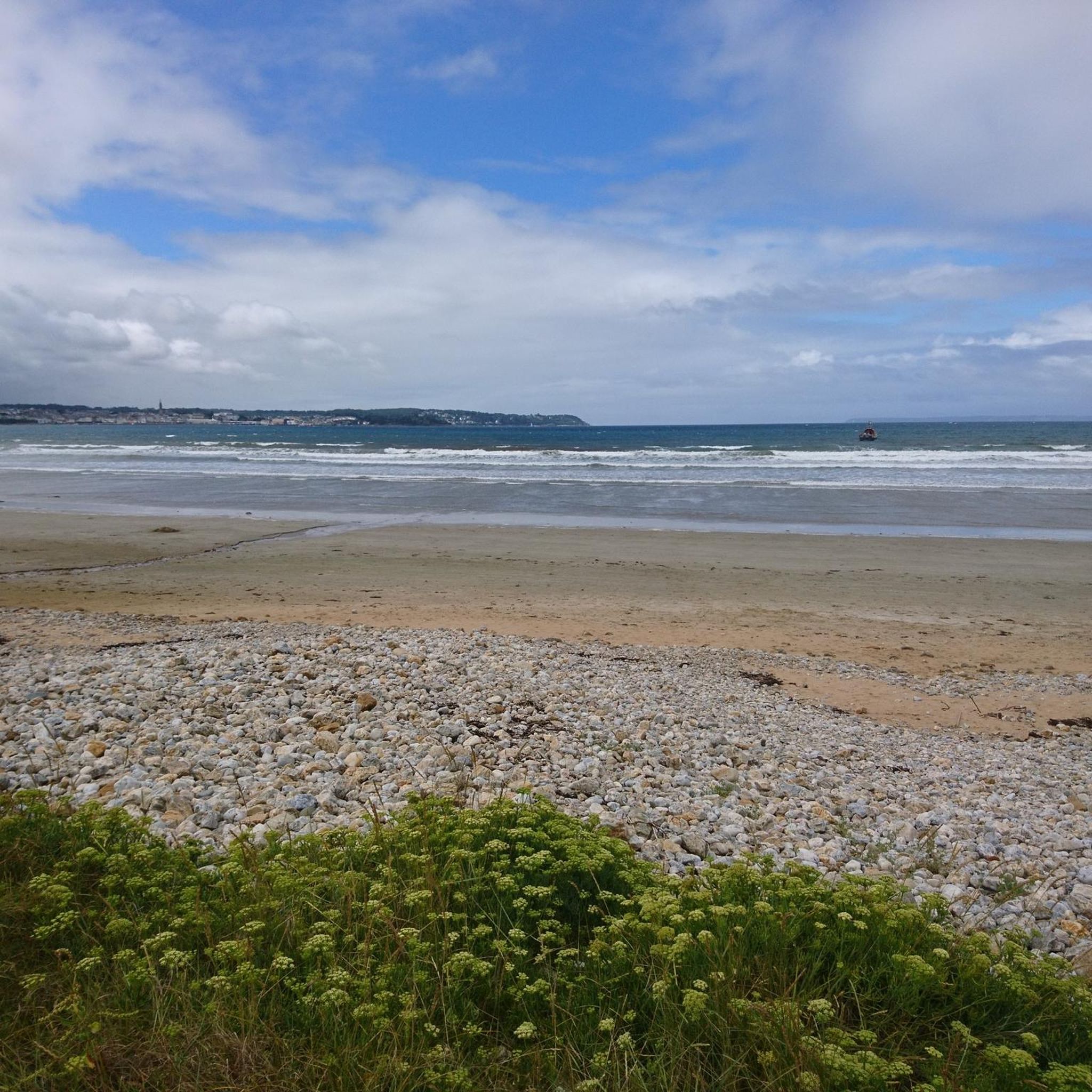
Plogonnec offers a diverse range of attractions, blending historical religious sites, extensive natural landscapes, and charming medieval towns. You can explore ancient chapels, vast woodlands like the Bois du Nevet, and enjoy proximity to significant towns such as Quimper and Locronan, which are rich in history and culture. The area also provides access to coastal features of the Baie de Douarnenez.
What historical and religious sites are notable within Plogonnec?
Within Plogonnec, the 15th-century Église Saint-Thurien is a prominent landmark. The commune is also home to several historic chapels, many dating from the 16th and 17th centuries, including the Neo-Gothic Chapelle Notre-Dame de la Lorette and the Chapelle Saint-Pierre, which once served the lords of Névet. The Chapel of Saint Théleau is particularly noted for its intricate sculptures.
Which nearby towns offer a rich historical and cultural experience?
Just 3 km from Plogonnec, Locronan is recognized as one of France's 'most beautiful villages.' Its medieval granite town center has remained largely unchanged since the 17th century, offering a timeless, pedestrian-friendly experience. About 12 km southeast, Quimper, a 'City of Art and History,' boasts a rich architectural heritage, including the impressive Saint-Corentin Cathedral and 16th and 17th-century houses.
Are there any significant natural sites or viewpoints near Plogonnec?
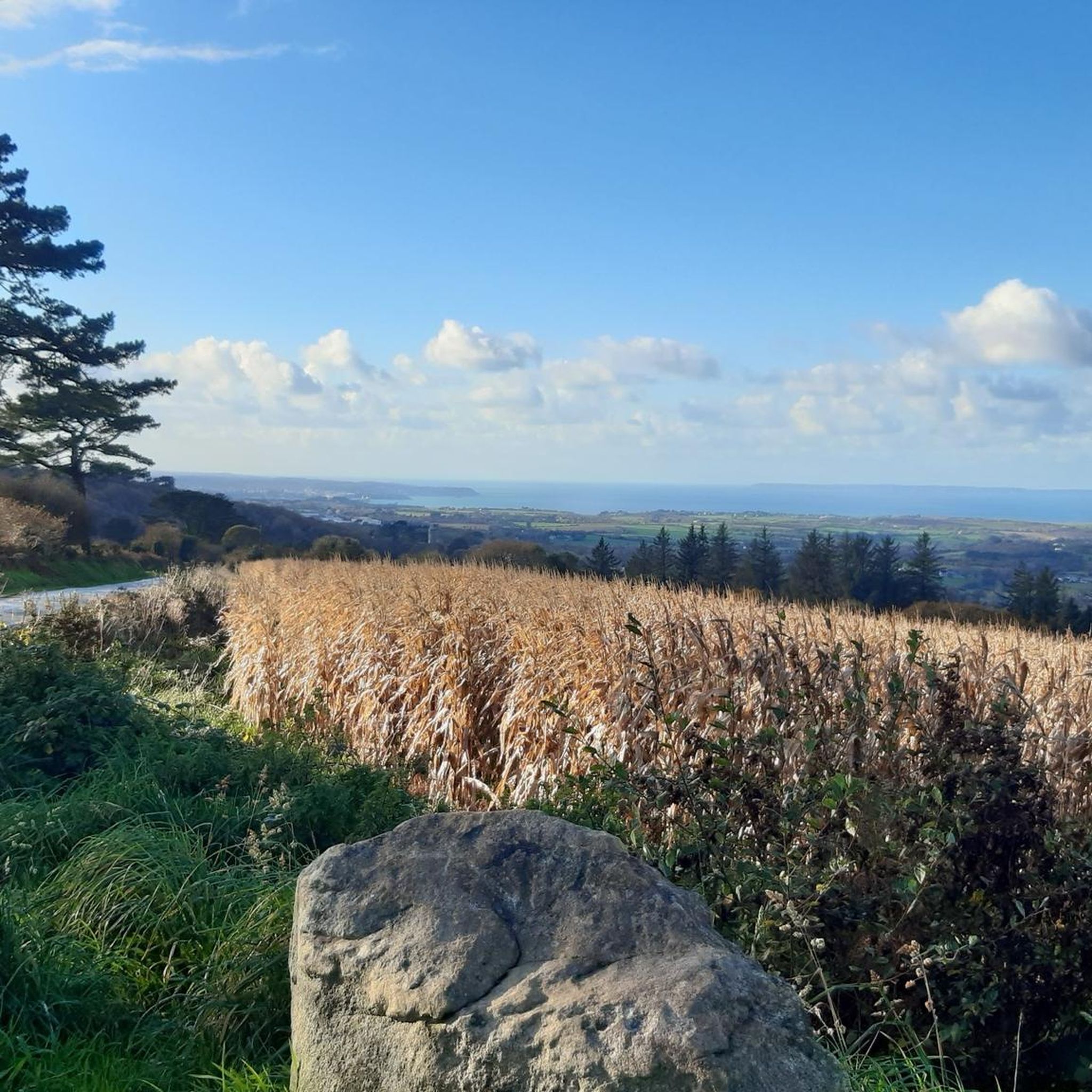
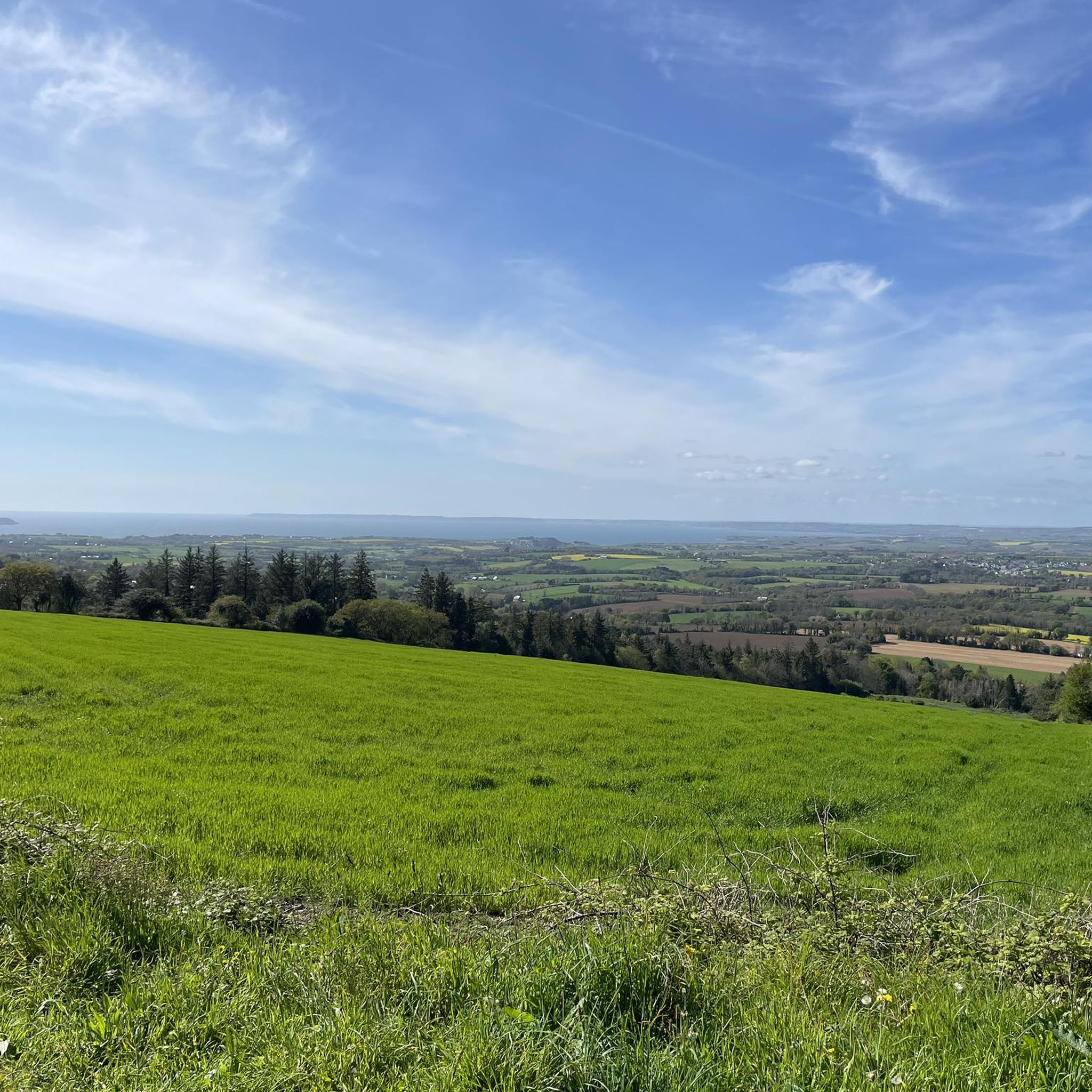
Absolutely. The extensive Bois du Nevet, an ancient druid sanctuary, is ideal for strolls and features marked trails. Plogonnec is also situated below the Montagne de Locronan, offering panoramic views of the coast. The Vallée du Névet is known for its diverse tree species. Furthermore, the area provides easy access to the Baie de Douarnenez and the significant natural site of Menez-Hom, located 16 km away.
What outdoor activities, like hiking or cycling, are available around Plogonnec?
The region around Plogonnec is excellent for outdoor enthusiasts. You can find numerous trails for various activities. For running, explore routes like the 'Manoir de Kerguénolé loop' or the 'Chapel & Cross Ar Sonj – View of the Bay of Douarnenez loop.' Cyclists can enjoy road cycling routes such as the 'Douarnenez – Marina loop' or the 'Ménez-Hom Summit and Viewpoint loop.' Mountain biking trails include the 'Wooden bridge – Saint-Pierre Chapel loop.' You can find more details on these and other routes in the running, road cycling, and MTB guides for Plogonnec.
Are there easy or family-friendly walking trails in the area?
Yes, the Bois du Nevet is particularly suitable for families and individuals with reduced mobility in its northern part, offering long, wide paths. It also features a playground and sports courses. The Retreat Garden in Quimper is another family-friendly spot, offering a quiet, green oasis in the city.
What do visitors particularly enjoy about the attractions near Plogonnec?
Visitors frequently praise the timeless charm of Locronan, noting its well-preserved medieval atmosphere and excellent photo opportunities. Quimper is appreciated for its beautiful old town, vibrant atmosphere with shops and cafes, and the striking architecture of Saint-Corentin Cathedral. The Retreat Garden is also highlighted as a quiet, green oasis.
What is the best time of year to visit Plogonnec for outdoor activities and sightseeing?
The spring months, particularly April to May, are ideal for visiting Plogonnec, as the undergrowth of the Bois du Nevet is carpeted with wild hyacinths, adding to the natural beauty. The milder weather during spring and summer is generally best for outdoor activities like hiking and cycling, and for exploring the charming towns and coastal areas.
Are there any attractions suitable for visitors with reduced mobility?
Yes, the northern part of the Bois du Nevet features long, wide paths that are suitable for individuals with reduced mobility, making it an accessible option for enjoying nature.
Can I find dog-friendly trails around Plogonnec?
The extensive woodlands of the Bois du Nevet are generally suitable for walks with dogs, offering ample space and natural surroundings. It's always advisable to keep dogs on a leash and follow local regulations to protect wildlife and ensure a pleasant experience for all visitors.
What are some recommended day trips from Plogonnec?
Plogonnec's location in Finistère makes it a great base for day trips. You can visit Douarnenez, a seaside resort town just 10 km to the west, known for its beaches. The significant natural site of Menez-Hom is 16 km away. For a broader natural experience, the Armorique Regional Park is about 26 km away. Although further (around 50 km), Pointe du Raz offers breathtaking cliffside panoramas.
Are there options for dining or accommodation in Plogonnec or nearby?
While specific establishments are not detailed, Plogonnec, as a commune, offers local amenities. For a wider selection of cafes, pubs, and restaurants, the nearby towns of Locronan and especially Quimper provide numerous options for dining and accommodation, catering to various preferences.
Most popular routes around Plogonnec

Get inspired with the komoot mobile app


Explore more
Still not found the Highlight you’re looking for? See guides of the top attractions in other regions:
