Attractions and Places To See around Vouzon - Top 16
Best attractions and places to see around Vouzon include a blend of local charm, natural beauty, and historical sites within the Sologne region of France. This area is characterized by its extensive forests, numerous ponds, and moorland, offering a tranquil setting. Visitors can explore a variety of cultural landmarks and natural features that highlight the region's heritage and environment.
Best attractions and places to see around Vouzon
- The most popular attractions is La Ferté-Saint-Aubin Castle, a historical site constructed in 1625. Visitors can explore the castle, its gardens, and a 40-hectare natural park, and taste honey madeleines prepared in its kitchens.
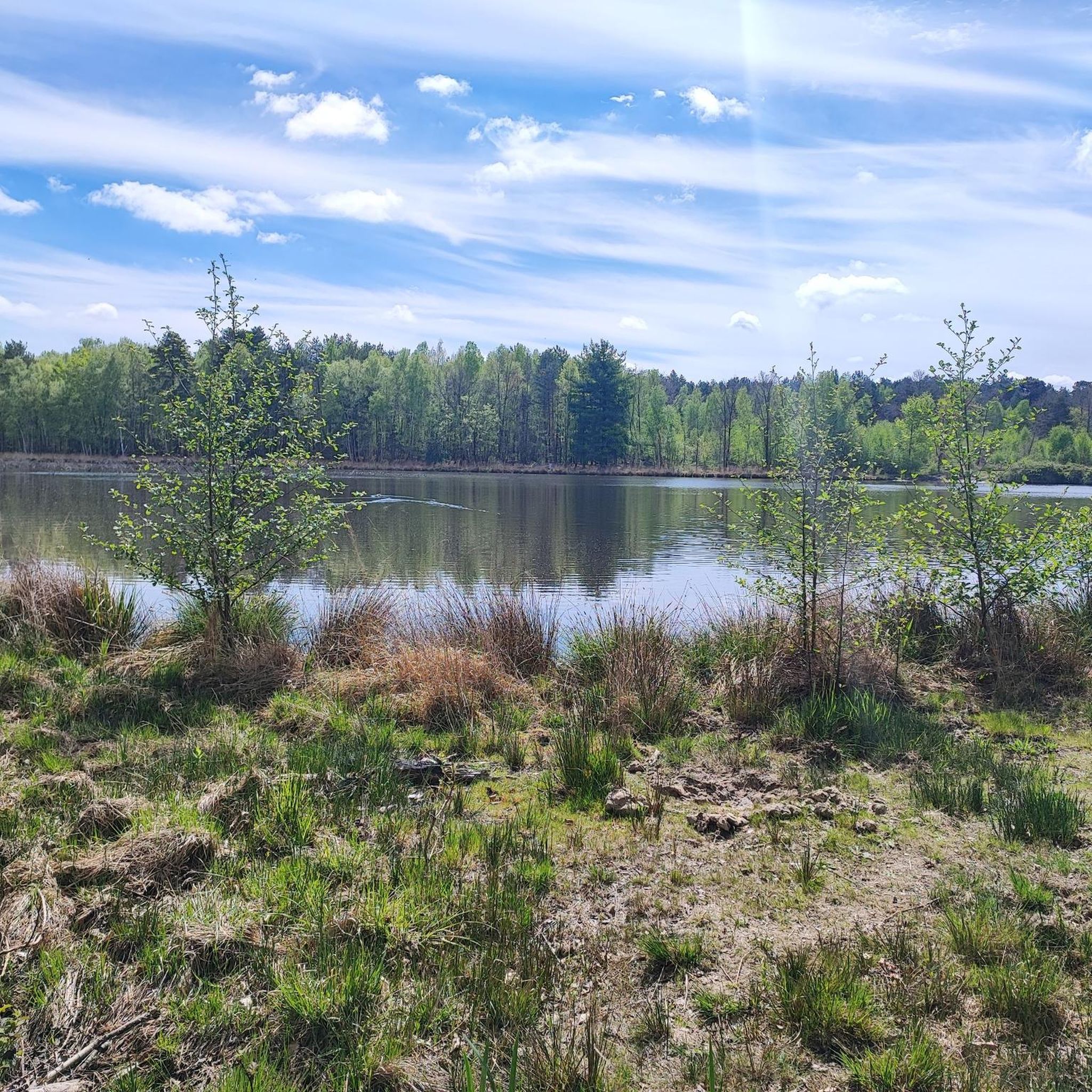
- Another must-see spot is Sologne Bird Observatory, a hut designed for bird watching. Here, visitors can observe birds and enjoy the surrounding lake.
- Visitors also love Saint-Étienne Church of Chaumont-sur-Tharonne, a religious building located in the heart of Chaumont-sur-Tharonne. This church is situated on a well-maintained square surrounded by charming houses.
- Vouzon is known for its historical sites, natural landmarks, and outdoor activities. The area offers a variety of attractions to see and explore, from ancient churches and castles to expansive forests and ponds.
- The attractions around Vouzon are appreciated by the komoot community, with 49 upvotes and 17 photos shared.
Last updated: May 1, 2026
La Ferté-Saint-Aubin Castle
Highlight • Historical Site
You can explore the castle, the gardens, the 40-hectare natural park, or even taste their famous honey madeleines which are prepared in the kitchens.
Translated by Google •
Tip by

Saint-Étienne Church of Chaumont-sur-Tharonne
Highlight • Religious Site
Translated by Google •
Tip by

Sign up now to discover places like this
Get recommendations on the best single tracks, peaks, & plenty of other exciting outdoor places.
Sign up for free
Sologne Resistance Memorial
Highlight • Other
These young Parisian students were part of a large wave of departures for the maquis following the call of June 6, 1944 by Marshal de Gaulle. On June 9, they reached their first stop towards the Corrèze maquis: the Château de Cerf-Bois, where Madame de Labeau welcomed them.
Another group of students was welcomed the same evening at the By farm, about fifteen kilometers away. However, this information having been obtained by the Gestapo, they were apprehended on June 10 at 5 a.m., searched, questioned then shot, apart from a traitor hidden among them and affiliated with the Paris Gestapo. He indicated to the Germans that the sketch found on one of the students corresponded to three resistance gathering places, including the Château de Cerf-Bois.
A raid was immediately organized at the castle and the 12 young men who were there were executed.
As for the third place indicated on the sketch, the Château des Grand-Bois, 14 students and the owner of the premises were also found and deported to Dachau, where eight died.
Translated by Google •
Tip by
Sologne Bird Observatory
Highlight • Mountain Hut
Translated by Google •
Tip by

Saint-Étienne Church
Highlight • Religious Site
Translated by Google •
Tip by

Sign up for free to discover even more attractions around Vouzon.
Sign up for free
Already have an account?
Start today with a free account
Your next adventure awaits.
Login or Signup

Tips from the Community

The parish church, dedicated to Saint Stephen, belonged in the 13th century to the Abbey of Micy near Orléans. It was rebuilt at the end of the 15th and beginning of the 16th centuries. It consists of a long nave, 35 meters in length and over 9 meters wide, ending in a three-sided apse. Its walls, built of rubble and rendered brick, are reinforced by dressed stone buttresses. The cornice at the base of the roof and the window and door surrounds are also made of molded dressed stone. The double-lancet windows with trefoil topped by a figure-eight shaped bilobe are identical, except for those on the west facade and the central window, which are more elaborate, featuring three lancets while retaining the same molding. An addition was made at the beginning of the 16th century. On the north side stands an imposing seigneurial chapel and a massive bell tower with eight flat buttresses, two on each face, all built of brick. Ashlar is reserved for the buttresses of the bell tower and alternates with brick in the buttresses of the chapel; it is used for framing the openings, the windows, and the sloping sides of the chapel's gable. A lozenge-shaped decoration of black bricks on a background of pink bricks has been preserved on the lower level and on part of the gable of this chapel. The chapel was the only vaulted part of the church, undoubtedly financed by Jean or Claude d'Estampes, lord of La Ferté-Nabert. The rest of the building was covered by a panelled vault, the replacement of which with a false ribbed vault of plaster resulted in the disappearance of the tie beams and king posts and ruined the structural integrity of the roof frame. This artificial, cold, and superficial decoration of the upper sections deprives the interior of the interplay of tie beams and king posts. These, in their rhythm, corresponded to the lateral openings and reflected the robust structure of the timber frame that protected the building. A comprehensive restoration is planned. Initially, for the north chapel—masonry, roofing, and timber frame—the French Heritage Society (Sauvegarde de l’Art français) provided €30,490 in 2001.
0
0
The parish church of Saint-Étienne was at the disposal of the Abbot of Jargeau. Of Romanesque origin, the building has a single nave on which are grafted a chapel to the north and south, a straight bay under the bell tower, supported by a sacristy to the north and a polygonal choir. The latter belongs to the 16th century. It includes a three-sided apse preceded by a straight bay. The whole, vaulted with ribs, is lit by five bays with flamboyant tracery similar to the two windows of the bay of the bell tower, contemporary with the choir. This has a square plan. Four pillars projecting strongly from the interior of the nave, receiving the four arches which carry all the masonry of the bell tower, accentuate the tripartite division of the interior volume of the building. The open door, in the north gutter wall, on the sacristy rebuilt in the 20th century, is surmounted by two pinnacles resting on sculpted bases framing an accolade. The lintel was once decorated with a coat of arms. The nave, Romanesque in its external volumes, was necessarily reworked from the 16th to the 19th century. It was probably originally a simple framed vessel whose gutter walls were supported on the outside by flat buttresses with slight projections. In the 16th century, the paneled barrel vault, still preserved in the attic, was hidden by ribbed vaults; the engaged columns which receive the ribs, as well as the corner buttresses visible on the facade belong to this campaign of works. Subsequently, a rectangular chapel was attached to the north wall; the south chapel, built in brick and cut stone, dates from the 19th century, as do the six windows with trefoil lintels illuminating the nave, the rose window pierced in the facade and the gallery installed at its back. A brick vault replaced the 16th century vault on the nave. The semicircular portal, extensively reworked, was formerly protected by a timber-framed porch. The three parts of the building are clearly differentiated in the exterior elevation of the building. The nave, not very high, as well as the choir, with its more slender roof, are dominated by the silhouette of the bell tower. Square in plan, it has four levels punctuated by dripstones; the upper level is pierced with two twin bays per face. The bell tower is crowned by a timber spire. The Sauvegarde de l’Art Français granted aid of 50,000 F in 1993 for the repair of the exterior masonry.
0
0

In a sheltered hut the birds can be observed
3
0
The beautiful lake invites you to linger.
3
0
Here you can watch birds with a bit of luck
3
0
Small and nice hut for bird watching
3
0

A granite monument displaying a cross of Lorraine faces the entrance to the Château du Cerf-Bois here and recalls one of the greatest tragedies in the history of the Sologne resistance. It was erected in memory of 12 Parisian students shot by the Nazis on June 10, 1944 in the clearing that you can reach by following the path in front of you. Another monument was erected in this clearing, accompanying the steles in memory of each of the young men. These young Parisian students were part of a large wave of departures for the maquis following the call of June 6, 1944 by Marshal de Gaulle. On June 9, they reached their first stop towards the Corrèze maquis: the Château de Cerf-Bois, where Madame de Labeau welcomed them. Another group of students was welcomed the same evening at the By farm, about fifteen kilometers away. However, this information having been obtained by the Gestapo, they were apprehended on June 10 at 5 a.m., searched, questioned then shot, apart from a traitor hidden among them and affiliated with the Paris Gestapo. He indicated to the Germans that the sketch found on one of the students corresponded to three resistance gathering places, including the Château de Cerf-Bois. A raid was immediately organized at the castle and the 12 young men who were there were executed. As for the third place indicated on the sketch, the Château des Grand-Bois, 14 students and the owner of the premises were also found and deported to Dachau, where eight died.
0
0
Beautiful church in the heart of Chaumont-sur-Tharonne, on a pretty well maintained square. The houses around the square are also worth a look.
0
0
Frequently Asked Questions
What are some notable historical and cultural sites around Vouzon?
The region offers several significant historical and cultural sites. You can visit La Ferté-Saint-Aubin Castle, a 17th-century castle with extensive gardens and a natural park. Also, the Saint-Étienne Church of Chaumont-sur-Tharonne is a beautiful religious building set in a charming village square. Within Vouzon itself, the Church of St. Peter and its rectory with painted beams are local landmarks. Further afield, the Saint-Benoît-sur-Loire Abbey is renowned for its Romanesque architecture, and the grand Château de Chambord is a major Loire Valley attraction.
Where can I experience nature and wildlife near Vouzon?
Vouzon is surrounded by the natural beauty of Sologne, characterized by forests, ponds, and moorland. The Sologne Bird Observatory offers a dedicated hut for bird watching by a lake. You can also explore the 300-hectare Domaine du Ciran, a nature conservatory in Ménestreau-en-Villette, which features ponds, woodlands, and observation points for wildlife like roe deer, wild boars, and various birds. The Canal de la Sauldre's former towpaths provide quiet routes to observe wet meadows and small bridges.
Are there family-friendly attractions in the Vouzon area?
Yes, several attractions are suitable for families. La Ferté-Saint-Aubin Castle is family-friendly, offering exploration of the castle, its gardens, and a natural park. The Sologne Bird Observatory is also a great spot for families to observe birds. The Domaine du Ciran nature conservatory provides marked trails and an interpretive course, making it an engaging outdoor experience for all ages. For active families, Paintball du Rabot offers a large paintball site with themed terrains.
What outdoor activities, like hiking or cycling, can I do around Vouzon?
The Sologne region around Vouzon is ideal for outdoor activities. You can find numerous hiking trails, including easy loops like 'Hiking in la ferté saint aubin' from Ménestreau-en-Villette, or more challenging routes like 'Forests and castles'. For cycling, the former towpaths of the Canal de la Sauldre are excellent, and there are various cycling routes such as 'Beauval Lock loop' from Lamotte-Beuvron. You can explore more options on the hiking guide and cycling guide for Vouzon.
Can I go bird watching near Vouzon?
Yes, bird watching is a popular activity. The Sologne Bird Observatory is specifically designed for this purpose, offering a hut where you can observe various bird species by a lake. The Sologne region, with its nearly 3,000 bodies of water, is also home to herons, cormorants, and other waterfowl, providing ample opportunities for bird observation.
What is the Sologne Resistance Memorial about?
The Sologne Resistance Memorial commemorates a tragic event during World War II. It is a granite monument with a cross of Lorraine, erected in memory of 12 Parisian students who were shot by the Nazis on June 10, 1944. Another monument stands in the clearing where the tragedy occurred, marking a significant site related to the Sologne resistance movement.
What kind of natural landscapes characterize the Sologne region around Vouzon?
The Sologne region is known for its distinctive natural landscapes, primarily characterized by extensive forests, numerous ponds, and moorland. It's a tranquil setting with a rich biodiversity. The region features nearly 3,000 bodies of water, making it a haven for aquatic wildlife and birds. The Canal de la Sauldre also adds to the landscape with its wet meadows and small bridges.
Are there any castles to visit near Vouzon?
Absolutely. The most prominent is La Ferté-Saint-Aubin Castle, a 17th-century edifice surrounded by moats and a 40-hectare natural park. While a bit further, the magnificent Château de Chambord, the largest castle in the Loire Valley, is also accessible and a major historical attraction.
What are some options for cycling around Vouzon?
Cycling is a great way to explore the area. The former towpaths of the Canal de la Sauldre offer quiet routes through natural beauty. You can find various cycling tours, including easy routes like 'Beauval Lock loop' and 'A beautiful pond with the house loop' starting from Lamotte-Beuvron. For more options, consult the cycling guide for Vouzon.
What is the best time of year to visit Vouzon for outdoor activities?
The Sologne region is beautiful throughout the year, but spring and autumn are particularly pleasant for outdoor activities. Spring offers blooming flora and active wildlife, while autumn brings vibrant colors to the forests. Summers are generally warm and suitable for exploring, though some prefer the milder temperatures of the shoulder seasons for hiking and cycling.
Are there any unique natural parks or conservatories to explore?
Yes, the Domaine du Ciran in Ménestreau-en-Villette is a 300-hectare nature conservatory dedicated to Sologne's flora and fauna. It features ponds, woodlands, and observation points for various wildlife. Marked trails and an interpretive course help visitors understand the local ecosystems. Additionally, the Parc Floral de la Source and Arboretum des Grandes Bruyères are remarkable gardens located within a reasonable distance.
What kind of churches can I visit in the area?
Beyond the local Church of St. Peter in Vouzon, you can visit the beautiful Saint-Étienne Church of Chaumont-sur-Tharonne, known for its architecture and setting. The Saint-Étienne Church, of Romanesque origin, also offers historical and architectural interest with its 16th-century choir and bell tower. For Romanesque architecture enthusiasts, the Saint-Benoît-sur-Loire Abbey is a recommended visit.
Are there any activities for thrill-seekers or groups?
For those seeking more active and group-oriented fun, Paintball du Rabot is located near Vouzon. It is the largest paintball site in the Centre region, offering 35 wooded hectares with a pond and seven themed terrains. Ball-Trap is also available at this location.
What do visitors particularly enjoy about the attractions around Vouzon?
Visitors appreciate the blend of historical sites, natural beauty, and outdoor activities. The tranquility of the Sologne forests and ponds, the charm of historical landmarks like La Ferté-Saint-Aubin Castle, and the opportunities for bird watching at the Sologne Bird Observatory are frequently highlighted. The well-maintained squares around churches like the Saint-Étienne Church of Chaumont-sur-Tharonne also receive positive remarks.
Are there any easy walking trails suitable for families near Vouzon?
Yes, there are several easy walking options. The 'Hiking in la ferté saint aubin' loop from Ménestreau-en-Villette is an easy 4.9 km trail. The former towpaths along the Canal de la Sauldre also provide flat, quiet routes perfect for leisurely family walks. The Domaine du Ciran nature conservatory offers marked trails that are generally accessible and engaging for families.

Get inspired with the komoot mobile app


Explore more
Still not found the Highlight you’re looking for? See guides of the top attractions in other regions:
