Top 20 Mountain Passes around Isola
Mountain passes around Isola are situated in the French Alps, within the Alpes-Maritimes department. This region borders Italy and is part of the Mercantour National Park. The area features high-altitude passes that connect valleys and offer challenging routes. It is known for its alpine landscape and diverse terrain.
Best mountain passes around Isola
- The most popular mountain passes is Col de la Lombarde, a mountain pass that is a high-altitude border pass connecting France and Italy. This pass overlooks…
Last updated: July 10, 2026
Col de la Lombarde
Highlight • Mountain Pass
Translated by Google •
Tip by

Col Tesina
Highlight • Mountain Pass
Translated by Google •
Tip by

Sign up now to discover places like this
Get recommendations on the best single tracks, peaks, & plenty of other exciting outdoor places.
Sign up for free
Col de la Couillole
Highlight • Mountain Pass
Translated by Google •
Tip by

Ascent of Col de la Lombarde from Isola via Isola 2000
Highlight (Segment) • Mountain Pass
Translated by Google •
Tip by

Colle del Lausfer
Highlight • Mountain Pass
Translated by Google •
Tip by
Sign up for free to discover even more mountain passes around Isola.
Sign up for free
Already have an account?
Start today with a free account
Your next adventure awaits.
Login or Signup

Other adventures around Isola

Tips from the Community

The Col de la Couillole is a mountain pass in the Massif du Mercantour-Argentera of the French Alps, situated at an altitude of 1,678 m (5,505 ft) in the Alpes-Maritimes department, France. The road connection is open for six to seven months of the year, allowing travel between the Cians gorges in the west and the Tinée valley in the east.
0
0

https://youtu.be/hC4eceIyyMw?si=515BXh8fRIHsMTkt At the top, there's a wooden stall with snacks and drinks; that's it, a road pass.
0
0

Beautiful pass at 2400m altitude. You go from a sunny and very green environment to a shady side, more rocky and that may still have residual snow (in my case at the beginning of June there was enough to block the passage). Spectacular stretch of path on the balcony on the west side.
0
0

I recommend the ring climb from the Tesina pass, with the saboulet, etc., as mentioned it's always windy
1
0


For a spectacular ascent and a thrilling descent, I would always recommend the route from Italy to France, if you can choose and plan it yourself. A beautiful valley with stunning views on narrow roads in Italy is a great place to enjoy at a slow pace. Wide, well-maintained roads in France make for a relatively safe descent.
1
0

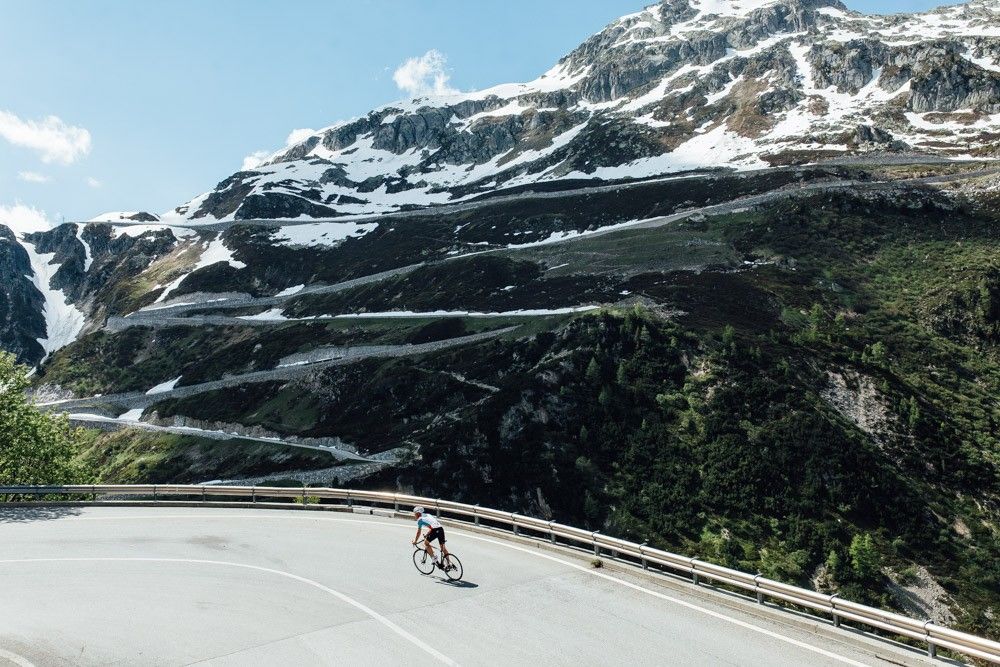
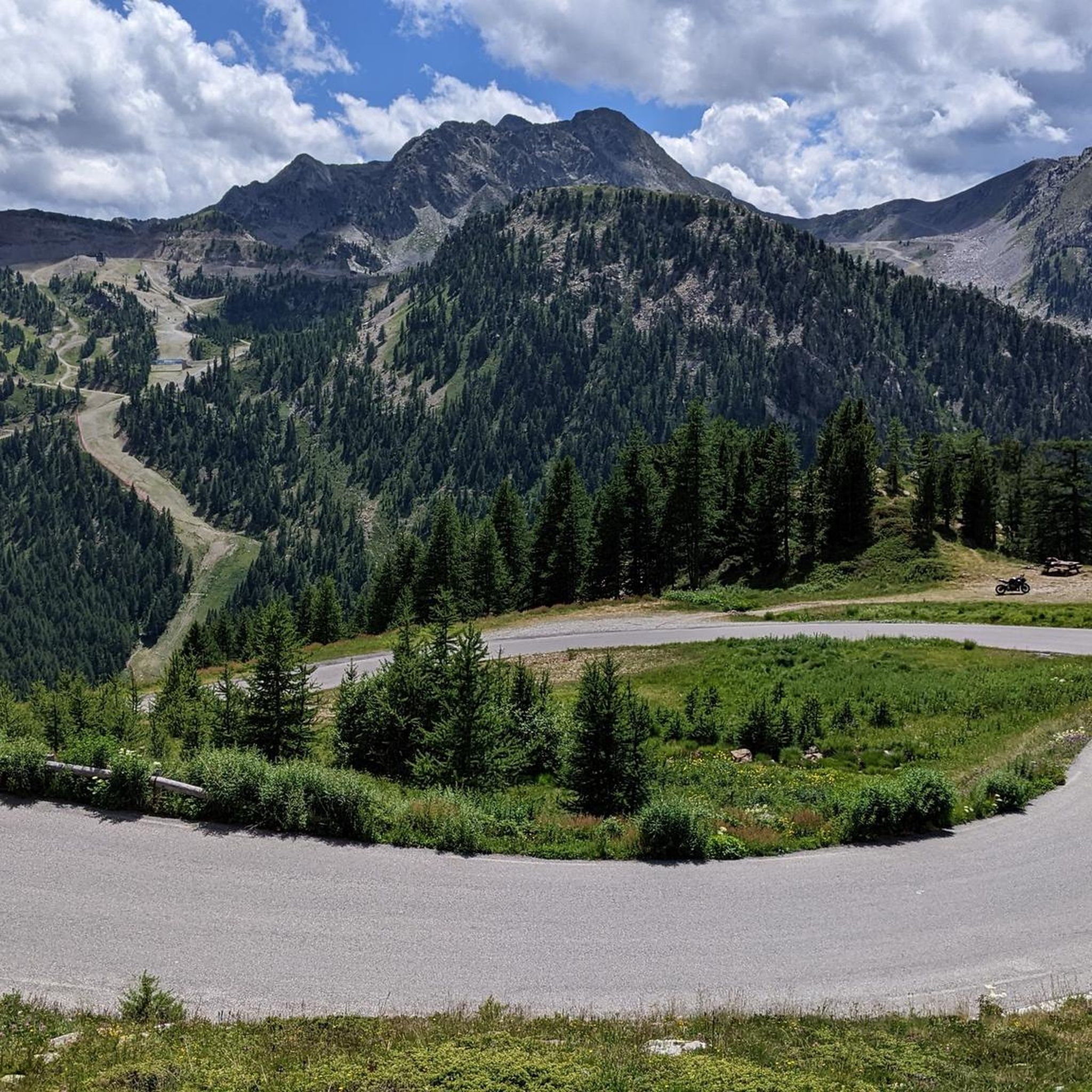
The western and French slope of the Col de la Lombarde is hard and long with 20 km and almost 1,500m of elevation gain. Until you reach the Isola 2000 ski resort, which is the main part of the climb, you travel along a road that goes up a very narrow valley. The first kms are the hardest, with an average of 9% and ramps above 10%. Afterwards, the slope softens and is very constant, with some rest sections. After the Isola 2000 station, we face the last 4 km where the slope increases to 8%, with several horseshoe curves and very beautiful views of the valley and the ski resort. A port that remembers the old mountain passes. A pleasure for the senses.
1
0
Since the Tour arrived at the Isola 2000 ski resort in 1993, I really wanted to climb up to the Col de la Lombarde from the French side. I managed to do it in 2016 with a couple of colleagues and friends from work. I had previously managed to reach the Col de la Lombarda from its Italian side. Between the two, I prefer the Italian side, much harder and more spectacular, with better views and a very beautiful and legendary road. Here is the link with the details of the altimetry published by @cyclingcols --> http://www.cyclingcols.com/col/Lombarde_Lombarda
2
2
Frequently Asked Questions
Which mountain passes around Isola are particularly challenging for cyclists?
For cyclists seeking a significant challenge, the Col de la Lombarde offers a sustained climb over 20 kilometers with almost 1,500 meters of elevation gain from the French side, averaging 6.87% and reaching over 10% in sections. Similarly, the Col de la Couillole presents a demanding 16-kilometer ascent from Saint Sauveur sur Tinée, with an average gradient of 7.3% and maximums of 9.3%. Both have been featured in major cycling events.
Where can I experience breathtaking panoramic views and spot wildlife near Isola?
The Col de la Lombarde is renowned for its breathtaking panoramic views at the summit and is considered a wild pass, attracting many wildlife photographers in the summer. Additionally, the nearby Col de la Bonette, France's highest road pass, offers a spectacular 360-degree panorama of the surrounding Alps.
Are there specific hiking routes or tours associated with the mountain passes around Isola?
Yes, for hikers, Col Tesina is a notable alpine pass at 2400 meters, often used as a transit point for the "Giro dei laghi di Sant'Anna" (Tour of the Lakes of Saint Anne). You can find various running and hiking routes in the area, including loops around the Col de la Lombarde. For more options, explore the Running Trails around Isola guide.
What is the best time of year to visit the mountain passes around Isola?
The mountain passes in the Isola region, particularly those at higher altitudes like the Col de la Lombarde, are typically open and best visited during the warmer months, generally from late spring to early autumn. The Col de la Couillole, for instance, is usually accessible for six to seven months of the year. This period offers the best conditions for cycling, hiking, and scenic drives.
What kind of historical significance do the mountain passes near Isola hold?
The region around Isola has a unique history, particularly concerning its border with Italy. Until 1947, the area where Isola 2000 now stands was Italian territory. The construction of the road over the Col de la Lombarde was a direct result of the Treaty of Paris, connecting France and Italy and marking a significant historical shift in the region.
Are there any specific cycling routes that incorporate multiple mountain passes in the Isola area?
Yes, the Isola region is popular for multi-pass cycling routes. For example, you can find challenging road cycling routes that combine the Col de la Lombarde with other local climbs. For detailed routes and options, refer to the Cycling around Isola and Road Cycling Routes around Isola guides.
What makes the Col de la Bonette a notable destination, even if it's not directly in Isola?
While not directly 'in' Isola, the Col de la Bonette is a highly significant pass located nearby. It holds the distinction of being France's highest road pass, reaching an altitude of 2,802 meters. Its extreme elevation, spectacular panoramic views, and frequent inclusion in challenging Tour de France stages make it a formidable and sought-after destination for cyclists and motorists in the wider region.
What are some of the general tips for visiting the mountain passes around Isola?
Visitors often highlight the sustained climbs and beautiful scenery. For passes like the Col de la Lombarde, be prepared for steep sections and potentially narrow roads, especially after Isola 2000. It's advisable to check road conditions, especially in the upper sections of high-alpine routes, as debris or boulders can be present. Always exercise caution, particularly with motorized two-wheelers.
What types of outdoor activities are popular near the mountain passes of Isola?
The mountain passes around Isola are a hub for various outdoor activities. Cycling, including road cycling and touring, is extremely popular due to the challenging climbs and scenic routes. Hiking and running are also favored, with numerous trails available, some of which pass through the Mercantour National Park. You can find detailed routes in the Running Trails around Isola and Cycling around Isola guides.
Are there any specific villages or points of interest along the routes to these mountain passes?
When ascending the Col de la Couillole from Saint Sauveur sur Tinée, you'll pass through two typical villages: Roure and Roubion. Roubion is known for having a nice restaurant, Auberge du Moulin. For the Col de la Lombarde, the route passes through the ski resort of Isola 2000, where thirsty travelers can find a fountain.
What are the typical road conditions like on these mountain passes?
Road conditions can vary. For instance, the ascent of the Col de la Bonette is generally in good condition with moderate gradients and light traffic, though caution is advised for tight bends and potential debris in the upper sections. Passes like the Col de la Lombarde can have very narrow roads, especially after Isola 2000, and sustained steep sections. Always be prepared for alpine road conditions.
Most popular attractions around Isola

Get inspired with the komoot mobile app


Explore more
See even more epic mountain passes by checking out these guides around Isola:
