Attractions and Places To See around Saint-Éloi - Top 20
Best attractions and places to see around Saint-Éloi are primarily located in the Ain department of France, a region known for its historical significance and diverse landscapes. The area features a mix of medieval settlements, religious buildings, and historical sites. Visitors can explore well-preserved architecture and learn about the region's past.
Best attractions and places to see around Saint-Éloi
- The most popular attraction is Medieval town of Pérouges, a historical site that offers a journey back to the Middle…
Last updated: July 7, 2026
Medieval town of Pérouges
Highlight • Historical Site
Translated by Google •
Tip by

Medieval town of Pérouges
Highlight • Settlement
Translated by Google •
Tip by

Sign up now to discover places like this
Get recommendations on the best single tracks, peaks, & plenty of other exciting outdoor places.
Sign up for free
Abbey of Notre-Dame des Dombes
Highlight • Religious Site
Translated by Google •
Tip by

Sainte-Madeleine Church of Le Montellier
Highlight • Religious Site
The history of this pleasant flowered village merges with that of the castle. The origin of the name of Montellier was glimpsed by the Burgundian …
Translated by Google •
Tip by
Fortifications
Highlight • Other
Translated by Google •
Tip by

Sign up for free to discover even more attractions around Saint-Éloi.
Sign up for free
Already have an account?
Start today with a free account
Your next adventure awaits.
Login or Signup

Tips from the Community

The site features the remains of fortifications dating from the 11th to the 19th centuries. The former castle of the Lords of Loyes (ruins of the Château de la Pie), the modern castle, the formal garden, and the kitchen garden are all visible. In the 18th century, major work was carried out on the Château de Loyes, but a fire destroyed the tops of the towers and the roof. In 1840, renovations were undertaken, including the construction of outbuildings, a woodshed/cellar, and stables. At the end of the 19th century, a church was built, dividing the castle mound in two. The castle entrance was modified at the end of the 19th century, along with the neo-Gothic wall. The garden, originally laid out in the early 18th century, was modernized by Luizet and Barret at the end of the 19th century; a landscaped garden was added to the formal garden. The castle mound is accessible via a footpath. Inside, a 17th-century staircase with ramps is adorned with the coats of arms of its various owners, painted in the 19th century. https://pop.culture.gouv.fr/notice/merimee/PA01000030
0
0

A beautiful 19th-century Cistercian abbey built in a remarkable brick style. Don't hesitate to make a short detour to see it. The church and atrium are free to visit. It is closed on Tuesdays. A local produce shop is located at the entrance to the abbey, featuring cheeses and apple products made on the abbey farm—a great way to recharge your batteries!
0
0

Nice little town, very calm and relaxing.
0
0

Lovely place with direct cheese sales! The surrounding roads are pleasant.
0
0

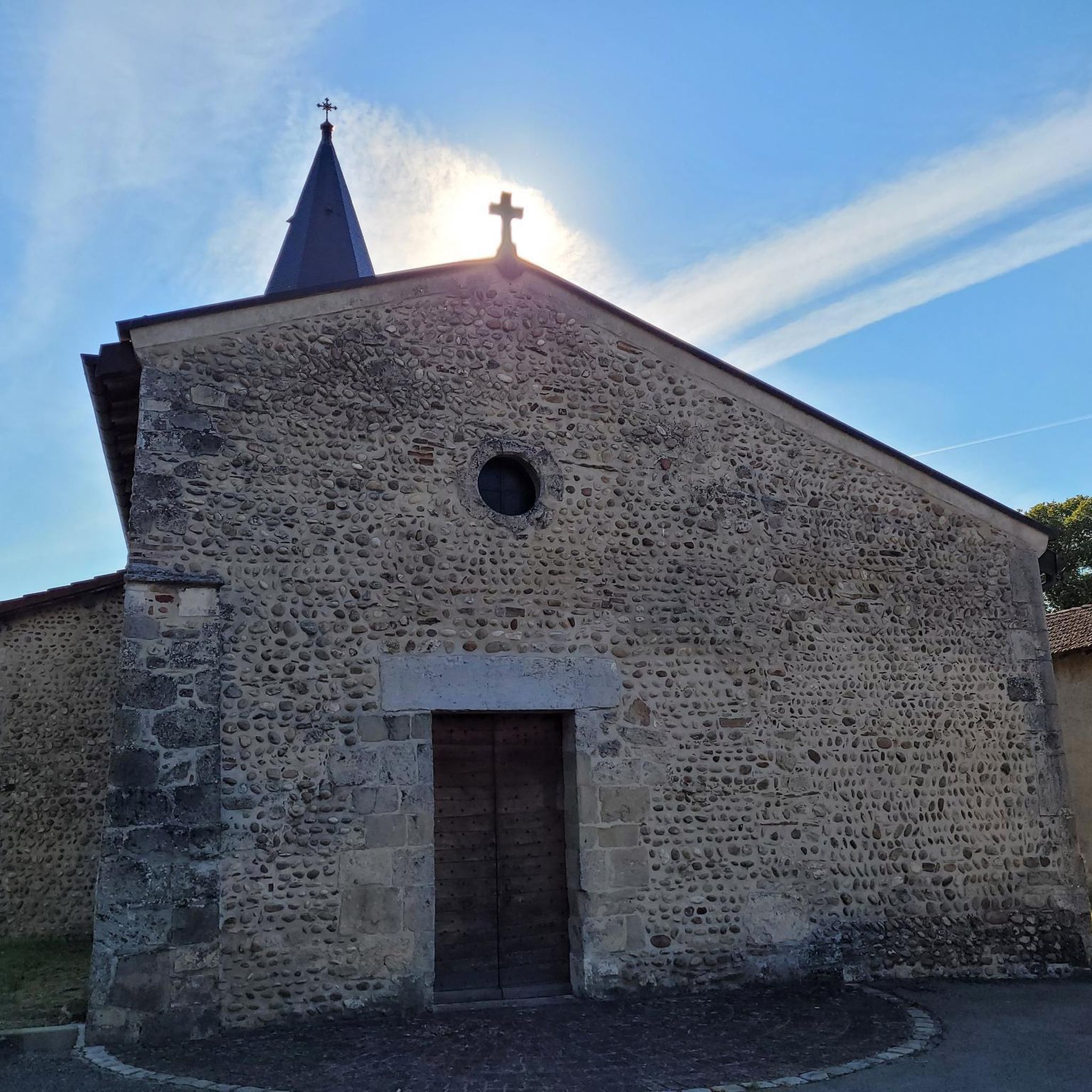
After the Blessed Virgin Mary, "Sainte MARIE MADELEINE" is the woman most frequently mentioned in the writings of the New Testament. Originally called "Mary of Magdala", after her place of origin on the Sea of Galilee, the name "Mary Magdalene" has evolved over time. According to the biblical accounts, she is one of the women and men who followed Jesus of Nazareth. According to the testimony of the evangelists, Mary Magdalene is also one of the three women who, after the crucifixion and burial of Jesus Christ, wanted to anoint the body on Easter morning after the Sabbath rest, and the very first person who ever met the Risen Christ. In theology, she is therefore also known as the "Apostle of the Apostles". The feast day of Sainte Marie-Madeleine in the calendar of saints is July 22nd.
0
0

Very beautiful medieval city. The village of my childhood. Absolutely taste the pancakes! 😉🍰
0
0

Beautiful church with its little bus stop for a little snack break
0
0

The medieval city of Pérouges is a true jewel of the past. Located to the east of Lyon, it transports us to a distant era, where cobbled streets and houses made of pebbles and bricks tell stories of yesteryear. With its 80 inhabitants living within its walls and 1,200 residents in the commune, Pérouges is an inhabited village which freely welcomes visitors all year round.
0
0
Frequently Asked Questions
What historical sites can I explore around Saint-Éloi, Ain?
The region around Saint-Éloi, located in the Ain department of France, is rich in history. You can visit the Medieval town of Pérouges, which is ranked among the most beautiful villages in France and offers a journey back to the Middle Ages. Another significant historical site is the Abbey of Notre-Dame des Dombes, a 19th-century Cistercian abbey known for its remarkable brick style and its role in draining the Dombes region's swamps.
Are there family-friendly attractions in the Saint-Éloi area?
Yes, several attractions around Saint-Éloi are suitable for families. The Medieval town of Pérouges is a great option, offering a captivating historical experience for all ages with its cobbled streets and unique church-fortress. The Abbey of Notre-Dame des Dombes also welcomes families, with its church and atrium free to visit.
What kind of outdoor activities can I do near these attractions?
The area around Saint-Éloi offers various outdoor activities, particularly hiking and cycling. You can find numerous routes that take you through the scenic landscapes. For hiking, explore options like the "General Adolphe Marie Messimy – Medieval town of Pérouges loop" or the "Medieval town of Pérouges – Aubépin Pond loop." Cyclists can enjoy routes such as the "Medieval town of Pérouges – Medieval town of Pérouges loop from Rignieux-le-Franc." You can find more details on these and other routes in the hiking guide and cycling guides for Saint-Éloi.
Are there easy hiking trails suitable for beginners or casual walkers?
Yes, there are several easy hiking trails around Saint-Éloi. For instance, the "General Adolphe Marie Messimy – Medieval town of Pérouges loop from Pérouges" is an easy 1.7 km route. Another easy option is the "Medieval town of Pérouges – Aubépin Pond loop from Pérouges," which is about 2.9 km. These routes are perfect for a leisurely stroll to enjoy the local scenery. More easy routes can be found in the hiking guide.
What do visitors enjoy most about the attractions around Saint-Éloi?
Visitors particularly appreciate the historical immersion offered by the Medieval town of Pérouges, often describing it as a trip back to the Middle Ages with its cobbled streets and unique architecture. The Abbey of Notre-Dame des Dombes is admired for its beautiful 19th-century brick style. The region's charm and historical significance are consistently highlighted by the komoot community, with over 120 upvotes and 30 photos shared.
Can I find religious buildings with historical significance in the area?
Absolutely. The Abbey of Notre-Dame des Dombes is a prominent 19th-century Cistercian abbey. Additionally, the Sainte-Madeleine Church of Le Montellier, with origins in the 12th century, offers insights into the area's heritage and is intertwined with the history of the local castle.
Are there any ancient fortifications or castle ruins to see?
Yes, you can explore the Fortifications near Saint-Éloi. These are the remains of the Château de Loyes, featuring structures dating from the 11th to the 19th centuries. While the castle itself may be closed, the impressive exterior and the castle mound, accessible via a footpath, provide a fascinating glimpse into the region's defensive past.
What are the best cycling routes around Saint-Éloi?
For road cycling, you can tackle routes like the "Medieval town of Pérouges – Medieval town of Pérouges loop from Rignieux-le-Franc" (48 km, moderate) or the more challenging "Lac d'Ambléon – Col de Fay loop from Meximieux-Pérouges" (108 km, difficult). For touring bicycles, consider the "Chalamont Village Center loop from Rignieux-le-Franc" (24 km, moderate) or the "Fortifications loop from Rignieux-le-Franc" (11.7 km, easy). More options are available in the road cycling guide and cycling guide.
Is there a specific time of year that is best to visit Saint-Éloi's attractions?
The period between April and August is often recommended for visiting the Medieval town of Pérouges, as tourist activities are in full swing, offering a vibrant atmosphere and different perspectives on the city. Generally, spring and summer provide pleasant weather for exploring historical sites and engaging in outdoor activities.
Are there any unique local specialties or products to try when visiting?
When visiting the Medieval town of Pérouges, don't miss the local specialty: the Peruvian pancake, also known as the unmissable sugar pie. At the Abbey of Notre-Dame des Dombes, you can find a local produce shop featuring cheeses and apple products made on the abbey farm, offering a taste of the region's agricultural heritage.
What is the most popular attraction in the Saint-Éloi area?
The most popular attraction is the Medieval town of Pérouges. It is highly regarded for its historical significance and charm, offering visitors a unique experience of a well-preserved medieval settlement.
Most popular routes around Saint-Éloi
Most popular attractions around Saint-Éloi

Get inspired with the komoot mobile app


Explore more
Still not found the Highlight you’re looking for? See guides of the top attractions in other regions:
