Attractions and Places To See around Sermérieu - Top 20
Best attractions and places to see around Sermérieu include a blend of historical heritage, cultural sites, and natural beauty. Located south of the Balcons du Dauphiné, this commune offers visitors diverse landscapes and points of interest. The area features impressive churches, historic castles, and natural viewpoints with panoramic views. Visitors can explore various sites, from ancient landmarks to scenic trails.
Best attractions and places to see around Sermérieu
- The most popular attractions is Groslée Bridge, a bridge that allows…
Last updated: July 7, 2026
Étang de la Rosière
Highlight • Lake
Translated by Google •
Tip by

Chateau de Chapeau Cornu
Highlight • Other
Translated by Google •
Tip by

Sign up now to discover places like this
Get recommendations on the best single tracks, peaks, & plenty of other exciting outdoor places.
Sign up for free
Tomb of Paul Claudel
Highlight • Historical Site
Translated by Google •
Tip by
Groslée Bridge
Highlight • Bridge
Translated by Google •
Tip by

Greenway from Crémieu to Arandon-Passins
Highlight (Segment) • Cycleway
Translated by Google •
Tip by

Sign up for free to discover even more attractions around Sermérieu.
Sign up for free
Already have an account?
Start today with a free account
Your next adventure awaits.
Login or Signup


Tips from the Community

Found somewhat by chance and at a very affordable price, this hotel restaurant is a superb stopover for a bike ride!
0
0

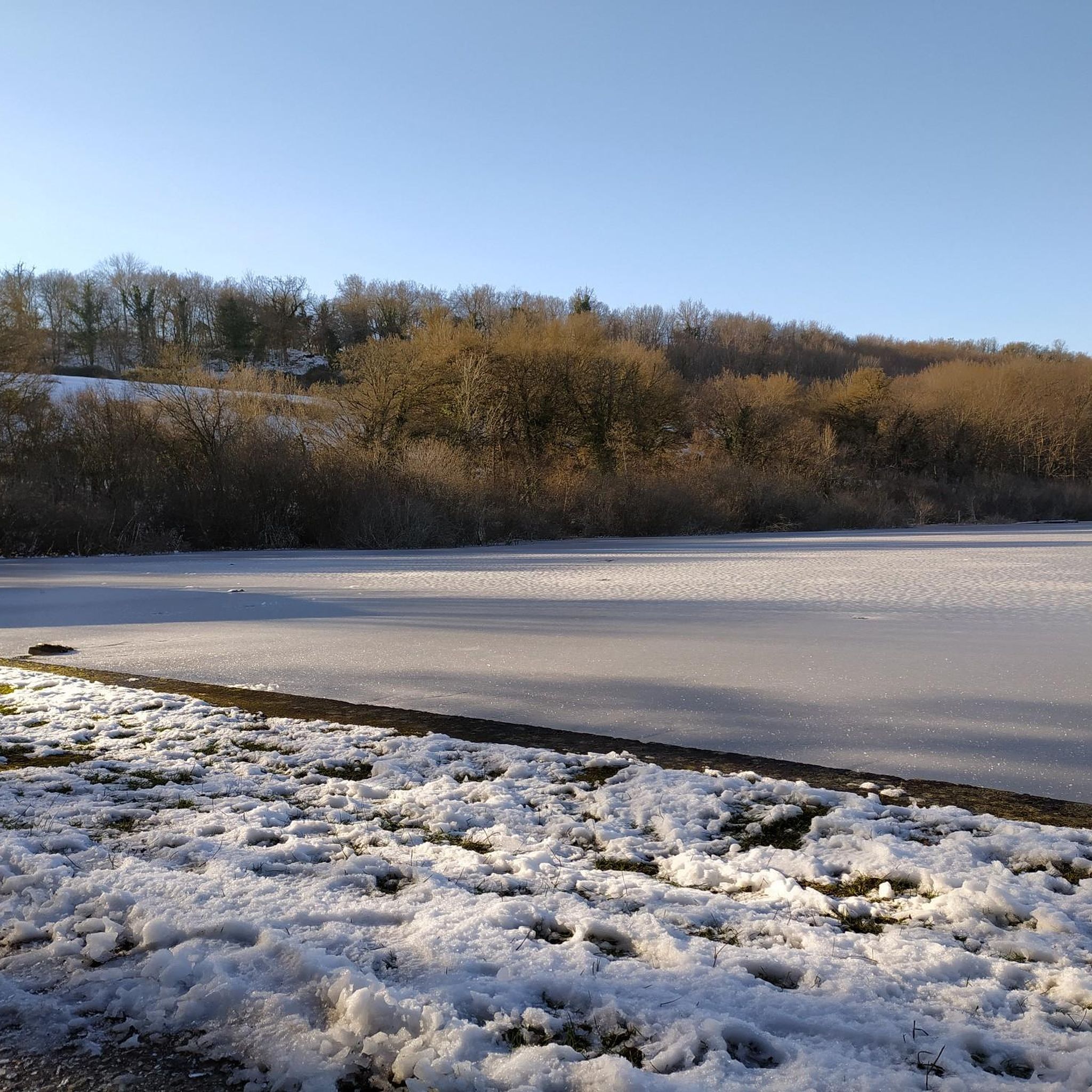
Lovely view of the pond. A little cool spot when it's hot.
0
0

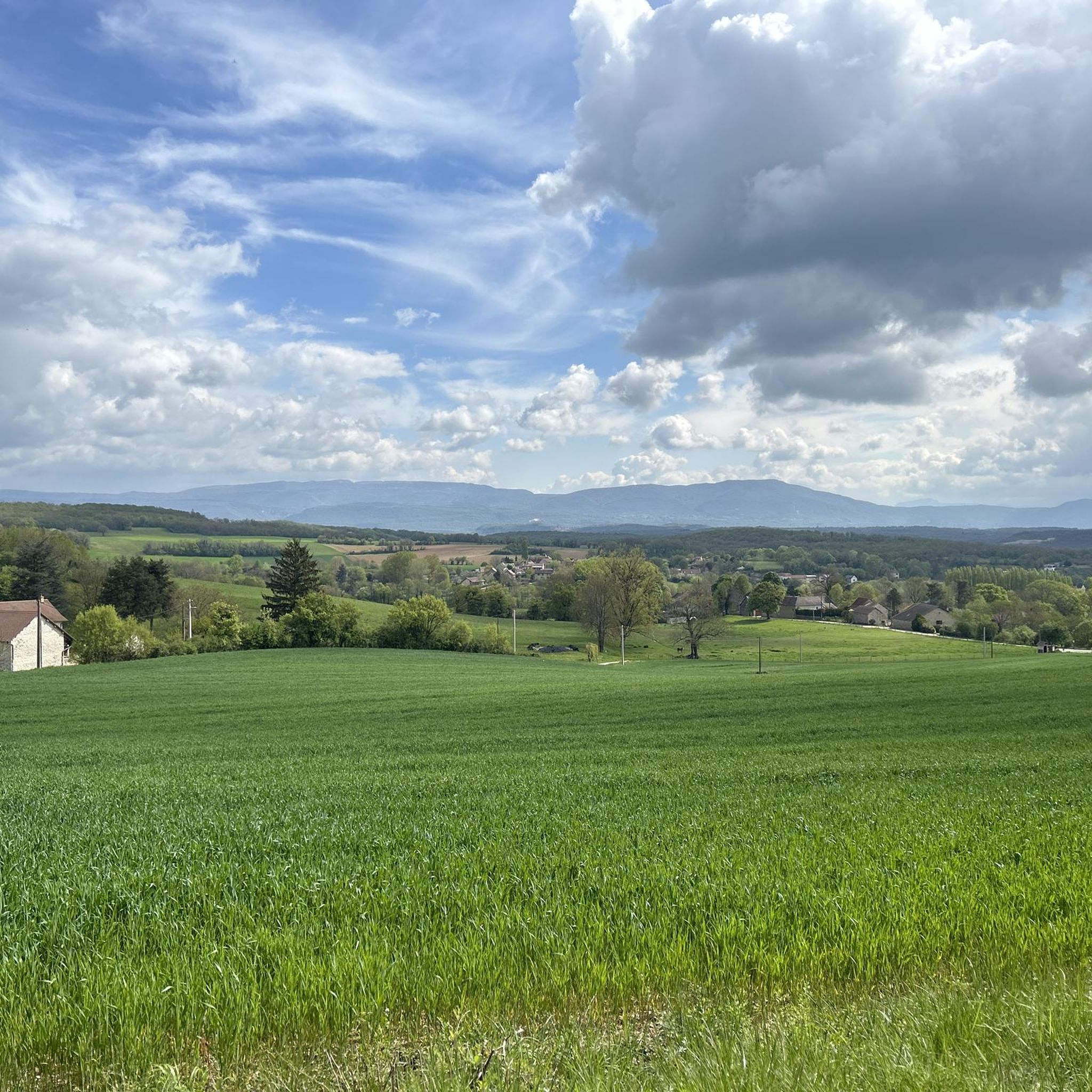
Beautiful view of the Rhône and the Jura mountains
0
0

A big surprise was the reference to the grave of this poet and philosopher. His grave is located in a corner of the park of the Château de Brangues and is open to the public.
0
0

It is at the bottom of the park, at the end of a small path that winds through the undergrowth, that the poet's grave is located. In accordance with his wishes, Paul Claudel was buried in Brangues, alongside one of his grandsons, Charles-Henri Paris, who died in 1938 at the age of two. It is in this land of Brangues, next to this child and a tall poplar, that the patriarch rests. His wife, Reine Sainte-Marie-Perrin, was buried next to him in 1973. (Access to the tomb is free and signposted for visitors) The epitaph. “Here lie the remains and the semen of Paul Claudel” This inscription is inspired by the epistle of Saint Paul to the Corinthians: “this seed which we put in the ground in the fall, seems to die during the winter, but germinates and comes back to life in the spring”. This is a message of hope. Already in 1892 Paul Claudel addressed this theme: “Below reason, below consciousness, below sense, Below instinct and every lit part of ourselves, Behold, completely lost in a revolt like that of the Conception, We feel that we can no longer defend this within ourselves, Which is like the germinal nucleus, the intimate grain, the seed of our own name! » (Paul Claudel – The Young Girl Violaine) Source: ABVL
2
0
The Groslée bridge is a suspension bridge crossing the Rhône between the municipalities of Groslée-Saint-Benoit (Ain) and Brangues (Isère). Designed by Ferdinand Arnodin and completed in 1912, it has a main span of 177.21 m in length. Source: Wikipedia
0
0

Chapeau Cornu Castle was originally a fortified house built on the site of an ancient Roman camp. Between 800 and 1100, feudalism took hold. The sovereigns of Vienna and the Bishop created “rear fiefdoms” to ensure security and repel attackers. In the 12th and 13th centuries, there were two allied families: the Capellas and the Cornutis. It is by derivative of these 2 Latin names that “Chapeau Cornu” was born. In 1300, Amédée de Rossilon was governor of Chapeau Cornu. He left this property to his nephews Pierre and Louis Chapel. After Pierre's death in 1358, Louis succeeded him. Pierre will leave 2 daughters, one of whom Antonia marries the Knight Etienne Laure, Lord of Veyssillieu. The latter was killed by the English while fighting under Duguesclin. His son Jacquemont Laure avenged him and his daughter Béatrice married Imbert de Groslée, Seneschal of the King, in 1413. His sons and descendants remained in Chapeau Cornu until 1650. It was in 1601 that Chapeau Cornu took the name Château. But in 1638, the Castle fell into disuse. The last occupants, the Matthieu de Rame couple, left no children and in 1693, the property passed to Aymard Micha de Burcin. He expanded the estate through multiple purchases and died in 1755, donating all his property to his cousin Philippe Guillaume de Grammont. After the storming of the Bastille on the night of July 25 to 26, 1789, “the great fear” began. A band of rioters, determined to destroy the property of the squires, arrived in Chapeau Cornu at 1 a.m. The steward at the time had the idea of treating them as guests and opened the doors of the wine cellars to them. The damage underground is impressive: the undrinked wine is emptied but the castle remains intact. After the Revolution, the castle was purchased by Jean André Barge from the de Certeau family. He diverted the bed of the stream coming from the hill which then passed into the castle. He had the large buildings to the south-east and east built on the vault. Ruined, he sold part of the land to people from Vignolles. In 1855, the castle and 80 hectares surrounding it were bought by his son Ferdinand de Certeau. The estate remained in the family until 1891. The Bourgoin Court then ordered a judicial liquidation and had the property sold in several lots. Source: Vignieu website
1
0
Frequently Asked Questions
What historical and cultural sites can I explore in Sermérieu?
Sermérieu offers a rich historical heritage. You can visit the impressive Church of Sermérieu, a neo-Gothic edifice built in the 1870s, known for its sumptuous stained-glass windows. Another significant site is the Notre-Dame du Bel Amour, the Madonna of the Windmill, an imposing statue of the Virgin and Child that has crowned the old Ossée mill for over seven decades. Additionally, the 18th-century Château du Marteray, built on the remnants of a medieval fortified house, is set within a beautiful wooded park. You can also discover examples of vernacular heritage, such as historical fountains, ovens, and wash houses, throughout the hamlets.
Are there any natural viewpoints or scenic spots in the area?
Yes, Sermérieu boasts several natural viewpoints. The Orientation Table at Madone du Moulin à Vent offers exceptional panoramic views of the surrounding countryside, including the Alpine and pre-Alpine mountains from Bauges to Chartreuse, and encompassing Belledonne and Vercors. You can also enjoy lovely views of the Étang de la Rosière, a protected natural area ideal for relaxation and walks.
What outdoor activities are available around Sermérieu?
The region around Sermérieu is excellent for outdoor activities. You can explore various hiking trails, such as the "Sentier entre terre et pierre" (Path between land and stone), which allows you to discover both natural and human heritage. For more structured routes, consider exploring options like the "Chateau de Chapeau Cornu – Poulet Tower loop" or the "Étang Bouvet – Château de Montagnieu loop." Find more hiking routes on the Hiking around Sermérieu guide. Cycling enthusiasts can enjoy the Greenway from Crémieu to Arandon-Passins, a former railway converted into a scenic path, or explore other routes on the Cycling around Sermérieu guide. Mountain biking trails are also available, with options like the "Étang de Lancin – Blue Valley loop." Discover more on the MTB Trails around Sermérieu guide.
Are there family-friendly attractions or activities in Sermérieu?
Yes, Sermérieu offers several family-friendly options. The Étang de la Rosière is a protected natural area perfect for family walks and relaxation, with hiking trails starting directly from the pond. Equipped picnic areas are available at Madone du Moulin à Vent, Les Ferrandières, and Le Marteray, providing ideal spots for family meals amidst nature. The Tomb of Paul Claudel is also listed as family-friendly, offering a quiet, reflective visit.
Where can I find a good spot for a picnic in Sermérieu?
Sermérieu provides several well-equipped picnic areas where you can enjoy meals outdoors. Notable spots include the picnic areas at Madone du Moulin à Vent, Les Ferrandières, and Le Marteray. These locations allow visitors to relax and dine amidst the natural beauty of the region.
What is the <a href="https://www.komoot.com/highlight/3543174" target="_blank" rel="noopener">Chateau de Chapeau Cornu</a> and its history?
The Chateau de Chapeau Cornu is a historic castle that was originally a fortified house built on the site of an ancient Roman camp. Its name derives from two allied families, Capellas and Cornutis, from the 12th and 13th centuries. The castle has a rich history, including surviving the French Revolution when a clever steward saved it by offering rioters wine. While it's a private venue today, its beauty can be appreciated from the outside.
Can I visit the <a href="https://www.balconsdudauphine-tourisme.com/en/cultural-site/church-of-sermerieu/" target="_blank" rel="noopener">Church of Sermérieu</a>?
The Church of Sermérieu is an impressive neo-Gothic church built in the 1870s. It replaced an older Romanesque church and is particularly noted for its sumptuous stained-glass windows, one of which depicts Saint Bruno, acknowledging the Carthusian order's contribution to its construction. For specific visiting hours or mass times, it's advisable to check local information or the official tourism site for Sermérieu.
What is the <a href="https://www.komoot.com/highlight/3217462" target="_blank" rel="noopener">Groslée Bridge</a> and its significance?
The Groslée Bridge is a significant structure over the Rhône River, allowing passage between the Ain and Isère departments. It is located on the Via Rhôna, making it a key point for cyclists and travelers following this route. It's known for its scenic views of the river.
What is the <a href="https://www.komoot.com/highlight/5117553" target="_blank" rel="noopener">Tomb of Paul Claudel</a>?
The Tomb of Paul Claudel is the final resting place of the renowned French poet, playwright, and diplomat. Located in Brangues, near Sermérieu, it is situated at the bottom of the Château de Brangues park, accessible via a small path. Paul Claudel chose this spot to be buried alongside one of his grandsons, under a tall poplar tree. The epitaph on his tomb, "Here lie the remains and the semen of Paul Claudel," is inspired by Saint Paul's epistle, conveying a message of hope and rebirth.
Are there any specific trails for cycling or mountain biking?
Yes, the area offers dedicated trails for cycling and mountain biking. The Greenway from Crémieu to Arandon-Passins is a popular choice for cyclists, being a former railway line converted into a greenway, offering a scenic route through a small gorge and woods. For mountain bikers, trails like the "Blue Enduro MTB Descent – River break loop" or the "Étang de Lancin – Blue Valley loop" provide more challenging options. You can find more details on the MTB Trails around Sermérieu guide and the Cycling around Sermérieu guide.
What do visitors particularly enjoy about the attractions around Sermérieu?
Visitors appreciate the blend of historical charm and natural beauty. The Chateau de Chapeau Cornu is admired for its beauty, even from the outside. The Greenway from Crémieu to Arandon-Passins is highly recommended for its pleasant, off-road cycling experience through nature. The Étang de la Rosière is valued as a relaxing and protected natural spot for walks. Overall, the community enjoys the diverse landscapes and the opportunity to explore both ancient landmarks and scenic routes.
Are there any unique local heritage features to discover?
Beyond the major landmarks, Sermérieu is rich in vernacular heritage. As you explore the various hamlets, you can discover historical fountains, traditional ovens, and old wash houses. These elements offer a glimpse into the daily life and architectural traditions of the region from past centuries.
Most popular routes around Sermérieu

Get inspired with the komoot mobile app


Explore more
Still not found the Highlight you’re looking for? See guides of the top attractions in other regions:
