Attractions and Places To See around Soleymieu - Top 20
Best attractions and places to see around Soleymieu offer a mix of historical sites and natural landscapes within the Balcons du Dauphiné. This commune provides opportunities to explore local heritage and scenic areas. The region features historical landmarks and natural spaces for visitors to discover.
Best attractions and places to see around Soleymieu
- The most popular attractions is Crémieu, medieval town, a historical site known for its architectural heritage. This small city features a Delphinal castle, a 16th-century market…
Last updated: July 7, 2026
Étang de la Rosière
Highlight • Lake
Translated by Google •
Tip by

Chateau de Chapeau Cornu
Highlight • Other
Translated by Google •
Tip by

Sign up now to discover places like this
Get recommendations on the best single tracks, peaks, & plenty of other exciting outdoor places.
Sign up for free
Château de Bienassis
Highlight • Castle
Translated by Google •
Tip by
Cingle Castle
Highlight • Castle
Translated by Google •
Tip by

Crémieu, medieval town
Highlight • Historical Site
Translated by Google •
Tip by

Sign up for free to discover even more attractions around Soleymieu.
Sign up for free
Already have an account?
Start today with a free account
Your next adventure awaits.
Login or Signup


Tips from the Community

Found somewhat by chance and at a very affordable price, this hotel restaurant is a superb stopover for a bike ride!
0
0

Beautiful little town, quite touristy, but worth the detour
0
0

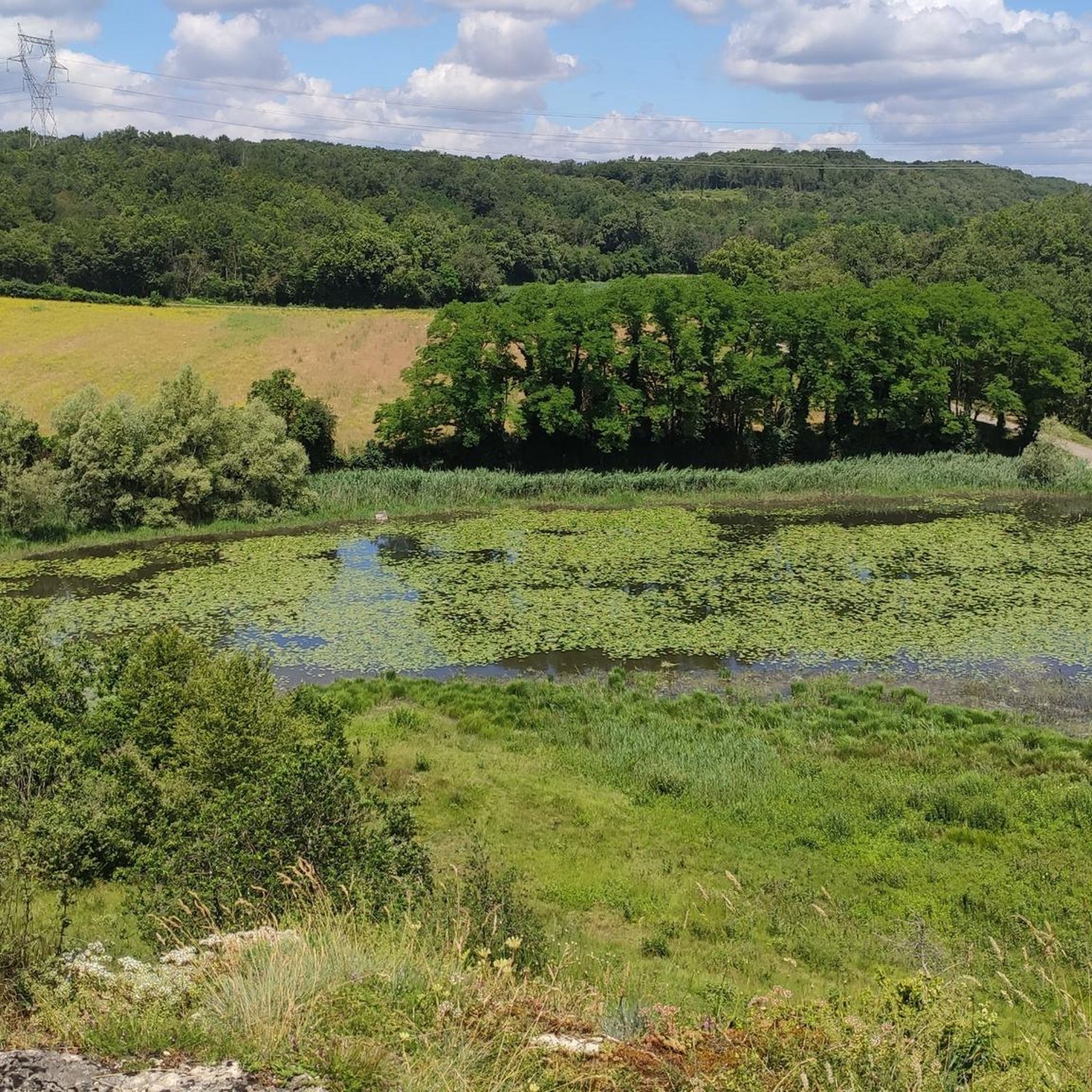
Lovely view of the pond. A little cool spot when it's hot.
0
0

Although first mentioned in 1540, the Cingle fortified house was undoubtedly built in the second half of the 14th century by the Pèlerin family. Originally composed of a main tower and a wing back to the west, it perhaps originally included a curtain wall. During the 15th century, the south wing was extended towards the west, a main building comprising a lower room and an upper room was attached to the north of the main tower, while a turret occupied on the first floor by an oratory and on the second by a dovecote is built to the east, projecting. A wing including the kitchen on the ground floor is also built at right angles to the north of the courtyard. The farm itself retains some architectural elements dating from the 16th century. Source: Ministry of Culture
1
0
The Bienassis fortified house, built by the Vallin family at the end of the 14th century, was organized around an enclosed courtyard and included a pavilion surrounded by watchtower turrets. The current building was completed in 1897 for Casimir Gournet, who wanted to give the old feudal residence the appearance of a medieval castle. Alphonse de Lamartine made several stays in Bienassis with his friend Nicolas Prosper Guichard, between 1804 and 1808. The castle, built of limestone rubble, consists of an L-shaped building covered with a long-pitched roof covered with mechanical tiles extended to the south by a high quadrangular tower with a porch in the work. The north wing has four levels of elevation: three cellars on the basement floor, a square floor and an attic floor. The tower rises on three levels: a ground floor with ribbed vaults and two square floors, the buildings are crowned with false machicolation. The corner turrets are covered with conical slate roofs. The stained glass windows of the ground floor living room are decorated with two bust-length women and two bust-length men in rondels. The coat of arms of the Joubert de Montlevon family can be found on one of the windows of the first living room on the ground floor. In the library, two shields with scrolling scroll motifs, a shield decorated with three female heads, a shield decorated with a passing griffin, and a shield decorated with two hammers with the initials C G for Casimir Gournet adorn the windows. Source: Châteaux de France
0
0
Chapeau Cornu Castle was originally a fortified house built on the site of an ancient Roman camp. Between 800 and 1100, feudalism took hold. The sovereigns of Vienna and the Bishop created “rear fiefdoms” to ensure security and repel attackers. In the 12th and 13th centuries, there were two allied families: the Capellas and the Cornutis. It is by derivative of these 2 Latin names that “Chapeau Cornu” was born. In 1300, Amédée de Rossilon was governor of Chapeau Cornu. He left this property to his nephews Pierre and Louis Chapel. After Pierre's death in 1358, Louis succeeded him. Pierre will leave 2 daughters, one of whom Antonia marries the Knight Etienne Laure, Lord of Veyssillieu. The latter was killed by the English while fighting under Duguesclin. His son Jacquemont Laure avenged him and his daughter Béatrice married Imbert de Groslée, Seneschal of the King, in 1413. His sons and descendants remained in Chapeau Cornu until 1650. It was in 1601 that Chapeau Cornu took the name Château. But in 1638, the Castle fell into disuse. The last occupants, the Matthieu de Rame couple, left no children and in 1693, the property passed to Aymard Micha de Burcin. He expanded the estate through multiple purchases and died in 1755, donating all his property to his cousin Philippe Guillaume de Grammont. After the storming of the Bastille on the night of July 25 to 26, 1789, “the great fear” began. A band of rioters, determined to destroy the property of the squires, arrived in Chapeau Cornu at 1 a.m. The steward at the time had the idea of treating them as guests and opened the doors of the wine cellars to them. The damage underground is impressive: the undrinked wine is emptied but the castle remains intact. After the Revolution, the castle was purchased by Jean André Barge from the de Certeau family. He diverted the bed of the stream coming from the hill which then passed into the castle. He had the large buildings to the south-east and east built on the vault. Ruined, he sold part of the land to people from Vignolles. In 1855, the castle and 80 hectares surrounding it were bought by his son Ferdinand de Certeau. The estate remained in the family until 1891. The Bourgoin Court then ordered a judicial liquidation and had the property sold in several lots. Source: Vignieu website
1
0
Nice view of the Chapeau Cornu castle from the road.
0
0
Rosière Pond NATURAL HERITAGE Rosière Pond BACK TO THE LIST Rosière Pond© Martial-Couderette The Rosière pond is located to the north-east of the town of Bourgoin-Jallieu on the edge of the town of Ruy-Montceau and offers an ideal relaxing setting. The association “Les Amis de Rosière et de la Nature” manages the pond made available by the city. The Rosière pond, fed by the Loudon stream, was built in the 18th century to power a hemp mill (the current restaurant). This pond was the property of the GENIN family for a long time before being bought by the town of Bourgoin-Jallieu in 1978. Since then, the town of Bourgoin-Jallieu has done everything possible to make this site a protected natural place, walks and hikes and a fishing spot. Many hiking trails start from the pond. Source: Isère Tourism
1
0
Frequently Asked Questions
What historical sites can I visit in and around Soleymieu?
Soleymieu and its surroundings are rich in history. You can explore the 12th-century Saint-Romain Church, the unique Soleymieu Oven, and the 14th-century Couvaloup-Montagnieu Fortified House, which occasionally opens to the public during European Heritage Days. Nearby, the medieval town of Crémieu offers a Delphinal castle, a 16th-century market hall, and an Augustinian cloister. Other notable historical structures include the Chateau de Chapeau Cornu and the Château de Bienassis.
Are there any natural attractions or outdoor spaces to enjoy near Soleymieu?
Yes, for nature lovers, the La Rama Sensitive Natural Space provides an opportunity to experience local flora and fauna. The Étang de la Rosière is a protected natural place that offers a relaxing setting and is popular for fishing, with several hiking trails starting from its shores.
What outdoor activities can I do near these attractions?
The region around Soleymieu offers various outdoor activities. You can enjoy cycling or hiking along The Greenway, an 18-kilometer route developed on an old railway line. For more structured routes, there are numerous MTB Trails, Running Trails, and Road Cycling Routes available, catering to different difficulty levels.
Are there family-friendly activities around Soleymieu?
Absolutely. The medieval town of Crémieu is considered family-friendly, offering an engaging historical experience. The Étang de la Rosière is also a great spot for families, providing a tranquil environment for walks and picnics, and it's a popular fishing location.
What are some popular walking or hiking options in the area?
You can enjoy walks around the Étang de la Rosière, where many hiking trails begin. The Greenway also provides an excellent 18-kilometer path suitable for both cyclists and hikers. For more specific routes, you can explore the running trails around Soleymieu, which include easy to moderate loops like the Château de Montagnieu loop.
What do visitors enjoy most about the attractions around Soleymieu?
Visitors particularly appreciate the rich architectural heritage of the medieval town of Crémieu, noting its charming narrow streets, market hall, and cloister. The Étang de la Rosière is loved for its ideal relaxing setting and as a protected natural place. Many also enjoy the scenic views of castles like Chateau de Chapeau Cornu, even if just from the road.
Is there a good place for cycling near Soleymieu?
Yes, The Greenway is an excellent option for cyclists, offering an 18-kilometer route that connects Crémieu to Arandon-Passins and further links to the ViaRhôna. Additionally, there are numerous Road Cycling Routes and MTB Trails in the wider Soleymieu area for various skill levels.
Can I see any castles or fortified houses in the region?
Yes, the region features several impressive castles and fortified houses. You can admire the Chateau de Chapeau Cornu, originally a fortified house on an ancient Roman camp, and the Château de Bienassis, known for its medieval appearance. The Cingle Castle, a 14th-century fortified house, is also a significant historical monument.
Are there any unique local heritage sites in Soleymieu itself?
Within Soleymieu, a unique local heritage site is the Soleymieu Oven, notable for being open on both sides and dating back to before 1826. The Saint-Romain Church, with its 12th-century origins, also stands as a significant historical and spiritual landmark.
What is the best way to explore the broader Balcons du Dauphiné region from Soleymieu?
Soleymieu is nestled in the Balcons du Dauphiné, making it a great base for regional exploration. The Greenway offers a direct connection for cyclists and hikers to other areas. For more comprehensive information on the region's cultural sites, you can visit the official tourism website: balconsdudauphine-tourisme.com.
How long should I allocate to visit the main attractions?
Visiting the medieval town of Crémieu could take a half-day to a full day to explore its streets, market hall, and cloister. A visit to the Étang de la Rosière for a walk or picnic might take 1-2 hours. For other historical sites like the churches or fortified houses, allow 1-2 hours per site, depending on your interest and whether they are open for interior visits.
Most popular routes around Soleymieu

Get inspired with the komoot mobile app


Explore more
Still not found the Highlight you’re looking for? See guides of the top attractions in other regions:
