Attractions and Places To See around Saint-Sornin - Top 20
Best attractions and places to see around Saint-Sornin, located in Charente-Maritime, offer a blend of historical sites, natural landscapes, and cultural experiences. The region is characterized by its proximity to the Seudre estuary and marshlands, historically significant for salt production and oyster farming. Visitors can explore ancient structures and picturesque villages that reflect the area's rich heritage and natural beauty.
Best attractions and places to see around Saint-Sornin
- The most popular attractions is Riberou Port, a settlement that serves…
Last updated: May 10, 2026
Mornac-sur-Seudre Marshes
Highlight • Natural
Once a fishing and …
Translated by Google •
Tip by

Riberou Port
Highlight • Settlement
Translated by Google •
Tip by

Sign up now to discover places like this
Get recommendations on the best single tracks, peaks, & plenty of other exciting outdoor places.
Sign up for free
Hiers
Highlight • Other
Translated by Google •
Tip by

Saint Peter's Church, Marennes
Highlight • Religious Site
Translated by Google •
Tip by

Saint Sulpice Church, Saint-Sulpice-d'Arnoult
Highlight • Religious Site
Tip by

Sign up for free to discover even more attractions around Saint-Sornin.
Sign up for free
Already have an account?
Start today with a free account
Your next adventure awaits.
Login or Signup


Tips from the Community

The port of Ribérou is a major heritage site in Saujon, bearing witness to a prosperous maritime past linked to the salt and wine trade. Transformed in the 19th century by ambitious works, it has now been reinvented as a place for living, relaxation, and preserving local history. 🛶 Origins and the Middle Ages The port of Ribérou takes its name from the Latin word ripa ("riverbank") or the Occitan word ribèira ("river"). It is located at the head of the Seudre estuary. It existed as early as the 11th century and became an important river and sea port thanks to its strategic position at the head of the estuary, used particularly for the salt trade—then called "white gold"—a highly sought-after product for preserving food. 🚢 Medieval Period and International Trade With the opening of British markets during the reigns of Eleanor of Aquitaine and Henry II Plantagenet, ships laden with wool, salt, wine, and other goods flocked to Ribérou. In the 16th century, the port exported local wines (such as cognac and pineau) throughout Europe. In 1577, during the Wars of Religion, the port was a strategic site: troops were stationed there, and battles took place. 🏗️ Decline, Reconstruction, and the 19th Century The estuary gradually silted up, making navigation difficult. By 1691, only smaller vessels could dock there. During the French Revolution, the sale of the tidal mill, which helped remove sediment, worsened the silting, leading to the port's decline. A modernization project began in 1822, but it wasn't until 1839 that an ambitious program was launched under the impetus of Jules Dufaure—a native of Saujon and Minister of Public Works—with the construction of sturdy quays, slipways, a lock bridge (marking the boundary between fresh and salt water), and reception facilities. In 1842, the work was completed, and the main quay was named Quai Dufaure in honor of this political support. 📉 Gradual Decline and Modernization The arrival of the railway in 1876 and the persistent problems of silting led to a decline in the port's traditional commercial activity, already facing competition from other transport networks. In the 20th century, the port gradually lost its economic importance but remained active for traditional fishing and became a place for pleasure boating, leisure, and local culture. Urban and tourism development projects (particularly in 2011–2012) modernized the port while preserving its historical charm. 🌊 Today The port of Ribérou is now a small fishing and pleasure port, much appreciated for its walks along the Seudre River, water sports (canoeing, kayaking, paddleboarding, etc.), and seasonal events.
0
0


Very beautiful church. A must-see!
0
0
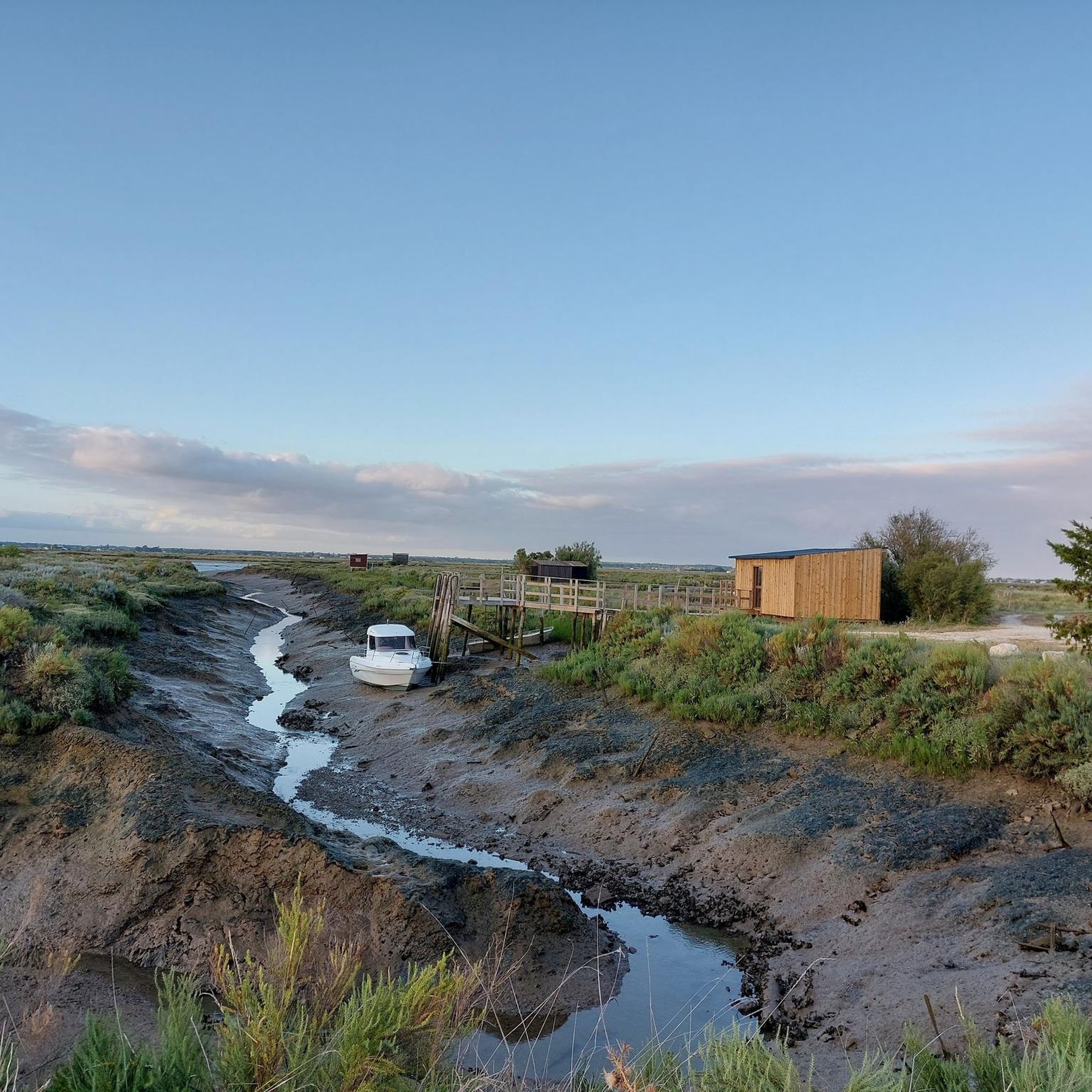
The port of Ribérou is a fishing and pleasure port located at the end of the Seudre estuary, in Saujon. It is one of the two ports in the city, along with that of Breuil, a little downstream. Active since the 11th century, it took on its current appearance from 1842, under the impetus of the Minister of Public Works at the time, Jules Dufaure, a "local boy", who thus attempted to revive maritime trade and fishing activities, which were then in decline. Ideally located, on the edge of the city center, the La Lande leisure center and the preserved areas of the Seudre marshes (towpaths transformed into walking trails), it has become one of the major tourist attractions in Saujon, where theme evenings and the July 14 fireworks are organized. In 2011, the municipality began a renovation program for the port site, entrusted to the architect-urban planner Sophie Blanchet. It consists of transforming the old car parks into a pedestrian esplanade, a real meeting place with modern street furniture and, in the long term, green spaces. From the quays, lined with bourgeois buildings, small picturesque streets lined with hollyhocks allow you to crisscross the district and reach the city centre. The Ribérou lock bridge, known as the "bridge of opposing waters", was renovated in 2010. It marks the separation between the waters of the estuary (port side: brackish water) and the waters of the river (retention basin side: fresh water). Ribérou is a starting point for certain water sports (canoeing and kayaking). It is approximately 250 metres long and 40 metres wide. From Ribérou, it is possible to reach successively the ports of Breuil (Saujon), L'Éguille, Mornac, Chaillevette, Chatressac (Chaillevette), Grandes Roches and Orivol (Étaules), La Grève in Duret and Coux (Arvert), La Grève (La Tremblade) and La Cayenne (Marennes).
0
0

The bell tower of this church is visible from afar! Coming from the north and from the port of Cayenne, it towers high above the landscape. The interior of the church is in need of renovation, but the stained glass windows beautifully depict various saints and biblical stories.
0
0

small round trip between the éguille and Ribérou
0
0
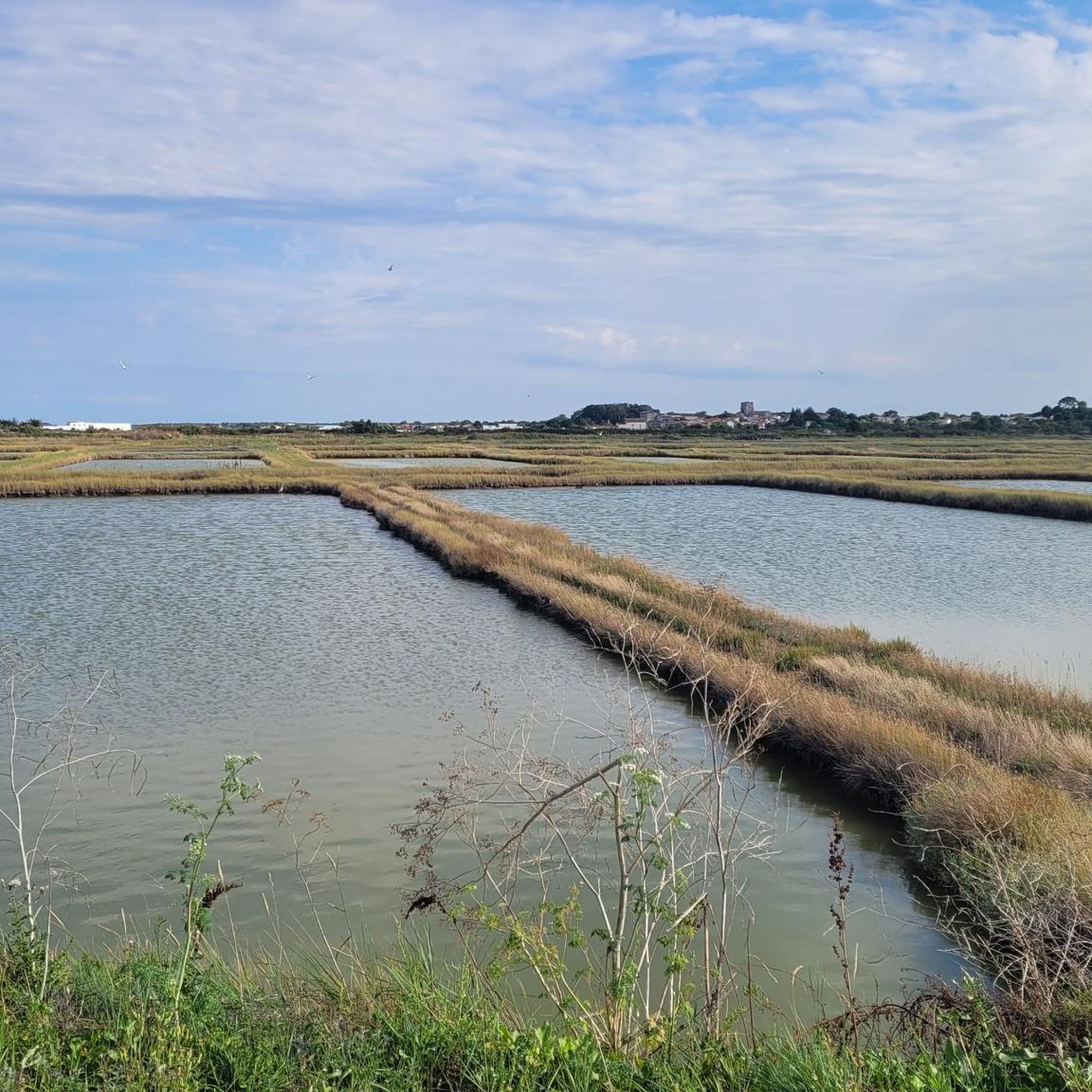
Nestled in the heart of the marshes of the Presqu’Île d’Arvert, Mornac-sur-Seudre is a small village with a dual face: oyster farming by tradition and artisanal by passion. It is a “Village of Stones & Water” (as the Charente-Maritime label promises) and is one of the “Most Beautiful Villages of France®”, and it also has the “Ville et Métiers d’” label. Art",. Mornac is a village where you have to take your time to soak up its atmosphere and charm. So you park your car in the large car park and visit it on foot to savor every detail and exchange with locals generous with anecdotes and craftsmen eager to share their know-how. Here, everything is on a human scale. We discover the village through the Place des Halles. The shelter, made of wood and supported by stone pillars, is ideal for meeting and resting. The terraced houses replace the old fortifications which protected the town in the Middle Ages. From Les Halles the main street takes you to the port. However, you should not hesitate to stroll through the small streets and alleys of the old town where you can literally get lost! This spiral part of Mornac is called the “Arab quarter”. The church dominates the village from its fortified bell tower. Original in many ways, the Romanesque building houses a font made of real shell. On August 2, 1943, lightning caused a fire which changed the appearance of the bell tower. The port is bordered by traditional and typical cabins. Each one has different colors. There is something for every taste. The small Seudre road allows you to follow them to the foot of the estuary. We arrive, at the very end, at the “goule de l’ach’neau”. We feel alone in the world. Everything is flat, horizontal. It’s time to tell you: the name Mornac means “calm waters”. From the port, possibility of a sea trip..... depending on the tide!!! For those on land, from Chemin de la Corderie, you can take the marked Détours® loops, between April and October, on the embankments of the pedestrian cutoffs. Possibility of taking advantage of guided tours of the village during the season. Mornac and its marshes can also be visited by bike using the shared Chemins de la Seudre routes. If the walk seems too long to you, you can combine the bike ride with the Train des Mouettes (Mornac-sur-Seudre is a stopover station for the tourist train)
0
0

This Saint Pierre de Sale Catholic church is characterized by its majestic bell tower door from the fifteenth century. It was placed under monument protection in 1840. Climbing the bell tower is possible in summer.
0
0
Frequently Asked Questions
What are the most popular attractions around Saint-Sornin?
Visitors frequently enjoy exploring Riberou Port, a historic fishing and pleasure port in Saujon known for its quiet terraces and pedestrian esplanade. Another highlight is Saint Peter's Church, Marennes, which boasts the highest religious building in Charente-Maritime with its 85-meter bell tower. The Mornac-sur-Seudre Marshes are also very popular, offering a glimpse into traditional oyster farming and salt extraction in one of France's 'Most Beautiful Villages'.
What historical sites can I visit near Saint-Sornin?
The region is rich in history. You can visit the historic Église Saint-Saturnin in the village itself, known for its 12th-century architecture and 17th-century frescoes. The impressive Tour de Broue, a remnant of a 12th-century fortified castle, offers a glimpse into the area's past significance in salt production. Additionally, Saint-Pierre Church in Mornac-sur-Seudre showcases Romanesque architecture and medieval history.
Are there family-friendly attractions around Saint-Sornin?
Yes, several attractions are suitable for families. Riberou Port is a pleasant spot for a stroll, and the nearby Parc Zoologique de la Palmyre offers a popular outing. The Mornac-sur-Seudre Marshes provide an engaging environment to learn about oyster farming and enjoy the natural landscape. The Saint-Pierre Church in Mornac-sur-Seudre is also listed as family-friendly.
What natural features and landscapes can I explore?
The area around Saint-Sornin is characterized by its natural beauty. You can explore the extensive Mornac-sur-Seudre Marshes, which are vital for oyster farming and salt extraction. The region also benefits from its proximity to natural areas like the Forêt domaniale de la Coubre and Pointe de la Coubre, offering opportunities to enjoy forests and coastlines. For panoramic views, consider visiting the Point de vue de la Fenêtre.
What outdoor activities can I do near these attractions?
The area offers various outdoor activities, particularly cycling. You can find numerous routes for mountain biking, road cycling, and touring. For example, explore the 'Brouage Marsh' on a road bike or discover 'The market halls in Mornac-sur-Seudre' on a mountain bike. You can find detailed route information and guides for these activities on the MTB Trails around Saint-Sornin, Road Cycling Routes around Saint-Sornin, and Cycling around Saint-Sornin guide pages.
Are there hiking trails near Saint-Sornin?
While specific hiking guides are not listed, many of the cycling routes can be adapted for walking or offer scenic paths. The area around the Mornac-sur-Seudre Marshes, for instance, has pedestrian cutoffs and embankments suitable for walks. The 'Circuit pédestre Du village de Saint-Sornin à la tour de Broue' is a known walking route that connects the village to the historic tower.
What is the best time to visit Saint-Sornin attractions?
The region generally enjoys a pleasant climate. Spring and early autumn are often ideal for visiting, offering comfortable temperatures for exploring historical sites and engaging in outdoor activities like cycling and walking without the peak summer crowds. Summer is also popular, especially for those looking to enjoy the coastlines and marshlands.
What are some unique or 'hidden gem' attractions in the area?
Beyond the main highlights, Saint-Sornin preserves elements of its rural heritage, including the terracotta works of Cadeuil. The village of Hiers, built on an old island, offers a fascinating historical context as it was once surrounded by the Saintonge gulf, now marshland. These sites provide a deeper insight into the local culture and history.
What do visitors enjoy most about the attractions around Saint-Sornin?
Visitors particularly appreciate the blend of historical charm and natural beauty. The tranquil atmosphere of Riberou Port and the picturesque setting of Mornac-sur-Seudre Marshes are frequently praised. The architectural grandeur of Saint Peter's Church, Marennes, especially its accessible bell tower, also receives high acclaim for its views and historical significance.
Are there dog-friendly trails or attractions?
While specific dog-friendly designations for trails are not detailed, many natural outdoor areas, such as the marshlands and forest paths, are generally suitable for walks with dogs, provided they are kept on a leash and local regulations are followed. It's always advisable to check specific site rules before visiting.
What kind of terrain can I expect on trails near Saint-Sornin?
The terrain around Saint-Sornin often features relatively flat landscapes, especially in the marsh areas and along the Seudre estuary. Paths can range from paved surfaces in villages and ports to unpaved tracks and embankments in natural areas. For example, the 'Circuit pédestre Du village de Saint-Sornin à la tour de Broue' is generally considered to have manageable terrain.
Most popular routes around Saint-Sornin

Get inspired with the komoot mobile app


Explore more
Still not found the Highlight you’re looking for? See guides of the top attractions in other regions:
