Attractions and Places To See around L'Éguille - Top 20
Best attractions and places to see around L'Éguille include a blend of coastal scenery, historic sites, and natural spaces. This charming village in Charente-Maritime is framed by the Seudre River and extensive salt marshes, which are vital for oyster refining and host diverse ecosystems. Visitors can explore traditional oyster ports, historic landmarks, and serene beaches, reflecting the area's rich heritage and natural beauty.
Best attractions and places to see around L'Éguille
- The most popular attractions is Chay Beach, a…
Last updated: May 10, 2026
Chay Beach
Highlight • Beach
Translated by Google •
Tip by

Port of Royan
Highlight • Structure
Translated by Google •
Tip by
Sign up now to discover places like this
Get recommendations on the best single tracks, peaks, & plenty of other exciting outdoor places.
Sign up for free
Conche de Gilet
Highlight • Beach
Translated by Google •
Tip by
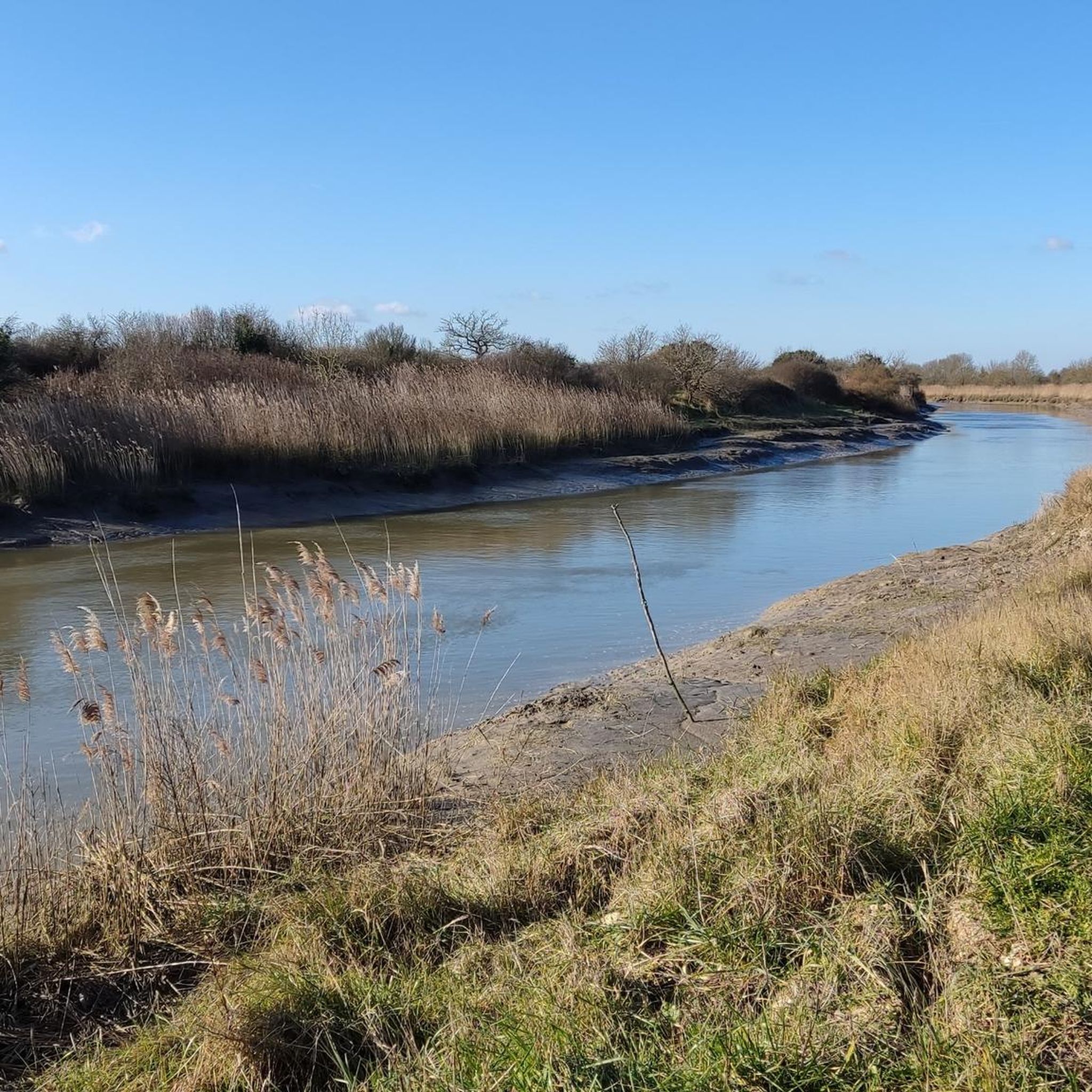
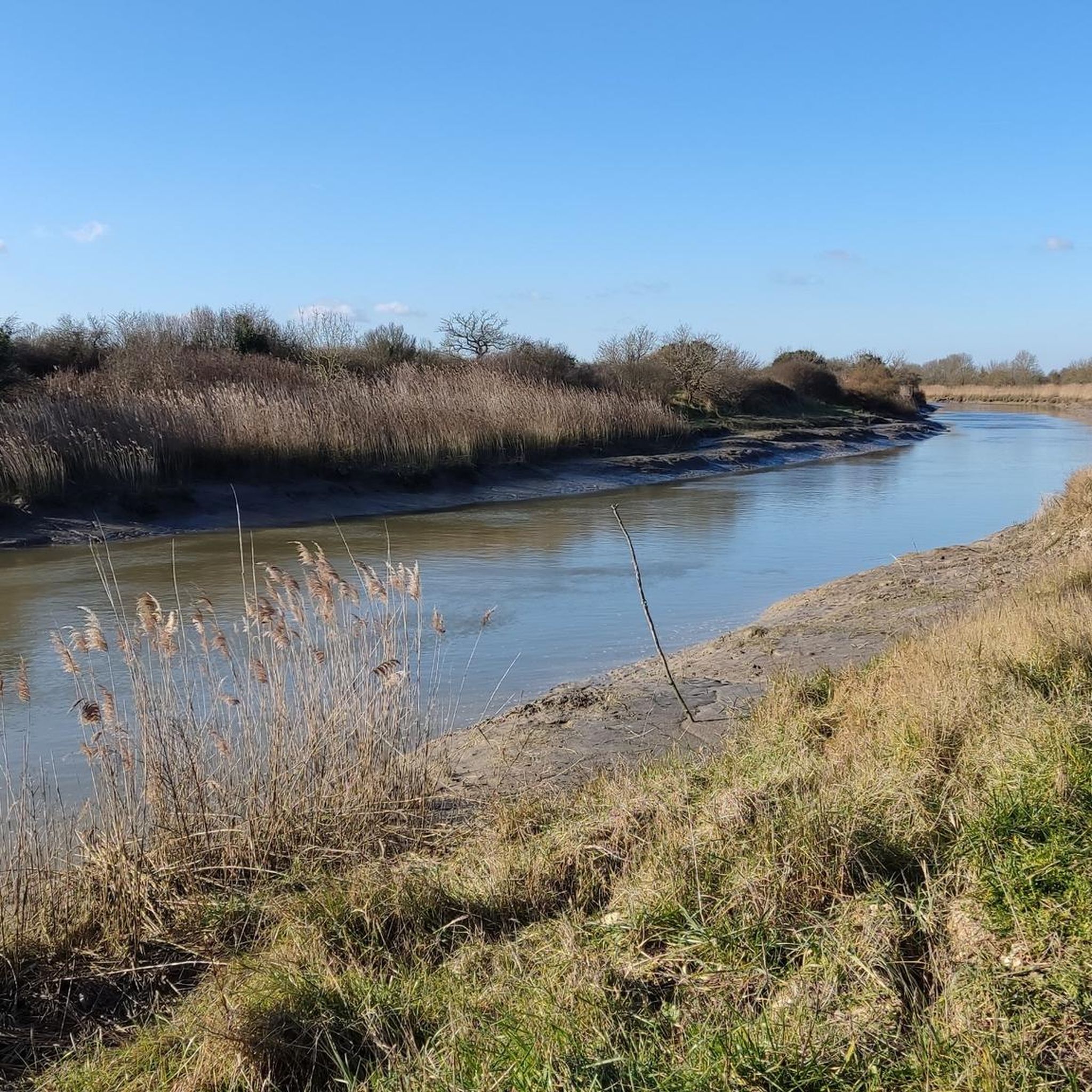
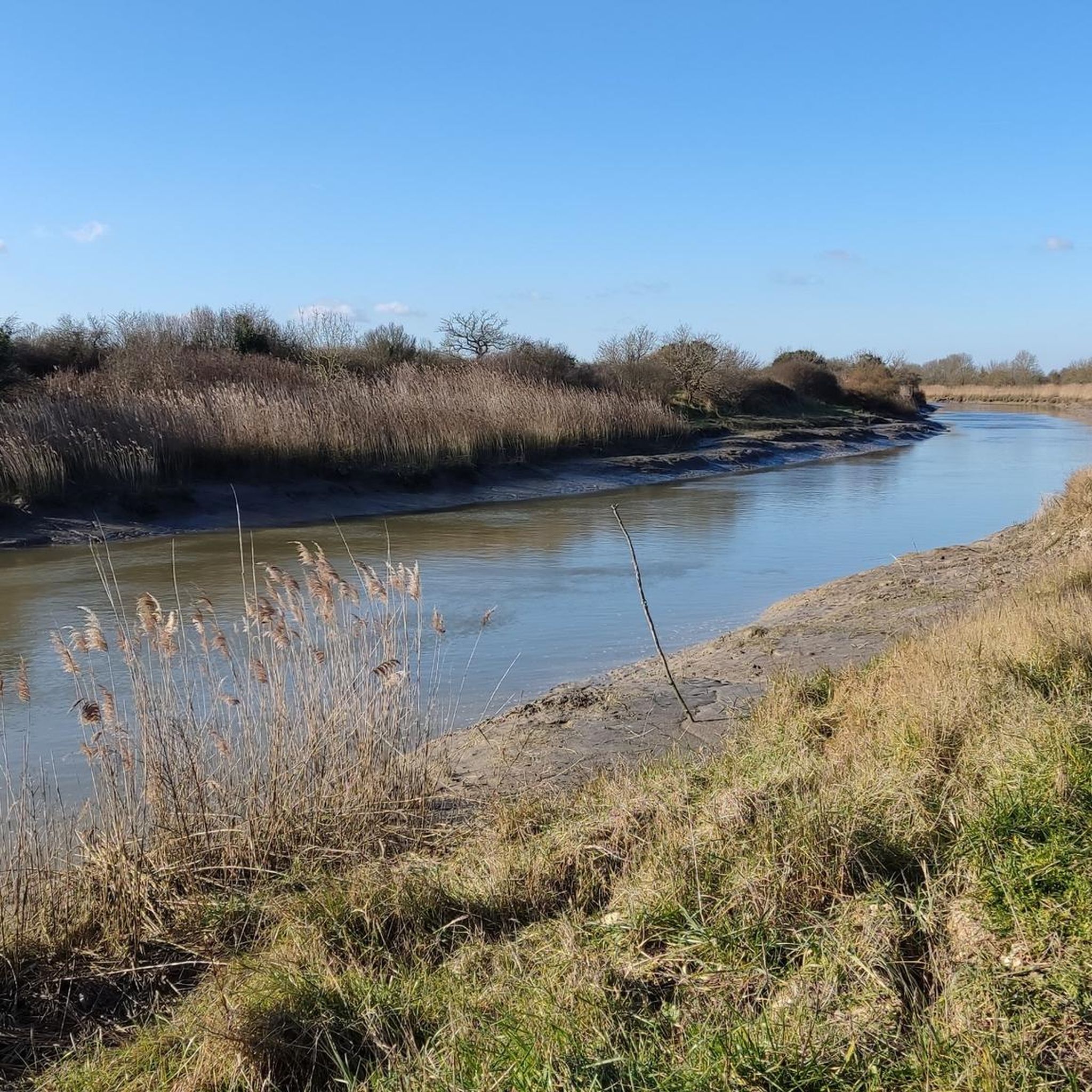
Mornac-sur-Seudre Marshes
Highlight • Natural
Once a fishing and …
Translated by Google •
Tip by

Fort du Chay
Highlight • Historical Site
Translated by Google •
Tip by
Sign up for free to discover even more attractions around L'Éguille.
Sign up for free
Already have an account?
Start today with a free account
Your next adventure awaits.
Login or Signup

Tips from the Community

📍 Introducing the Gilet Cove The Gilet Cove is a small, natural beach on the oceanfront, located on Boulevard de la Conche de Gilet / Boulevard de la Falaise, in the town of Vaux-sur-Mer, just before Royan. 🌿 It's a sheltered, rocky cove, appreciated for its tranquility and more intimate setting compared to the larger urban beaches nearby. 🏖️ At high tide, the sea can completely cover this small beach, making the space very limited; at low tide, you can enjoy a patch of sand and rocks for relaxing or swimming. 🧭 Features & Tips 📍 Type of place: small, unsupervised beach, nestled among the rocks with sand and cliffs. 🏖️ Tides: access is best at low tide — at high tide the beach can disappear underwater. 🐶 Animals: prohibited from April 1st to September 30th (subject to municipal regulations). 👣 Access: via stairs from the boulevard above, surrounded by villas with sea views. 🚫 Lifeguard services: no lifeguard station or marked services. 📍 Location La Conche de Gilet is often considered the last small beach in Vaux-sur-Mer before reaching Royan/Pontaillac when following the coastline from Saint-Palais-sur-Mer.
0
0
🏖️ General Overview Chay Beach is a family-friendly, fine sandy beach located in Royan (Charente-Maritime), on the Côte d’Argent promenade between Pigeonnier Beach and Pointe du Chay. It stretches for approximately 200 meters and boasts a pleasant natural setting, with a cove bordered by rocks typical of the Charente coastline. 🏝️ Features • 🌊 Beach type: fine sand, sheltered cove. • 🏄♂️ Atmosphere: relatively calm and family-friendly, ideal for children and vacationers seeking relaxation away from the large urban beaches. • 🐾 Pets: prohibited from April 1st to September 30th. • 🫧 Water quality: excellent (Blue Flag label awarded for 2025). 🧭 Lifeguard and Safety • Swimming is supervised during the season (June to early September), with areas marked by red and yellow flags. • The area is classified as a Category 3 "Supervised Beach" and lifeguards are present during the indicated hours. 🪑 Amenities On-site, you can find: • 🏖️ Sun loungers, parasols, and mattresses for rent. • 🚿 Foot rinse and public restrooms. • 📶 Wi-Fi access, first aid station, and an area accessible to people with reduced mobility (assistance may be required depending on the slope). • 🍴 Beachfront restaurant ("Le Chay" bar-restaurant with sea views). 🚶♂️ Atmosphere and Activities • 🎈 Ideal for families and leisurely strolls. • 🌞 People come here for swimming, playing on the sand, flying kites, or simply relaxing by the ocean. • 🅿️ Parking is available nearby, and the beach is easily accessible on foot or by bike from Royan town center in just a few minutes. 🧭 Practical Tips • 📆 Best time to visit: summer for supervised swimming and full services, but also during the off-season for a more peaceful atmosphere. • ☀️ Arriving early in the morning makes parking easier during peak season. • 🐶 Dogs are not allowed during the summer season; check the signs on site during the off-season.
0
0
The port of Royan is located between the Foncillon district and the Grande Conche beach, in the heart of the city. Ideally located at the mouth of the Gironde, in the immediate vicinity of the Atlantic Ocean and opposite Port-Médoc, it consists of a marina with a thousand rings and a fishing port, specializing in “noble” species (sole, meagre, sea bass, etc.). You will find the harbor master's office, the Fishing Port and the auction, as well as a covered shopping arcade, “Les voûtes du Port”, which extends the shopping arcades of the “Front de Mer”. Port, 1100 sheltered places – Reception pontoon – Secure pontoons. Access pass is 0.30 m above the zero of the nautical charts. Basins after dredging 2.30 m from the zero of the nautical charts. Services: water, electricity (220 V) on pontoon, toilets, WC, showers, handling in closed technical area, recovery of careening water, grey water and black water pumps, maintenance and ship repair workshops, ship chandlers on the port, wifi, 24/24 CB fuel, slipway. V.H.F. 9. The port is sheltered from all winds because it is protected by the landing stage of the ferries which ensure the crossing of the Gironde for the crossings to the Pointe de Grave/Le Verdon-sur-Mer.
1
0
Of the first star-shaped fort (1811), only a few things remain today. In 1859 its plan was redesigned with a solid ground facing the sea separated by a large ditch cutting the fort in two. The redoubt is cut off and allows the access bridge located to the north to be monitored. This redoubt has the particularity of having a specific plan. It only has a machicolation on three of its sides to the north (inland side) and on its two short sides (east and west). The tour of the solid ground is reinforced by a large masonry wall now. At the rear, the star-shaped device protects against attacks coming from the land. The site was affected by erosion and especially lost its relief after the Second World War. The battery line is still visible from the air and on the ground, only a few German and French bunkers are still outcropping. They are inaccessible. Transformed into a promenade, the site borders the coastal path that starts from the port of Royan and continues to the Grande Côte. Today, nearly 75% of the militarized surface of the late 19th century is occupied by residences and the Cordouan Thalazur hotel. The site still has some visible remains, mainly of French origin
0
0
The first fortification projects for Pointe du Chay date back to 1772, counterbalanced on the other bank by Fort du Verdon. But it was not until the battle of 1811 that the military authorities were convinced to fortify the point. However, in 1757, Marshal Senectere, Lord of Didonne, had a defensive element built a little further south of Fort du Chay. He had opened a strategic route to protect the mouth of the estuary. A fort comprising star-shaped bastions was built between 1811 and 1812. It was recaptured by the English in April 1814 and partly destroyed. It was not until the Second Empire that the fort was considerably improved. In addition to the rebuilt embankments, a redoubt derived from the crenellated towers of the 1846 type was built between 1859 and 1860. It served the battery. The battery was remodeled between 1875 and 1877 at the same time as that of the Fort de Suzac. This new battery included eight cannons that would not evolve again until the Second World War. They were divided into four 24cm cannons and four 27cm cannons. One of the vats is disproportionate and seems to indicate that it was planned to install a larger piece there. A fire control post was probably built after 1920, perhaps at the same time as the Arros battery around 1937. It does not appear on the aerial photos of 1920 and is located in front of the firing positions. According to some sources, the Fort du Chay was equipped around 1930 with 75 model 1897 cannons (to be confirmed). The Fort du Chay redoubt would have a hardly more favorable fate than the one near the Fort de Suzac. Integrated into the improvements made to the fort at the end of the 19th century and then at the beginning of the 20th century, this structure would remain until the fort was integrated into the Atlantic Wall around 1942. In 1920, the fort was partially disarmed since only seven of the eight cannons and a reduced garrison remained. At the end of the Second World War, the Fort du Chay redoubt, the oldest vestige of the fort, was literally cut in two by the bombings of 1944 to 1945. Although in 1946, the site remained as it was, it was the object of much covetousness from 1950. The site was largely razed between 1956 and 1957 to make way for a program of 120 housing units. In 1959, it was used temporarily by an equestrian center using a large part of the star-shaped glacis of 1811.
0
0
The Chay de Royan beach is a continuation of the Pigeonnier cove on the Côte d'Argent promenade and offers a larger area than the latter. This sandy beach is family-friendly with a restaurant on the beach. It is supervised during the summer season (mid-June to early September) and you can rent mattresses and cabins. The environment of this beach is very pleasant, there are fewer houses than on the other beaches in Royan. A large car park is available near this beach (left side). Access is possible for people with reduced mobility via an inclined plane with assistance (the slope is steep). Dogs are prohibited from April 1st to October 31st.
1
0
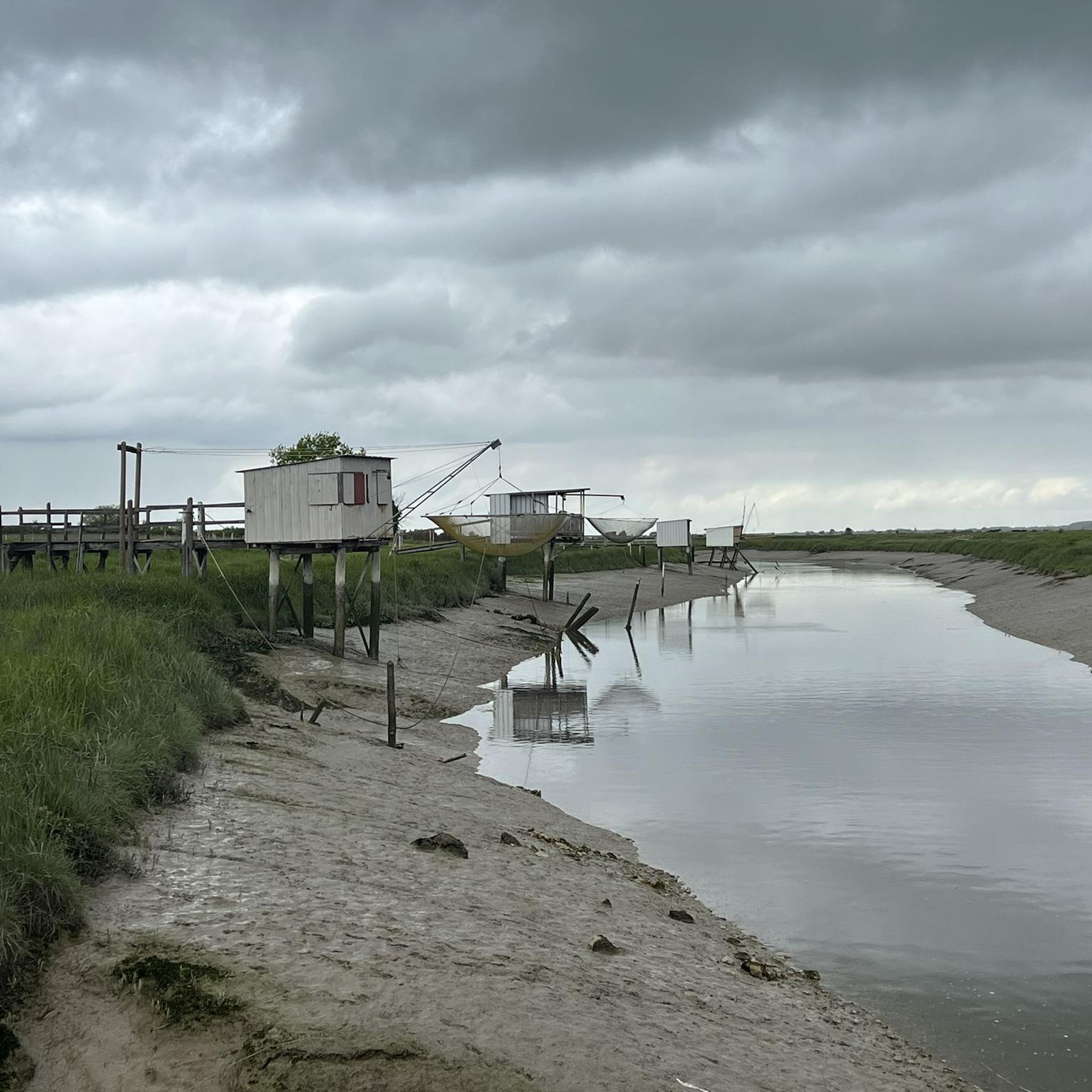
Nestled in the heart of the marshes of the Presqu’Île d’Arvert, Mornac-sur-Seudre is a small village with a dual face: oyster farming by tradition and artisanal by passion. It is a “Village of Stones & Water” (as the Charente-Maritime label promises) and is one of the “Most Beautiful Villages of France®”, and it also has the “Ville et Métiers d’” label. Art",. Mornac is a village where you have to take your time to soak up its atmosphere and charm. So you park your car in the large car park and visit it on foot to savor every detail and exchange with locals generous with anecdotes and craftsmen eager to share their know-how. Here, everything is on a human scale. We discover the village through the Place des Halles. The shelter, made of wood and supported by stone pillars, is ideal for meeting and resting. The terraced houses replace the old fortifications which protected the town in the Middle Ages. From Les Halles the main street takes you to the port. However, you should not hesitate to stroll through the small streets and alleys of the old town where you can literally get lost! This spiral part of Mornac is called the “Arab quarter”. The church dominates the village from its fortified bell tower. Original in many ways, the Romanesque building houses a font made of real shell. On August 2, 1943, lightning caused a fire which changed the appearance of the bell tower. The port is bordered by traditional and typical cabins. Each one has different colors. There is something for every taste. The small Seudre road allows you to follow them to the foot of the estuary. We arrive, at the very end, at the “goule de l’ach’neau”. We feel alone in the world. Everything is flat, horizontal. It’s time to tell you: the name Mornac means “calm waters”. From the port, possibility of a sea trip..... depending on the tide!!! For those on land, from Chemin de la Corderie, you can take the marked Détours® loops, between April and October, on the embankments of the pedestrian cutoffs. Possibility of taking advantage of guided tours of the village during the season. Mornac and its marshes can also be visited by bike using the shared Chemins de la Seudre routes. If the walk seems too long to you, you can combine the bike ride with the Train des Mouettes (Mornac-sur-Seudre is a stopover station for the tourist train)
0
0

Built in the 18th century, Fort du Chay was integrated into the German defense system in 1940. Thoroughly rebuilt by the German occupying troops, who replaced the old facilities with blockhouses, it formed a lock at the mouth of the river mouth with the fortifications of the Pointe de Grave. This impressive defense system was almost completely destroyed in the bombing raids of 1945. Only a few log houses remain.
3
0
Frequently Asked Questions
What natural features can I explore around L'Éguille?
L'Éguille is rich in natural beauty. You can discover the extensive Salt Marshes (Marais), vital for oyster refining and home to diverse birdlife like herons and egrets. The Seudre River frames the village, offering scenic views and opportunities for water activities. For coastal beauty, visit Chay Beach, known for its sandy stretch and views of the Cordouan lighthouse, or the secluded Conche de Gilet, a narrow beach accessible at low tide.
Are there any historical sites to visit in L'Éguille?
Yes, L'Éguille has a rich historical past. You can explore the remnants of Fort du Chay, an 18th-century structure that played a role in WWII, with a few log houses still standing. The village's local architecture, with its traditional stone houses and ancient churches, also reflects its medieval heritage. Informative signs along walking paths detail the village's history, including customs officers and the chain ferry.
What kind of outdoor activities can I do near L'Éguille?
The area around L'Éguille offers a variety of outdoor activities. You can enjoy hiking through the serene salt marshes, with trails like the 6 km Le Detours® trail. Cycling is also popular, with numerous routes available. The Seudre River provides opportunities for boat excursions, kayaking, and paddleboarding to observe local flora and fauna. For more detailed routes, explore the hiking, MTB, and road cycling guides for the region.
Are there family-friendly attractions or activities in L'Éguille?
L'Éguille is a great destination for families. Chay Beach is a sandy, family-friendly spot that is supervised during the summer season. Exploring the Oyster Port of L'Éguille is also engaging, where children can watch traditional boats and learn about oyster farming. Easy hiking trails through the salt marshes are suitable for families, and boat excursions on the Seudre River offer a fun way to see wildlife.
Where can I experience the local culture and gastronomy?
To immerse yourself in local culture, visit the Oyster Port of L'Éguille, where you can stroll among traditional oyster huts and witness daily life. The village hosts cultural events like the annual Fête de l'Huître (Oyster Festival) in summer, regular craft markets, and art exhibitions. For gastronomy, enjoy fresh seafood platters at restaurants, especially those located in the oyster huts, offering a true taste of the region.
What are some scenic viewpoints around L'Éguille?
For breathtaking views, head to Pointe de L'Éguille, which offers panoramic vistas of the surrounding oyster beds and quaint coastal villages. It's particularly beautiful at sunset. Chay Beach also provides impressive views of the Cordouan lighthouse, framed by rocky cliffs.
Can I find easy walking trails suitable for beginners or children?
Yes, L'Éguille offers several easy walking options. The extensive Salt Marshes have numerous hiking trails, including the 6 km Le Detours® trail, which are generally flat and suitable for leisurely strolls. The hiking guide for L'Éguille lists easy routes like the 'Pointe de l'Éguille loop from L'Éguille' (5.5 km) and shorter loops around Mornac-sur-Seudre Marshes.
What is the best time of year to visit L'Éguille?
L'Éguille is charming throughout the warmer months. Summer is vibrant with events like the Fête de l'Huître and supervised beaches. Spring and autumn offer milder weather, ideal for hiking and cycling through the marshes and enjoying the coastal scenery without the peak season crowds. The natural features and cultural sites can be enjoyed year-round, but water-based activities are best in warmer weather.
Are there any dog-friendly attractions or walks?
While specific restrictions may apply to certain beaches during peak season (e.g., dogs prohibited at Chay Beach from April to October), many of the natural trails through the Salt Marshes and along the Seudre River are generally dog-friendly, provided they are kept on a leash. It's always advisable to check local signage for specific regulations.
Where can I find parking for attractions in L'Éguille?
Parking is generally available near popular attractions. For Chay Beach, a large car park is available nearby. The Oyster Port of L'Éguille and other village areas typically have designated parking spaces. For specific locations like Pointe de L'Éguille, look for local parking signs. It's recommended to arrive early during peak season to secure a spot.
What makes the Oyster Port of L'Éguille special?
The Oyster Port of L'Éguille is a central and picturesque hub, showcasing the village's strong oyster farming heritage. It features traditional oyster huts lining the quays, where you can observe traditional boats and fishermen. It's also a departure point for boat excursions on the Seudre River and is marked by a unique roundabout adorned with two massive hands opening an oyster, symbolizing its identity.
Are there opportunities for wildlife spotting?
Absolutely. The extensive Salt Marshes surrounding L'Éguille are a vital ecosystem and a haven for wildlife. They serve as a habitat for wading birds such as herons and egrets, and as a migratory stop for swans, storks, and wild geese. Exploring the marshes on foot or taking a boat excursion on the Seudre River provides excellent opportunities for birdwatching and observing the local flora and fauna.
Most popular routes around L'Éguille

Get inspired with the komoot mobile app


Explore more
Still not found the Highlight you’re looking for? See guides of the top attractions in other regions:
