Attractions and Places To See around Lémeré - Top 20
Best attractions and places to see around Lémeré. Lémeré is a village located in the Indre-et-Loire department of France, within the Loire Valley. The area is characterized by its architectural heritage and serves as a central point for exploring historical and cultural sites. Visitors can find a variety of landmarks, including historic castles and churches, that reflect the region's past.
Best attractions and places to see around Lémeré
- The most popular attractions is Château du Rivau, a castle known…
Last updated: July 2, 2026
Royal Fortress of Chinon
Highlight • Castle
Translated by Google •
Tip by

Château du Rivau
Highlight • Castle
Translated by Google •
Tip by

Sign up now to discover places like this
Get recommendations on the best single tracks, peaks, & plenty of other exciting outdoor places.
Sign up for free
Crissay-sur-Manse Village
Highlight • Settlement
Translated by Google •
Tip by

Royal Fortress of Chinon
Highlight • Castle
Translated by Google •
Tip by

Sanctuary of Our Lady of Rivière
Highlight • Religious Site
Translated by Google •
Tip by

Sign up for free to discover even more attractions around Lémeré.
Sign up for free
Already have an account?
Start today with a free account
Your next adventure awaits.
Login or Signup


Tips from the Community

Crissay-sur-Manse is one of the most beautiful villages in France. The Manse River, which gives the village its name, flows through the southern part of the municipality. Sights: - Saint-Maurice Church (early 16th century) - Houses from the 15th and 16th centuries - Castle ruins (15th century)
0
0

History in brief Antiquity: the site is strategically located on a promontory and has been inhabited for 3,000 years. It was not fortified until the end of the Roman Empire. Middle Ages: in 1154, the new King of England, Henry II Plantagenet, became ruler of an empire stretching from Scotland to the Pyrenees and made Chinon his continental capital. He had a large palace built next to the fortress, which has now disappeared. In 1189, abandoned by his sons, Richard the Lionheart and John Lackland, and fleeing from the King of France, he eventually died there. Philippe Auguste had the defensive Tour du Coudray built there after the siege of 1205. Renaissance: in 1454, the fortress became the main residence of Queen Marie d'Anjou, who lived there without her husband. She spent lavishly on decorating the house to her taste. From the 16th century onwards, the fortress was gradually abandoned and fell into disrepair. Despite the dangerous nature of the terrain, it became a public promenade in 1824 and was listed as a monument in 1840. The restoration of the estate began in 1854 thanks to the efforts of the writer Prosper Mérimée. Source: https://loirelovers.fr/en/visit-royal-fort-chinon/
6
0

Beautiful gardens and an art collection in the castle.
0
0

Seen from the outside, this little church doesn't look like much, and you have to go through the front door to discover this hidden gem. Its walls, entirely covered with decorations and motifs painted during several campaigns over the centuries, restore the original appearance of Romanesque churches with a state of conservation that is quite rare in France. The Notre-Dame de Rivière church was built between the 10th and 11th centuries. Legend has it that Saint Martin founded the early church on a site already devoted to prayer. Today, it has a choir, a crypt and recumbent figures dating from the 16th century, as well as remarkable exterior sculptures. But it is above all the 11th century frescoes, recently restored, which add to the historical richness of this building. Legend has it that Joan of Arc passed there, but this is not corroborated by any contemporary testimony, however Charles VII made a pilgrimage there.
0
0

The road out of Chinon towards the Loire, to get back on the Eurovelo 6 (towards Tours) had huge hills beyond my skill set with a lot added bike. Check elevations. I ended up catching a train two stops.
0
0


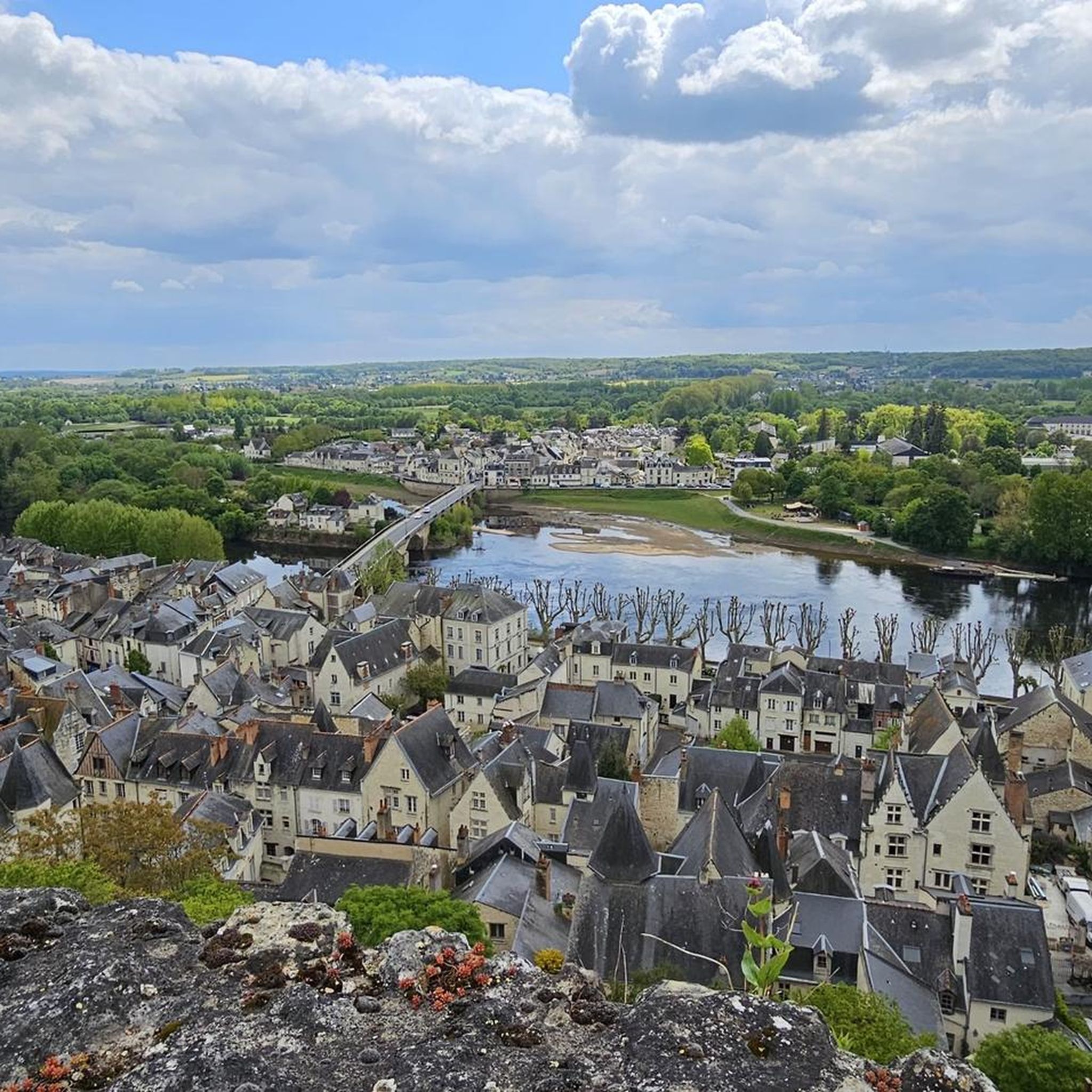
Chinon lives from its historical heritage and especially from its castle. On July 14th, a wonderful fireworks display can be viewed from the bridge over the Venant. An unforgettable experience!
1
0

The fortress site has been occupied for three thousand years. The castle itself took shape between the 6th and 10th centuries.
1
0
Frequently Asked Questions
What historical sites can I explore in Lémeré itself?
Within Lémeré, you can visit the historic Saint-Hilaire Church, notable for its bell tower classified as a historical monument. The village also features an old wash house and several historic mansions like L'Ouraye, the Château de la Noblaye, Bourlière, and the Munets Manor, offering a glimpse into its past.
Are there any castles with unique gardens near Lémeré?
Yes, the Château du Rivau is a prominent attraction known for its unique blend of 15th and 16th-century architecture and its renowned 'fairytale gardens'. These gardens feature distinct areas such as the Gargantua vegetable garden, the Forest Court with artworks, a chessboard of flower pots, and a charming labyrinth shaped like the Cheshire Cat.
What is the significance of the Royal Fortress of Chinon?
The Royal Fortress of Chinon holds great importance in French history, notably as the place where Joan of Arc met the Dauphin, who would become King Charles VII. This former royal fortress has been occupied for 3,000 years and now houses a permanent museum and exhibition, offering a deep dive into its rich past.
Which nearby villages are worth visiting for their historical charm?
Just a short distance from Lémeré, Crissay-sur-Manse Village is considered one of France's most beautiful villages. It features ruins of a 15th-century castle, a 16th-century church, and picturesque white tufa houses from the 15th and 16th centuries.
Are there any religious sites with notable art or architecture nearby?
Absolutely. The Sanctuary of Our Lady of Rivière, built between the 10th and 11th centuries, is a hidden gem. Its walls are entirely covered with recently restored 11th-century frescoes, offering a rare glimpse into Romanesque church art. Additionally, the Church of Tavant, about 5 minutes from Lémeré, is also notable for its well-preserved 11th-century frescoes.
What family-friendly activities are available around Lémeré?
Many attractions cater to families. The Château du Rivau with its fairytale gardens and events like pumpkin festivals is very popular. The Royal Fortress of Chinon offers an interactive 'histopad' guided tour, an Escape Game, and family events during holidays. Crissay-sur-Manse Village also provides a charming setting for a family stroll.
What outdoor activities can I do near Lémeré's attractions?
The area around Lémeré is excellent for outdoor enthusiasts. You can find various routes for running, mountain biking, and hiking. For instance, there are several running loops starting from Château du Rivau, and extensive MTB trails that can take you past the Royal Fortress of Chinon. Explore more options on the Running Trails around Lémeré, MTB Trails around Lémeré, and Hiking around Lémeré guide pages.
Are there easy walking trails suitable for beginners or families near Lémeré?
Yes, there are easy walking trails available. For example, the 'River loop' is an easy 5.3 km hike, and the 'Assay loop from Champigny-sur-Veude' is an easy 2.6 km route. These are great options for a relaxed stroll or for families with young children. You can find more details on the Hiking around Lémeré guide page.
What is there to see in the town of Richelieu, close to Lémeré?
Located about 10 minutes from Lémeré, the town of Richelieu is known for its historic park. This park once housed a magnificent castle built by Cardinal Richelieu, which was even larger than Versailles before its demolition in 1835. It's a place to appreciate historical grandeur and serene landscapes.
What do visitors enjoy most about the attractions around Lémeré?
Visitors particularly appreciate the rich historical context and the well-preserved architecture. The 'fairytale gardens' of Château du Rivau are often highlighted for their beauty and unique artistic creations. The historical significance of the Royal Fortress of Chinon, especially its connection to Joan of Arc, also resonates strongly with visitors, as does the charm of villages like Crissay-sur-Manse.
Is there a UNESCO World Heritage site accessible from Lémeré?
Yes, the magnificent Château d'Azay-le-Rideau, a UNESCO World Heritage site, is approximately 22.1 km from Lémeré. It is considered an unmissable tourist destination in the Loire Valley, renowned for its Renaissance architecture reflected in the Indre River.
Where can I see a statue of Joan of Arc near Lémeré?
In Chinon, approximately 15 minutes from Lémeré, you can find a dynamic Joan of Arc statue created by Jules Roulleau. This statue commemorates her historic meeting with the Dauphin in Chinon in 1429, a pivotal moment in French history.
Most popular attractions around Lémeré

Get inspired with the komoot mobile app


Explore more
Still not found the Highlight you’re looking for? See guides of the top attractions in other regions:
