Attractions and Places To See around Mésigny - Top 20
Attractions and places to see around Mésigny, a commune in Haute-Savoie, offer a blend of local heritage and access to the natural and cultural sites of the Annecy region. Situated in the Pre-Alps, the area features prominent natural landmarks like gorges and mountains. Its proximity to Lake Annecy and the Massif des Bauges Regional Nature Park provides diverse outdoor exploration opportunities. The region combines rural charm with significant historical and geological points of interest.
Best attractions and places to see…
Last updated: July 6, 2026
Fier Gorge
Highlight • Gorge
Translated by Google •
Tip by

Caille Bridge
Highlight • Bridge
Translated by Google •
Tip by

Sign up now to discover places like this
Get recommendations on the best single tracks, peaks, & plenty of other exciting outdoor places.
Sign up for free
Tête de la Mandallaz
Highlight • Other
The word mandallaz comes from the …
Translated by Google •
Tip by

Ruins of the Bains de la Caille
Highlight • Historical Site
Translated by Google •
Tip by
Montrottier Castle
Highlight • Castle
Translated by Google •
Tip by

Sign up for free to discover even more attractions around Mésigny.
Sign up for free
Already have an account?
Start today with a free account
Your next adventure awaits.
Login or Signup


Tips from the Community

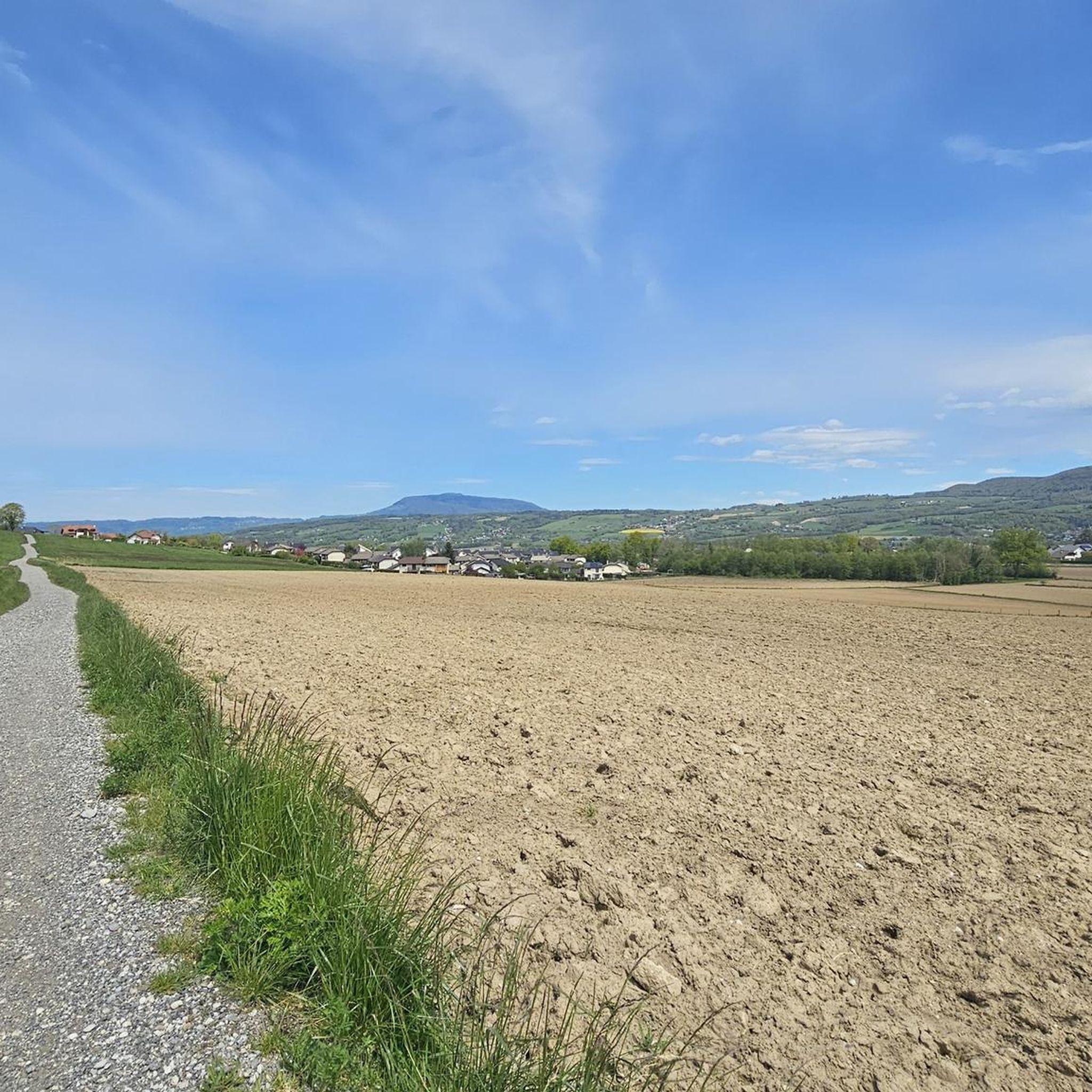
A beautiful route between Yvoire and Annecy mostly via cycle paths and country roads.
0
0

Unfortunately, the chateau was closed during our visit.
1
0

A very interesting château. Admission is €10. If you also visit the gorge, it's only €8. The owner has collected souvenirs and curiosities from all over the world. Therefore, inside you can admire porcelain, weapons, and works of art from Europe, Africa, China, Japan, and more.
1
0
Head of Mandallaz and Sillingy fault mirror
0
0

very gloomy place housing the ancient thermal baths of the pont de la quailles
0
0

Ancient thermal baths, a rather dark and gloomy place
0
1
Mandallaz Mountain, also known as Mandallaz Mountain (pronounced Mandalle), or Balme Mountain, is a mountain in the Prealps located in the Haute-Savoie department (France). The word mandallaz comes from the Old French muer, which gave rise to the verbs "remer" and "mouvoir," and more specifically the noun remue. It thus refers to a small chalet located in an alpine pasture, and in Savoyard, muanda, with the diminutive suffix -allaz. The mountain is locally known as Balme Mountain or La Balme-de-Sillingy, from the name of the eponymous commune. In a transcript of a meeting of the Florimontane Academy (1912), a note states that "Mandallaz is wrongly called the mountain of Balme de Sillingy." It can also be called Mandallaz Mountain or simply La Mandallaz. The Mandallaz Mountains are a small pre-Alpine massif, eight kilometers long and three to four kilometers wide, located northwest of the Annecy basin. It extends through the communes of Annecy (formerly Pringy), Choisy, Cuvat, Épagny-Metz-Tessy, La Balme-de-Sillingy, Sillingy, and Allonzier-la-Caille. Its most prominent peak, the Tête de la Mandallaz, at the southern end of the mountain overlooking La Balme-de-Sillingy and Épagny-Metz-Tessy at an altitude of 900 meters, is not its highest point; the highest point is located in the center of the mountain at 923 meters. The Mandallaz offers panoramic views of the Annecy metropolitan area, Lake Annecy, the Alps, the Montagne d'Âge, and the surrounding countryside.
2
1
The Caille baths are former thermal baths, now disused, located in the Usses gorges, in the town of Cruseilles in Haute-Savoie. Probably already known to the Romans1, they are fed by two sulfurous springs which spring at the bottom of the Usses valley, downstream from the Caille bridges. These baths have been used several times at least since the Middle Ages. They were actually developed from the middle of the 19th century but have not been exploited since the 1960s, their location nestled in the gorges, the moderate flow and temperature of the springs not having favored the sustainability of the establishment. The waters are sulphurous, alkaline, gaseous, hot at 24°Re or 30°C1. They are used in drinks, baths, showers and steam baths. They become cloudy as soon as they are exposed to air and then give off a very characteristic odor. They escape in two sources from the limestone bases of the so-called “Châtelard” mountain. Their flow rate of approximately one hundred liters of water per minute corresponds, for example, to the content of a bath per minute1. They are easily digested; also, patients can drink 8 to 12 glasses per day. They are used more particularly against diseases of the skin, joints, gout, rheumatism, scrofula, internal and external engorgement, vapors, migraines, etc. The operation of the baths stopped definitively around the 1960s. The buildings were then partly destroyed, and ruins remained, including the old swimming pool at the entrance to which we can still read the inscription “BENI BE GOD WHO MADE THE SPRINGS BRING OUT. ALONGSIDE THE EVILS, HE PUT THE REMEDY.”
1
0
Frequently Asked Questions
What natural features can I explore near Mésigny?
The region around Mésigny is rich in natural beauty. You can visit the impressive Fier Gorge, where a catwalk leads about 25 meters above the Fier river. Another prominent feature is Tête de la Mandallaz, a pre-Alpine mountain offering panoramic views. Additionally, the stunning Lake Annecy is about 14 km away, and the Massif des Bauges Regional Nature Park, a UNESCO Geopark, is also within reach for outdoor enthusiasts.
Are there historical sites to visit around Mésigny?
Yes, Mésigny and its surroundings offer several historical sites. Within Mésigny, you'll find the historic Château de Massy, a War Memorial, and the Bornachon Chapel. Nearby, you can explore Montrottier Castle, which houses a museum with medieval weapons and global curiosities. The Caille Bridge, an 1839 suspension bridge, is also a significant historical landmark, and nearby are the Ruins of the Bains de la Caille, former thermal baths with a fascinating history.
What are the opening times for the Gorges du Fier?
The Fier Gorge is generally open from March 15th to October 15th. It's advisable to check their official website for precise opening hours before your visit.
Are there family-friendly attractions near Mésigny?
Many attractions in the area are suitable for families. The Fier Gorge offers an exciting experience with its catwalk, and the Caille Bridge provides a unique perspective into the deep gorge. Both are listed as family-friendly. Montrottier Castle also offers an engaging visit with its museum and grounds.
Where can I find panoramic views around Mésigny?
For breathtaking panoramic views, head to Tête de la Mandallaz. This pre-Alpine mountain offers extensive vistas of the Annecy metropolitan area, Lake Annecy, and the surrounding Alps. The Caille Bridge also provides a dramatic view into the deep Usses gorge.
What hiking opportunities are available near Mésigny?
The Mésigny area is excellent for hiking. You can find various trails, including moderate routes like the Borbannaz Waterfall – Belvedere loop from Sallenôves or the Resistance shelter 1944 – Tête de la Mandallaz loop from La Balme-de-Sillingy. For more options and detailed routes, explore the Hiking around Mésigny guide.
Are there cycling routes around Mésigny?
Yes, the region offers diverse cycling routes. Road cyclists can enjoy routes such as the Maison Forte de Rossy – Caille Bridge loop from Mésigny (moderate) or the more challenging Ascent of the Croix Fry pass. For a comprehensive list of routes, check out the Road Cycling Routes around Mésigny guide.
What about mountain biking trails in the Mésigny area?
Mountain biking enthusiasts will find several trails around Mésigny. Options include the moderate Marlioz Castle loop from Sallenôves or the more difficult Mini Barres Descent View – Mandallaz North Trail loop from La Clée. Discover more trails in the MTB Trails around Mésigny guide.
What is the best time to visit the attractions around Mésigny?
The best time to visit largely depends on your interests. For attractions like the Fier Gorge, the season is typically from March 15th to October 15th. Generally, spring and autumn offer pleasant weather for outdoor activities and exploring historical sites, with fewer crowds than the peak summer months. Summer is ideal for enjoying Lake Annecy and higher mountain trails.
Can I visit a castle near Mésigny?
Absolutely. Mésigny itself is home to the historic Château de Massy. Just a short distance away, you can visit Montrottier Castle, a well-preserved estate featuring a museum with various collections and a dungeon.
Is there public transport available to reach attractions around Mésigny?
While Mésigny is a rural commune, public transport options exist to reach some regional attractions. For instance, the Fier Gorge is accessible by train or car, with free parking available. For specific routes and attractions, it's recommended to check local bus schedules or regional transport services.
What is the Massif des Bauges Regional Nature Park, and how far is it from Mésigny?
The Massif des Bauges Regional Nature Park is an unspoiled green setting recognized as a UNESCO Geopark, located between Lake Annecy and Lac du Bourget. It's a haven for outdoor enthusiasts with numerous peaks and forests. While not directly adjacent to Mésigny, it's within a short drive, offering extensive opportunities for hiking and exploring natural landscapes.
Most popular routes around Mésigny
Most popular attractions around Mésigny

Get inspired with the komoot mobile app


Explore more
Still not found the Highlight you’re looking for? See guides of the top attractions in other regions:
