Attractions and Places To See around Saint-Mandrier-Sur-Mer - Top 20
Attractions and places to see around Saint-Mandrier-Sur-Mer are located on a peninsula in the Var department, featuring a blend of historical sites and natural landscapes. The area maintains its character as a fishing village, offering diverse beaches and coastal paths. Situated across from the military port of Toulon, it provides both maritime history and scenic views.
Best attractions and places to see around Saint-Mandrier-Sur-Mer
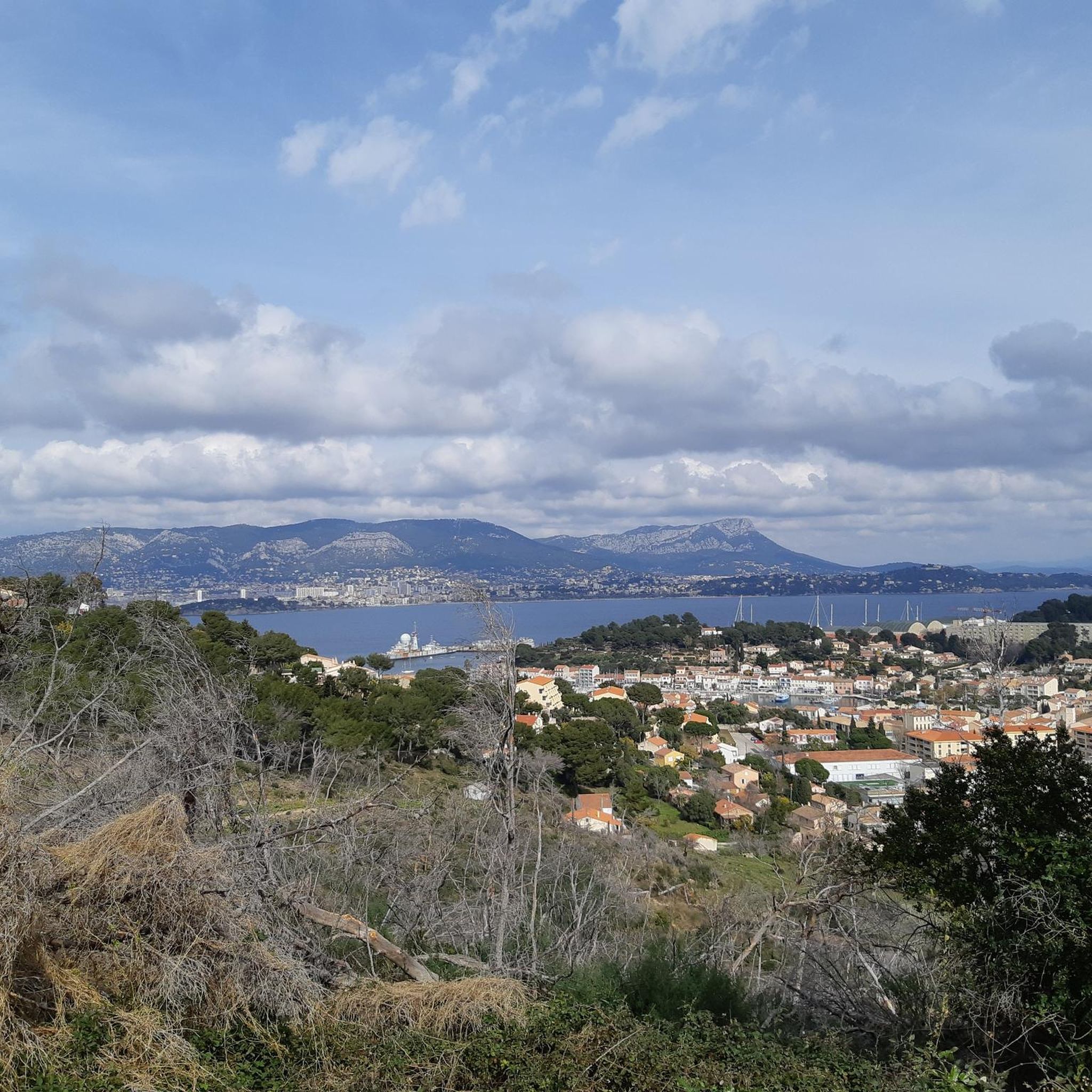
- The most popular attractions is Notre dame du mai, a trail and viewpoint that offers 360° views of the surrounding area, including Six-Fours-les-Plages and Toulon harbor. This location provides a coastal path experience with varied landscapes.
- Another must-see spot is Musée de la Marine, a museum and historical site. It traces over 400 years of maritime history, featuring well-preserved models and the maneuver board of the Clémenceau.
- Visitors also love Notre-Dame du Faron Sanctuary, a religious building and historical site. This sanctuary serves as a memorial to soldiers who fell during the liberation of Provence in 1944.
- Saint-Mandrier-Sur-Mer is known for its historical forts, diverse beaches, and scenic coastal paths. The region offers a variety of attractions to see and explore, from cultural landmarks to natural features.
- The attractions around Saint-Mandrier-Sur-Mer are appreciated by the komoot community, with over 420 upvotes and 230 photos shared by visitors.
Last updated: August 29, 2026
Notre dame du mai
Highlight • Trail
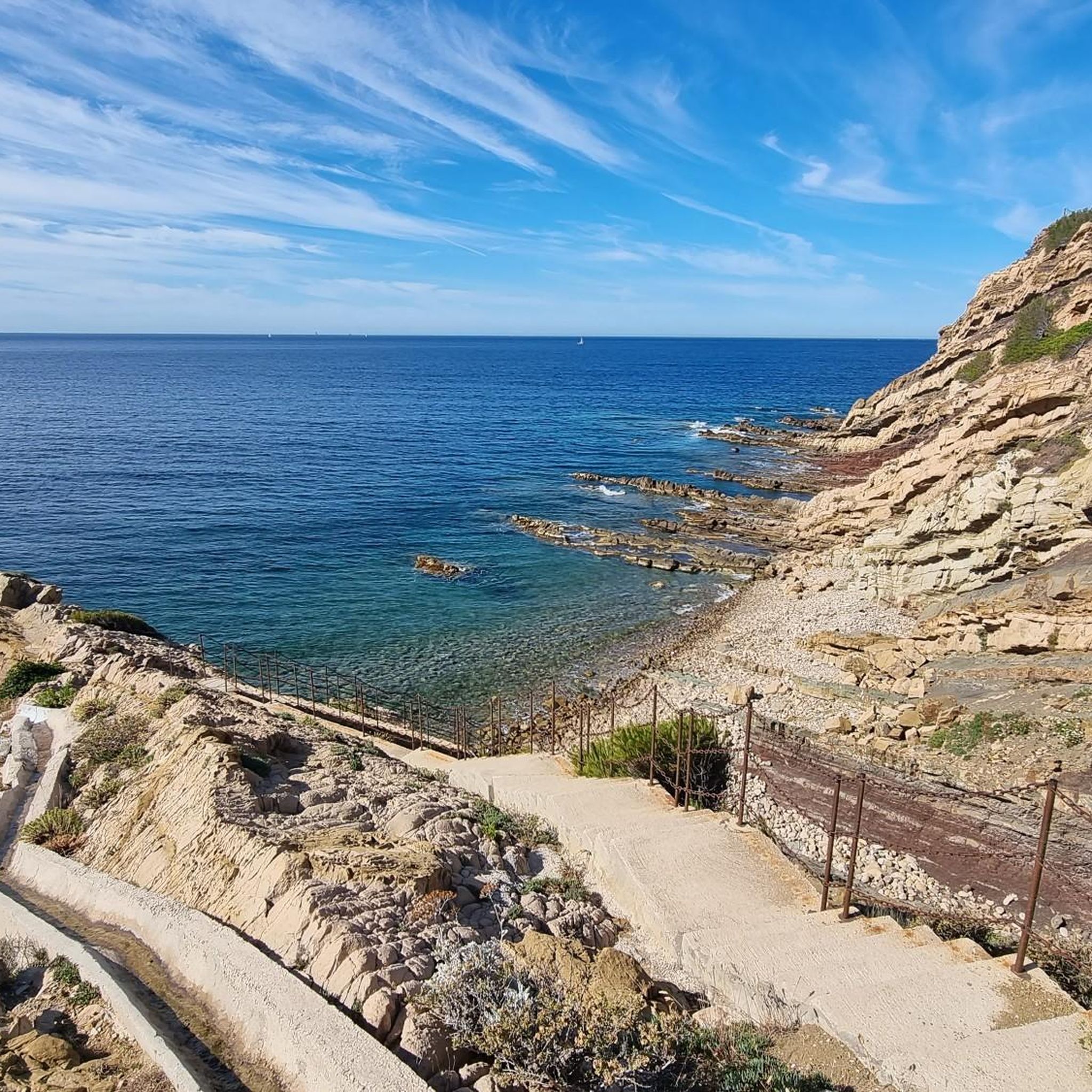
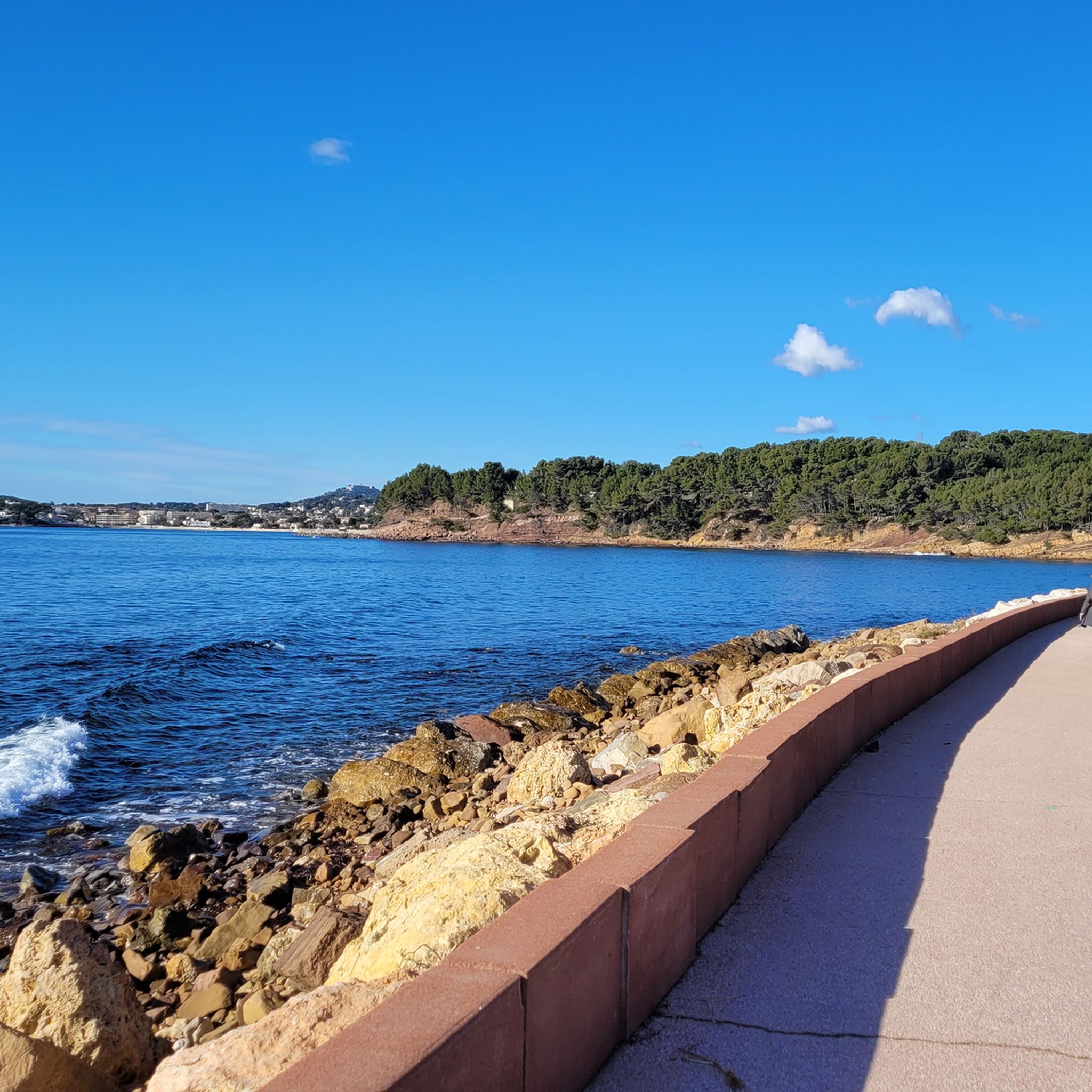
Magnificent hike on the small coastal path where the landscapes change constantly: the port of Brusc, the cliffs, the sea, the undergrowth, the scrubland with thyme, heather and rosemary ... and the smell of pins! must do with good shoes, water and a camera!
Translated by Google •
Tip by

Notre-Dame du Faron Sanctuary
Highlight • Religious Site
Translated by Google •
Tip by

Sign up now to discover places like this
Get recommendations on the best single tracks, peaks, & plenty of other exciting outdoor places.
Sign up for free
Toulon's Small Harbor
Highlight • Natural
Thanks to its exceptional natural environment (the hills surround the city and overlook the harbor), Toulon has become the only harbor to combine maritime and land defenses. This military heritage of forts, towers, and other fortresses, combined with the historic presence of the Arsenal, now known as the naval base, today provides the opportunity to tell great stories of strategy, battles, and the Revolution.
All year round, the boatmen located at the port offer guided tours of the most beautiful harbor in Europe: the naval base and buildings of the French Navy, the marine cemetery, the port of La Seyne-sur-Mer and the former shipyards, the Tamaris corniche, Lazaret Bay and its mussel beds, the Saint Mandrier peninsula, the fortifications (Eguillette, Balaguier, Tour Royale), and the Mourillon beaches.
Toulon harbor is also an ideal navigational area for sailing, dinghy sailing, and a variety of water sports (sea kayaking, paddleboarding, rowing, etc.). It hosts numerous prestigious regattas and nautical races.
Translated by Google •
Tip by

Toulon Cathedral (Cathedral of Saint Mary Major)
Highlight • Religious Site
Translated by Google •
Tip by

Musée de la Marine
Highlight • Monument
Translated by Google •
Tip by
Sign up for free to discover even more attractions around Saint-Mandrier-Sur-Mer.
Sign up for free
Already have an account?
Start today with a free account
Your next adventure awaits.
Login or Signup

Tips from the Community

A true gateway to the historic Arsenal
1
0

The harbor is one of Toulon's most emblematic sites. It includes the small harbor, which houses the military port, the marina, and the ferry terminal, as well as the large harbor, a coastal strip stretching from the Tour Royale to Cap Brun. Thanks to its exceptional natural environment (the hills surround the city and overlook the harbor), Toulon has become the only harbor to combine maritime and land defenses. This military heritage of forts, towers, and other fortresses, combined with the historic presence of the Arsenal, now known as the naval base, today provides the opportunity to tell great stories of strategy, battles, and the Revolution. All year round, the boatmen located at the port offer guided tours of the most beautiful harbor in Europe: the naval base and buildings of the French Navy, the marine cemetery, the port of La Seyne-sur-Mer and the former shipyards, the Tamaris corniche, Lazaret Bay and its mussel beds, the Saint Mandrier peninsula, the fortifications (Eguillette, Balaguier, Tour Royale), and the Mourillon beaches. Toulon harbor is also an ideal navigational area for sailing, dinghy sailing, and a variety of water sports (sea kayaking, paddleboarding, rowing, etc.). It hosts numerous prestigious regattas and nautical races.
1
1
Subsequently, the growing importance of the naval arsenal contributed to a demographic boom that required increasing the capacity of the Cathedral, the only church in the city until the beginning of the 19th century. A new extension, including the Chapel of the Relics, was undertaken between 1654 and 1659 under the episcopates of Bishop Jacques Danès de Marly and Bishop Pierre Pingré. The latter consecrated the new Cathedral in 1661. It is now oriented from north to south and its surface area has doubled. This extension made it possible to include a large part of the pre-existing structural work. Thus, the building has three naves of five bays of unequal dimensions: the first, upon entering, is very short and corresponds to the Romanesque side aisle; the second, with a square plan, is the old great Romanesque nave; the third and fourth are narrower, and the volume of the great Romanesque nave is only found in the fifth bay which precedes the choir. The bay of the relic chapel, which supports the dome, already had its dimensions and square plan. The main drawback of this building is its darkness; the elevation of the central nave does not differ enough from that of the side naves to allow windows to be opened (those visible overlook the attic). Ceremonies were therefore, here more than elsewhere, lit by candlelight. These successive expansions and rearrangements give it a unique character, with naves of varying sizes, massive walls, and arcades of different styles. From 1696 to 1701, a monumental façade (24 meters long and 19 meters high) was inlaid onto the Romanesque wall where a door had been installed since 1666. The gable is adorned with a simple pointed pediment placed on a cornice surmounting a Corinthian order, as the central nave was not high enough in relation to the side naves to allow for the construction of a second order. Part of the sculpted decoration was damaged or destroyed during the Revolution in 1794 (the statues of Faith and Charity, as well as the bas-reliefs above the side doors, were removed, and the angels on the transom of the main door were disfigured). In 1730, the bell tower was demolished because it was in such poor condition. The city organized funding for a new bell tower, the construction of which began in 1737 and was completed in 1740. Like the old one, the new bell tower was falsely symmetrical with the Fos tower, until the latter was upgraded in 1822. The wrought iron bell cage that then topped it was transferred to the bell tower. The four bells, Holy Trinity, Savior, Mary, and Cyprien, have punctuated Toulon's life since 1524. During the French Revolution, the churches suffered greatly; the Cathedral was transformed into a Temple of Morality, a military equipment store, and a salt warehouse. The Concordat of 1801 abolished the dioceses of Fréjus and Toulon, which were incorporated into the diocese of Aix-en-Provence. In 1802, the Cathedral was returned to worship in a deplorable state and took the name of Sainte-Marie-Majeur Church until 1958, when the see was transferred to Toulon. In 1822, during the Restoration, the Diocese of Fréjus was reestablished and incorporated the Diocese of Toulon, thus corresponding to the Var department as Napoleon Bonaparte had intended. Illustrious visitors have come to pay their respects in our Cathedral: numerous Counts of Provence, Catherine de Medici, Anne of Austria, several Kings of France (Charles IX, Louis XIV, Charles X), Cardinal Mazarin, the Duke and Duchess of Angoulême, Saint Catherine of Siena, Saint John Bosco, Father Lacordaire, and more. Please come and discover this unique Cathedral, where guided tours are offered every Thursday during the summer: meet at 3 p.m. in front of the reception desk.
0
0
Toulon has been an episcopal see since the 5th century. Honorius (or Augustal) is the first known bishop in 441. Saint Cyprian, the most illustrious, served from 517 to 546. According to several sources, the original cathedral was located on the site of the current chapter house. Unfortunately, the first reliable information dates back only to the 11th and 12th centuries. The archives are all the more sparse because raids by Majorcan pirates in 1178 and 1196, as well as successive pillages and massacres by the Saracens, destroyed many documents and buildings during the Middle Ages. The Romanesque (or pre-Romanesque) building may therefore have been partially or completely demolished. In any case, the church had become too small by the end of the 11th century due to the growth of the city. According to tradition, Count Gilbert of Provence, while passing through Toulon, vowed to build a church dedicated to the Virgin Mary if he returned safely from the Crusade to the Holy Land. Upon his return in 1096, he ordered the construction of a larger church dedicated to the Virgin Mary under the name of Notre-Dame-de-la-Seds (from the Latin sedis, meaning seat, in reference to the cathedra, the bishop's seat). This medieval cathedral was located to the west of the ancient building; it faced east and was accessed through a porch in the chapter house courtyard, the entrance being through the current Chapel of the Holy Cross. This Romanesque edifice comprised the first three bays of the current building. A few visible traces remain: vaults, Sibille's epitaph on the funerary plaque in the former Saint Michael cemetery (present-day Cathedral Square), and the Fos tower, whose foundations are located in the current Sainte-Croix chapel (it was in danger of collapse, and the top was destroyed in 1822). This tower housed a clock between the 15th and 19th centuries; it may have been part of an early city wall or an early canonical district, or it may have been identified with the "provostship tower," located west of the Cathedral according to some sources. Regardless of its construction date, the question arises as to the church's integration into the poorly understood and changing topography of the city, due to the rapid expansion of the medieval town, which spread southward and westward during the 13th and 14th centuries. In 1442, the Chapel of the Holy Relics was built, which the following year became "Our Lady of the Holy Relics", and finally the Chapel of the Virgin. It was separated from the Cathedral by a street and contained the relics of Saint Cyprian; the altar of the Virgin, dated 1688 (inscription engraved on the key of the arcade), probably after a rearrangement towards the north or a modification of its interior decoration.
0
0
In the 5th century, Toulon was the seat of a bishopric and certainly had a cathedral. In 1096, traces of the Romanesque building constructed by Count Gilbert can be found. This church occupied the first three bays of the current cathedral, as one enters it. The choir is that of the Saint-Joseph chapel. To enlarge the building, which had become too cramped, the other bays were built towards the north, incorporating the chapel of relics, which had been built in the 15th century. The current cathedral was built beginning in 1654: the three naves of the previous building were therefore used to create the first three bays of the new structure. On April 27, 1661, the second Sunday after Easter, Bishop Pierre de Pingré of Toulon, consecrated the new cathedral, retaining his former title of Notre-Dame de la Seds or of the See. In 1688, Bishop de Chalucet extended the Chapel of the Virgin, which brought the building to its current form. This means that in 2011, Sainte-Marie Cathedral celebrates the 350th anniversary of its dedication.
0
0
A must-see for an insight into the history of boat building and the interconnected trades involved. Located near the Maritime Prefecture and the Clock Tower at the entrance to the arsenal, the Toulon National Maritime Museum was created at the end of the First Empire. A true reminder of the Toulon arsenal, it has preserved the majestic gate designed by Lange in 1738. The site houses a collection of ships and galleys emblematic of the maritime tradition in the Mediterranean. Since the inauguration of a new exhibition in March 2011, the museum has also highlighted the establishment of the navy in Toulon and its impact on the city's development. On the ground floor, a space is dedicated to Vauban, creator of the first arsenal under Louis XIV. A model of the rope-making factory presents the architecture of a building like few others in France. The central part of the museum houses large-scale models of a ship and a frigate used for training officer cadets. Visitors will also discover a reconstruction of a galley, replaced after 1748 by the Toulon port prison. The reconstruction of the prison hospital is among the museum's new features. The first floor resituates Toulon as a seat of power and displays gifts representative of the Franco-Russian alliance established from 1891 to 1914, such as a punch set and a silver and enamel bratina. In addition to a torpedo dating from the 1960s, and a space reserved for submarines and aircraft carriers, enthusiasts will also appreciate the life-size reconstruction of the Charles de Gaulle maneuvering board, as well as a space dedicated to life aboard a ship, ensuring that the crew remains connected to their work tools.
0
1

Ideally located next to the naval base, the Marine Museum traces more than 400 years of maritime history. You will see magnificent, well-preserved models as well as the maneuver board of the famous Clémenceau. The museum is open every day from 10am to 6pm, except Tuesdays. It is labeled "Accueil Vélo".
2
0
The sanctuary serves as a memorial to the soldiers who fell in 1944, during the liberation of Provence.
0
0
Frequently Asked Questions
What natural attractions and viewpoints can I explore in Saint-Mandrier-sur-Mer?
The peninsula offers stunning natural beauty. You can visit Notre dame du mai, a trail and viewpoint providing 360° views of Six-Fours-les-Plages, the Îles d'Embiez, La Seyne-sur-Mer, and Toulon harbor. The Cap Cépet headland also offers scenic views and is home to the Phare du Cap Cépet lighthouse. Additionally, the Coastal Path (Sentier des Douaniers) provides opportunities to discover coves, red rocks, and pine forests.
Are there historical sites or cultural landmarks to visit in the area?
Yes, Saint-Mandrier-sur-Mer and its surroundings are rich in history. You can explore the Franco-Italian Military Cemetery, the resting place of Admiral Louis-René Levassor de Latouche Tréville and Italian WWII soldiers, offering views of the Îles d'Or. The area also features several historical forts like Fort de la Croix-des-Signaux and Fort de la Coudoulière. The Musée de la Marine in nearby Toulon traces over 400 years of maritime history, and the Toulon Cathedral (Sainte-Marie-Majeure) is a national monument with construction spanning centuries.
What kind of beaches can I find in Saint-Mandrier-sur-Mer?
Saint-Mandrier-sur-Mer is known for its diverse beaches. You'll find popular sandy beaches such as Plage de la Vieille, Plage Touring, Plage Le Canon, Plage de Sainte-Asile (noted for golden sands and clear waters), and Plage Pin Rolland. For pebble beaches, consider Plage de la Coudoulière, known for its crystalline waters and rounded pebbles, and Plage Cavalas.
What outdoor activities are available near Saint-Mandrier-sur-Mer?
The region offers a variety of outdoor activities. You can enjoy hiking along the Coastal Path or explore the Cap Sicié massif for more challenging trails. Water sports like swimming, windsurfing, sea kayaking, paddleboarding, and sailing are popular on the beaches and in the harbor. The rich marine biodiversity also makes it an excellent spot for scuba diving. For specific routes, check out the hiking guide, cycling guide, or gravel biking guide for the area.
Are there family-friendly attractions or activities in Saint-Mandrier-sur-Mer?
Yes, many attractions are suitable for families. The trail to Notre dame du mai is considered family-friendly, even for children as young as four, offering magnificent views. The diverse sandy beaches are perfect for family outings and water activities. Boat tours of Toulon Harbor are also a great way to engage children with the region's maritime history and sights.
Where can I go hiking in Saint-Mandrier-sur-Mer?
You can hike along the scenic Coastal Path (Sentier des Douaniers) which runs along the coast and coves, offering varied landscapes. The centenarian pine forest of Saint Asile provides shaded walks. For more extensive trails, the Cap Sicié massif, connected to the peninsula, offers spectacular hiking options. Consider routes like the 'Coastal Path from Saint Asile to Cavalas' or 'Coastal Path at Pin Rolland – Renardière Point loop' for moderate difficulty. Find more options in the hiking guide around Saint-Mandrier-sur-Mer.
What is the best time of year to visit Saint-Mandrier-sur-Mer?
The region is enjoyable throughout the year, but for hiking and outdoor activities, spring and early autumn offer pleasant temperatures and fewer crowds. Summer is ideal for beach activities and water sports, though it can be quite warm and busy. The natural beauty, including the pine forests and coastal paths, can be appreciated in milder seasons.
Are there any accessible attractions for visitors with wheelchairs?
Yes, the Musée de la Marine in Toulon is noted as wheelchair accessible, offering an insight into maritime history. While many natural paths might be challenging, the main port areas and some beach promenades are generally accessible.
Can I take boat tours from Saint-Mandrier-sur-Mer?
Yes, from the fishing and marina port in Saint-Mandrier-sur-Mer, you can take guided boat tours of Toulon Harbor. These tours allow you to explore the largest naval base in Europe, view French Navy buildings, the marine cemetery, the port of La Seyne-sur-Mer, and the Tamaris corniche.
What is the significance of the fishing port in Saint-Mandrier-sur-Mer?
The fishing port in Saint-Mandrier-sur-Mer, nestled in the inlet of Creux Saint-Georges, retains its authentic character as a traditional fishing village. It's a charming place for leisurely walks, admiring traditional boats, and enjoying fresh seafood at seaside restaurants, reflecting the town's maritime heritage.
Are there any religious sites of interest in the area?
Beyond the Toulon Cathedral (Sainte-Marie-Majeure), you can visit the Chapelle Saint-Louis, dating from 1830 and once part of a maritime hospital. The Église de Saint-Mandrier, erected in 1845, features a Renaissance painting and a medieval wooden Virgin. Additionally, the Notre-Dame du Faron Sanctuary serves as a memorial to soldiers who fell during the liberation of Provence in 1944.
What do visitors enjoy most about the attractions around Saint-Mandrier-sur-Mer?
Visitors particularly enjoy the breathtaking 360° views from viewpoints like Notre dame du mai, the diverse landscapes encountered on coastal hikes, and the rich maritime history found in places like the Musée de la Marine. The combination of historical sites, natural beauty, and opportunities for outdoor activities, especially along the coast, is highly appreciated.
Most popular routes around Saint-Mandrier-Sur-Mer

Get inspired with the komoot mobile app


Explore more
Still not found the Highlight you’re looking for? See guides of the top attractions in other regions:
