Attractions and Places To See around El Cabaco - Top 20
Best attractions and places to see around El Cabaco include a variety of natural and historical sites within the Sierra de Francia in Salamanca, Spain. The region is characterized by the Las Batuecas-Sierra de Francia Natural Park, featuring extensive forests and diverse wildlife. Visitors can explore ancient Roman gold mines and significant religious landmarks. The area offers a blend of cultural experiences and opportunities to engage with its natural landscape.
Best attractions and places to see around El Cabaco
- The…
Last updated: July 2, 2026
Mogarraz
Highlight • Settlement
Declared a Historic-Artistic Site in 1998 and a member of the network of …
Translated by Google •
Tip by

Mogarraz Main Square
Highlight • Settlement
Translated by Google •
Tip by

Sign up now to discover places like this
Get recommendations on the best single tracks, peaks, & plenty of other exciting outdoor places.
Sign up for free
Sanctuary of Our Lady of the Peña de Francia
Highlight • Religious Site
Translated by Google •
Tip by

Old Town of La Alberca
Highlight • Historical Site
Showing Translation
Tip by

Water Trail
Highlight • Trail
Translated by Google •
Tip by
Sign up for free to discover even more attractions around El Cabaco.
Sign up for free
Already have an account?
Start today with a free account
Your next adventure awaits.
Login or Signup
Tips from the Community

Striking about the houses are the stone support beams above the doorposts. Religious texts are engraved on them and there are dates from the 1700s and 1800s. After the reconquista, when the area was repopulated, many Jews came to live in the village. Because the church forbade the Jews to practice their religion, they had to prove that they had joined the Catholic church by engraving biblical texts above their houses.
10
0
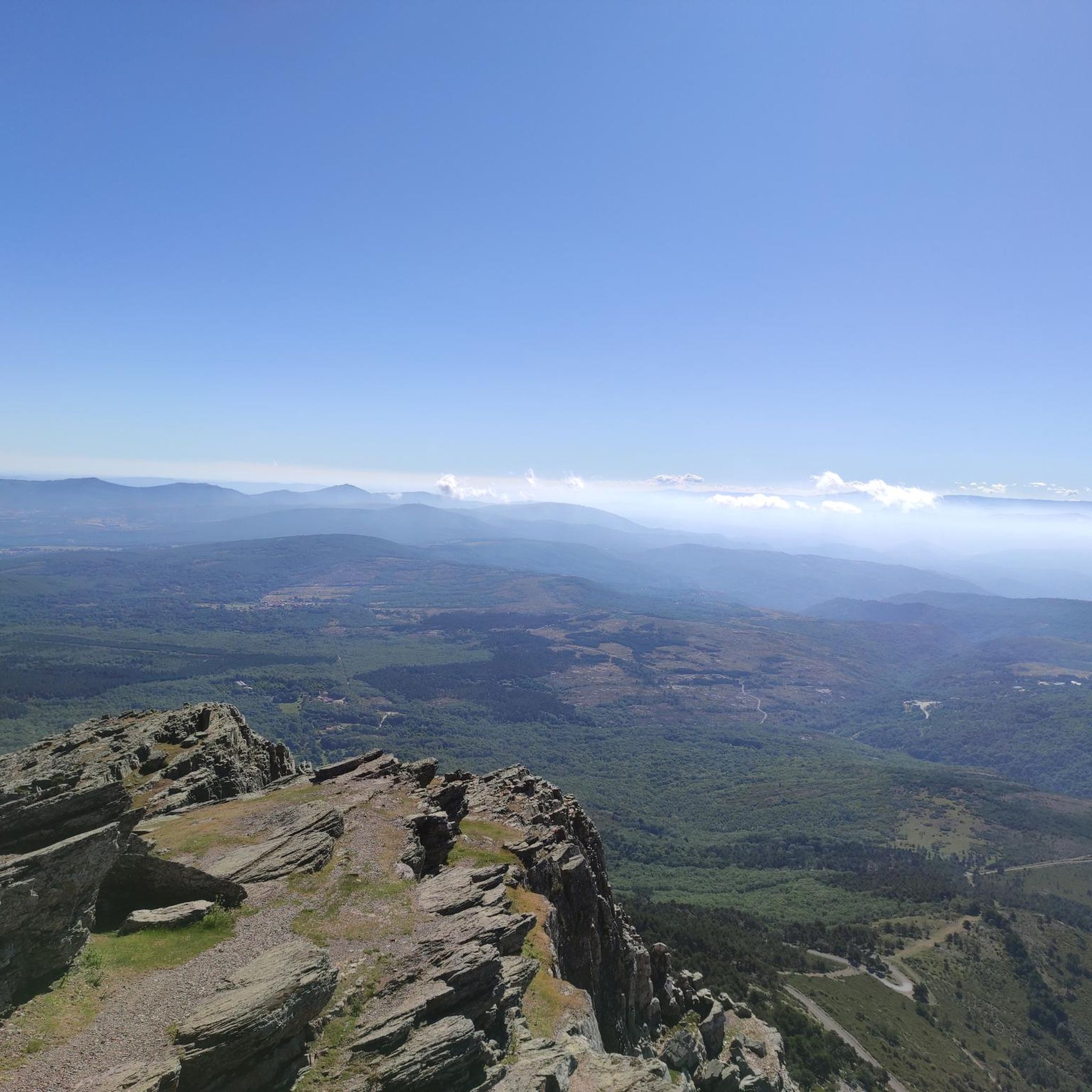
Beautiful top with views and a restaurant run by modern monks.
0
0

The Plaza Mayor of Mogarraz is the heart of the village and one of its most picturesque spots. Oval shape: Unlike other Castilian squares, Mogarraz's has an irregular, enclosed shape, surrounded by traditional mountain houses with timber framing and stone walls. Traditional architecture: Flower-filled balconies, arcades, and facades adorned with the famous portraits from the "Faces of Mogarraz" art project. Social and historical center: Formerly used for markets and popular celebrations, today it serves as a meeting point for visitors and locals alike. Highlights: Central fountain. Views of the church and cobbled streets leading from the square. Restaurants and bars with terraces where you can sample the local mountain cuisine.
1
0
What to see in Mogarraz The Faces of Mogarraz More than 800 portraits painted on the facades, the work of artist Florencio Maíllo, who transformed the village into an open-air museum. This initiative originated from photos taken in the 1960s for residents' national identity cards. Main Square The central oval-shaped square, surrounded by traditional mountain houses with timber framing and stone walls. Church of Our Lady of the Snows A Renaissance-style church, built between the 16th and 17th centuries. Bell Tower An old defensive tower, separate from the church, used as a watchtower in the Middle Ages. Ethnographic Museum – House of Crafts Exhibits traditional crafts such as embroidery, shoemaking, and goldsmithing.
2
0
Founded during the 12th-century repopulation of León by Alfonso IX, within the district of Miranda del Castañar. Declared a Historic-Artistic Site in 1998 and a member of the network of the Most Beautiful Villages of Spain. Its mountain architecture combines stone, wood, and adobe, with flower-adorned balconies and heraldic details.
2
0

Declared a Historic-Artistic Site in 1998, the town of Mogarraz offers visitors a network of narrow streets and passageways dotted with coats of arms belonging to ancient lineages and even to the dreaded Inquisition, original lintels with religious engravings, crosses, and fountains. But what really catches the eye is the exhibition of portraits adorning the facades of the houses where the locals portrayed lived.
1
0

I went in winter to eat there were two bars, one in the square and a hotel. BUT BE CAREFUL AT NIGHT YOU WON'T FIND ANYTHING OPEN. You can stay without dinner
1
0
A very interesting route for its sculptures And the peace that is experienced on the route
0
0
Frequently Asked Questions
What natural features can I explore around El Cabaco?
El Cabaco is nestled within the Las Batuecas-Sierra de Francia Natural Park, offering extensive forests of oak, chestnut, and cork oaks, as well as valleys with streams and rivers. The imposing Peña de Francia mountain, at 1,727 meters, is a prominent natural landmark providing spectacular landscapes and panoramic views from its summit.
What historical and cultural sites are there to visit near El Cabaco?
You can explore the ancient Roman Gold Mines of Las Cavenes, which showcase Roman extraction techniques. Another significant site is the Sanctuary of Our Lady of the Peña de Francia, a 15th-century monastery and pilgrimage site. The Porta Coeli Convent in El Zarzoso, a Gothic-style convent founded in 1445, is also nearby.
Are there any unique villages to visit in the El Cabaco area?
Yes, several charming villages are known for their traditional architecture. Mogarraz is famous for its unique 'Faces of Mogarraz' art project, featuring over 800 portraits on building facades. The Old Town of La Alberca, the first rural town in Spain declared a National Historical Monument, is also a must-see with its picturesque streets and traditional stone houses.
What are the best viewpoints in the El Cabaco area?
The summit of Peña de Francia offers the best panoramic views in all directions, including plains, villages, and the Gabriel y Galán reservoir. Within the sanctuary complex, the 'Balcony of Santiago' and the 'Viewpoint of Santo Domingo' (which includes a sundial) also provide magnificent vistas.
Are there family-friendly activities or attractions around El Cabaco?
Many of the traditional villages like Mogarraz and the Old Town of La Alberca are considered family-friendly for exploring. Additionally, the Water Trail (Camino del Agua) connecting Mogarraz and Monforte de la Sierra is a pleasant circular path suitable for families.
What hiking opportunities are available near El Cabaco?
El Cabaco serves as a starting point for several hiking routes within the Las Batuecas-Sierra de Francia Natural Park. You can find trails leading to Peña de Francia and circular paths like the Water Trail. For more options, explore the Running Trails around El Cabaco guide, which includes various hiking routes.
Can I find routes for mountain biking or road cycling near El Cabaco?
Yes, the region offers diverse terrain for cycling. You can find numerous routes for both mountain biking and road cycling. Check out the MTB Trails around El Cabaco and Road Cycling Routes around El Cabaco guides for detailed tour suggestions.
What kind of wildlife can I expect to see in the Las Batuecas-Sierra de Francia Natural Park?
The Las Batuecas-Sierra de Francia Natural Park is rich in biodiversity. You might spot wild goats, roe deer, wild boar, and various bird species such as black vultures, golden eagles, and Egyptian vultures. The elusive Iberian lynx also inhabits the area, though sightings are rare.
What is the best time of year to visit El Cabaco for outdoor activities?
The region is generally pleasant for outdoor activities during spring and autumn when temperatures are milder. Summer can be warm, but the higher elevations offer cooler conditions. Winter hiking is possible, but some trails at higher altitudes might be affected by snow or ice.
Is there parking available for popular attractions like Peña de Francia?
Yes, there is parking available near the Sanctuary of Our Lady of the Peña de Francia at the summit of Peña de Francia. For other popular trailheads and villages, parking is typically available, though it might be limited in peak season in smaller village centers.
Where can I find traditional food or places to eat in El Cabaco?
El Cabaco and the surrounding villages offer local eateries where you can experience traditional cuisine. The Porta Coeli Convent in El Zarzoso is known for traditional sweets and wafers made by cloistered Franciscan nuns. In nearby villages like Mogarraz and La Alberca, you'll find restaurants and cafes serving regional specialties.
What do visitors enjoy most about the attractions around El Cabaco?
Visitors particularly appreciate the unique charm of villages like Mogarraz with its painted portraits and the picturesque streets of the Old Town of La Alberca. The stunning panoramic views from the Sanctuary of Our Lady of the Peña de Francia and the peaceful, scenic Water Trail are also highly rated experiences.
Most popular attractions around El Cabaco

Get inspired with the komoot mobile app


Explore more
Still not found the Highlight you’re looking for? See guides of the top attractions in other regions:
