The best walks and hikes around Cózar
16
hikers
8
hikes
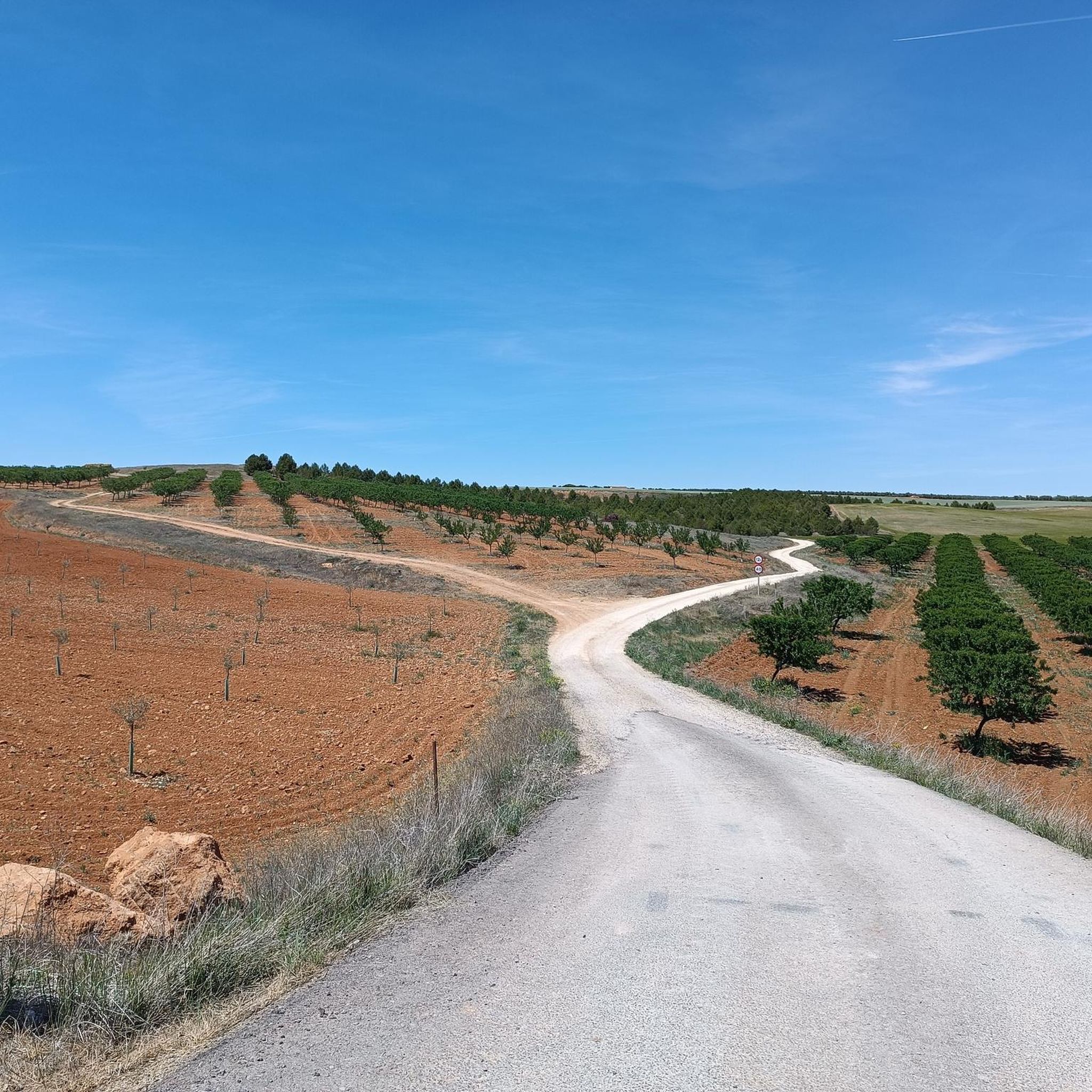
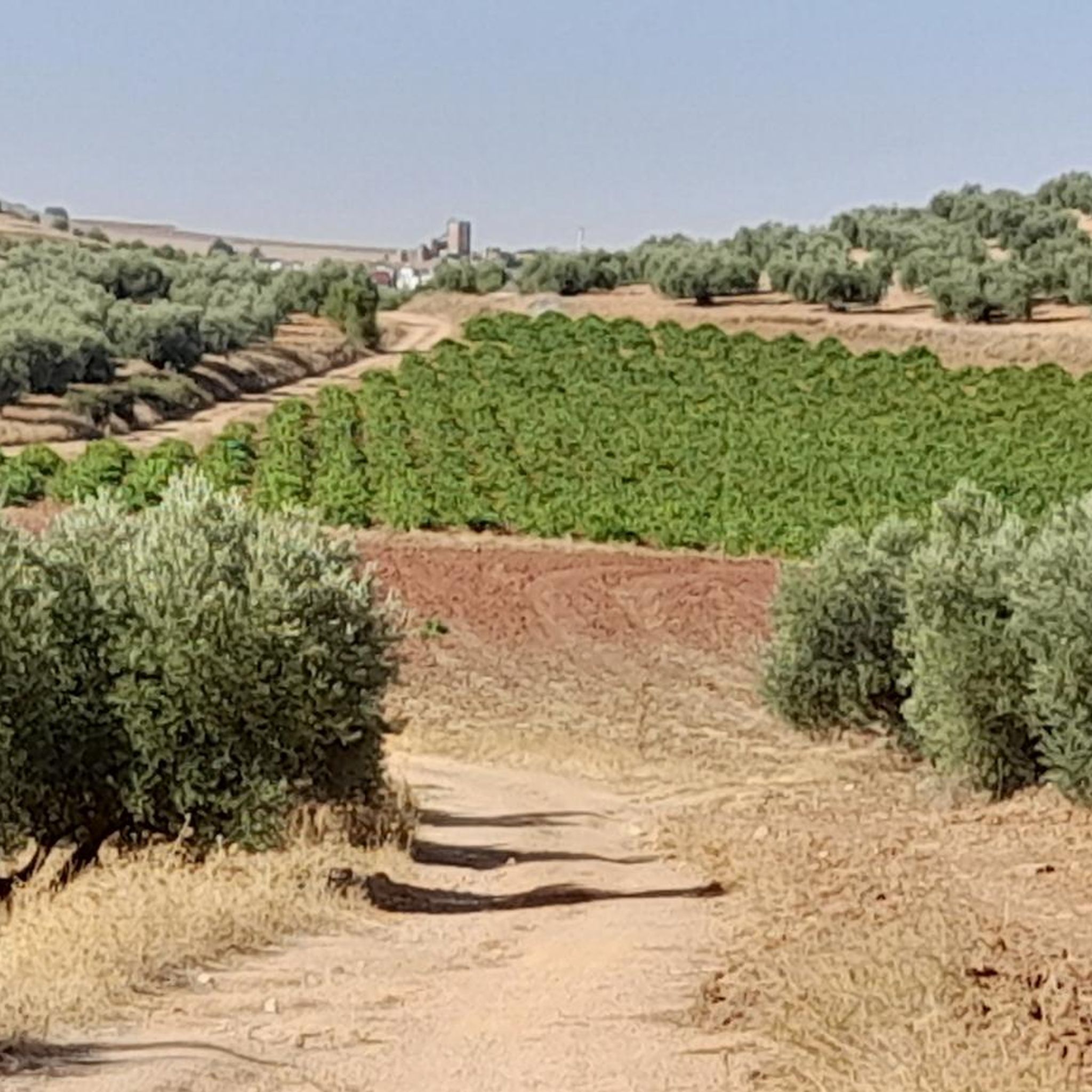
Hiking around Cózar offers diverse landscapes within the Campo de Montiel region of Ciudad Real, Castile-La Mancha, Spain. The area features moderately hilly terrain with elevations ranging from 790 to 950 meters, providing varied gradients. Hikers will encounter expansive olive fields, steppe-like areas, Mediterranean scrubland, holm oak groves, and pastures. The region also includes wetlands, rivers, and reservoirs, contributing to its ecological diversity.
Best hiking trails around Cózar
- The most popular hiking route is Villanueva de los Infantes - Fuenllana…
Last updated: July 10, 2026
1
hikers
12.5km
03:18
120m
120m
Hike the 7.8-mile Villanueva de los Infantes - Fuenllana Circular Trail, a moderate route exploring plains and historical sites.
10.1km
02:44
130m
130m
Moderate hike. Good fitness required. Easily-accessible paths. Suitable for all skill levels.

Sign up for free
10.1km
02:40
80m
80m
Moderate hike. Good fitness required. Easily-accessible paths. Suitable for all skill levels.
9
hikers
Moderate hike. Good fitness required. Easily-accessible paths. Suitable for all skill levels.
3
hikers
Easy hike. Great for any fitness level. Easily-accessible paths. Suitable for all skill levels.
Get access to more routes and recommendations from other explorers.
Sign up for free
Already have an account?
Our route recommendations are based on thousands of hikes, rides, and runs completed by other people on komoot.
Start today with a free account
Your next adventure awaits.
Login or Signup
Popular around Cózar

Tips from the Community

According to local tradition, it served as an Inquisition prison, initially under the jurisdiction of the Jaén Tribunal and later that of Murcia. It reflects the splendor of Villanueva de los Infantes during the 16th, 17th, and 18th centuries. Only the ashlar doorway with a lintel remains, bearing a coat of arms depicting a cross with two crossed bones and a skull.
1
0
After the walk, what better way to end the visit to Villanueva de los Infantes than with some Coca-Colas, some cold beers and some tapas in a typical local bar right in the Plaza Mayor, as its name suggests.
1
0
This manor house was once owned by the Bustos family. It is an emblematic 19th-century building with a historicist façade and magnificent wrought-iron balconies. Inside, it preserves a typical Castilian courtyard with Ionic columns, a trefoil frieze, and coffered ceilings in the galleries and entrance hall. The courtyard of the Casa de Rueda houses the world's first scientific museum dedicated to "the place in La Mancha" mentioned by Cervantes as the starting point for Don Quixote's adventures. It displays the sixteen verifiable facts that form the core of the university study that, in 2005, determined that Villanueva de los Infantes is indeed that "place in La Mancha." The research was conducted by a multidisciplinary scientific team from the Complutense University of Madrid, comprised of ten experts in Geography, History, Philology, Sociology, Mathematics, and Information Science, led by Professors of Sociology Francisco Parra Luna and International Relations Santiago Petschen, and the literary scholar Manuel Fernández Nieto. It also houses the Villanueva de los Infantes Interpretation Centre, the city's History and Archaeology Museum. Opening hours: Monday to Friday, 10:00 a.m. to 7:00 p.m. Saturday and Sunday, 10:00 a.m. to 8:00 p.m. Admission: Free
1
0
It was a junior college where Pedro Simón de Abril, translator of the classics who consolidated Castilian as a literary and scientific language, and Bartolomé Jiménez Patón, an important grammarian, Master of Humanities and Rhetoric, and friend of Francisco de Quevedo and Lope de Vega, taught. Its courtyard is one of the most beautiful in Villanueva de los Infantes, with its ribbed vaults and ochre-colored wooden balustrade. Hours: Monday to Sunday, 10:00 a.m. to 7:00 p.m. Admission: Free.
1
0
The Alhóndiga, built in the mid-16th century as a granary (wheat warehouse) and trading house to manage the intense commercial activity, was transformed into a prison in 1719. Inside, inscriptions carved by prisoners on the walls and columns are still preserved. It currently functions as a cultural center, housing a library, auditorium, and other facilities. Access to the site is free.
1
0
On one side is the Church of Santo Domingo, built in the 17th century following the principles of the Counter-Reformation. Highlights include the main altar with its Baroque altarpiece featuring Solomonic columns. Above it are interesting frescoes depicting Saint Dominic. Among the side chapels, the Chapel of Souls, founded by the Ballesteros family, the Chapel of Ecce Homo, commissioned by the Duke of San Fernando, and the Chapel of Our Lady of the Rosary, commissioned by the Bustos family, are particularly noteworthy. However, the most visited site is the convent, or rather, the cell where Francisco de Quevedo died in 1645. Quevedo's cell, open to the public, is the exact spot where the writer passed away shortly after arriving in Villanueva, already very ill. Following the confiscation of church property in 1844, the convent was closed, and today part of the building houses cultural events and a hotel. The opening hours and admission prices are as follows: Opening Hours: Monday from 11:00 AM to 2:00 PM. Closed Tuesdays. Wednesday to Sunday from 11:00 a.m. to 2:00 p.m. and from 5:00 p.m. to 8:00 p.m. Admission: €2 (Reduced: €1).
1
0
It is an old manor house that originally belonged to the García del Busto family, one of the oldest lineages in the city and owners of the chapel of the first and last burial of Francisco de Quevedo in the Church of San Andrés, where his remains are currently located.
1
0
The Plaza Mayor is Neoclassical in style and a key element of the urban design, housing the main political and religious institutions. The Church of San Andrés is notable for its Neoclassical façade, featuring a deep semicircular arch, an image of Saint Andrew, and the coat of arms of the Habsburgs. Inside, the Chapel of the Busts is preserved, in whose crypt Francisco de Quevedo was buried. Visiting hours and prices are: Hours: Sunday from 11:00 a.m. to 12:00 p.m. Admission: General €2 (Reduced €1).
1
0
Frequently Asked Questions
What kind of terrain can I expect when hiking around Cózar?
The terrain around Cózar is moderately hilly, with elevations typically ranging from 790 to 950 meters. You'll encounter a diverse landscape featuring expansive olive fields, steppe-like areas, Mediterranean scrubland, holm oak groves, and pastures. Some routes also pass by wetlands, rivers, and reservoirs, adding to the varied scenery.
Are there any easy hiking trails suitable for beginners in Cózar?
Yes, there is at least one easy hiking trail available around Cózar. While most routes are moderate, options exist for those seeking a gentler experience. These trails allow you to enjoy the region's natural beauty without significant challenge.
What are some notable natural features or wildlife I might see on the trails?
Cózar is situated within a Special Protection Area (ZEPA) for steppe birds, making it an excellent spot for birdwatching. You might observe species such as great bustards, little bustards, sandgrouse, Dupont's larks, and stone curlews, as well as various raptors like Montagu's harrier. The landscape itself is characterized by olive groves, Mediterranean scrubland, and holm oak forests.
Are there any circular hiking routes available in Cózar?
Many of the hiking routes around Cózar are circular, offering convenient starting and ending points. For example, you can explore The Olive Fields of Almedina — circular or the Landscapes of Torre de Jan Abad — circular, both providing immersive experiences through the regional scenery.
What historical or cultural landmarks can I explore near the hiking trails?
The Campo de Montiel region, where Cózar is located, has a rich historical and cultural heritage, famously associated with *Don Quixote*. Nearby, you can visit several historical sites and religious buildings. Notable attractions include the Main Square and the Convent of Santo Domingo. The Church of San Andrés and the Ermita del Cristo de Jamila also offer glimpses into the area's past.
What is the best time of year to go hiking in Cózar?
The region's Mediterranean climate generally makes spring and autumn ideal for hiking, offering milder temperatures and pleasant conditions. Summers can be hot, especially in the middle of the day, while winters are typically mild but can have cooler temperatures.
Are there any longer, more challenging routes for experienced hikers?
While most routes are classified as moderate, some offer longer distances. For instance, the Convent of Santo Domingo – Main Square loop from Villanueva de los Infantes covers approximately 14.4 km, providing a more extended trek through the area's landscapes and historical sites.
What do other hikers say about the trails in Cózar?
Hikers often appreciate the diverse landscapes, from olive groves to steppe-like areas, and the opportunity to experience the natural beauty of the Campo de Montiel. The trails are generally well-suited for exploring the region's unique ecosystems and cultural heritage.
Can I find trails that combine natural scenery with historical points of interest?
Absolutely. Many routes in the area allow you to experience both the natural beauty and the rich history. For example, the Parque de la Glorieta – Church of San Andrés loop from Villanueva de los Infantes takes you through scenic areas while passing by significant landmarks like the Church of San Andrés.
What is the typical elevation gain on hikes around Cózar?
The hikes around Cózar feature moderately hilly terrain. While specific elevation gains vary by route, you can expect manageable ascents and descents. For example, the Villanueva de los Infantes - Fuenllana Circular Trail has an elevation gain of around 118 meters, providing a good workout without being overly strenuous.
Are there any routes that specifically highlight the olive groves of the region?
Yes, to fully immerse yourself in the characteristic olive groves of the region, consider hiking The Olive Fields of Almedina — circular. This moderate 10.1 km path is designed to showcase this iconic agricultural landscape.
Most popular routes around Cózar
Most popular attractions around Cózar

Get inspired with the komoot mobile app


Explore more
Browse the best Hikes in other regions.
