The best walks and hikes around Lake Gubishche
4.0
(2)
25
hikers
10
hikes
Hiking around Lake Gubishche offers a selection of trails primarily located near Daugavpils. The region features routes with minimal elevation gain, making them accessible for various activity levels. These trails often traverse urban and suburban landscapes, providing opportunities to explore local points of interest. The terrain is generally flat, suitable for easy walks.
Best hiking trails around Lake Gubishche
- The most popular hiking route is Jaunbūve loop from Ķīmiķu ciemats, a 3.3 miles (5.2 km) trail that takes 1…
Last updated: July 12, 2026
3
hikers
5.25km
01:21
20m
20m
Easy hike. Great for any fitness level. Easily-accessible paths. Suitable for all skill levels.
2
hikers
5.85km
01:30
20m
20m
Easy hike. Great for any fitness level. Easily-accessible paths. Suitable for all skill levels.

Sign up for free
4
hikers
Easy hike. Great for any fitness level. Easily-accessible paths. Suitable for all skill levels.
5.0
(1)
5
hikers
Moderate hike. Good fitness required. Easily-accessible paths. Suitable for all skill levels.
3.0
(1)
6
hikers
5.33km
01:22
20m
20m
Easy hike. Great for any fitness level. Easily-accessible paths. Suitable for all skill levels.
Get access to more routes and recommendations from other explorers.
Sign up for free
Already have an account?
Our route recommendations are based on thousands of hikes, rides, and runs completed by other people on komoot.
Start today with a free account
Your next adventure awaits.
Login or Signup
Popular around Lake Gubishche
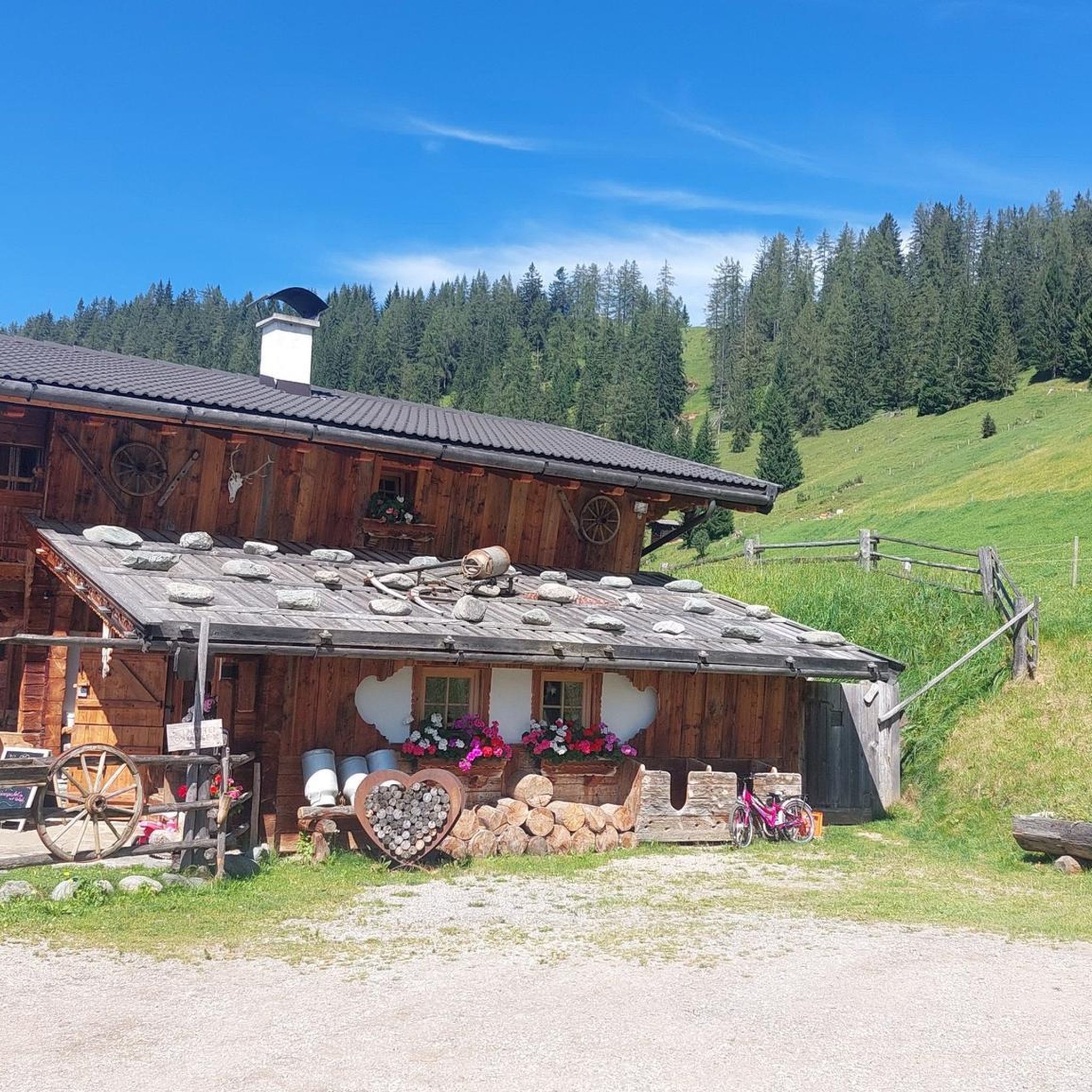
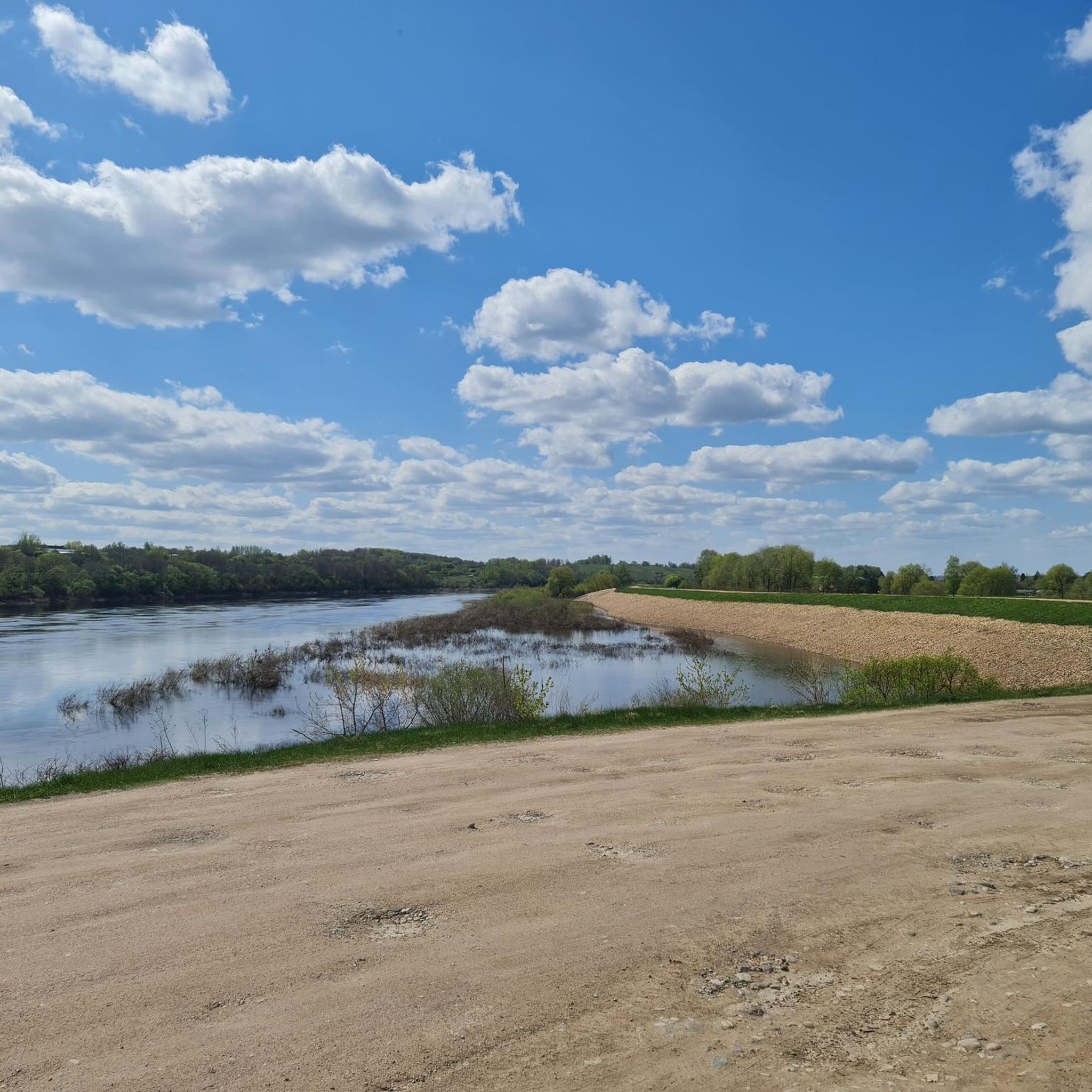
Tips from the Community

The old town center of Daugavpils, with its historic two-story houses, is well worth a visit because of its beautiful design. The art installed in many places throughout the city is striking.
0
0
The fortress as a whole is very worth seeing, even if it would deserve better use to prevent it from being left to decay.
0
0


Today history in the fortress territory is witnessed by historical large-calibre cannons. In these days nine old cannons can be found here: five of them are from cast-iron, while four – made from steel. They were manufactured in the second half of the 19th century in an ordnance plant in Perm and in Obukhov steel casting plant (Russia). All cannons are made with threading in a gun tube, which increased the range of a missile and improved accuracy and close pattern of shooting. Two of the cannons are placed at the main entrance of the Commandant’s house facing the fortress garden. In the very middle of the garden three cannons enrich the fountain. The steel mortar gun (bore diameter 205 mm, model of 1872) of the fortress is placed on the “Wallgang” (a protected place on the upper part of a rampart) of the main rampart curtain between the Nicholas gate and the 7th bastion – in the way how cannons were placed when the fortress switched to defence emergency. One more steel cannon with the bore diameter of 107 mm (model of 1887) on the original Venglovski gun-mount is placed at the intersection of the streets Imperatora and Konstantīna. Two steel artillery tubes were installed at Hekeļa Street 3, yet now they are moved to a warehouse belonging to the building proprietor. https://rm.coe.int/16806f5dfd
0
0
Houses for officers were built in the 1820s-1830s on both sides of the Commandant’s house and the fortress garden. 1. Oficieru Street has still preserved two houses (No 2 and 8) also for officers at the commandant and committee of the military registration office, yet the architecture of these houses differs from that of other buildings. Officer Assembly with its own club and library was functioning in the fortress. In the 1920s-1940s the building was occupied by headquarters and other services of Zemgale division, different clubs were situated there as well. In order to view internal buildings of the citadel, choose the thematic route “Commandant’s Route” visible on the map that you can receive in Daugavpils Fortress Culture and Information Centre (Nikolaja Street 5). https://rm.coe.int/16806f5dfd
0
0
To support the garrison needs, a considerable number of various warehouses were located in the fortress territory. Three bastions facing the bridgehead were used for powder magazines. Today two of them can be seen in the 7th and 8th bastions. The inside of the bastion is made as a room surrounded by a safety gallery (to protect from fire and humidity) – here gun powder was kept in special barrels. It is probable that originally powder magazines were thatched with turves. In the yard of the 8th bastion a long provisions magazine building (1834- 1837) is located that was used to store the fortress food supplies. This building was particularly guarded during the Soviet years since it was used as baggage and armament magazine (Nikolaja Street 9). A warehouse for pontoons of the Birago system was placed in the citadel corner opposite to the 3rd bastion (head of Aleksandra Street). These sheds have been partially preserved till our days. https://rm.coe.int/16806f5dfd
0
0
In the 1820s-1850s four spacious two-storey stone barracks to house soldiers were built not far from the fortress gates. Three of the buildings have also a semibasement floor that was used for kitchen, lavatory and washing rooms. Toilet blocks, utility rooms and wells were located in barrack courtyards. In the 1920s-1940s soldiers of Zemgale division regiments were lodged in these buildings. The premises were considerably rebuilt during the Soviet times to meet the needs of the aviation school cadets. A third floor was built on the Nicholas barrack (Nikolaja Street 2), while the new Nicholas barrack (Mihaila Street 11) was turned into a school canteen. Today these spacious buildings are not used. https://rm.coe.int/16806f5dfd
0
0
Mark Rothko Art Centre is located in the building of the artillery arsenal (1830-1833). It is a place where the past has regained its second wind and is in step with the time, thus creating a unique place for varied creative manifestations. Some day the place was used to keep cannons, ammunition wagons and prodgy, swords and rifles, regimental colours and drums. The building is architectural monument of State significance. In the Art Centre one can see the original pieces of the worldknown artist Mark Rothko, born in Daugavpils, as well as to visit the exposition devoted to this artist. Mark Rothko (b. Marcus Rothkowitz) was born September 25, 1903. In 1913 his family emigrated to the United States of America. He is one of the most outstanding and remarkable artists of the second half of the 20th century, founder of the abstract expressionism movement. In the art centre it is also possible to visit changing personal and group exhibitions of well-known Latgalian, Latvian and foreign artists. The total surface of the exhibition halls is 2000 m2. One may visit expositions and exhibitions independently or accompanied by a guide. The tour around all art centre exhibitions takes 1 hour and 30 minutes, the tour of the A sector (M. Rothko biography and creative works) takes 45 minutes. The art centre also offers ordering tours around the fortress. Tours can be ordered by phone: +371 654 30279, +371 65430273, +371 20364226. Opening hours of Mark Rothko Art Centre: Monday – closed; Tuesday and Sunday – from 11:00 to 17:00; Wednesday, Thursday, Friday, and Saturday – from 11:00 to 19:00. Mihaila Street 3. +371 654 30 253 www.rotkocentrs.lv, rotkocentrs@ daugavpils.lv
1
0
Frequently Asked Questions
How many hiking trails are available around Lake Gubishche?
There are over 10 hiking routes available around Lake Gubishche on komoot. These trails primarily offer easy to moderate experiences, with 8 routes classified as easy and 2 as moderate.
Are there any easy hiking trails suitable for beginners or families?
Yes, the region around Lake Gubishche is well-suited for easy hikes. Many trails, like the Jaunbūve loop from Ķīmiķu ciemats, are relatively flat and traverse urban or suburban landscapes, making them accessible for various activity levels. The Lake Gogebic State Park also offers the two-mile Lake Gogebic Forest Trail, ideal for a relaxed walk.
What kind of landscapes can I expect to see while hiking near Lake Gubishche?
Hiking around Lake Gubishche offers a mix of urban paths, local parks, and green spaces within Daugavpils. The broader region, encompassed by the Ottawa National Forest, features diverse topography including dense forests, and scenic vistas. You can expect serene walks through backcountry areas, with opportunities for birdwatching and observing local flora.
Are there any circular walks around Lake Gubishche?
Yes, many of the routes around Lake Gubishche are designed as loops. For example, the Jaunbūve loop from Daugavpils is an easy circular path through residential areas and green spaces. Another option is the Daugavpils University Sundial and Public Garden – Unity House (Vienības Nams) loop from Daugavpils, which takes you through urban environments.
What interesting places or landmarks can I explore on a hike?
While hiking around Lake Gubishche, you can explore points of interest within Daugavpils. The Daugavpils University Sundial and Public Garden – Unity House (Vienības Nams) loop from Daugavpils specifically highlights these urban landmarks. Further afield, the Ottawa National Forest offers trails leading to historic sites, and the Black River National Forest Scenic Byway provides access to several beautiful waterfalls.
Are there any waterfalls accessible via hiking trails near Lake Gubishche?
Yes, a short drive from Lake Gubishche, the Black River National Forest Scenic Byway offers access to five beautiful waterfalls: Great Conglomerate Falls, Potawatomi, Gorge, Sandstone, and Rainbow Falls. All of these are accessible via hiking trails, providing excellent opportunities for scenic walks.
What do other hikers enjoy most about hiking in Lake Gubishche?
The area is highly rated by the komoot community, with an average score of 4.0 stars from over 2 reviews. Hikers often appreciate the accessible, flat terrain and the convenience of exploring urban paths and local green spaces within Daugavpils.
Is there public transport access to the hiking trails?
Given the urban nature of many trails around Lake Gubishche, particularly those starting from Daugavpils like the Jaunbūve loop from Daugavpils, it is likely that public transport options within the city can provide access to trailheads. For specific routes, checking local Daugavpils public transport maps would be advisable.
What is the best time of year to go hiking around Lake Gubishche?
The region offers hiking opportunities across different seasons. While the guide data doesn't specify a 'best' time, the diverse terrain of the Ottawa National Forest suggests that spring and fall would be ideal for enjoying the foliage and milder temperatures. Winter hikes are also possible for those equipped for colder conditions.
Can I expect to see wildlife while hiking in the area?
Yes, the region around Lake Gubishche, especially within the vast Ottawa National Forest, is rich in wildlife. Hikers can spot various birds and observe local flora like ferns and fungi. The Lake Gogebic Forest Trail in Lake Gogebic State Park is also a prime spot for birdwatching.
Are there any longer, more adventurous routes for experienced hikers?
While many routes directly around Lake Gubishche are easy, the nearby Porcupine Mountains Wilderness State Park, about 30 minutes away, offers more challenging and extensive trails. These include strenuous options like the 25.25-mile Porcupine Mountains Traverse and the 23.31-mile Porcupine Mountains Scenic Wilderness Loop, providing remote experiences and summit views.
Are there any viewpoints or scenic overlooks on the trails?
The diverse terrain of the Ottawa National Forest and nearby Porcupine Mountains Wilderness State Park includes scenic vistas. The Porcupine Mountains, for instance, are famous for expansive views like the Lake of the Clouds overlook, offering rewarding sights for hikers willing to venture further.

Get inspired with the komoot mobile app


Explore more
Browse the best Hikes in other regions.
