Top 13 Castles around Königstetten
Castles around Königstetten provide insights into the region's historical significance. Königstetten is a wine-growing village in Lower Austria, characterized by its natural landscape and historical elements. The area features a mix of well-preserved historical sites and castle ruins, offering diverse exploration opportunities. These locations often integrate with local cycling paths and natural surroundings.
Best castles around Königstetten
- The most popular castles is Ried Castle Ruins, a castle that is the ruin of a spur castle on the local mountain…
Last updated: July 6, 2026
Danube Cycle Path
Highlight (Segment) • Cycleway
Translated by Google •
Tip by

Greifenstein Danube Oxbow
Highlight • Lake
Translated by Google •
Tip by

Sign up now to discover places like this
Get recommendations on the best single tracks, peaks, & plenty of other exciting outdoor places.
Sign up for free
Greifenstein Castle 🏰
Highlight • Castle
Translated by Google •
Tip by

Greifenstein Castle
Highlight • Castle
Translated by Google •
Tip by

Ried Castle Ruins
Highlight • Castle
Translated by Google •
Tip by

Sign up for free to discover even more castles around Königstetten.
Sign up for free
Already have an account?
Start today with a free account
Your next adventure awaits.
Login or Signup
Tips from the Community

As a possible founder, the Babenberg ministerialis Konrad around 1170/80 comes into question. In the first half of the 13th century, the Kuenringer came into possession of the castle under unclear circumstances; Hadmar II. achieved the separation of the chapel in Ried from the parish association of Sieghartskirchen in 1211. His grandson Albero V. no longer shared the original interests in the seat and exchanged the lordship in 1256/59 with King Ottokar II. for the enfeoffment with Rossatz and the pledge for Zwettl. In 1280, his sons Leudolt I. and Heinrich IV. von Kuenring had the exchange confirmed by King Rudolf I. von Habsburg in writing.
2
0

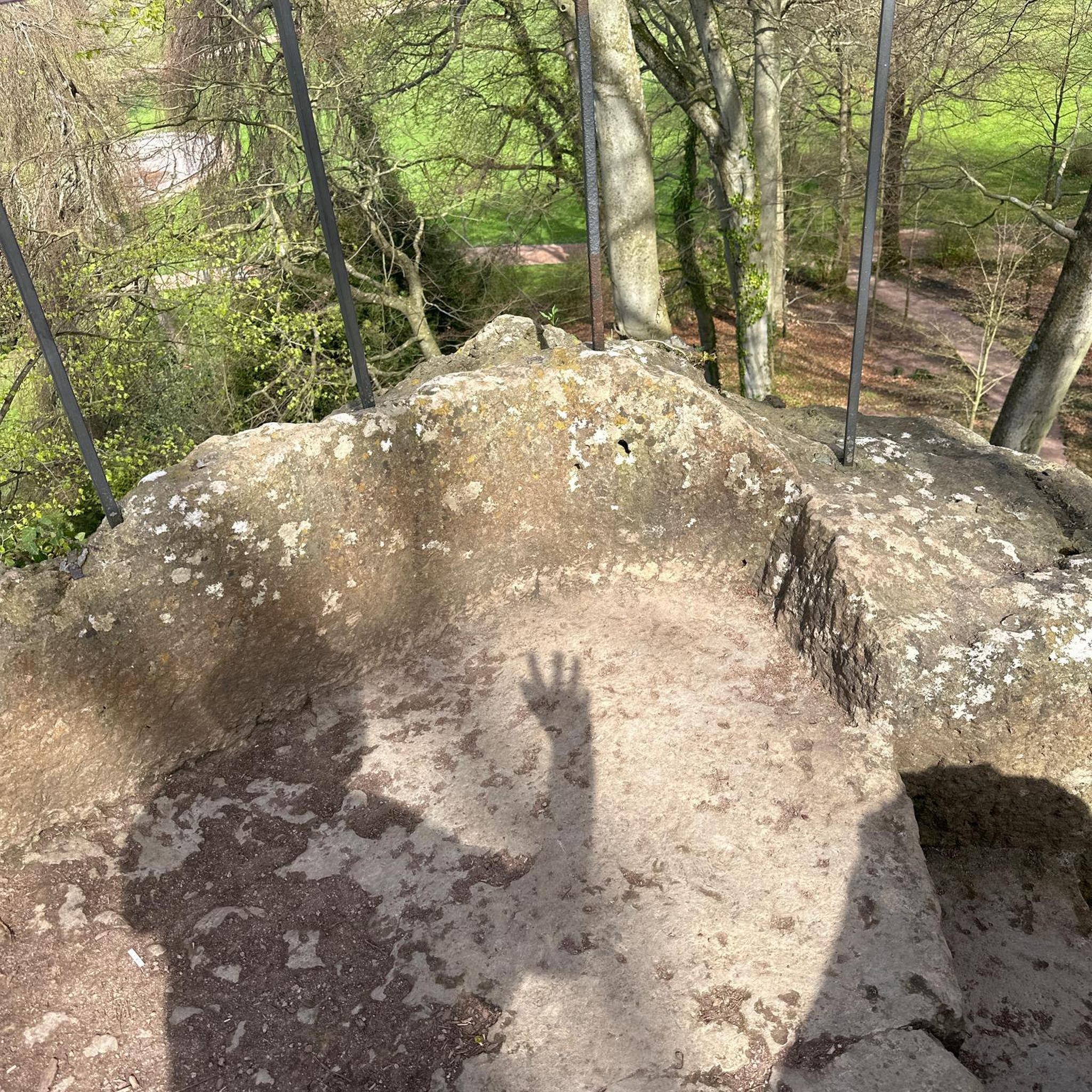
The ruins are surrounded by a moat.
1
0


From this vantage point, there is a sweeping view of Greifenstein Castle, which sits elevated above the Danube backwater and dominates the landscape. The castle forms a striking historical landmark within the surrounding countryside and is clearly visible from the cycle path. Greifenstein Castle is a medieval hilltop castle in Lower Austria. It was probably built in the 11th century and was first documented in 1135. Over the course of its history, it has served various functions, including as part of the defensive system along the Danube and, at times, as a prison for the ecclesiastical court.
0
0
From the cycle path, there is an unobstructed view of Greifenstein Castle, which sits high above the river. While cycling along the water, the castle is clearly visible for much of the way and serves as a prominent landmark in the landscape. Greifenstein Castle is a medieval hilltop castle in Lower Austria. It was probably built in the 11th century and was first documented in 1135. Historically, it served both military functions as part of the Danube defenses and as a prison for the ecclesiastical court. In the 19th century, the complex was remodeled under Prince Johann I of Liechtenstein. Today, the castle is privately owned and not open to the public, but it can be easily seen from the Danube Cycle Path.
0
0

Nice castle. Unfortunately, I don't know the name.
1
1
Greifenstein Castle sits atop a rocky outcrop above the Danube River, offering impressive views of the surrounding area. It was probably built in the 11th century by the Bishopric of Passau and first documented in 1135. Over the centuries, the castle has experienced numerous sieges, destruction, and reconstructions, including its capture by the Turks in 1529 and its restoration in the Romantic style in the 19th century. The complex consists of a mighty keep, a palace, and a chapel, complemented by Gothic-inspired windows and a viewing terrace. Today, the castle is privately owned and not open to the public, but remains a popular destination for cycling tours, offering magnificent views of the Danube and the surrounding area.
2
0
Frequently Asked Questions
What types of historical structures can I explore around Königstetten?
The region around Königstetten offers a diverse range of historical structures, including castle ruins, moated castles, and fortified castles. You can find remnants of ancient fortifications like Ried Castle Ruins, as well as more preserved sites such as Judenau Moated Castle and Schloss Purkersdorf.
Are there family-friendly castles to visit near Königstetten?
Yes, several castles in the area are considered family-friendly. Ried Castle Ruins, for instance, is suitable for small children and offers a short, nice hike. Judenau Moated Castle is also listed as family-friendly, offering a picturesque setting that can be enjoyed by all ages.
What outdoor activities can I combine with a castle visit?
Many castles around Königstetten are integrated into natural landscapes, offering opportunities for outdoor activities. Judenau Moated Castle is located directly on several cycling paths. For hiking, you can explore routes like the 'Ancient Beech Forest – Millennium Oak loop' or 'Fragnerplatzl Viewpoint loop' from Königstetten. Find more hiking options at Hiking around Königstetten.
Are there any castles near Königstetten that are good for cycling?
Yes, Judenau Moated Castle is notably situated on the Große Tulln and is accessible via several cycling paths, making it a great stop during a bike tour. The nearby Danube Cycle Path also offers excellent cycling opportunities with scenic views.
What is the historical significance of <a href="https://www.komoot.com/highlight/5584407" target="_blank" rel="noopener">Schloss Purkersdorf</a>?
Schloss Purkersdorf was originally built around 1000 AD as a fortified castle. It served as the Imperial Forest Office for the Vienna Woods for centuries and has been rebuilt multiple times after fires, including during the Turkish sieges. Today, it houses the district court and a local history museum, preserving its rich past.
Can I find viewpoints or natural attractions near the castles?
Absolutely. The region is rich in natural beauty. Near the castles, you can find highlights like the Greifenstein Danube Oxbow, which is excellent for swimming and relaxing, offering beautiful views. Ried Castle Ruins also provides a viewpoint within a forest setting.
What do visitors particularly enjoy about the castles around Königstetten?
Visitors appreciate the blend of historical exploration and natural beauty. Many enjoy the scenic settings, such as Judenau Moated Castle's picturesque location on cycling paths. The opportunity for short, pleasant hikes, especially to sites like Ried Castle Ruins, is also highly valued, often described as suitable even for small children.
Are there running trails available near the castles?
Yes, the area around Königstetten offers various running trails that can be combined with castle visits. You can explore routes like the 'Kogelsteig – Leopold-Figl-Warte loop' or the 'Königstetten Church loop'. For more options, check out Running Trails around Königstetten.
What is the best time to visit castles around Königstetten?
The castles and their surrounding natural areas can be enjoyed throughout the year. Spring and autumn offer pleasant temperatures for hiking and cycling. Summer is ideal for combining castle visits with activities at natural attractions like the Greifenstein Danube Oxbow. Even in winter, some trails near the ruins can offer unique, quiet walks.
Is there a castle that is particularly well-preserved or offers a museum?
Schloss Purkersdorf, while having undergone rebuilds, is a substantial historical building that now houses a local history museum, offering insights into the region's past. While Königstetten itself has a 'former Schloss' on its main square, its details are limited for traditional visits.
Are there any mountain biking trails near the castles?
Yes, for mountain biking enthusiasts, there are trails available in the broader region. You can find routes such as the 'Idyllic Danube – Tulln Main Square loop' or the 'Klosterneuburg Abbey – Greifenstein Power Plant loop'. More MTB options are detailed in MTB Trails around Königstetten.
Most popular routes around Königstetten
Most popular attractions around Königstetten

Get inspired with the komoot mobile app


Explore more
Looking for the best castles somewhere else? Discover other guides around Königstetten:
