The best walks and hikes in Dome Wilderness
4.8
(43)
746
hikers
25
hikes
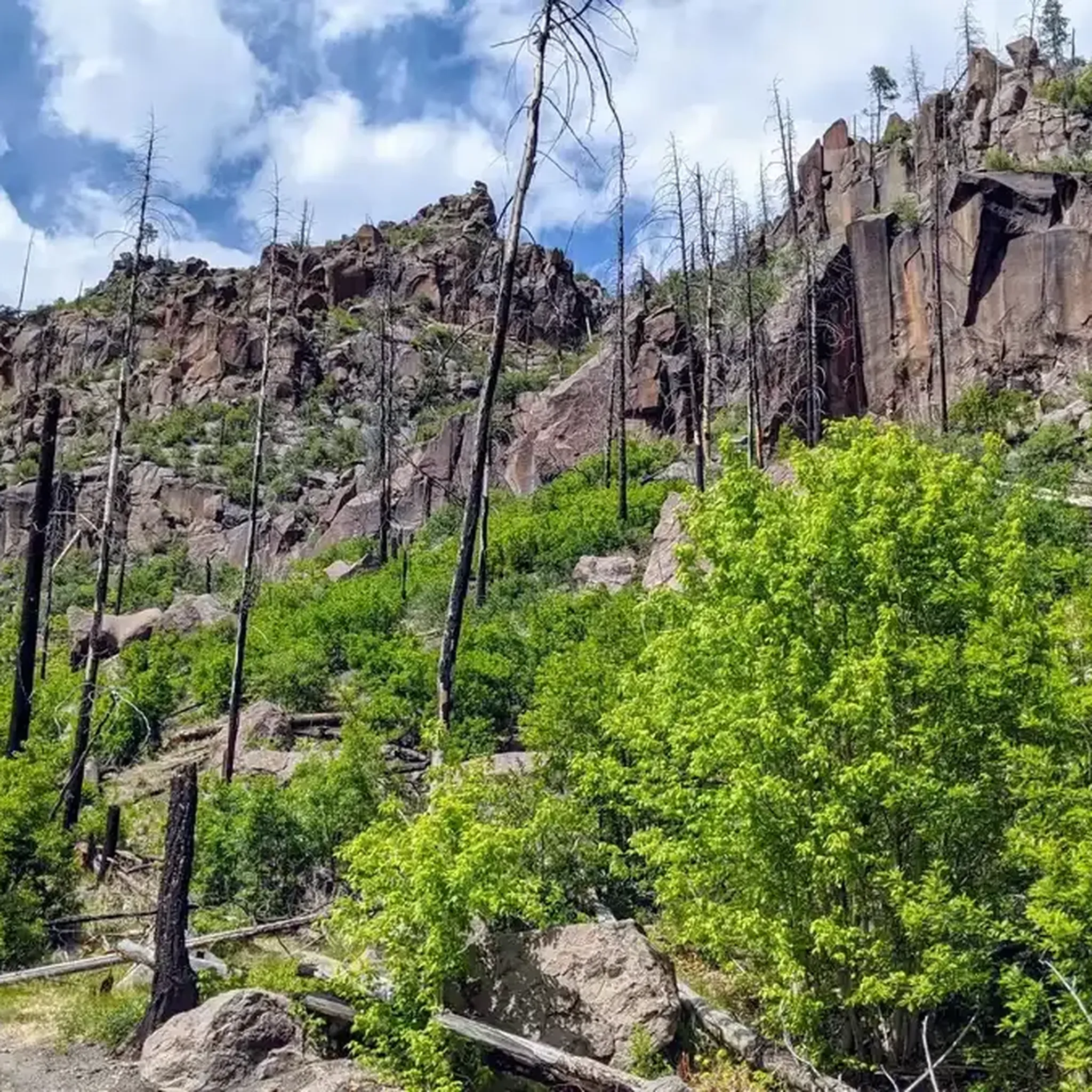
Hikes in Dome Wilderness explore a landscape of canyons and mesas within the Jemez Mountains of New Mexico. The region is characterized by its volcanic geology, with elevations ranging from 5,800 feet (1,768 m) in its canyons to over 8,200 feet (2,500 m) near its high points. The area's trails pass through stands of pine trees and offer access to views of the surrounding mountain ranges.
Best hiking trails in Dome Wilderness
- The most popular hiking route is Saint Peter's…
Last updated: October 4, 2026
1
hikers
19.9km
06:08
710m
710m
Hard hike. Very good fitness required. Easily-accessible paths. Suitable for all skill levels.
18.1km
05:32
660m
660m
Hard hike. Very good fitness required. Easily-accessible paths. Suitable for all skill levels.

1
hikers
8.02km
02:57
250m
280m
Moderate hike. Good fitness required. Mostly accessible paths. Sure-footedness required.
1
hikers
2.81km
00:49
20m
180m
Easy hike. Great for any fitness level. Easily-accessible paths. Suitable for all skill levels.
6
hikers
6.36km
01:55
210m
210m
Easy hike. Great for any fitness level. Easily-accessible paths. Suitable for all skill levels.
Get access to more routes and recommendations from other explorers.
Already have an account?
Our route recommendations are based on thousands of hikes, rides, and runs completed by other people on komoot.
Start today with a free account
Your next adventure awaits.
Popular around Dome Wilderness
Tips from the Community

Painted Cave is an archaeological site with Ancestral Puebloan Pictographs. The paintings are made from well-preserved red paint and depict people, animals, buildings, and celestial images. Runners can either begin at the Dome Trailhead just outside Bandelier National Monument or begin at the monument's Visitor Center. The Dome Trailhead is closed from January through mid-April.
0
0
Saint Peter's Dome can be reached in a few ways. The shorter way is: park at the Dome Trailhead Parking Lot and run on Saint Peter's Dome Road, a 4.3-mile round trip to the top of Saint Peter's Dome. The longer way is: park on FR289 Dome LO Road, and wind through the Dome Wilderness on Saint Peter's Dome Trail, 11.2 miles round trip. The top of Saint Peter's Dome has expansive views of the desert and a fire lookout marking the top.
0
0

Boundary Peak is located at the boundary of Bandelier National Monument. To get here, start at the Dome Trailhead, but keep in mind that it is not accessible from January through mid-April due to seasonal road closures.
0
0
The Yapashi Ancestral Pueblo site's ruins are on the Pajarito Plateau in the Bandelier backcountry. Beyond the ancient ruins, runners can enjoy the panoramic views of the volcanic landscape formed by the ancient Valles Caldera eruption. These ruins were made by the Keres people in 1200–1500 CE. Some of the buildings were up to three stories tall and had hundreds of rooms.
0
0
Ponderosa Group Campground has vault toilets and water spigots and is just off of New Mexico Highway 4. The campsites can hold 10–50 people, and there is access to the Frijoles Canyon Shuttle running from mid-May to mid-October. This campground was affected by the Las Conchas Fire back in 2011, and today it is repaired and running well.
0
0
The Dome Wilderness is approximately 5,200 acres in size and was set aside as wilderness land in 1980. Dome Wilderness is right next to the Bandelier Wilderness, and even though a fire came through in 1996, today visitors can enjoy trees, rolling hills, and grassy land.
0
0
Saint Peter's Dome can be reached in a few ways. The shorter way is: park at the Dome Trailhead Parking Lot and hike on Saint Peter's Dome Road, a 4.3-mile round trip to the top of Saint Peter's Dome. The longer way is: park on FR289 Dome LO Road, and wind through the Dome Wilderness on Saint Peter's Dome Trail, 11.2 miles round trip. The top of Saint Peter's Dome has expansive views of the desert and a fire lookout marking the top.
0
0

Upper Frijoles Crossing is where the Ponderosa, Frijoles Rim, Frijoles, and Apache Springs Trails all intersect. This spot also has fantastic views down the lush canyon and is a great place to pause and take some photos and sip some water because it can get hot out there!
0
0
Frequently Asked Questions
What is the best time of year to hike in the Dome Wilderness?
Spring and fall are the ideal seasons for hiking in the Dome Wilderness. Spring brings pleasant temperatures and blooming wildflowers, while autumn offers cooler weather perfect for longer treks. Summers can be very hot, with a risk of afternoon thunderstorms during the monsoon season, and winter can bring snow and cold conditions at higher elevations.
Are there any easy, family-friendly trails in the Dome Wilderness?
Yes, there are several easier options suitable for families. While many trails in the wilderness are rugged, you can find less strenuous hikes. A good example is the Ponderosa Trail to Upper Frijoles Crossing, a relatively short 4-mile (6.4 km) walk through a beautiful pine forest.
Are dogs allowed on the trails in the Dome Wilderness?
Yes, dogs are generally permitted in the Dome Wilderness, but they must be under your control at all times to protect wildlife and other hikers. It's best practice to keep them on a leash. Be sure to carry enough water for your dog, as natural water sources are very limited.
How difficult is the Saint Peter's Dome Trail?
The Saint Peter's Dome via Saint Peter's Dome Trail is considered a difficult hike. The route is over 11 miles (18 km) long and involves a significant elevation gain of more than 2,100 feet (650 m). It requires a good level of fitness and preparation, but rewards hikers with fantastic panoramic views from the top.
Are there any backpacking or multi-day loop trails available?
The rugged terrain and network of trails in and around the Dome Wilderness lend themselves to creating multi-day backpacking trips. While there are few formally designated loops, experienced hikers can link different trails. The Apache Spring Trailhead to Water Canyon loop is a challenging 11.3-mile (18.2 km) route that offers a taste of the area's backcountry character.
What are the trail conditions like on the Capulin Trail?
The Capulin Trail generally follows a high mesa, running parallel to Capulin Canyon. Like many trails in a designated wilderness area, it can be primitive and less maintained than trails in a national park. Hikers should be prepared for a rugged path and be comfortable with navigation. Always check for recent trail reports before heading out.
Can I see any prehistoric ruins while hiking?
Yes, the region is rich in cultural history, and it is possible to see prehistoric ruins. The adjacent Bandelier National Monument is famous for its cliff dwellings and archeological sites. Hikes that explore the canyons in this area, such as the challenging trek to Painted Cave, can offer glimpses into the past. Remember to treat these sites with respect and leave no trace.
How do I get to the trailheads in the Dome Wilderness?
Access to the Dome Wilderness is typically via unpaved forest roads, such as Forest Road 289 and Forest Road 142. These roads can be rough and may require a high-clearance or 4WD vehicle, especially after rain or snow. Always check current road conditions with the Santa Fe National Forest before your trip.
Are there any slot canyons to explore in the area?
While the Dome Wilderness itself is known more for its broader canyons and mesas, the nearby Kasha-Katuwe Tent Rocks National Monument is famous for its slot canyons. The Cave Loop Trail and Kasha-Katuwe Tent Rocks Slot Canyon hike is a popular and accessible way to experience this unique geological formation. Note: Always check the status of Kasha-Katuwe as access can be restricted.
What do other hikers say about the trails in Dome Wilderness?
The hiking routes in the Dome Wilderness are highly rated by the komoot community. Hikers often praise the solitude and the stunning, expansive views from the high mesas and peaks. The feeling of being in a truly wild and remote landscape is a common theme in reviews.
Are there any water sources on the trails?
You should not rely on finding water in the Dome Wilderness. Natural water sources like springs and streams are extremely scarce, seasonal, and can be unreliable. It is essential to carry all the water you will need for your entire hike, plus extra for emergencies.
Do I need a permit to hike or camp in the Dome Wilderness?
Generally, permits are not required for day hiking or backpacking in the Dome Wilderness. However, regulations can change, especially regarding camping or group size. It's always a good idea to check the latest rules and any potential fire restrictions with the Jemez Ranger District of the Santa Fe National Forest before you go.
Most popular routes in Dome Wilderness

Get inspired with the komoot mobile app


Explore more
Browse the best Hikes in other regions.
