The best road cycling routes around Fortios
4.9
(10)
709
riders
94
rides
Road cycling around Fortios offers a diverse landscape characterized by rolling hills and varied terrain, typical of the Portalegre district in Portugal. The region features routes that traverse both open countryside and areas near historical towns, providing a mix of gradients suitable for different skill levels. Cyclists can expect to encounter moderate ascents and descents, with some routes featuring more challenging climbs. The area's natural features include agricultural lands and scattered woodlands, contributing to a scenic cycling experience.
Best road…
Last updated: May 15, 2026
44
riders
47.5km
02:19
620m
620m
Moderate road ride. Good fitness required. Mostly well-paved surfaces and easy to ride.
12
riders
71.5km
03:20
860m
860m
Moderate road ride. Good fitness required. Mostly well-paved surfaces and easy to ride.

Sign up for free
10
riders
36.5km
01:40
370m
370m
Moderate road ride. Good fitness required. Mostly well-paved surfaces and easy to ride.
11
riders
47.8km
02:37
930m
930m
Hard road ride. Very good fitness required. Mostly well-paved surfaces and easy to ride.
8
riders
52.2km
02:39
730m
730m
Moderate road ride. Good fitness required. Mostly well-paved surfaces and easy to ride.
Get access to more routes and recommendations from other explorers.
Sign up for free
Already have an account?
Our route recommendations are based on thousands of hikes, rides, and runs completed by other people on komoot.
Start today with a free account
Your next adventure awaits.
Login or Signup


Tips from the Community

Far in the northeast of Alentejo lies Castelo de Vide, just a few kilometers from the border with Spain. The town is often called Cidade branca (white city), which is primarily due to the pretty whitewashed houses of the town. The highlight of the town (besides its great location in the Parque Natural da Serra de São Mamede) is the 14th-century Castelo de São Roque. From the castle, you have a fantastic view of the old town. Other sights in Castelo de Vide include the old Jewish quarter with the oldest synagogue in Portugal and the numerous churches and chapels of the town.
1
0

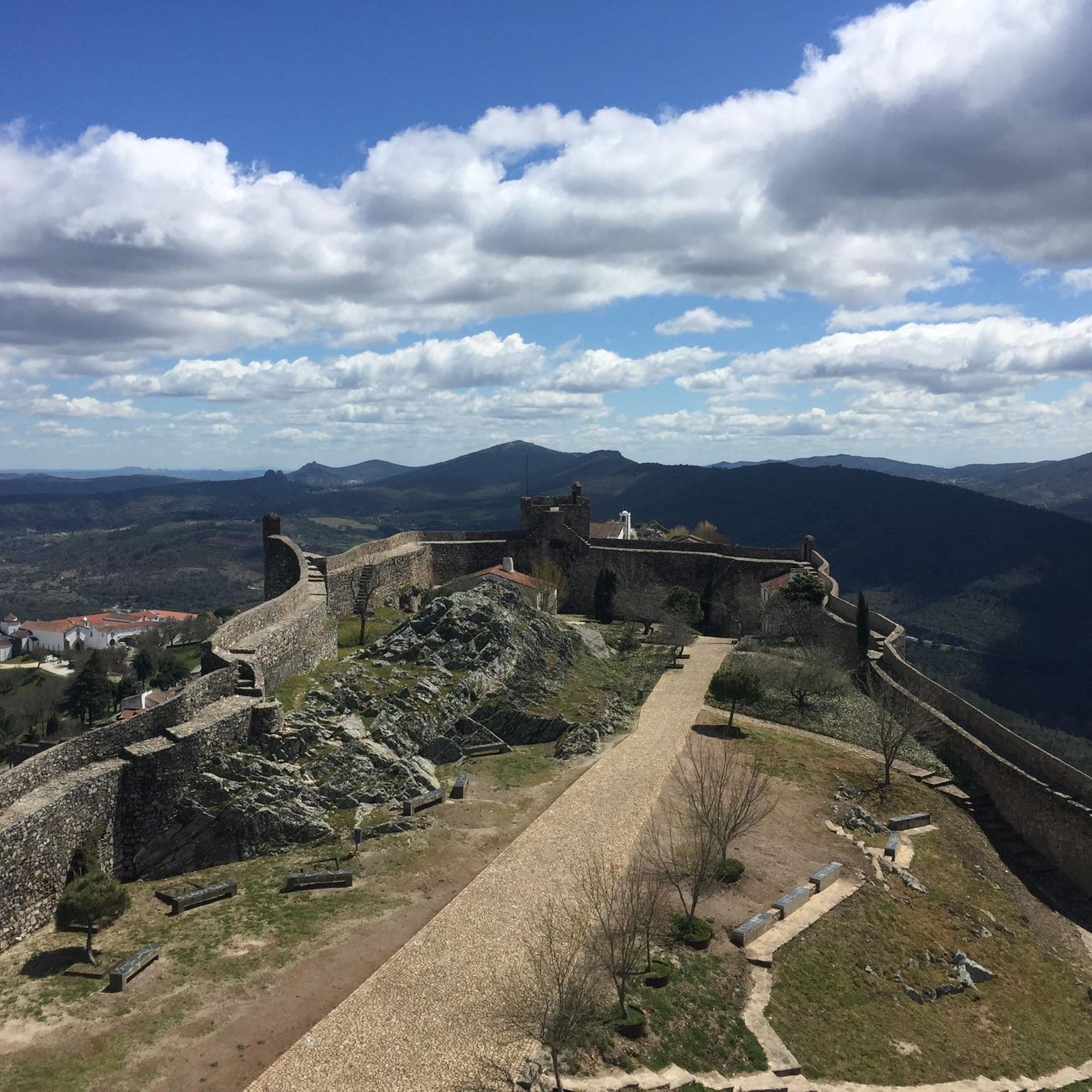
The castle was founded by King D. Dinis in 1290, with the aim of defending the Alentejo border. Originally, it had an imposing structure with a double ring of walls, twelve towers and eight gates. Over the centuries, it lost part of its structure to the growth of the city, but it remains a National Monument. The Keep is the best-preserved part of the original complex. Inside, there is a museum that you can visit.
1
0

A place to visit every month. It's wonderful.
2
0
Imposing building in which the Centro de Dia senior center is located
2
0
The current pillory dates from the years immediately following the granting of the New Charter by King Manuel in 1512 and reflects his Manueline, albeit very rustic, style. The monument stands in front of the 16th-century district jail building and next to the clock tower, also from the 16th century, in the square that bears his name. It stands on a base with four octagonal steps and consists of an octagonal shaft set directly into the upper step, formed by five drums with mortar joints.
1
0
The fortified town of Marvão, 12 kilometers from Quinta do Pomarinho, is also known as the "Eagle's Nest." It boasts a spectacular location on a granite cliff, atop one of the peaks of the Serra de São de Mamede mountain range. Completely walled, Marvão is situated in the Alto Alentejo region, near the Spanish border, which was once controlled from the village. The town of Marvão owes its name to Ibn Maruane, an Arab military leader who sought refuge here in the 11th century. He hid on Mount Ammaia and built a castle there, in the most remote and inaccessible spot he could find. Years later, the castle was transformed into a medieval fortress. Its location made it a strategic defensive position, nestled among hills with slopes to the north, south, and west, accessible only on foot from the village. For many years, Marvão was a municipality heavily and significantly involved in numerous military conflicts in the region. Today, Marvão is a rather sleepy town, but one where you can enjoy wonderful walks. More information can be found here: https://www.feriasemportugal.com/marvao
3
0

Portalegre is a historic town in the Serra de São Mamede near the Spanish border, known for its medieval strategic role and rich religious and architectural heritage. It became a city in the 16th century under King João III. Today, it blends baroque charm with cultural landmarks like the Tapestry Museum and José Régio’s House-Museum.
0
0
The Castle of Portalegre is a medieval Portuguese castle located in the town of Portalegre. Positioned on a high point overlooking the old town, it stands out for its dark walls contrasting with whitewashed houses. Historically, it served as a key defense on the frontier with Castile.
1
1
Frequently Asked Questions
How many road cycling routes are available around Fortios?
There are nearly 100 road cycling routes around Fortios, offering a wide range of options for different skill levels. These routes are primarily located within the Portalegre district of Portugal.
What kind of terrain can I expect on road cycling routes near Fortios?
The terrain around Fortios is characterized by rolling hills and varied landscapes, typical of the Portalegre district. You'll encounter a mix of moderate ascents and descents, with some routes featuring more challenging climbs, traversing agricultural lands and scattered woodlands.
Are there easy road cycling routes suitable for beginners or families around Fortios?
Yes, there are several easy road cycling routes around Fortios. For instance, the Roadbike loop from Fortios is a moderate 22.6-mile (36.5 km) trail that can be completed in about 1 hour 40 minutes, offering a pleasant ride through the local countryside.
What are some challenging road cycling routes near Fortios?
For those seeking a challenge, the Climb to Porto da Espada loop from Portalegre is a difficult 36.6-mile (58.9 km) path with significant elevation gain, providing demanding climbs and expansive views. There are 40 difficult routes in total in the area.
What do other road cyclists say about the routes around Fortios?
The road cycling routes around Fortios are highly rated by the komoot community, with an average score of 4.9 stars from over 10 reviews. More than 700 road cyclists have used komoot to explore the varied terrain, often praising the scenic countryside and diverse challenges.
Are there any historical sites or attractions to see along the road cycling routes?
Yes, many routes connect to historical areas. You can explore attractions such as the Historic Village of Marvão, the Marvão Castle, or the charming town of Castelo de Vide. The Portalegre Castle – Colorful Portalegre loop from Coutada is another route that passes through historical areas.
Can I find loop routes for road cycling around Fortios?
Yes, many of the road cycling routes around Fortios are designed as loops. Examples include the popular Castelo de Vide loop from Portalegre and the São Mamede Trail – São Mamede Spring loop from Portalegre, offering convenient circular journeys.
What is the most popular road cycling route in the Fortios area?
The most popular road cycling route is the Castelo de Vide loop from Portalegre. This moderate 28.7-mile (46.3 km) trail takes approximately 2 hours 11 minutes to complete and explores the scenic surroundings of Castelo de Vide.
Are there routes that offer expansive views or scenic viewpoints?
Routes with significant elevation gain, such as the Climb to Porto da Espada loop from Portalegre, are likely to offer expansive views of the surrounding Portalegre district due to their challenging climbs.
What types of natural features will I see while road cycling near Fortios?
While road cycling near Fortios, you will primarily encounter agricultural lands and scattered woodlands, contributing to a scenic experience within the rolling hills and varied terrain of the Portalegre district.
Are there any specific castles or historical bridges accessible by road bike?
Yes, you can cycle to areas near historical landmarks. Notable sites include the Marvão Castle and the 16th-century bridge of Portagem, both of which are part of the rich historical tapestry of the region.
Most popular attractions around Fortios

Get inspired with the komoot mobile app


Explore more
Browse the best Road cycling routes in other regions.
