Attractions and Places To See around Narol - Top 20
Best attractions and places to see around Narol are found in this town in southeastern Poland, located within the Subcarpathian Voivodeship. The region offers a blend of historical landmarks, cultural sites, and natural features. Narol is appealing for outdoor activities, with hiking and cycling routes available through its natural reserves and along rivers like the Tanew. The area is characterized by its historical significance and diverse landscapes.
Best attractions and places to see around Narol
- The most popular attractions is St. Paraskeva Orthodox Church in Nowe Brusno, a religious building that was constructed in 1713. This former Greek Catholic church is noted for its architecture and is part of the Podkarpacie Wooden Architecture Trail.
- Another must-see spot is Nad Tanwią Nature and Educational Trail, a trail that runs on both sides of the Tanew River. Visitors can explore a landscape reserve featuring waterfalls, diverse forest complexes, and educational boards.
- Visitors also love Zamoyski Paper Mill Ruins, a man-made monument located within the Czartowe Pole Nature Reserve. These ruins are the remains of an 18th-century industrial plant that produced various types of paper, accounting for a large percentage of the Lublin Governorate's production.
- Narol is known for its historical sites, natural reserves, and cultural heritage. The region offers a variety of attractions to see and explore, from ancient churches to industrial ruins and scenic river valleys.
- The attractions around Narol are appreciated by the komoot community, with 51 upvotes and 53 photos shared by visitors.
Last updated: July 1, 2026
St. Paraskeva Orthodox Church in Nowe Brusno
Highlight • Religious Site
Tip by

Zamoyski Paper Mill Ruins
Highlight • Monument
Translated by Google •
Tip by

Sign up now to discover places like this
Get recommendations on the best single tracks, peaks, & plenty of other exciting outdoor places.
Sign up for free
Czartowe Pole Nature Reserve
Highlight • Forest
Translated by Google •
Tip by

Historic Border Crossing on the Tanew River
Highlight • Historical Site
Patriotic activists and smugglers crossing the border used an illegal route through Tanew to Rebizants located on the Galician side. The border was heavily guarded, especially on the Russian side. Only the ordynat foresters had free access to the forest between this road and the border, who smuggled banned publications and led independence activists through this route.
In June 1901, Józef Piłsudski, who had escaped from the prison hospital in St. Petersburg, was led across the border along this route.
Translated by Google •
Tip by

Nad Tanwią Nature and Educational Trail
Highlight • Trail
Translated by Google •
Tip by

Sign up for free to discover even more attractions around Narol.
Sign up for free
Already have an account?
Start today with a free account
Your next adventure awaits.
Login or Signup
Other adventures around Narol

Tips from the Community

Orthodox churches are usually beautiful and fascinating, but this one is exceptionally beautiful and interesting. It is a former Greek Catholic church built in the early 18th century. In 1987, it was added to the list of historical monuments and included in the Podkarpacie Wooden Architecture Trail.
0
0

The Czartowe Pole Reserve is one of the most picturesque parts of Roztocze, located on the Sopot River, on the border of the Józefów and Susiec communes. It delights with the natural landscape of the valley with numerous water rapids, steep slopes covered with forest and rare plants. In the area you will see the ruins of the 17th-century Zamoyski paper mill and symbolic graves of partisans. The reserve is open to tourists - a nature trail about 1 kilometer long with wooden footbridges leads through it. Right next to it is the Green Velo parking place with shelters and stands where you can attach a bike.
2
0

The former border between the partitions
0
0

A beautiful church and an old cemetery behind it. Worth seeing👍👍👍
2
1

The path runs on both sides of the Tanew River and shows a fragment of one of the most interesting landscape reserves in Roztocze, the "Nad Tawią" reserve. The path starts from the forest parking lot, located on the Susiec-Cieszanów road at the beginning of the village of Huta Szumy, just before the bridge over the Tanew River (driving from Susiec towards Cieszanów). The route is marked in the trees with white squares with a red diagonal stripe. The length of the route is approximately 3 km. Tourists visiting this place are provided with wooden tables and benches, educational boards, wooden platforms with handrails, wooden stairs, waste bins and toilets. This is where you can see waterfalls commonly called "szumy" or "szypoty" and get acquainted with various forest complexes and other extremely interesting elements of nature.
0
1
The Czartowe Pole Reserve was established in 1958. It covers an area of approximately 80.5 ha. The name of the reserve comes from a forest clearing about which it was said that "only devils roamed there." The reserve covers a several-kilometer long section of the picturesque Sopot River valley. In this section there is a whole series of waterfalls, which, combined with a large decline in the bed, makes Sopot resemble a swift mountain stream. The sandy islands that form between the jagged river rapids add even more charm to this unique river. The specific shape of the river bottom and clean water provide excellent living conditions for graylings and brown trouts. A major attraction of the reserve are the ruins of a historic paper mill standing on the outskirts of a clearing that was the property of the Zamość Estate. It was established in the first half of the 18th century and was one of the largest plants in the Kingdom of Poland. Nine types of paper were produced here, including: packaging, printing, office and stamping. During the plant's heyday, the paper produced here accounted for 80% of all paper production in the Lublin Governorate. The paper mill used the power of Sopot's river current, but the proximity of the river also had its disadvantages - the buildings and machines were destroyed by floods several times and required renovation works. Ultimately, a fire in 1883 contributed to the collapse of the paper mill. Reconstruction of the plant turned out to be unprofitable due to the enormous damage. The paper mill fell into ruin, and the local "fiends", suspected of causing the flood and fire, finally had a clearing to themselves. A 1.4 km long nature and educational trail runs through part of the reserve. Along the path, in addition to attractions such as the river gorge, rich vegetation and the ruins of a paper mill, there are also places related to the fight for Poland's independence. You can see an obelisk commemorating the stay of soldiers from the Sanitary Officer Cadet School who stayed here on summer maneuvers in 1931, and a commemorative stone from 1936 placed in the place where the scouts set up their camps. At the partisan cemetery there are symbolic graves of the famous "Mishka Tatar" and "Korsarz", who died defending local residents against repression by the Germans.
1
0
The ruins are the remains of a once large industrial plant of the Zamość estate built in the 18th century. In the years of the Duchy of Warsaw and the Kingdom of Poland, the plant was leased by Lejbuś Kahan, and then Cała Wax - the owner of the Hebrew printing house in Józefów. In the 1830s, approximately 4,000 reams of paper were produced here, which constituted 80% of the total production in the Lublin Governorate. Over 9 types of paper, including wrapping, printing, office and stamp paper. Paper was made by hand, mainly from rags. An interesting fact is that it contained a watermark - the lord's monogram or the Zamoyski family's coat of arms. It is one of the largest plants in the Kingdom of Poland. He used the power of the Sopot River flowing down. The collapse of the paper mill was directly caused by floods in 1849 and 1870 and a fire in 1883, after which the reconstruction of the plant became unprofitable due to the enormous damage.
0
0

A beautiful place for quiet and peaceful walks. There are no crowds of people.
2
0
Frequently Asked Questions
What historical sites can I explore around Narol?
Narol and its surroundings are rich in history. You can visit the St. Paraskeva Orthodox Church in Nowe Brusno, an early 18th-century former Greek Catholic church known for its architecture and part of the Podkarpacie Wooden Architecture Trail. Another significant site is the Historic Border Crossing on the Tanew River, marking the former border between the Russian and Austrian partitions.
Are there any natural reserves or scenic areas to visit near Narol?
Absolutely. The Czartowe Pole Nature Reserve is a picturesque area on the Sopot River, featuring water rapids, forested slopes, and rare plants. It also contains the Zamoyski Paper Mill Ruins. Additionally, the Nad Tanwią Nature and Educational Trail runs along the Tanew River, showcasing waterfalls locally known as "szumy" or "szypoty" and diverse forest complexes.
What kind of outdoor activities can I do around Narol?
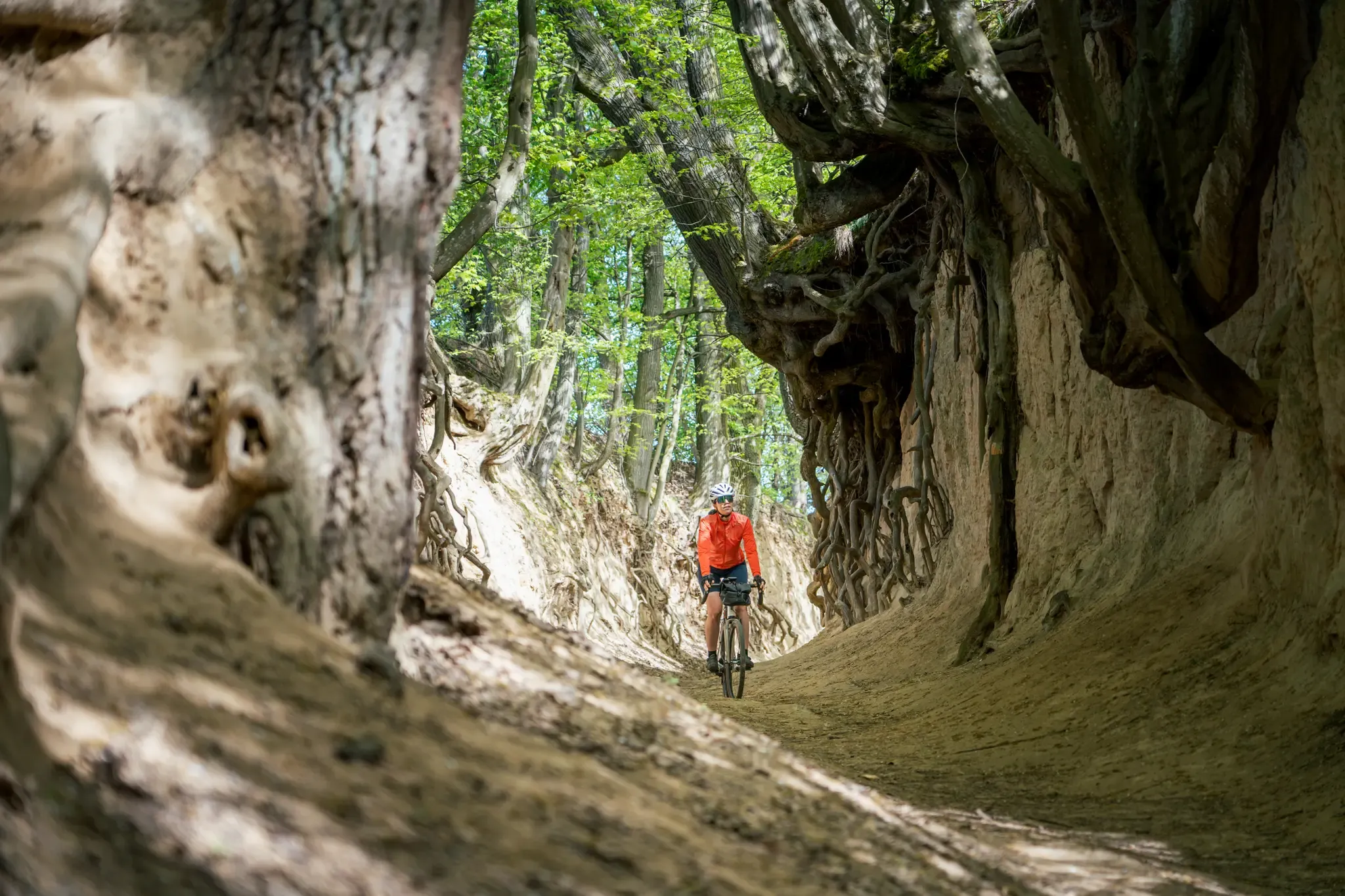
The region is well-suited for outdoor activities. You can enjoy hiking and cycling through its natural reserves and along rivers. For detailed routes, explore the Hiking around Narol guide or the Gravel biking around Narol guide.
Are there family-friendly attractions in the Narol area?
Yes, several attractions are suitable for families. The Czartowe Pole Nature Reserve offers a nature trail with wooden footbridges, making it accessible for a family walk. The Nad Tanwią Nature and Educational Trail is also designed with educational boards and amenities like wooden tables and benches, perfect for families to explore the natural beauty and waterfalls.
Where can I find hiking trails near Narol?
Narol offers various hiking opportunities. The Czartowe Pole Nature Reserve has a 1-kilometer nature trail, and the Nad Tanwią Nature and Educational Trail is approximately 3 km long. For more options, you can find detailed routes in the Hiking around Narol guide, which includes easy trails like the "Kobyle Jezioro" loop.
What is the Palace of Count Łoś in Narol?
The Palace of Count Łoś in Narol is a historic palace constructed in 1776 in a horseshoe shape. Although it has undergone destruction and rebuilding, it is now managed by the "Pro Academia Narolense" Foundation, which is working towards its reconstruction and uses it as a retreat for artists.
Can I learn about the industrial history of the Narol region?
Yes, you can explore the Zamoyski Paper Mill Ruins, located within the Czartowe Pole Nature Reserve. These are the remains of a significant 18th-century industrial plant that once produced a large percentage of the Lublin Governorate's paper. Information boards along the nature trail provide details about its history.
Are there any monuments commemorating historical events in Narol?
Narol features several monuments. There is a monument honoring John III Sobieski, commemorating his victory over invading Tatars in 1672. Within the Czartowe Pole Nature Reserve, you'll find symbolic graves of partisans who died defending local residents during WWII, and a monument dedicated to Polish soldiers, partisans, and victims of World War II. An obelisk also commemorates soldiers from the Sanitary Officer Cadet School from 1931.
What are the 'szumy' or 'szypoty' on the Tanew River?
The 'szumy' or 'szypoty' are local names for the waterfalls found along the Tanew River, particularly within the Nad Tanwią Nature and Educational Trail. These picturesque waterfalls contribute to the unique natural beauty of the river, making it a popular spot for visitors.
What do visitors enjoy most about the attractions around Narol?
Visitors frequently appreciate the peaceful and quiet atmosphere, especially in natural areas like the Czartowe Pole Nature Reserve. The blend of historical sites, such as the St. Paraskeva Orthodox Church, with scenic natural landscapes and well-maintained trails, offers a diverse and engaging experience for those seeking both cultural immersion and outdoor recreation.
Are there easy hiking trails available near Narol?
Yes, for those looking for less strenuous walks, there are easy hiking trails around Narol. For example, the "Kobyle Jezioro" loop is an easy option. You can find more details and other easy routes in the Easy hikes around Narol guide.
Most popular routes around Narol
Most popular attractions around Narol

Get inspired with the komoot mobile app


Explore more
Still not found the Highlight you’re looking for? See guides of the top attractions in other regions:
