Attractions and Places To See around Ostrołęka - Top 20
Attractions and places to see around Ostrołęka offer a blend of historical landmarks, cultural sites, and natural features. Situated on the Narew River, the city serves as a cultural and administrative center for the Kurpie region. Visitors can explore a variety of sites, from historical buildings to museums and green spaces. The area provides opportunities to experience both the city's heritage and its connection to the surrounding natural landscape.
Best attractions and places to see around Ostrołęka
- The most popular…
Last updated: August 26, 2026
Municipal Public Library
Highlight • Structure
mbpostroleka.pl/historia
Translated by Google •
Tip by

Gen. JÓZEF BEM Square and Monument
Highlight • Monument
Unveiled on May 26, 1973, on the anniversary of the Battle of Ostrołęka, which took place during the November Uprising …
Translated by Google •
Tip by
Sign up now to discover places like this
Get recommendations on the best single tracks, peaks, & plenty of other exciting outdoor places.
Sign up for free
Monument to the 5th Zasław Uhlan Regiment
Highlight • Monument
Monument to the 5th Regiment of Uhlan Zasławski
The 5th Regiment of Zasławski Lancers was stationed in Wojciechowice near Ostrołęka in the years 1921-1939. He took part in the …
Translated by Google •
Tip by

St. Francis Church in Ostrołęka
Highlight • Religious Site
Translated by Google •
Tip by

Przystań Manor House
Highlight • Historical Site
Translated by Google •
Tip by

Sign up for free to discover even more attractions around Ostrołęka.
Sign up for free
Already have an account?
Start today with a free account
Your next adventure awaits.
Login or Signup
Tips from the Community

An interesting place to visit. I recommend it.
0
0

In addition to the beautiful small park near the manor, an additional advantage of the place is the almost complete lack of coverage, so you can completely cut yourself off from the network.
0
0
The project was designed by architect Marek Pęza. The new facility was officially unveiled on September 20, 2015, during the celebration of the Regiment's holiday. Its cost was 70 thousand złoty. The construction was financed entirely by donations from companies and individuals. The 5th Zasław Uhlan Regiment was stationed in Wojciechowice near Ostrołęka in the years 1921-1939. It fought the September Campaign as part of the Podlasie Cavalry Brigade.
0
0

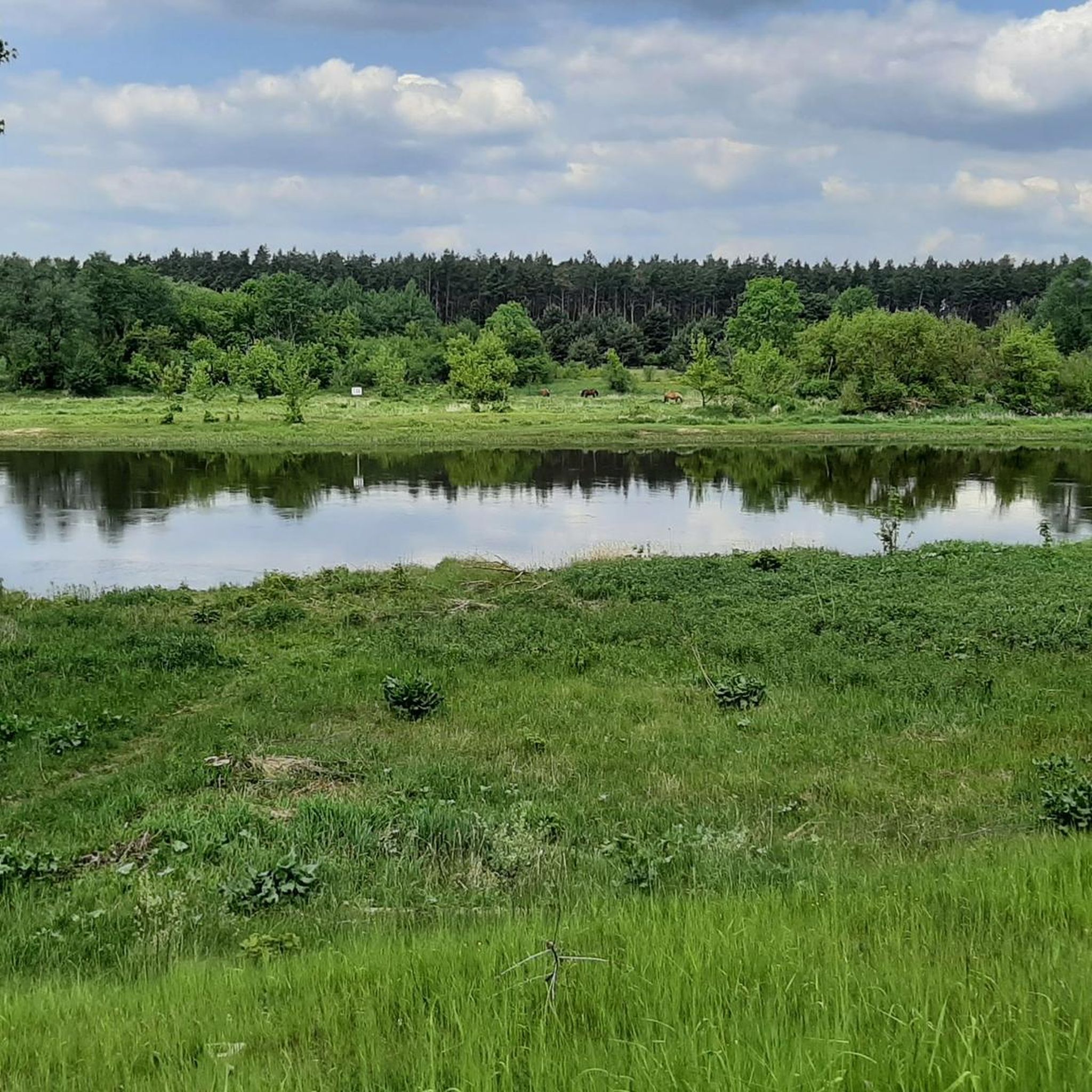
Behind the manor house there is a river, it is very easy to cross with a bike in your hand
0
0
The history of our parish begins on June 30, 1993, with the decree of Bishop Juliusz Paetz appointing Father Tadeusz Zawadzki responsible for organizing a new pastoral center on the “Centrum” Housing Estate. During the Christmas caroling (from December 1993 to February 1994), Fathers Tadeusz Zawadzki (vicar of the parish of St. Anthony) and Mirosław Sebunia (vicar of the parish of the Savior of the World) visited 2,023 families, asking for their opinion on the plans to create a new parish. 1,538 families (76%) were in favor of the idea, while 485 were against it. On March 9, 1994, the first plots of land for the construction of a church were purchased from Mr. Wiesław Chełstowski, Mr. Eugeniusz Wargulewski and Mrs. Krystyna Choroszewska. On March 30, a decision on the location of the new church was obtained from the City Office. The temporary designs for the chapel and rectory were prepared by an engineer from Ostrów Mazowiecka – Mr. Mirosław Puścian.
0
0
A nicely maintained and well-kept manor house
1
0

A larch manor house was built in Przystań in the 18th century, but unfortunately it was burned down by Russian troops during the Bar Confederation. Konstanty Godlewski undertook the reconstruction of the manor house, but unfortunately his premature death prevented it. His wife pledged the property as collateral for the loan, and because she did not repay it on time, the manor became the property of Paweł Mostowski, who completed the construction of the manor. Later, the property in Przystań was purchased by the Krasiński family, and then became the property of the Czartoryski family. Adam Czartoryski's eldest daughter, Małgorzata, received the Przystań property as a wedding dowry in 1925. She married a foreigner, Prince Gabriel de Bourbon – Socilias. On his order, the construction of a new manor house, park, orchard and garden began. The manor was built in 1928. It was made of pine wood in a rectangular shape, single-story with an attic, covered with a mansard shingle roof. Inside, all walls were plastered, only one, the "larch room", was lined with larch boards. Outside the manor, a new park, orchard and vegetable garden were established. Currently, the building houses a primary school. After the renovation, the larch room and the stylish fireplace have been preserved, next to which there is a mosaic depicting the Virgin Mary made of tiled tiles. The facility is surrounded by a 2-hectare park planted by Antoni de Bourbon in the 20th century.
1
0
Ostroleka Monument to the 5th Regiment of Uhlan Zasławski The 5th Regiment of Zasławski Lancers was stationed in Wojciechowice near Ostrołęka in the years 1921-1939. He took part in the September campaign as part of the Podlaska Cavalry Brigade. Wojciechowice is currently a district of Ostrołęka. The monument in honor of the regiment was unveiled in 1991.
0
0
Frequently Asked Questions
What historical landmarks can I visit in Ostrołęka?
Ostrołęka offers several significant historical landmarks. You can explore the Baroque St. Francis Church, the Gothic Saint Mary's Visitation Parish Church, and the Town Hall, a classical-style building from the 1820s. Don't miss the Bem's Forts, which mark the battlefield of the 1831 Ostrołęka Battle, and the Gen. JÓZEF BEM Square and Monument, commemorating General Józef Bem's role in the battle.
Where can I learn about the local culture and history of the Kurpie region?
To delve into the unique folk culture, history, and language of the Kurpie region, visit the Kurpie Culture Museum. It's housed in a 1928 building and offers permanent exhibitions on Ostrołęka's history, along with temporary displays. The Ostrołęckie Centrum Kultury also serves as a central hub for the town's cultural life, encompassing various cultural institutions.
What natural attractions are there to explore around Ostrołęka?
Ostrołęka is beautifully situated on the Narew River, which is a significant natural feature. Upstream, the Narew forms part of a National Park, often called the 'Polish Amazon,' known for its unique river system and wetlands. You can also find the vast Green Forest (Puszcza Zielona) on the city's edge, and the Plaża Miejska Ostrołęka (Municipal Beach) for recreation. For a unique experience, visit Tężnia Rzekuń, a brine graduation tower nearby.
Are there family-friendly attractions or activities in Ostrołęka?
Yes, families can enjoy several spots. The Przystań Manor House, a historical site now housing a primary school, is surrounded by a 2-hectare park. The Municipal Park in Ostrołęka provides green space with alleys named after Polish comic book authors. The Ostrołęka Art Gallery offers art workshops for all ages, and the Ostrołęckie Centrum Kultury often hosts family-oriented events.
When is the best time of year to visit Ostrołęka's attractions?
The best time to visit Ostrołęka largely depends on your interests. For outdoor activities and enjoying the natural beauty, late spring to early autumn (May to September) offers pleasant weather. This period also includes annual events like 'Ostrołęka Days' in May, featuring picnics, sports, and concerts, and the annual Kurpie Festival, celebrating local culture with folk music and crafts.
What outdoor activities, like cycling or running, can I do near Ostrołęka's attractions?
The area around Ostrołęka is great for outdoor activities. You can find numerous routes for cycling and running. For example, there are easy cycling routes like the 'Dr. Szczypek Square loop' or the 'Pumptrack Ostrołęka – Brine Graduation Tower in Rzekuń loop'. Runners can explore routes such as the 'Playground in the City Park loop'. You can find more details and specific routes in the Cycling around Ostrołęka and Running Trails around Ostrołęka guides.
Are there any museums or art galleries in Ostrołęka?
Absolutely. The Kurpie Culture Museum is a key institution for understanding the region's heritage. For art enthusiasts, the Ostrołęka Art Gallery, located in a former merchant's townhouse, hosts exhibitions, vernissages, and art workshops. Additionally, the Museum of the Cursed Soldiers (Muzeum Żołnierzy Wyklętych), opened in 2022, commemorates a significant period in Polish history.
Can I find opportunities for wildlife observation near Ostrołęka?
Yes, the Narew River, especially its upstream section within the Narew National Park, is an excellent spot for wildlife observation. Often called the 'Polish Amazon,' this area is home to around 200 bird species, including many harriers, as well as beavers and elk. Visitors can explore the park by boat or utilize hiking and biking trails, with notable attractions like the footbridge connecting Waniewo and Śliwno, which includes ornithological observatories.
What is the significance of the Ostrołęka Railway Station and Multicenter?
The Ostrołęka Railway Station and Multicenter is a modern hub for information, communication technology, and education. Once a worn-out railway station, it now houses interactive and computerized laboratories focusing on robotics, technology, and art. Its history dates back to 1893, marking the city's connection to the broader railway network, and it continues to serve as a transport and educational facility.
Are there any hidden gems or unique places to discover in Ostrołęka?
Beyond the main attractions, consider visiting the Antoni Madaliński's Bridge, a steel arch suspended structure inspired by a bridge in Seville. The Street Workout Park Miejski offers an outdoor fitness area. For a glimpse into local life and history, the Municipal Public Library, the oldest public library in the region, is a hub for cultural and educational activities, including literary festivals and historical meetings.
Are there any wheelchair-accessible attractions in Ostrołęka?
Several attractions in Ostrołęka are noted as wheelchair-accessible. These include the Municipal Public Library, the Gen. JÓZEF BEM Square and Monument, St. Francis Church, and the Ostrołęka Railway Station and Multicenter. It's always a good idea to confirm specific accessibility features with the venues directly before your visit.
Most popular routes around Ostrołęka

Get inspired with the komoot mobile app


Explore more
Still not found the Highlight you’re looking for? See guides of the top attractions in other regions:
