Attractions and Places To See around Plzeň - Sever - Top 17
Best attractions and places to see around Plzeň - Sever include historical landmarks, natural features, and cultural sites within the Plzeň Region of the Czech Republic. The district offers a diverse landscape with significant points of interest. Visitors can explore ancient castle ruins, observe geological formations, and discover protected natural areas. This region provides opportunities for outdoor activities and cultural exploration.
Best attractions and places to see around Plzeň - Sever
- The most popular attractions is Ruins of Buben Castle…
Last updated: May 4, 2026
Ruins of Buben Castle
Highlight • Castle
Translated by Google •
Tip by

Krkavec Observation Tower
Highlight • Viewpoint
Translated by Google •
Tip by

Sign up now to discover places like this
Get recommendations on the best single tracks, peaks, & plenty of other exciting outdoor places.
Sign up for free
Plasy Monastery
Highlight • Historical Site
Plasy Monastery is a former Cistercian monastery, founded as early as 1146. The current Baroque appearance dates from …
Translated by Google •
Tip by

Railroad and cycle path bridge over the Mies
Highlight • Bridge
Translated by Google •
Tip by

Mže River on Paneuropa Cycle Route 37
Highlight • River
Translated by Google •
Tip by

Railway and Cycle Bridge
Highlight • Bridge
Translated by Google •
Tip by

Church of Jezna
Highlight • Religious Site
Translated by Google •
Tip by

Loza
Highlight • Settlement
Translated by Google •
Tip by

Mariánský Týnec Monastery and Church of the Annunciation
Highlight • Religious Site
Translated by Google •
Tip by
Church of St. Martin, Horní Sekyřany
Highlight • Religious Site
A stop at the church of St. Martin in Horni Seyrany should be made here. The …
Translated by Google •
Tip by

Sign up for free to discover even more attractions around Plzeň - Sever.
Sign up for free
Already have an account?
Start today with a free account
Your next adventure awaits.
Login or Signup

Tips from the Community

It's good that you can get to the right side of the Mies from here, because cycle route 37 to Stribro is in very bad condition.
0
1

Unfortunately, it's closed on Mondays, even if Monday is Whit Monday :-( Plasy Monastery is a former Cistercian monastery, founded as early as 1146. The current Baroque appearance dates from 1685-1740, primarily by the architects Mathey and Santini-Aichel (including Sedlec Monastery and the Zelená Hora Pilgrimage Church, both UNESCO World Heritage Sites). The monastery's lands must have been enormous, given the size of the complex! Emperor Joseph II, the "revolutionary from above," who abolished serfdom, among other things, nationalized monasteries for the benefit of the Religious Fund (from 1782 onward), including Plasy. Metternich acquired it from this fund (Congress of Vienna, Holy Alliance), reorganized its economic operations, and lost it to Czechoslovakia in 1918. After that, it slowly fell into disrepair; today it is being gradually renovated.
0
0
The provost's office and pilgrimage church of the Annunciation of the Blessed Virgin Mary in Mariánský Týnec/Marienbad belonged to the Cistercian monastery complex of Plasy; its history is closely linked to it. This beautiful Baroque church was built starting in 1711 and, like Plasy, was designed by the architect Santini-Aichel (among others, Sedlec Monastery and the Zelená Hora Pilgrimage Church, both UNESCO World Heritage Sites). Emperor Joseph II, the "revolutionary from above," who abolished serfdom, among other things, nationalized monasteries for the benefit of the Religious Fund (1785), including Plasy (including Mariánský Týnec). Metternich acquired it from this fund (Congress of Vienna, Holy Alliance), reorganized the economic operations, and lost the lands to Czechoslovakia in 1918. The church then slowly fell into decline; In 1920, the dome and several vaults collapsed. In 2005, the dome was rebuilt and has been beautifully restored. The building became the home of the Museum and Gallery of the Northern Pilsen Region. Unfortunately, closed on Mondays, even if Monday is Whit Monday :-( In the 12th century, the village belonged to a man named Roman. He was sick and childless and promised, if cured, to build a chapel dedicated to the Virgin Mary. He recovered and kept his promise. Around 1180 (or 1230), he bequeathed his property to the Cistercian monastery in Plasy. The monks built a courtyard around the chapel; people from near and far began to visit. It became the oldest pilgrimage site in Western Bohemia. The number of pilgrims grew, and so a new, larger church was built in 1681. Johann Karl von Unwerth brought a painting of Our Lady of Sorrows from Rome, and two additional altars (Saint Bernard and the Fourteen Holy Helpers) were donated. In 1711, Abbot Eugen Tittl, who began the reconstruction of the monastery in Plasy, also laid the foundation stone for a completely new church and provost's house. The work were interrupted during the war; the interior was not completed until 1777.
0
0

Impressive railway bridge over the Mize
1
0

Rocky passage on the Pan-European cycle route
0
0

It's a little bit of a thrill when crossing the bridge, especially when a train is passing by.
0
0

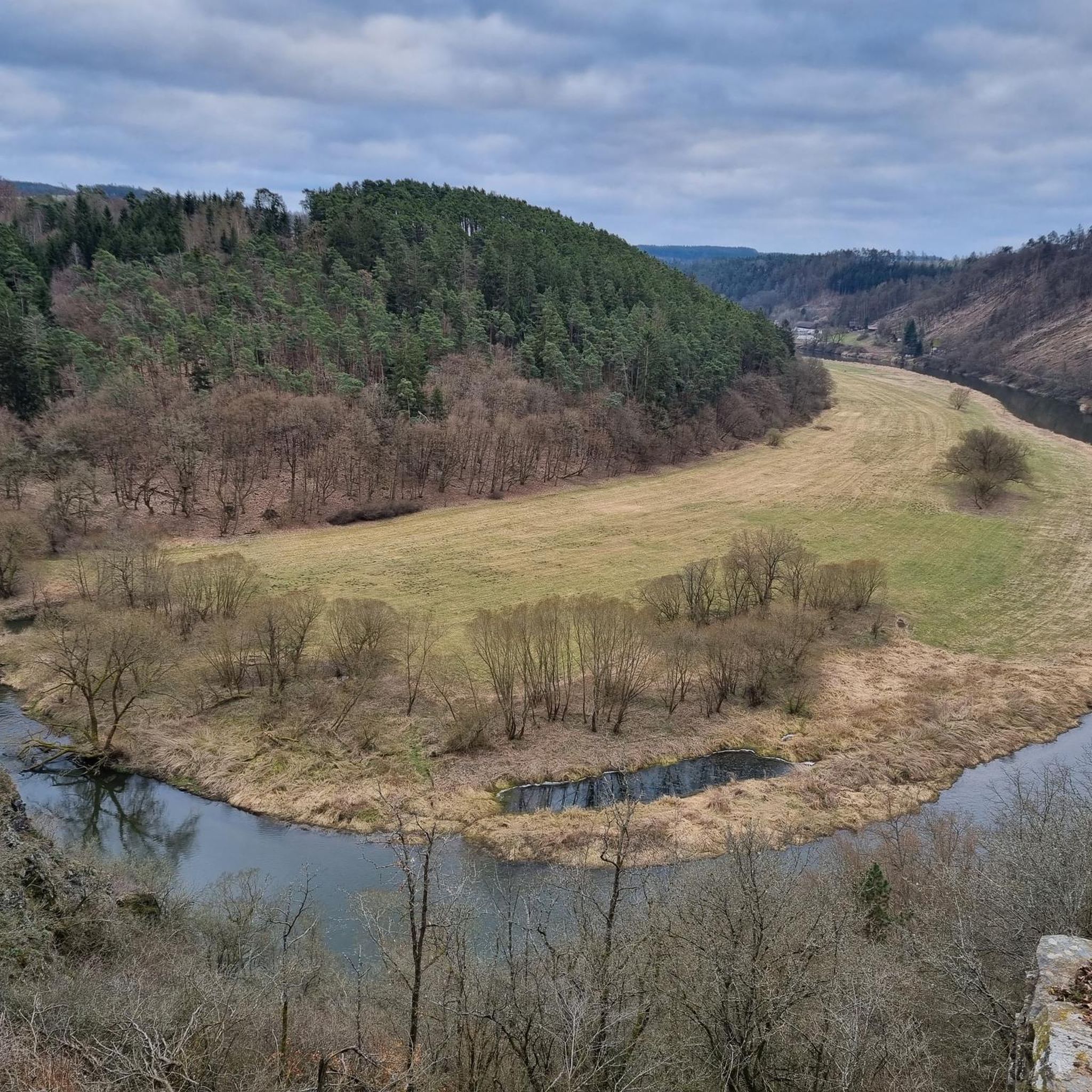
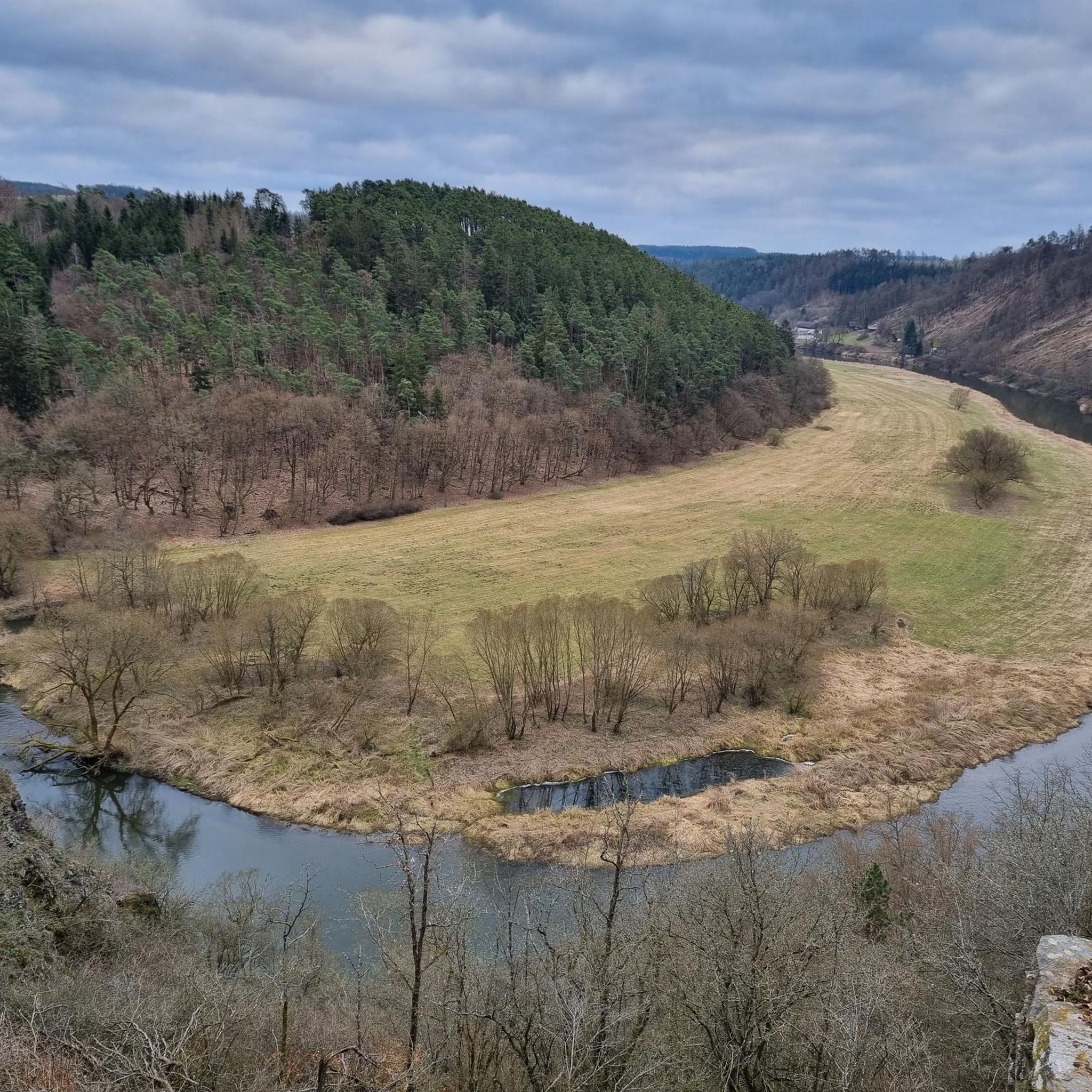
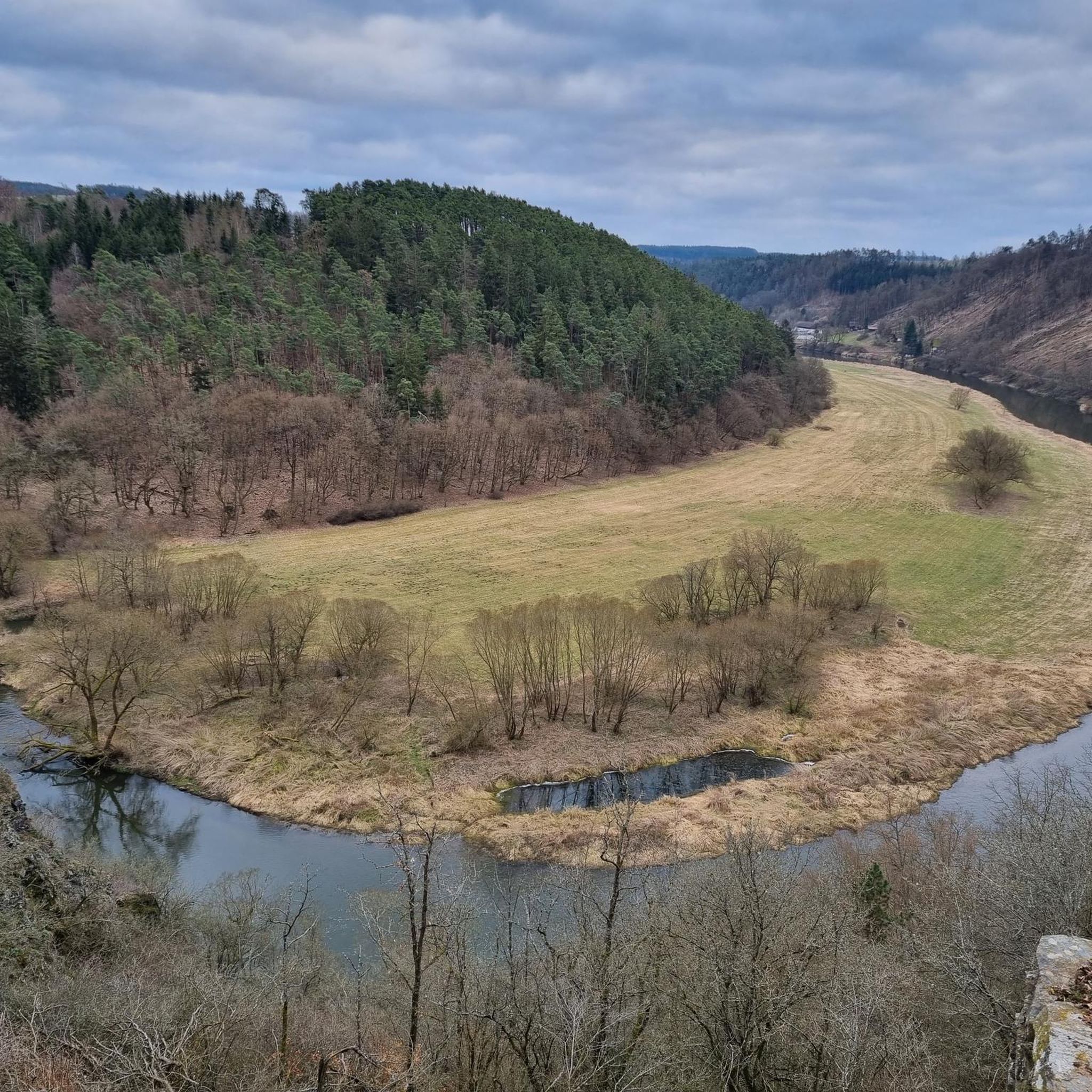
Beautiful area on the Mze River.
0
0
There is a rest area at the church, it is covered and in hot weather you can look forward to a spot in the shade. The church looks quite dilapidated and it is not possible to visit it.
0
0
Frequently Asked Questions
What historical landmarks can I explore in Plzeň-Sever?
The region is rich in history. You can visit the impressive Plasy Monastery, a former Cistercian monastery with a Baroque complex. Additionally, explore the atmospheric Ruins of Buben Castle, situated on a rocky headland, or other historical ruins like Preitenstein, Libštejn, and Rabštejn nad Střelou.
Where can I find scenic viewpoints in Plzeň-Sever?
For panoramic views, ascend the Krkavec Observation Tower. This 18.2-meter-high cylindrical stone tower offers expansive vistas of the surrounding landscape. You can also find scenic spots along the Mže River, particularly the section on the Paneuropa Cycle Route 37.
Are there any unique natural features to see in the region?
Yes, Plzeň-Sever boasts unique natural attractions. Head north of Plzeň to discover the remarkable Boulders at Žihle, showcasing the area's geological diversity. The region also features several protected natural areas like Střela and Odlezly Lake, ideal for experiencing diverse flora and fauna.
What cycling opportunities are available in Plzeň-Sever?
Cyclists can enjoy the scenic Mže River on Paneuropa Cycle Route 37, which offers a beautiful route along the river with a rocky passage. For more cycling options, explore various road cycling routes around Plzeň-Sever, including easy to moderate loops like the 'Nýřany Church – Zbůch loop' or 'Čeminy Castle – Roundabout loop'. You can find more details on Road Cycling Routes around Plzeň - Sever.
Are there family-friendly attractions in Plzeň-Sever?
Absolutely! The Plasy Monastery is considered family-friendly, offering a rich historical experience. The Railway and Cycle Bridge is also a popular spot, especially when a train passes by, providing a thrill for visitors of all ages. The settlement of Loza is another family-friendly highlight.
What kind of hiking trails can I find in Plzeň-Sever?
Plzeň-Sever offers diverse hiking experiences, including scenic trails featuring waterfalls, such as loops around Týřov – Týřov Castle Ruins. While specific hiking routes are not detailed in the highlights, the presence of protected areas and natural features suggests ample opportunities for exploration. For running trails, which often overlap with hiking paths, you can check out options like the 'Running loop from Ejpovice' or 'Running loop from Hracholusky' on the Running Trails around Plzeň - Sever guide.
What do visitors enjoy most about the attractions in Plzeň-Sever?
Visitors particularly appreciate the historical depth of sites like Ruins of Buben Castle, noting its preserved tower and walls. The Krkavec Observation Tower is loved for its panoramic views. The Mže River on Paneuropa Cycle Route 37 is praised for its beautiful area and rocky passage, making it a wonderful section for outdoor enthusiasts.
Are there any significant religious buildings to visit?
Yes, the region is home to several notable religious sites. The Plasy Monastery, with its impressive Church of the Assumption of the Virgin Mary, is a major cultural monument. You can also visit the Mariánský Týnec Monastery and Church of the Annunciation, and the historic Church of Jezna.
What are the options for mountain biking in Plzeň-Sever?
Mountain biking enthusiasts can find various trails around Plzeň-Sever. Options range from moderate to difficult, such as the 'Trail Through the Fields – Švábiny Shelter loop' or the more challenging 'Chlum [Plzeň - Doubravka] – View of the Berounka River loop'. For detailed routes and difficulties, refer to the MTB Trails around Plzeň - Sever guide.
Where can I find accommodation near Plasy Monastery?
While specific accommodation options are not listed in the guide, Plasy is a town with historical significance. For accommodation near Plasy Monastery, it is recommended to check local booking sites or tourism information for the town of Plasy, which often has guesthouses or hotels catering to visitors.
Are there any bridges of interest in Plzeň-Sever?
Yes, the region features interesting bridges. The Railroad and cycle path bridge over the Mies is a notable structure. Another impressive one is the Railway and Cycle Bridge, known for its two sweeping bows and the unique experience of crossing it, especially when a train passes by.
Most popular routes around Plzeň - Sever

Get inspired with the komoot mobile app


Didn’t find what you were looking for?
Are you keen on exploring more awesome places nearby? Browse our guides:
Explore more
Still not found the Highlight you’re looking for? See guides of the top attractions in other regions:
