The best walks and hikes around Tuhelj
4.2
(11)
46
hikers
6
hikes
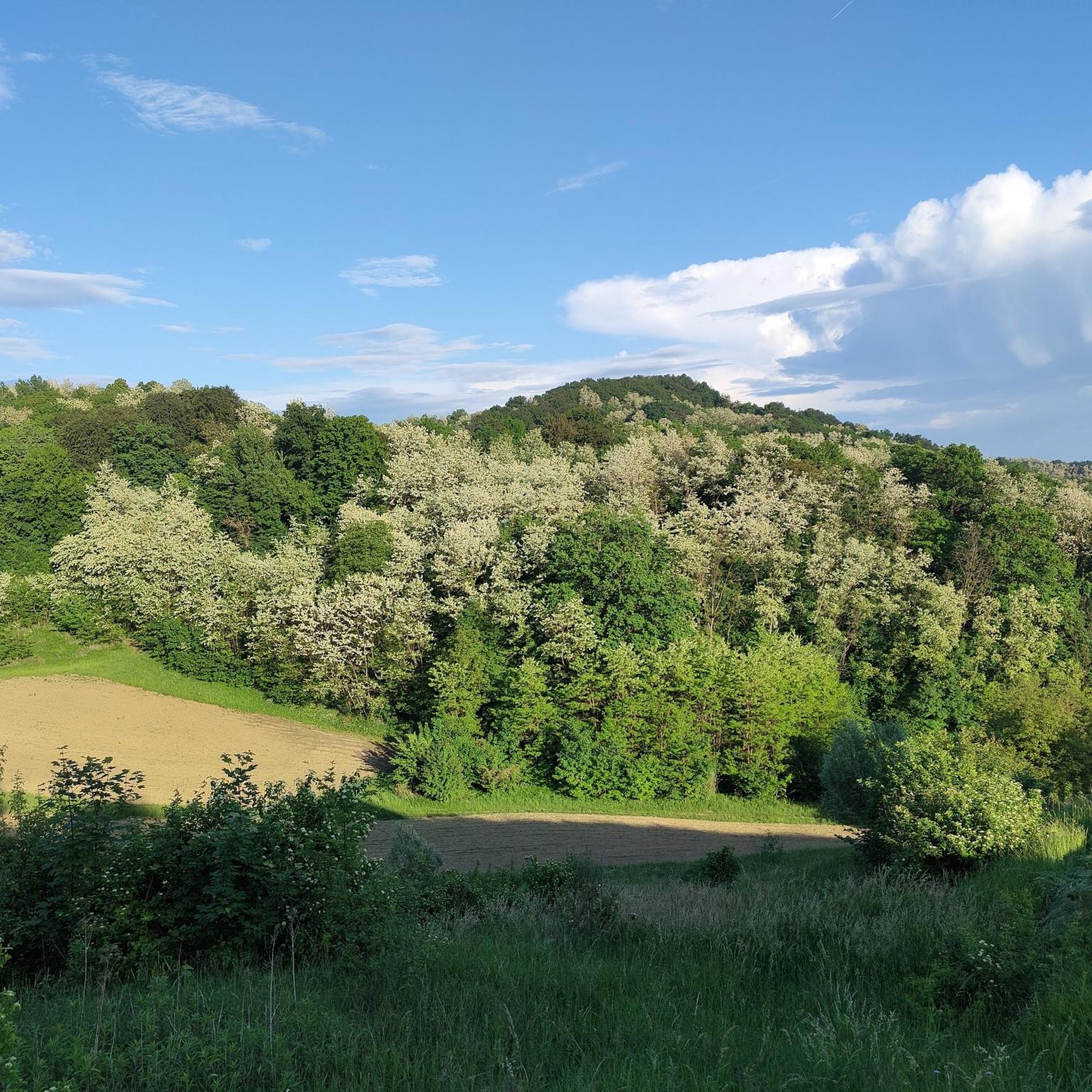
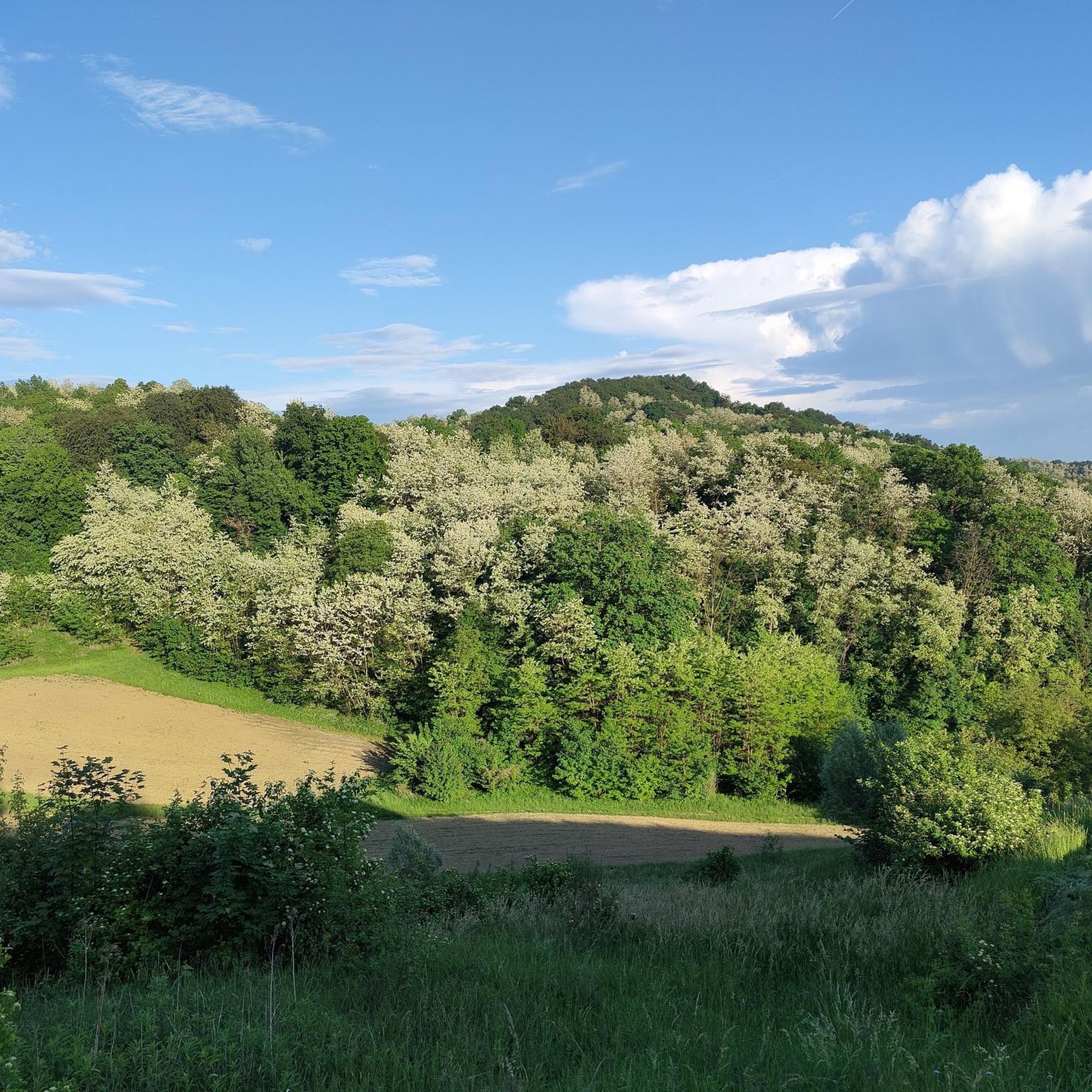
Hiking around Tuhelj offers diverse trails through the rolling green hills, dense forests, and picturesque vineyards of Croatian Zagorje. The region is characterized by gentle elevations, with some trails leading to higher points like Ivanščica and Ravna Gora, providing panoramic views. Thermal springs and the Horvatska river contribute to the area's natural features, while many routes pass by historical sites and cultural landmarks.
Best hiking trails around Tuhelj
- The most popular hiking route is Hotel Nili Tuheljske Toplice – Old House Near Svetska Kriz loop from Tuheljske Toplice, a 4.6 miles (7.4 km) trail that takes 2 hours 7 minutes to complete, winding through the local landscape.
- Another top favourite among local hikers is Miniature Park Grešna Gorica – Veliki Tabor Castle loop from Desinić, an easy 2.7 miles (4.4 km) path that explores the area around Veliki Tabor Castle.
- Local hikers also love the Hotel Nili Tuheljske Toplice – Viewpoint Over Velika Erpenja loop from Tuheljske Toplice, a 7.5 miles (12.0 km) trail leading through varied terrain, often completed in about 3 hours 20 minutes.
- Hiking around Tuhelj is defined by rolling hills, dense woodlands, and vineyards, often leading past historical castles and chapels. The network offers options for different ability levels, from easy walks to moderate climbs.
- The routes in Tuhelj are highly rated by the komoot community with an average score of 4.5 stars from 10 reviews. More than 40 hikers have used komoot to explore Tuhelj's varied terrain.
Last updated: July 5, 2026
4.3
(4)
20
hikers
Moderate hike. Good fitness required. Easily-accessible paths. Suitable for all skill levels.
3.8
(4)
7
hikers
4.39km
01:17
120m
120m
Easy hike. Great for any fitness level. Easily-accessible paths. Suitable for all skill levels.

Sign up for free
4.7
(3)
8
hikers
Moderate hike. Good fitness required. Easily-accessible paths. Suitable for all skill levels.
4
hikers
6.09km
01:42
110m
120m
Easy hike. Great for any fitness level. Easily-accessible paths. Suitable for all skill levels.
4
hikers
11.5km
03:13
220m
220m
Moderate hike. Good fitness required. Easily-accessible paths. Suitable for all skill levels.
3
hikers
12.6km
03:32
250m
240m
Moderate hike. Good fitness required. Easily-accessible paths. Suitable for all skill levels.
Our route recommendations are based on thousands of hikes, rides, and runs completed by other people on komoot.
Start today with a free account
Your next adventure awaits.
Login or Signup
Tips from the Community

A magnificent 17th-century jewel of sacred art, the Church of the Three Kings, lies amidst the rolling hills of the Zagorje region in Velika Erpenja, not far from Veliki Trgovišće. On the stone above the large entrance gate is an inscription dating the year 1650, the year in which this parish church was built. It is believed that the name of the village of Velika Erpenja is partly derived from Hungarian. The word "eper" translates from Hungarian as strawberry. Apparently, the ignorant inhabitants of the time distorted the word slightly and named the place Velika Erpenja, which means "large strawberry grove." In 1842, a public school was built next to the church, the first in this part of the Croatian Zagorje region. Tomo Gajdek, educator, patron, poet, and later parish priest, made a significant contribution to popular education. This period marks the beginning of education in this region. Classes used to be held in a house next to the parish hall; today, the branch school is located in nearby Dubrovčan and belongs to the Veliko Elementary School. A bench at the viewing point offers the opportunity to charge cell phones and provides explanations.
0
0

The church and the Calvary are outside the town of Klanjec, but it can be reached on foot in 10 minutes.
1
0

The Chapel of St. George was first mentioned in 1439 when the new pastor arrived. This chapel is located in solitude at an altitude of 268 m in Klanječko Lake with a beautiful view of the river Krapinica and two streams Kostelina and Horvatcka and surrounding villages such as Martinišće, Jalšje, Jurjevec, Dubrovčan, Gubaševo, Strmec, etc., and Velika Erpenja and its surroundings. Not far from the chapel is a parking lot, a morgue and a small chapel of St. Antuna. The cemetery is entered through a metal door that is open every day so that people can visit their loved ones, ie the deceased souls who have remained in our hearts. This chapel became a parish church until 1880, ie four years after the new parish church was built in Veliki Trgovišće, which was built in 1876. This chapel has three altars: the altar of the Suffering Jesus, the altar of the Blessed Virgin Mary and the main altar of St. George. In this chapel there is a flat ceiling (tabulat). On the choir are Ovčarić's organ dating from 1930. In the 16-meter bell tower there are three bells, one of which is a zinc: the bell of St. George 413 kg ton b ', bell of St. Josip 293 kg ton c 'and the bell of St. Antuna 132 kg ton es ''). There are two sacristies in this chapel: the past one (located on the left in front of the chapel portal) and the new one (it is behind the chapel and through it you enter near the main altar on the left)
1
0
CHAPEL OF THE HOLY CROSS IN THE HOLY CROSS All the chapels of the Tuhelj parish are located on the hills with beautiful views. Perhaps the most beautiful lookout point is the chapel of the Holy Cross, from where you can see Tuheljske Toplice. A Gothic chapel was built on the site of today's chapel around 1519, which would be the oldest chapel in the parish. Next to it, in 1739, the chapel of St. Helena was added, which stood not far away on the same hill. Today's chapel is from 1831. Above the altar is a baroque painting depicting the Good Shepherd - the Risen Christ - whose blood leaks from his wounds, giving food and drink to the sheep. The side altars are dedicated to St. John the Baptist and St. Anthony of Padua. Masses are served in the chapel for the New Year (January 1), the Ascension Day and Thanksgiving on the last Sunday in October. http://www.zg-nadbiskupija.hr/nadbiskupija/zupe?zupeid=68
0
0
Memorial area to the Croatian Mother in Velika Erpenja Mons. Kolarić visited Velika Erpenja as a student in 1968 and discovered there that the mother of the author of the Croatian anthem - Justina Mihanović - was buried in the cemetery next to the church. He even found that it was recorded that her son Antun was also present at her funeral, and he believes that he was sitting on that hill, from where a beautiful view of Hrvatsko Zagorje can be seen, and got the inspiration to write the Croatian anthem. Justin's grave was decorated in 1974, as was the tombstone. With the arrival of democracy in Croatia, the Society of the Brothers of the Croatian Dragon was re-established, which seeks to preserve the memory of great people and events from the Croatian past. The Grand Master in the Society was also Msgr. Kolarić, who suggested that the grave of Mihanović's mother be arranged in Velika Erpenja, but also the tradition of celebrating Mother's Day. "The renovation lasted for three years. We had a new tombstone on which it was written in Croatian who was buried there, and originally the inscription was in German. Our architect Ante Vodnjaković made a big stage, and many others participated in the project. I remind you that there was one of the first schools in Zagorje that was visited by the first Archbishop of Zagreb Juraj Haulik, it was a nursery of culture. The first celebration of Mother's Day, after the renovation, took place on June 10, 1998. And the following year, on May 9, the celebration was joined by the Croatian Women's Society, which was entrusted by the Society of the Croatian Dragon Brothers to take care of further Mother's Day celebrations, "said Msgr. Kolarić. From year to year, this day in Velika Erpenja is celebrated with a festive all-day program. Anyone who wishes can come to the memorial area to express their gratitude to the Croatian mother for the love they give. Retrieved from: https://hkm.hr/vijesti/domovina/kako-je-nastalo-spomen-podrucje-hrvatskoj-majci-u-velikoj-erpenji/
1
0
The aristocratic town of Veliki Tabor is one of the most important cultural and historical monuments of the profane architecture of continental Croatia. Veliki Tabor is exceptional precisely because of its monumental and authentic fortification architecture. With its location on the top of Hum Košnićki, at 333 m above sea level, it has dominated the Zagorje region for more than half a millennium - the architecture has actually merged with nature, forming a unique image. The view from Veliki Tabor to the entire Croatian Zagorje and part of Slovenia is also impressive. This cultural monument of the highest zero category is one of the most recognizable identities, not only of Hrvatsko Zagorje, but also of Croatia. Opinions of the profession are divided over the dating of the Great Camp. Some are of the opinion that the oldest part of Veliki Tabor was built in the middle of the 15th century, while others believe that the construction of the oldest part began only after 1502. The recently conducted conservation research, comparative architectural analysis and analysis of the discovered archaeological finds speak in favor of earlier dating of the oldest part of Veliki Tabor (mid-15th century). More .... https://www.veliki-tabor.hr/o-muzeju/pregled/povijest Much more about the Palace ... https://www.veliki-tabor.hr/
2
0

The fort of Veliki Tabor is one of the most important cultural and historical monuments of secular architecture in continental Croatia, with a unique monumental and authentic fortification structure. Situated at the top of Mount Hum Košnički, at 333 meters above sea level, it has dominated the Zagorje area for over half a millennium, during which time the architecture has blended in with nature. The impressive view from Veliki Tabor stretches over the entire Hrvatsko Zagorje area and part of Slovenia.
1
0
CHAPEL OF SAINT FLORIAN WITH CALVARY The votive chapel of the people of Klanje from 1742. Chapel of St. Florian above Klanjec was first mentioned in a canonical visitation in 1690. According to the description of the archdeacon who visited it in 1691, the chapel was built and has a bolt. Due to its small size, there is a large window on each side, through which people listen to Mass because only a few people can fit in the chapel. The altar of the chapel was masonry, with a wooden retable, and in the middle is a statue of St. Florian holding a cup of water. Mass was served in the chapel on the feast of St. Florian and in the eighth Corpus Christi, and the chapel was cared for by Mihael Vogić. The present chapel was built from the ground up in 1742. The single-nave chapel with a three-sided sanctuary has a bell tower built into the main façade. The chapel was thoroughly renovated in 1899, when the older painting was covered with today's frescoes by the painter Sikošek from Brežice, which are in very poor condition today. The tower of the chapel is also without a tin roof, covered only by a thin concrete blanket. Recently, works on the necessary rehabilitation and restoration research have begun, so that the chapel can be professionally and qualitatively renovated. Chapel of St. Florian, is the votive chapel of the people of Klanje who celebrate this saint as their protector. A beautiful forest promenade leads to it, and a calvary has been erected on the hill next to it. Retrieved from: https://www.klanjec.hr/kultura/spomenici-kulture/kapela-sv-florijana/
1
0
Frequently Asked Questions
What kind of terrain can I expect on hikes around Tuhelj?
Hiking in Tuhelj primarily features trails through rolling green hills, dense forests, and picturesque vineyards. You'll encounter gentle elevations, with some paths leading to higher points that offer panoramic views. The region's natural beauty is characterized by its unspoiled nature, often referred to as 'The Fairy Tale in the Palm of your Hand'.
Are there easy hiking trails suitable for beginners or families in Tuhelj?
Yes, Tuhelj offers several easy trails perfect for beginners or families. For instance, the Miniature Park Grešna Gorica – Veliki Tabor Castle loop from Desinić is an easy 2.7-mile (4.4 km) path that explores the area around Veliki Tabor Castle, suitable for a leisurely walk.
Are there more challenging hikes in the Tuhelj area for experienced hikers?
While most trails around Tuhelj are moderate, the wider Croatian Zagorje region offers more challenging options. Mountains like Ivanščica, Strahinjčica, and Ravna Gora provide trails with varying difficulty levels and stunning panoramic views. Within Tuhelj, routes like the Little Free Library loop from Tomaševec, at nearly 8 miles (12.6 km) with significant elevation gain, offer a more extended and moderate challenge.
What natural features or landmarks can I see while hiking in Tuhelj?
Many trails in Tuhelj wind through serene paths dotted with old huts and wooden cellars, especially in vineyard areas. You might also encounter the Horvatska river and the natural thermal springs that Tuhelj is known for. Higher points often provide expansive views of the surrounding hills and valleys.
Are there any historical sites or castles accessible via hiking trails in Tuhelj?
Yes, hiking in Tuhelj and the wider Zagorje region often integrates cultural exploration. Routes can lead past medieval castles such as Veliki Tabor and Trakošćan Castle, quaint villages, and numerous churches and chapels. The region boasts 33 castles, mansions, and forts, and over 100 churches and chapels, many of which can be seen or visited during your hikes.
Where can I find the best viewpoints on hikes around Tuhelj?
Many trails in Tuhelj lead to elevated positions offering excellent views. For example, the Hotel Nili Tuheljske Toplice – Viewpoint Over Velika Erpenja loop from Tuheljske Toplice is specifically named for its scenic outlooks. Other trails that ascend hills, such as those leading to the Church of Three Wise Men, also provide expansive views of Tuheljske Toplice and the surrounding landscape.
Are there circular hiking routes available in Tuhelj?
Yes, many of the hiking routes around Tuhelj are circular, allowing you to start and end at the same point. A popular option is the Hotel Nili Tuheljske Toplice – Old House Near Svetska Kriz loop from Tuheljske Toplice, which is a 4.6-mile (7.4 km) trail winding through the local landscape.
Can I bring my dog on the hiking trails around Tuhelj?
Generally, dogs are welcome on most hiking trails in the natural areas around Tuhelj. However, it's always advisable to keep your dog on a leash, especially when passing through vineyards, near livestock, or in areas with other hikers. Always carry water for your pet and clean up after them.
What is the best time of year to go hiking in Tuhelj?
The best time to hike in Tuhelj is typically during the spring and autumn months. Spring offers lush greenery and blooming wildflowers, while autumn provides vibrant fall foliage and pleasant temperatures. Summer can be warm, but shaded forest trails remain enjoyable. Winter hiking is possible, especially on lower elevation trails, but requires appropriate gear for potentially colder and wetter conditions.
Is parking available near the trailheads in Tuhelj?
Yes, parking is generally available near popular trailheads and attractions in Tuhelj and the surrounding villages. Many routes, such as the Hotel Nili Tuheljske Toplice loop from Tuheljske Toplice, often start from areas with designated parking, including near accommodations like Hotel Nili or in village centers.
How accessible are the hiking trails in Tuhelj by public transport?
Tuhelj is relatively accessible, being a short drive from Zagreb. While some local trails might be reachable by regional bus services, having a car often provides more flexibility to access various trailheads across the wider Zagorje region. For specific routes, it's best to check local bus schedules to see if they align with your desired starting points.
Are there any long-distance hiking trails that pass through the Tuhelj region?
Yes, for those seeking a longer adventure, the Zagorje Hiking Trail (Zagorska Transverzala) spans Hrvatsko Zagorje from east to west, offering a comprehensive experience of the region. Additionally, the Camino Hrvatsko Zagorje, a scenic 56 km route, combines natural beauty with cultural sites, passing through forests, vineyards, medieval villages, and thermal springs, including areas near Tuhelj.
What do other hikers say about the trails in Tuhelj?
The hiking routes in Tuhelj are highly rated by the komoot community, with an average score of 4.5 stars from 10 reviews. Hikers often praise the diverse terrain, from rolling hills to dense woodlands and vineyards, and appreciate the blend of natural beauty with historical landmarks like castles and chapels. Many enjoy the well-marked paths and the options available for different ability levels.
Are there places to eat or stay near the hiking trails in Tuhelj?
Tuhelj is known for Terme Tuhelj, a popular spa resort, which offers accommodation and dining options. Additionally, the surrounding villages and towns in Croatian Zagorje feature numerous local restaurants (kleti) and guesthouses. Many trails pass by vineyards and small settlements where you can find refreshments or traditional Croatian cuisine.

Get inspired with the komoot mobile app


Explore more
Browse the best Hikes in other regions.
