Attractions and Places To See in Punta Arenas - Top 14
Best attractions and places to see in Punta Arenas include a diverse array of historical landmarks, cultural sites, and natural features at the southern tip of Chile. This city serves as a gateway to Patagonia and the Strait of Magellan, offering insights into maritime exploration and regional history. Visitors can explore its rich past and unique landscapes.
Best attractions and places to see in Punta Arenas
- The most popular attractions is San Isidro Lighthouse, a man_made_monument that can be…
Last updated: July 15, 2026
Magellan Monument at Plaza Muñoz Gamero
Highlight • Monument
Translated by Google •
Tip by

Punta Arenas Waterfront and Old Pier
Highlight • Viewpoint
Translated by Google •
Tip by

Sign up now to discover places like this
Get recommendations on the best single tracks, peaks, & plenty of other exciting outdoor places.
Sign up for free
San Isidro Lighthouse
Highlight • Monument
Translated by Google •
Tip by

Monument to the Crew of the Schooner Ancud
Highlight • Monument
Tip by

Sanctuary of Mary Help of Christians
Highlight • Religious Site
Translated by Google •
Tip by
Circunnavegación Sculpture
Highlight • Monument
Translated by Google •
Tip by

Sara Braun Family Mausoleum
Highlight • Monument
She was …
Translated by Google •
Tip by
Wildlife Watching on the Strait of Magellan
Highlight • Viewpoint
Translated by Google •
Tip by
Monument to the Shepherd
Highlight • Monument
Translated by Google •
Tip by

Wreck of the Lord Lonsdale
Highlight • Historical Site
Translated by Google •
Tip by

Sign up for free to discover even more attractions in Punta Arenas.
Sign up for free
Already have an account?
Start today with a free account
Your next adventure awaits.
Login or Signup
Popular around Punta Arenas
Tips from the Community


This square has a lively atmosphere that attracts both tourists and locals. The focal point is the imposing Magellan Monument, built in honor of the famous navigator. It impressively depicts Magellan himself surrounded by native statues. Local legend says that touching the feet of the native statue brings good luck - a custom that many travelers like to take up, and you can also see how worn the feet have become. The plaza is also a good starting point for exploring other sights in the city, as it is surrounded by historic buildings. The small market stalls on the edge of the square, which offer local souvenirs and handicrafts, are particularly charming. If you have some time, it is worth just hanging around, people watching and soaking up the atmosphere.
0
0

The work Circunnavegación, by the well-known national artist Francisco Gazitúa, is a metal armillary sphere that symbolizes the circumference of the Earth. Inside it is a representation of the ship commanded by Magellan. It also contains a tribute to the indigenous people of Patagonia and Tierra del Fuego and to the mythology of the Selknam people. The President of the Republic, Sebastián Piñera, inaugurated in 2020 on the 500th anniversary of the first passage through the Strait of Magellan. Circunnavegación is a 25-ton metal sculpture by the well-known artist Francisco Gazitúa that highlights the importance of the historic journey. The work is inspired by an armillary sphere or spherical astrolabe, an astronomical instrument used until the end of the Middle Ages that serves as a metaphor for the globe. Inside there is a representation of the Nao Victoria, the ship commanded by Ferdinand Magellan, sailing westwards with its main mast in the position of the Earth's axis, inclined at 23 degrees. In addition, the spheres of the Gazitúa sculpture are a tribute to the indigenous people who populated Patagonia and Tierra del Fuego more than 10,000 years ago. The luminous bodies of the work correspond to the outlines of the constellation Orion, which was part of the mythology of the Selknam people. The President was part of the jury that selected the work on the premise that it should not only have artistic value, but also be attractive to the inhabitants and visitors of Punta Arenas. "The great achievements and the great epics in the history of humanity are not accidental, behind them there is always a vision, a will, courage, determination and resilience," said the Head of State.
0
0
Sara Braun was a woman of Russian origin who emigrated to Chile with her parents. Although originally completely penniless, she became the most important entrepreneur in the region. She was heavily involved in the genocide of the Selk'nam, part of the indigenous Tierra del Fuegos. It is all the more incomprehensible that the residents of Punta Arenas adore her. Probably because at the end of her life she donated charitable measures and financial aid to the city. Among other things, for the construction of a Magellan monument and to promote the local school system. She also donated the bombastic Art Nouveau entrance gate to the cemetery administration. Therefore, she was allowed to have the mausoleum built in the Russian-Byzantine style in the cemetery of Punta Arenas. The family grave includes its own small park surrounded by walls and bars and is considered the most expensive grave in the cemetery.
0
1

The ship Lonsdale was an English ship built at the end of the 19th century at the Bigger shipyard in Londonderry, Ireland, for the firm of J. H. Iredale. With 1,889 tons, it caught fire on a voyage from Hamburg to Mazatlán, in Port Stanley in the Falkland Islands, on October 6, 1909, having to be sunk to put out the fire. It was acquired by a merchant in Punta Arenas, who in turn sold it to the firm Braun & Blanchard of the same port, to be used as a wool pontoon, until it was sold for scrapping. The bow with the bowsprit and a section of the keel are its only remains, which lie in Punta Arenas, on the coast of the Strait of Magellan, on 21 de Mayo Street in front of María Behety Park. It was declared a Historical Monument on January 7, 1974 under the emblem "Tribute to the sailors of all nationalities who sailed the Magellanic Sea." During 2014, the remains of the ship were intervened, within the framework of the II International Meeting of Media Arts, Lumen. The Lonsdale Project, by artist Julio Escobar, set out to bring the ship to life through the installation of a high-pressure sodium luminaire, inside the bow and in the remaining section of the keel of the boat.
0
0

The monument dedicated to the sheep workers of Patagonia is very beautiful to look at. It's worth a quick stop to take a close look at the realistically crafted figures.
3
0

The monument, inaugurated on February 18, 1944, is dedicated to the sheep workers of Patagonia and consists of twelve figures: the shepherd, his horse, two sheep dogs and eight sheep. It symbolizes the economic boom in the region at the end of the 19th and beginning of the 20th century. It was initially made of granite and was replaced eighteen years later by figures made of bronze. The bronze sculptures were created by local sculptor Germán Montero. Fragments of the poem “El ovejero de mi tierra” by the Magellan poet José Grimaldi Acotto served as the basis for the work.
2
0

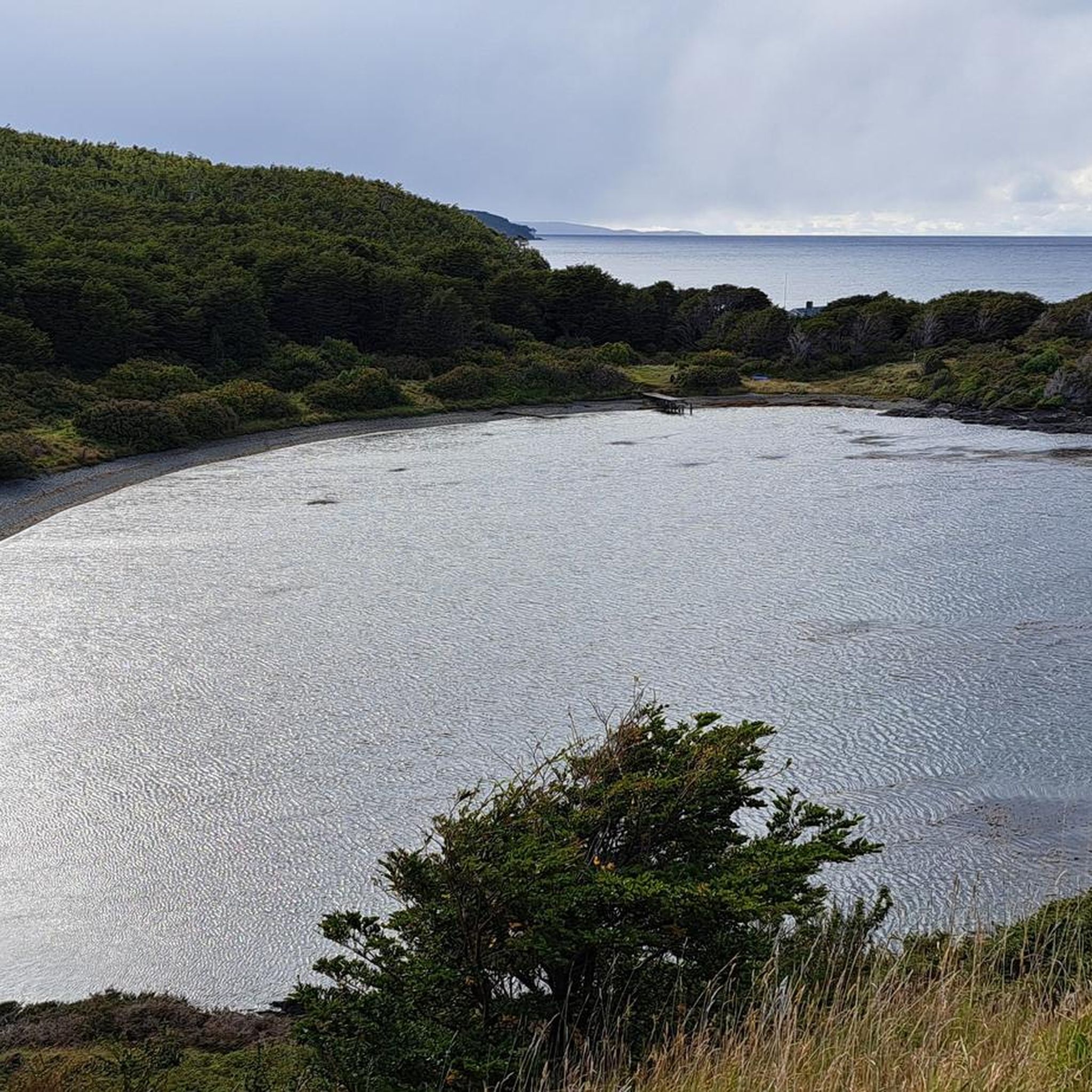
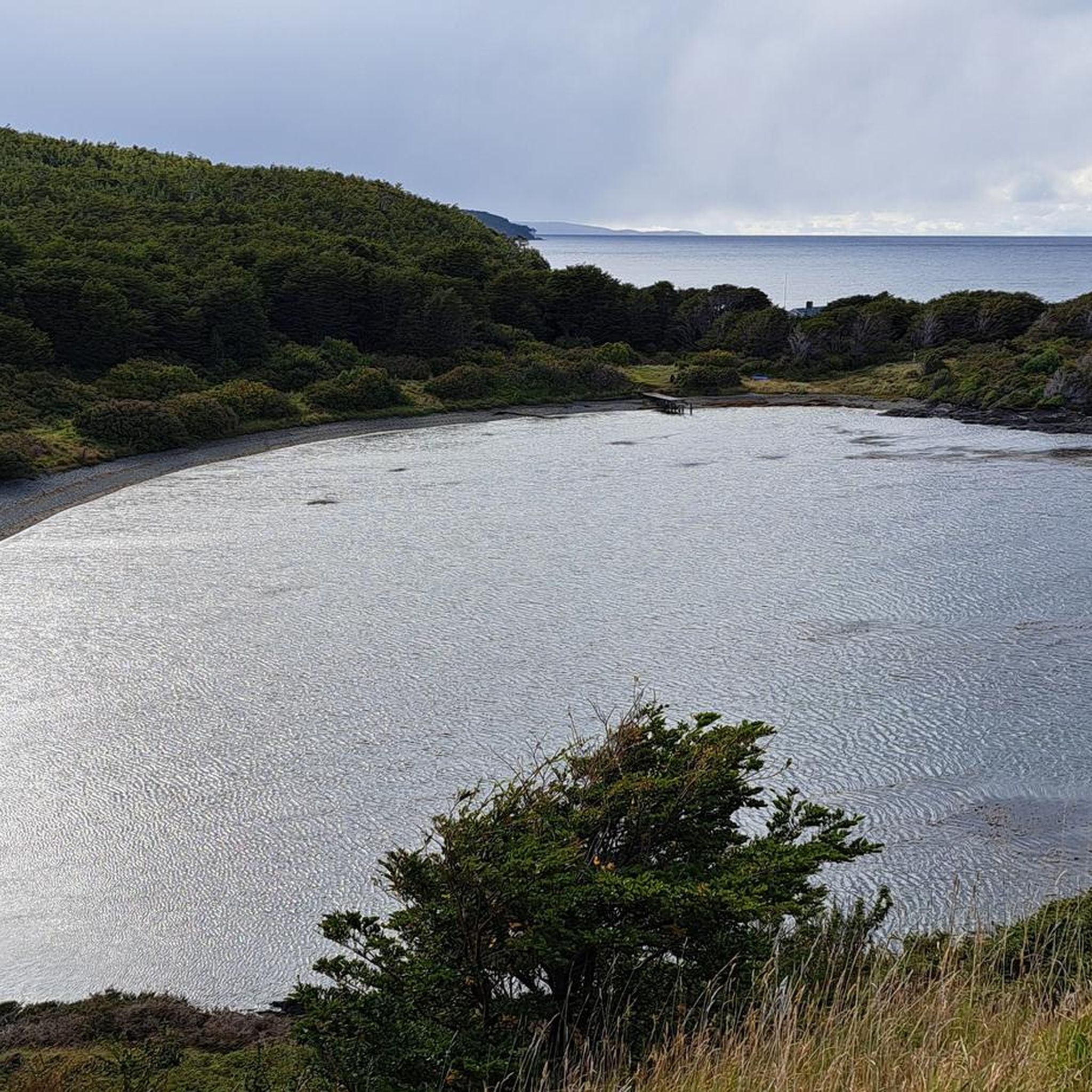
A very nice "easy" hike. Keep in mind that you are walking on a pebble beach, which sometimes makes progress a little difficult. Sometimes you have to dodge the waves when the water is high. However, we were able to walk without any problems, even if we got a little wet feet. Pay attention to the sea: you like to see dolphins, sea lions, penguins or even whales.
2
0
Frequently Asked Questions
What historical landmarks can I explore in Punta Arenas?
Punta Arenas is rich in history. You can visit the Magellan Monument at Plaza Muñoz Gamero, a central hub surrounded by grand 19th-century mansions. Other significant sites include the Monument to the Crew of the Schooner Ancud, which commemorates Chile's claim to the Strait of Magellan, and the Monument to the Shepherd, honoring the region's sheep farming heritage. Don't miss the Cementerio Municipal, recognized as one of the world's most beautiful cemeteries, showcasing diverse architectural styles and serving as a national monument.
Where can I find the best panoramic views of Punta Arenas?
For stunning panoramic views, head to Mirador Cerro de la Cruz, which offers vistas of the city, the Strait of Magellan, and Tierra del Fuego. Another excellent spot is the Punta Arenas Waterfront and Old Pier, providing scenic views of the city and the historic Strait.
Are there opportunities for wildlife spotting near Punta Arenas?
Yes, Punta Arenas is a gateway to incredible wildlife experiences. You can take a day trip to Isla Magdalena to see a colony of over 100,000 Magellanic penguins. Another option is to visit the King Penguin Colony on Tierra del Fuego. For marine life closer to the city, consider Wildlife Watching on the Strait of Magellan, where you might spot dolphins, sea lions, or even whales.
What are some family-friendly attractions in Punta Arenas?
Many attractions in Punta Arenas are suitable for families. The Magellan Monument at Plaza Muñoz Gamero is a great starting point, often featuring market stalls. The Punta Arenas Waterfront and Old Pier offers scenic walks. The Nao Victoria Museum, with its full-size replicas of historic ships like Magellan's Nao Victoria, provides an engaging educational experience for all ages. Wildlife tours to Isla Magdalena are also very popular with families.
Can I go hiking near Punta Arenas?
Absolutely! Punta Arenas offers several hiking opportunities. You can explore the Reserva Nacional Magallanes, located close to the city, which features trails through southern beach forests and offers birdwatching. For a unique coastal hike, consider the trail to San Isidro Lighthouse, though be prepared for walking on a pebble beach. For more detailed routes, check out the Hiking in Punta Arenas guide, which includes routes like the 'San Isidro Lighthouse loop from Fin del Camino'.
What cultural sites should I visit in Punta Arenas?
Beyond historical monuments, Punta Arenas offers rich cultural experiences. The Maggiorino Borgatello Salesian Museum provides insights into the region's cultural and natural history. The Magallanes Regional Museum, housed in a former mansion, delves into the history and colonization of Patagonia. You can also visit the beautiful Sanctuary of Mary Help of Christians, known for its stunning architecture.
How can I experience the Strait of Magellan?
The Strait of Magellan is central to Punta Arenas' identity. You can experience it by walking along the Costanera del Estrecho, the coastal promenade, which offers scenic views and monuments. Boat tours are available for cruising the Strait, and some excursions offer whale watching or glacier tours. The Wildlife Watching on the Strait of Magellan highlight also provides opportunities to observe marine life from the shore.
Is Punta Arenas accessible for visitors with mobility challenges?
Some key attractions in Punta Arenas are noted for their accessibility. The Magellan Monument at Plaza Muñoz Gamero and the Circunnavegación Sculpture are listed as wheelchair accessible. The Costanera del Estrecho promenade also offers a relatively flat surface for enjoying the waterfront views.
What is the best time of year to visit Punta Arenas for outdoor activities?
The best time for outdoor activities in Punta Arenas is generally during the Patagonian summer, from December to March. During these months, the weather is milder, with longer daylight hours, making it ideal for hiking, wildlife tours, and exploring natural features. However, weather can be unpredictable, so always be prepared for wind and sudden changes.
Are there any unique natural landscapes to explore near Punta Arenas?
Yes, beyond the Strait of Magellan, you can visit the Parque Pali Aike Volcanic Fields, located about 130 km from Punta Arenas. This park features a unique landscape of hardened lava from past volcanic activity and is an important archaeological site with hiking trails. The Reserva Nacional Magallanes also offers beautiful southern beach forests for exploration.
Where can I find monuments related to maritime history in Punta Arenas?
Punta Arenas has a strong connection to maritime history. You can find the Monument to the Crew of the Schooner Ancud along the Costanera del Estrecho. The Nao Victoria Museum also offers a deep dive into maritime exploration with full-size ship replicas. Additionally, the San Isidro Lighthouse, the southernmost lighthouse on mainland Chile, is a significant maritime landmark.
Can I go running in Punta Arenas?
Yes, Punta Arenas offers several routes suitable for running, particularly along the scenic waterfront. The Costanera del Estrecho provides a great path with views of the Strait of Magellan. You can find various running trails, including 'Strait of Magellan Monuments loop' and 'Costanera – Playa Colón loop', in the Running Trails in Punta Arenas guide.

Get inspired with the komoot mobile app


Explore more
Still not found the Highlight you’re looking for? See guides of the top attractions in other regions:
