The best cycling routes in Bisamberger Wald
4.4
(4469)
31,663
riders
330
rides
Touring cycling in Bisamberger Wald offers a diverse landscape for riders, characterized by extensive forests and rolling hills. The region features picturesque vineyards, particularly around villages like Langenzersdorf and Klosterneuburg, providing scenic routes. Proximity to the Danube River allows for cycling along the Danube Cycle Path, which includes both flat sections and gentle climbs. The Marchfeld Canal also provides consistently flat, car-free paths through agricultural landscapes.
Best touring cycling routes in Bisamberger Wald
- The most popular touring cycling route is…
Last updated: November 21, 2026
4.3
(45)
177
riders
47.1km
02:55
350m
350m
Moderate bike ride. Good fitness required. Mostly paved surfaces.
4.9
(16)
224
riders
Moderate bike ride. Good fitness required. Mostly paved surfaces.

4.3
(4)
34
riders
14.5km
00:55
110m
110m
Easy bike ride. Mostly paved surfaces.
4.8
(9)
29
riders
29.1km
01:41
80m
80m
Easy bike ride. Mostly paved surfaces.
4.6
(642)
3,843
riders
59.2km
03:20
120m
120m
Moderate bike ride. Good fitness required. Mostly paved surfaces.
Get access to more routes and recommendations from other explorers.
Already have an account?
Our route recommendations are based on thousands of hikes, rides, and runs completed by other people on komoot.
Start today with a free account
Your next adventure awaits.

Tips from the Community

Rest stop with beautiful view
0
0

The Kellergasse begins at the intersection of Clessgasse – Hagenbrunner Straße and leads steeply uphill to the north. In numerous cellars, it repeatedly says „Ausg’steckt is“.
4
0
The contract for the construction of the Reichsrat building was awarded to Hansen as a result of a competition announced by the k. k. Ministry on October 12, 1864 (participants Heinrich Ferstel, Theophil Hansen and Friedrich Schmidt as well as Ignaz Ullmann [Prague], August Ottmar von Essenwein [Graz] and Nikolaus Ybl [Pest]). The building, created by him from 1874 to 1883 in Hellenistic forms (foundation laid on September 2, 1874), shows rich articulation and is adorned externally with sculptures and paintings; Hansen himself explained the choice of architectural style (thereby simultaneously fulfilling his wish to erect a monumental building in this style) by stating that the roots of democracy were to be found in the Greek polis.
5
0

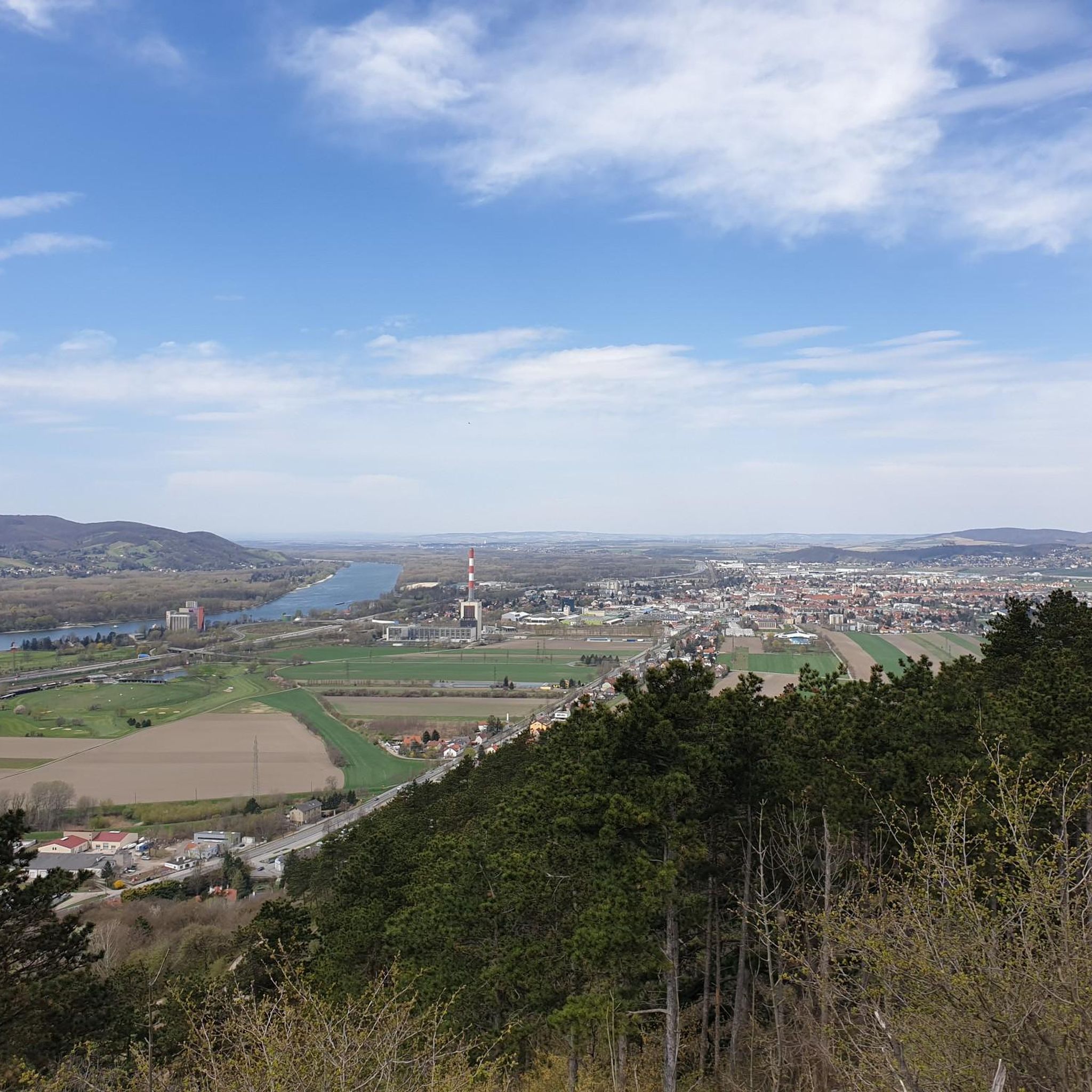
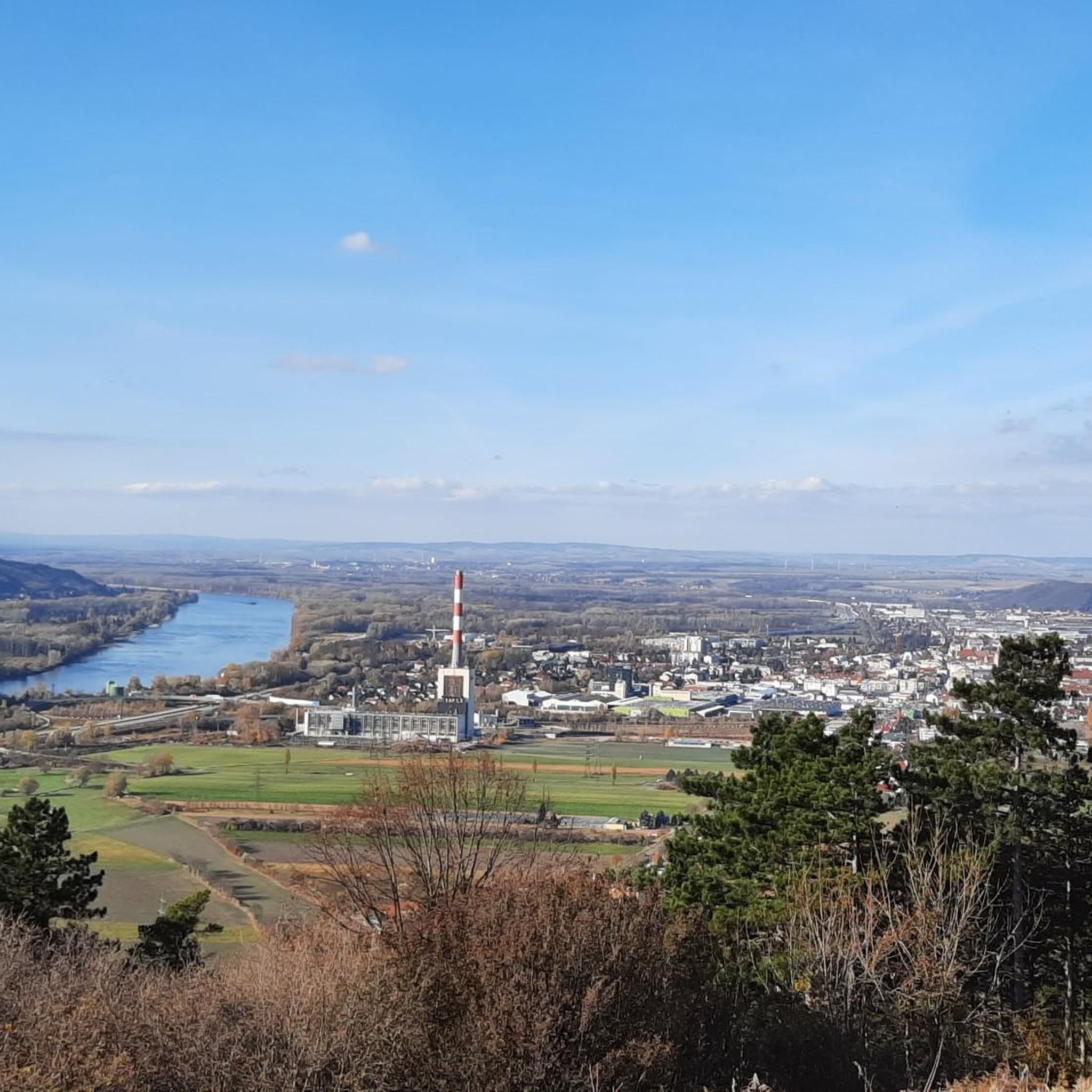
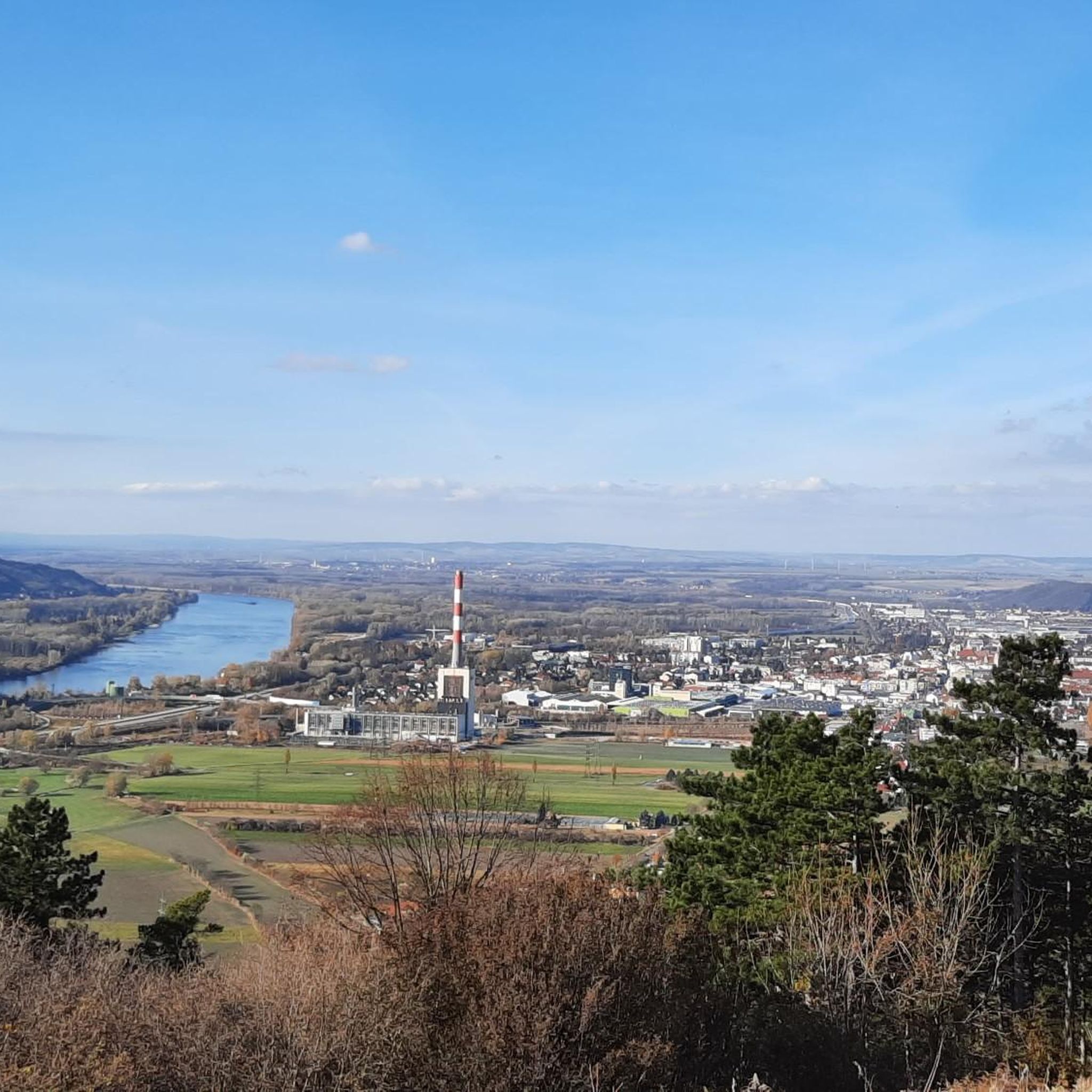
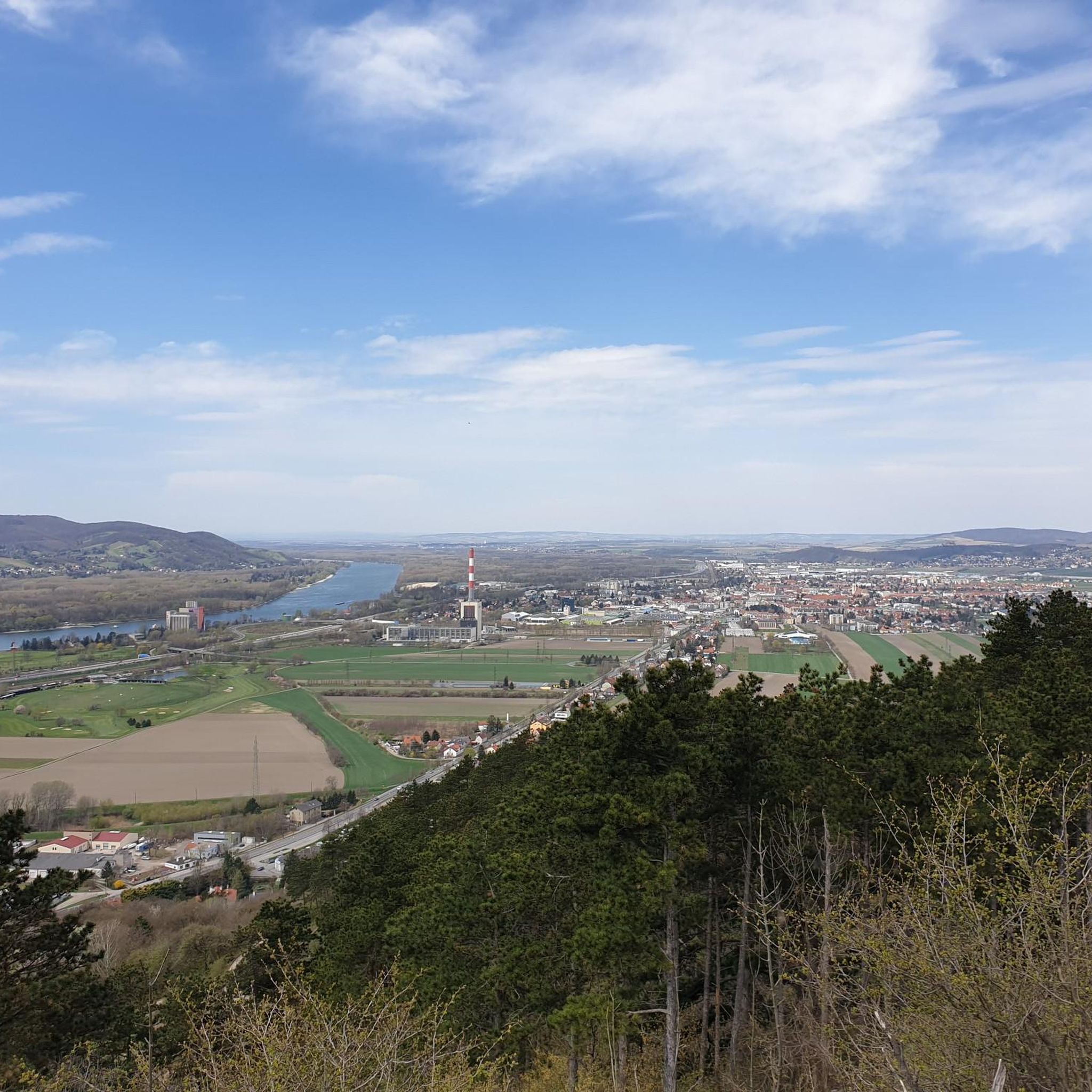
Probably the most beautiful waste incineration plant
0
0

The „Hundertwasser Power Plant“ is officially the Spittelau waste incineration plant (MVA) in Vienna's 9th district. It is one of Vienna's most famous landmarks and a prime example of how to reconcile necessary industry with art and environmental protection.
1
0

From the cycle path at the northern tip of Danube Island, there is a particularly clear and open view of Leopoldsberg. Where Danube Island ends and the view opens up upstream, Leopoldsberg rises prominently above the river and, together with the neighboring Kahlenberg, forms the distinctive boundary of the Vienna Woods. The church and the walls of the former fortifications on the summit are clearly visible from this perspective.
1
0
From this spot, you have beautiful views of the Kahlenberg and Leopoldsberg hills. Particularly along the shoreline, several viewpoints offer opportunities to admire the hills and the surrounding landscape. The view is a popular highlight for cyclists. Just take a short break, enjoy the view, and capture the stunning perspectives.
1
0

The Spittelau Waste Incineration Plant in Vienna is a fascinating example of the combination of functionality and art, designed by the famous Austrian artist Friedensreich Hundertwasser. Here are some interesting aspects of this unique facility: 1. Architecture: - The waste incineration plant was built between 1988 and 1992 and is characterized by its artistically designed façade, which Hundertwasser designed after a major fire in 1989. - The striking 120-meter-high chimney tower is a central design element and makes the plant a popular photo subject in Vienna. 2. Functionality: - The plant has a total installed capacity of 460 MW and plays an important role in waste management and energy generation in Vienna. - It converts waste into energy, thus contributing to the city's sustainable energy supply. 3. **Visitor Services**: - Guided tours of the plant's exterior and interior are offered, giving visitors insight into the innovative technology and artistic design. - The **Hundertwasser district heating system** is another highlight that illustrates the connection between art and energy supply. 4. **Cultural Significance**: - The waste incineration plant is not only a functional building, but also a symbol of the creative integration of art into architecture and urban planning. - It demonstrates how industrial facilities can be designed in an aesthetically pleasing way to enhance the cityscape. The Spittelau waste incineration plant is thus an impressive example of modern architecture that is both environmentally friendly and artistically valuable.
4
1
Frequently Asked Questions
How many touring cycling routes are available in Bisamberger Wald?
Bisamberger Wald offers a wide selection of touring cycling routes, with over 350 options available. These routes cater to various preferences, ranging from easy, flat paths to more challenging, undulating terrain through forests and vineyards.
What types of terrain will I encounter while cycling in Bisamberger Wald?
You can expect a diverse landscape for touring cycling in Bisamberger Wald. Routes often feature extensive forests, rolling hills, and picturesque vineyards, especially around villages like Langenzersdorf and Klosterneuburg. You'll also find paths along the Danube River, which include both flat sections and gentle climbs, and consistently flat, car-free routes along the Marchfeld Canal.
Are there any easy touring cycling routes suitable for beginners or families?
Yes, Bisamberger Wald has numerous easy touring cycling routes. For instance, the Bottle sculptures – Kellergasse Bisamberg loop from Bisamberg is an easy 9.0-mile (14.5 km) trail that takes about 55 minutes. Another great option is the Marchfeld Canal – Klosterneuburg Abbey loop from Langenzersdorf, which is an easy 18.1-mile (29.1 km) route, offering a pleasant, car-free environment along the canal.
What are some popular moderate touring cycling routes in the region?
For those seeking a moderate challenge, the Wine cycle route – Danube-Veltliner is a popular choice. This 29.3-mile (47.1 km) route winds through vineyards and along the Danube. Another favorite is the Vienna City Hall – View of Leopoldsberg loop from Langenzersdorf, a 25.8-mile (41.5 km) path offering scenic views towards Leopoldsberg and the city.
Are there any circular touring cycling routes in Bisamberger Wald?
Many touring cycling routes in Bisamberger Wald are designed as loops, allowing you to start and end at the same point. Examples include the Bottle sculptures – Kellergasse Bisamberg loop from Bisamberg and the Marchfeld Canal – Klosterneuburg Abbey loop from Langenzersdorf. These circular routes provide convenient options for exploring the area without needing to retrace your steps.
What can I see along the touring cycling routes in Bisamberger Wald?
Along the touring cycling routes, you can discover various natural and cultural attractions. Notable viewpoints include the Elisabethhöhe Memorial and Viewpoint and the Venusgarten and View of Langenzersdorf and Vienna, offering panoramic vistas. You might also pass by the Zigeunerbründl Spring or cultural landmarks like the Josef von Eichendorff Memorial.
What is the best time of year for touring cycling in Bisamberger Wald?
The best times for touring cycling in Bisamberger Wald are typically spring and autumn. During these seasons, the weather is mild, and the landscape is particularly vibrant with colors, making for a pleasant cycling experience. While summer is also an option, spring and autumn offer more comfortable temperatures.
Are there any places to eat or drink near the cycling routes?
Yes, the region offers opportunities to stop for refreshments. Cycling routes often lead through charming villages where you can find traditional Austrian winemakers' taverns, known as Heurigen, especially in the broader Bisamberg area. These offer local wines and delicacies. The Gasthaus zur Gamshöhe is one such spot that cyclists might encounter.
What do other touring cyclists enjoy most about Bisamberger Wald?
The komoot community highly rates touring cycling in Bisamberger Wald, with an average score of 4.5 stars from over 4,000 reviews. Cyclists often praise the diverse landscape, which includes dense forests, scenic vineyards, and paths along the Danube River and Marchfeld Canal. The variety of routes, catering to different ability levels, is also a frequently highlighted positive aspect.
Can I reach Bisamberger Wald cycling routes using public transport?
The region's proximity to Vienna and surrounding towns means that many starting points for cycling routes are accessible via public transport. While specific connections vary, it's generally possible to reach the area by train or bus, often allowing for bike transport, making it convenient to start your tour without a car.
Are there any longer touring cycling routes for experienced riders?
For experienced touring cyclists looking for longer distances, the Donaubühne Tulln – Danube Cycle Path Near Höflein loop from Langenzersdorf is a moderate 36.8-mile (59.2 km) route. This route offers an extended journey along the Danube Cycle Path, providing a more substantial ride through the scenic river landscape.
Most popular routes in Bisamberger Wald
Most popular attractions in Bisamberger Wald

Get inspired with the komoot mobile app


Explore more
Browse the best Cycling routes in other regions.
