Top 20 Castles around Moosbach
Best castles around Moosbach are found in the Upper Palatinate region of Bavaria, Germany, an area known for its historical significance and diverse natural landscape. This municipality is surrounded by several historical castle ruins and complexes, offering insights into the region's past. Many of these sites are situated on elevated positions, providing extensive views over the Upper Palatinate Forest. The area features a mix of well-preserved structures and remnants, reflecting centuries of history.
Best castles around Moosbach
- The most popular…
Last updated: October 9, 2026
Leuchtenberg Castle Ruins
Highlight • Castle
Translated by Google •
Tip by

Wildstein Castle Ruins
Highlight • Castle
Translated by Google •
Tip by

Sign up now to discover places like this
Get recommendations on the best single tracks, peaks, & plenty of other exciting outdoor places.
Trausnitz Castle in the Valley
Highlight • Castle
Translated by Google •
Tip by

Frauenstein Castle Ruins
Highlight • Castle
Translated by Google •
Tip by

Thonmühle Ruins
Highlight • Historical Site
Translated by Google •
Tip by
Sign up for free to discover even more castles around Moosbach.
Already have an account?
Start today with a free account
Your next adventure awaits.

Other adventures around Moosbach

Tips from the Community

Frauenstein Castle Ruins The village of Weiding belonged to the Frauenstein lordship in hereditary servitude, about whose beginnings nothing is known. In the second half of the 13th century, Duke Heinrich of Lower Bavaria bought Frauenstein from Fredrich the Siegenhofer. This source states that the area around the village of Weiding, which had a brick church, was largely deserted. In the 14th century, the Frauenstein lordship and thus Weiding became a fief of the King of Bohemia. The Satzenhofers, Zengers, Fuchs and the Lords of Murach followed as further owners. In 1512, Hans von Selbitz (knight, friend of Götz von Berlichingen) appears as the owner of Frauenstein Castle. On January 29, 1580, Emperor Rudolf II enfeoffed Andreas Georg von Murach auf Kürnberg und Winklarn and his wife Anna, daughter of the late Hans Fuchs zum Schneeberg, with the two desolate castles Frauenstein and Reichenstein, today preserved as the Reichenstein castle ruins, the small town of Schönsee and the villages of Weiding and others. On November 26, 1605, Hans Friedrich Fuchs received an imperial letter of fief. His hereditary possessions included the castles Frauenstein and Reichenstein, the town of Schönsee, Weiding, Pondorf, Gaisthal, Schönau, Stadlern and Schwand with the iron hammer. Today, unfortunately, only a few remains of the walls in a romantic location remain. Only the tip of an entrance arch protrudes from the overgrown piles of rubble. A little higher up, further east, a wall remains that is about to collapse rises from the collapsed material. Large piles of bricks lie everywhere. The whole thing impressively shows the decay of a castle and looks a bit like a sunken fairytale castle. Source: www.wikipedia.de
4
0

Frauenstein, one of the five mysterious vanishing points of the early Middle Ages - next to Hirštejn (Czech Republic, between Závist (Neid) and Nemanice (Wassersuppen)), Reichenstein (between Stadlern and Ebene or Böhmerwaldturm, Drachenturm (Treffelstein) and Thanstein. You have to experience them all with all their secrets in order to get to the bottom of the secrets of the “Schwarzachtaler holiday region 🤣).
3
0

Beautiful rock formation and a great view, a trip to the Burgstall is worth it.
6
0
Idyllic place on the Pfreimd, an information board provides information about the former clay mill.
7
0

Beautiful hike from Hannesried to the Frauenstein................
3
0

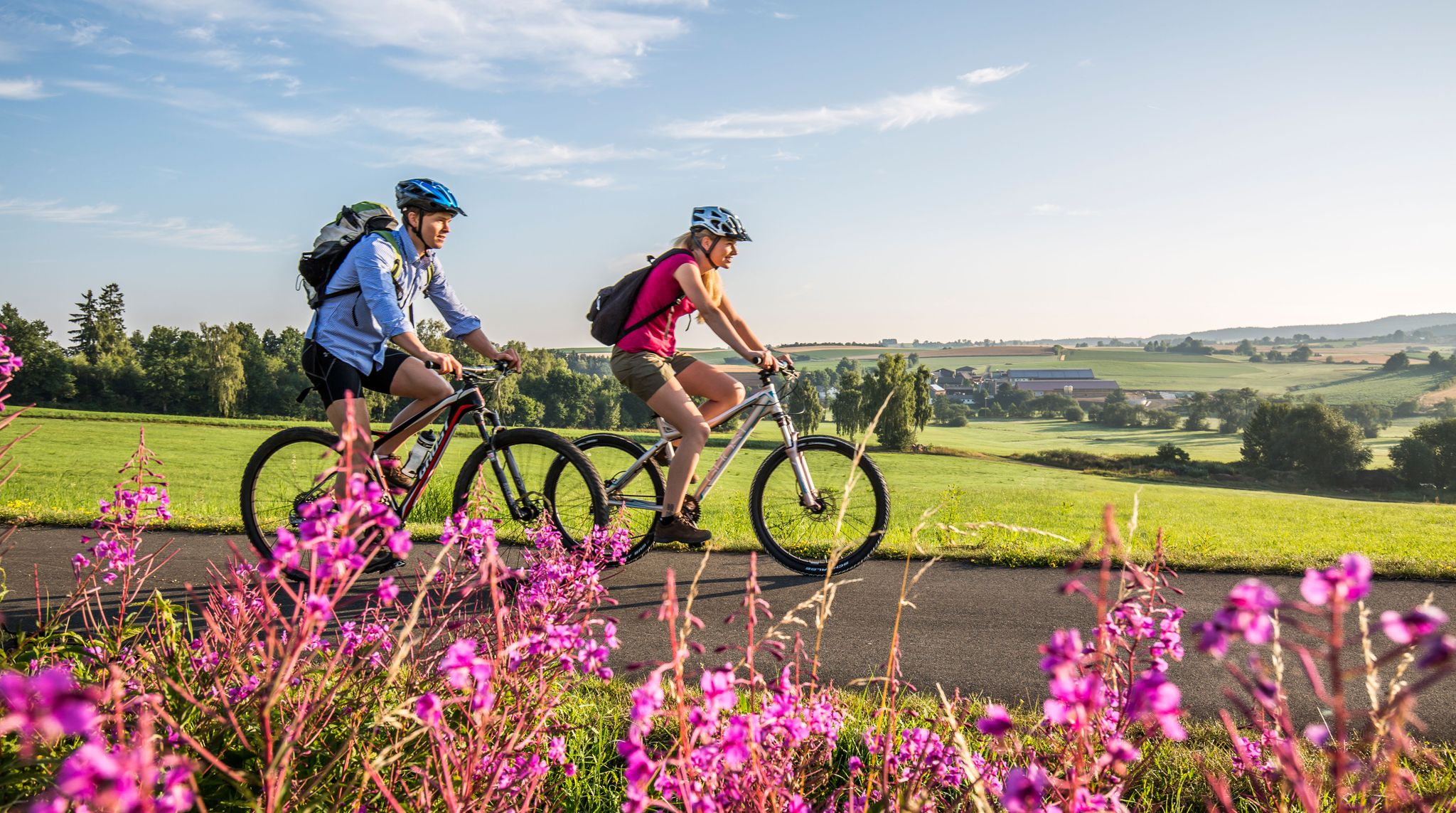
Always a nice highlight to ride a mountain bike here and to explore the beautiful area
3
0

Once again enjoyed the Wildstein. Very beautiful
5
0

The castle can be visited from the outside or, on certain dates, from the inside. On September 11th, 2022, on the "Day of the Open Monument", 3 guided tours will be offered at 10 a.m., 1 p.m. and 3 p.m. Price information: Adults 4.00 euros per person; Children 2 euros per person Events: Sunday, August 21, 2022 Sunday, 09/11/2022 10:00 a.m. - 5:00 p.m Sunday, October 9th, 2022 Venue: Burggasse 2 92555 Trausnitz trausnitz@jugendherberge.de +49 9655 / 9215 - 0 Contact person: Trausnitz Castle in the valley Burggasse 2 92555 Trausnitz www.trausnitz.jugendherberge.de/ trausnitz@jugendherberge.de +49 9655 / 9215 - 0
7
0
Frequently Asked Questions
What are some notable castles and ruins to explore around Moosbach?
The region around Moosbach offers several significant historical sites. You can visit the well-preserved Leuchtenberg Castle Ruins, known for its recognizable knight's hall and summer open-air theater. Other notable ruins include Wildstein Castle Ruins, offering panoramic views, and Murach Castle, with its impressive keep and viewing platform. Don't miss Frauenstein Castle Ruins, a ruin nestled among trees, and the Thonmühle Ruins, an idyllic historical site by the Pfreimd river.
Which castles offer the best panoramic views?
For breathtaking views, the Wildstein Castle Ruins provide a magnificent panoramic view over the 'Waldbuckel' of the Upper Palatinate Forest on a clear day. Similarly, the 20-meter-high keep at Murach Castle features a viewing platform that offers extensive vistas of the Upper Palatinate Forest.
Are there family-friendly castle ruins to visit near Moosbach?
Yes, several castle ruins are suitable for families. Both the Leuchtenberg Castle Ruins and Wildstein Castle Ruins are categorized as family-friendly. These sites offer historical exploration in an outdoor setting, with some providing space for children to explore.
What outdoor activities can I do near these castles?
The area around Moosbach is excellent for outdoor activities. You can find numerous hiking trails, such as the 'Wildstein Summit – Wildstein Castle Ruins loop' or the 'Burgtreswitz Castle – Viewpoint Auf der Wache loop'. There are also MTB trails and road cycling routes available. For more details on routes, you can explore the Hiking around Moosbach, MTB Trails around Moosbach, and Road Cycling Routes around Moosbach guides.
What is the best time of year to visit the castles around Moosbach?
The summer months are particularly vibrant, especially at Leuchtenberg Castle Ruins, which hosts the largest open-air theater in Eastern Bavaria. Generally, spring and autumn offer pleasant weather for exploring the ruins and enjoying the scenic views without the peak summer heat. The period from April 1st to October 31st is when sites like Leuchtenberg Castle are typically open for visitors.
Are there guided tours available for the castles?
While specific guided tours for all ruins are not detailed, for Murach Castle, you can obtain the key to access the keep from the local burgwart, Manfred Senft, at Obermurach 58 (Tel. 09671/91234). This allows for a self-guided exploration of the keep and its viewing platform. For other sites, information boards often provide historical context.
What should I wear when visiting the castles, especially in different seasons?
Given that many castles are ruins and located on elevated positions, comfortable walking shoes are essential. In spring and autumn, layers are advisable as temperatures can vary. During summer, light clothing and sun protection are recommended. For winter visits, warm, waterproof clothing, sturdy boots, and possibly traction aids are necessary, as paths can be slippery or snowy.
Can I bring my dog to the castle ruins?
Many outdoor historical sites in Germany, including castle ruins, are generally dog-friendly, provided dogs are kept on a leash and owners clean up after them. However, it's always best to check specific regulations for each site upon arrival, especially for any indoor or restricted areas.
Where can I find parking near the castles?
Parking availability varies by site. For Leuchtenberg Castle Ruins, there is usually designated parking nearby. For more remote ruins like Wildstein Castle Ruins, you might find parking in the nearest village, such as Teunz, from where the ruins are a short walk. For Murach Castle, parking is typically available near the village of Obermurach.
Are there cafes or restaurants near the castle sites?
While some castle sites might have small kiosks or seasonal offerings, it's generally advisable to look for cafes and restaurants in the nearby towns and villages. Moosbach itself, as well as larger towns like Oberviechtach near Murach Castle, will offer dining options. It's a good idea to pack snacks and water, especially when visiting more remote ruins.
How long does it typically take to visit the castles around Moosbach?
The time required depends on the specific castle and your interest level. For a site like Leuchtenberg Castle Ruins, you might spend 1-2 hours exploring the grounds and any exhibitions. More remote ruins like Wildstein Castle Ruins might involve a short hike, adding to the overall visit time. If you plan to visit multiple sites, allocate a full day or more.
What do visitors enjoy most about the castles around Moosbach?
Visitors frequently appreciate the historical significance and the well-preserved nature of sites like Leuchtenberg Castle Ruins. The stunning panoramic views from elevated positions, such as those at Wildstein Castle Ruins and Murach Castle, are also highly praised. The blend of history with natural beauty, often accessible via hiking trails, makes for a rewarding experience.
Most popular routes around Moosbach
Most popular attractions around Moosbach

Get inspired with the komoot mobile app


Explore more
Looking for the best castles somewhere else? Discover other guides around Moosbach:
