The best walks and hikes around Heidmühlen
4.6
(2344)
8,016
hikers
19
hikes
Hiking around Heidmühlen offers diverse landscapes in northern Germany. The region features rolling hills, expansive forests, and open fields, providing varied terrain for exploration. Notable natural features include the Wittenborn Heath Nature Reserve with its heathlands and moors, and the winding Schmalfelder Au stream. These elements create a network of hiking trails suitable for different abilities.
Best hiking trails around Heidmühlen
- The most popular hiking route is Wild Boar Enclosure – Wildpark Eekholt loop from Halloher Moor, Brandsheide und Könster…
Last updated: July 5, 2026
4.7
(72)
504
hikers
Easy hike. Great for any fitness level. Easily-accessible paths. Suitable for all skill levels.
5.0
(8)
15
hikers
Easy hike. Great for any fitness level. Easily-accessible paths. Suitable for all skill levels.

Sign up for free
5.0
(2)
5
hikers
Moderate hike. Good fitness required. Easily-accessible paths. Suitable for all skill levels.
8
hikers
4.21km
01:04
10m
10m
Easy hike. Great for any fitness level. Easily-accessible paths. Suitable for all skill levels.
5.0
(1)
2
hikers
14.9km
03:48
40m
40m
Moderate hike. Good fitness required. Easily-accessible paths. Suitable for all skill levels.
Get access to more routes and recommendations from other explorers.
Sign up for free
Already have an account?
Our route recommendations are based on thousands of hikes, rides, and runs completed by other people on komoot.
Start today with a free account
Your next adventure awaits.
Login or Signup

Tips from the Community

Breeding station for the storks
0
0
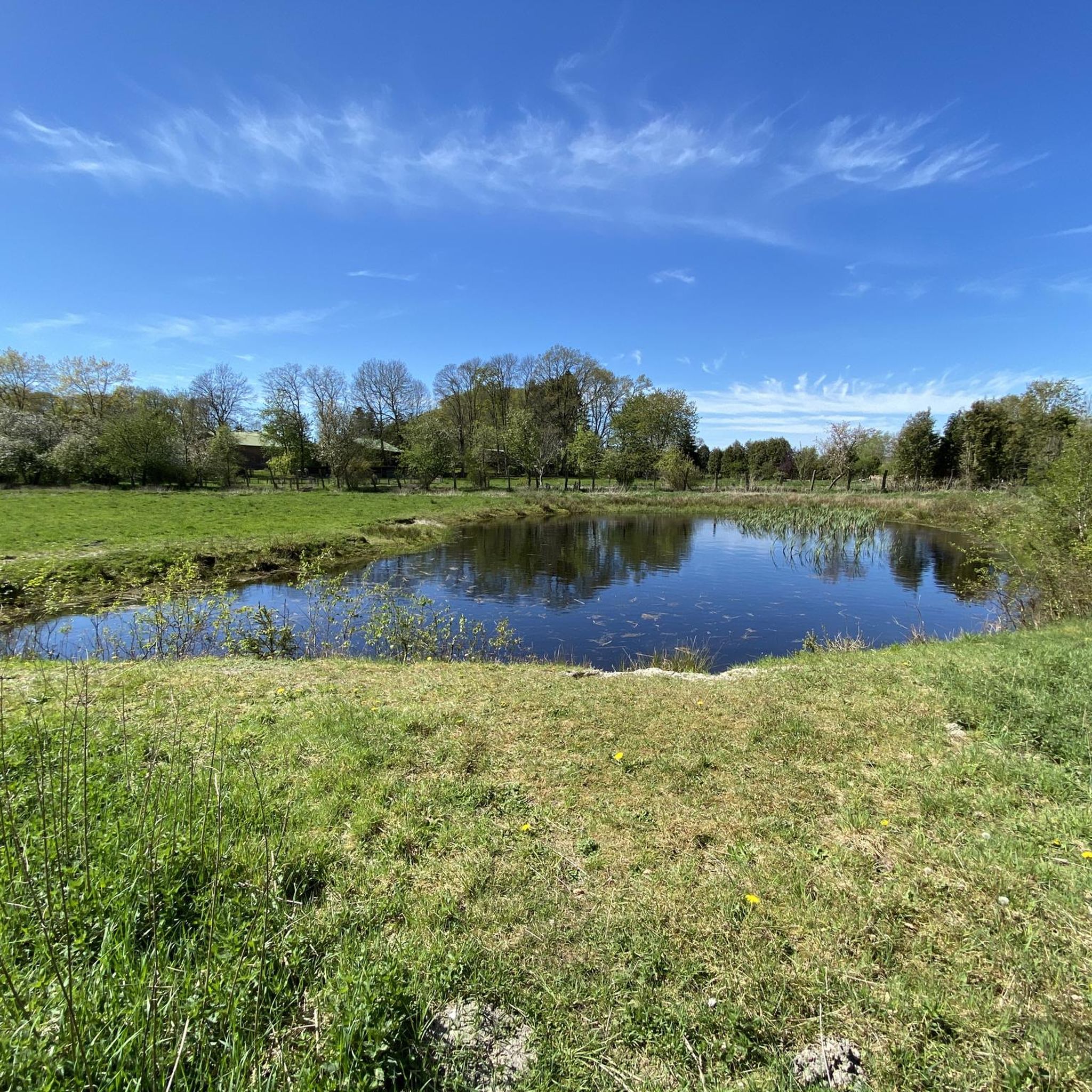
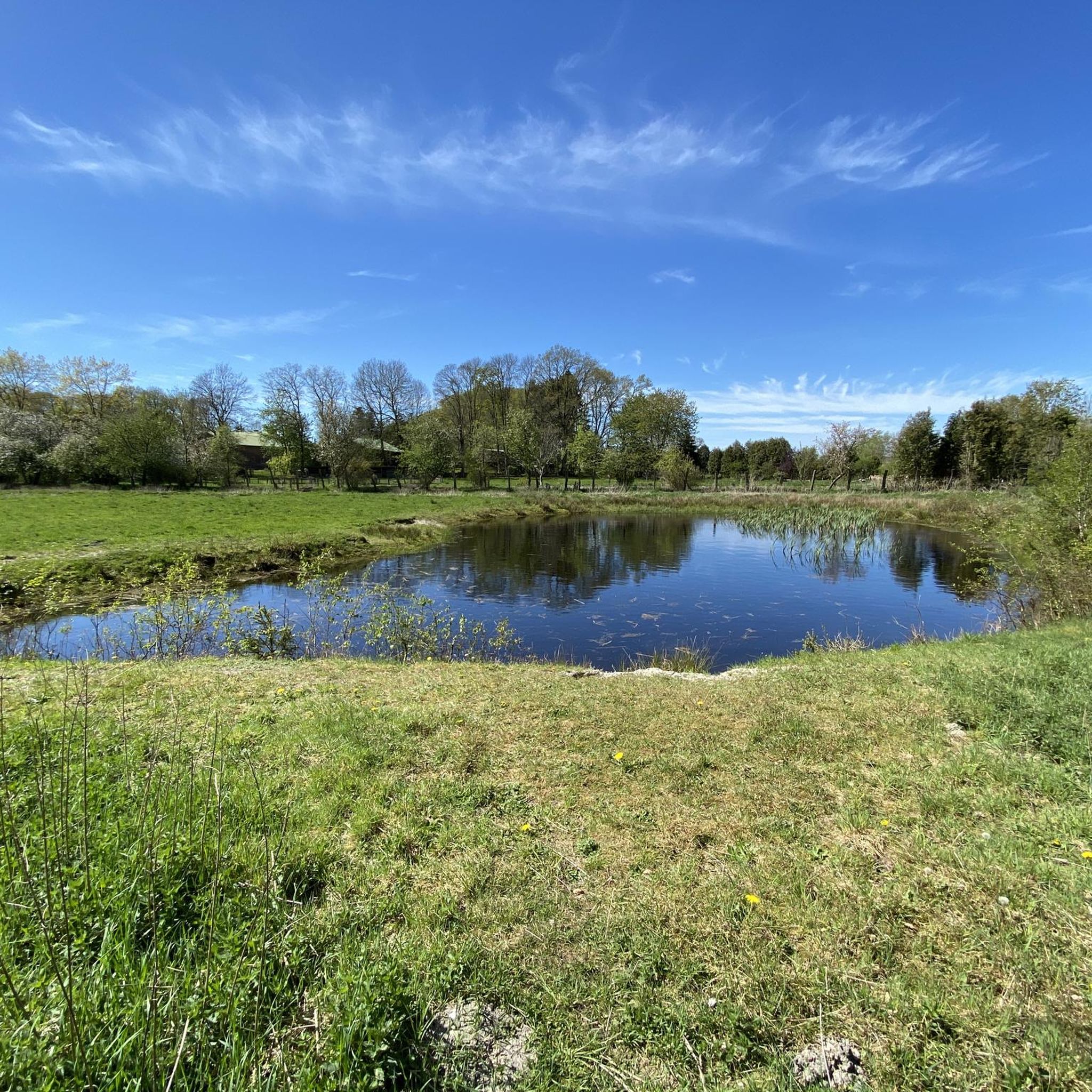
A good overview of the stork enclosure with pond
0
0

The kingfisher enchants observers with the symphony of colors in its plumage and is therefore often called a "flying gem" or a "flying diamond." The unusually bright coloring of the kingfisher's plumage for Northern Europe has always captured the imagination. According to an old legend, the kingfisher was an inconspicuous gray before the Flood. But as it hastily left Noah's Ark, it is said to have landed with its back to the sky, and at the same time, its belly feathers were singed by the setting sun. Most of the time, it is only seen flying by, its turquoise-blue back flashing. It calls out a harsh "zii" or "zrii." It flies very quickly, with whirring wingbeats, close to the water, interrupted by short glides. Well-nourished kingfishers weigh around 40 grams. They are only slightly larger than a sparrow.
0
0
Although not common in Schleswig-Holstein, the kingfisher can still be found. The breeding population is estimated at 200 to 600 pairs, primarily in the water-rich eastern hills and on the Geest. Kingfishers are piscivores and prefer to nest on steep banks or in the root plates of fallen trees. Explanation: Distribution: In Schleswig-Holstein, kingfishers are primarily found in regions with numerous bodies of water, such as the eastern hills and the Geest. Habitat: They prefer steep banks of lakes, rivers, and ponds, but also ditches, gravel pits, and tree root plates near suitable bodies of water. Diet: Kingfishers are piscivores and feed mainly on small freshwater fish such as minnows. Breeding: They typically breed from March to June and lay 5-7 eggs. Special Features: The kingfisher is a protected species, and its population is heavily dependent on the health of the water bodies. Kingfishers are also vulnerable to cold winters, which can affect their populations
0
0
In search of food, wild boars rummage through the ground for edible roots, worms, grubs, mice, snails, and mushrooms. In addition to aquatic plants such as calamus, wild boars also eat the leaves, shoots, and fruits of numerous woody plants, herbs, and grasses. As omnivores, they will also eat carrion and waste. Wild boars have been observed breaking into rabbit burrows to eat the young rabbits. Occasionally, they also prey on the eggs and young of ground-nesting birds. In dry waters, they even eat mussels.
0
0
The term "Bache" for the adult female wild boar, however, has only been documented in this sense since the 16th century. Originally, the Old High German word *bah- meant the back of an animal or the bacon taken from it (cf. English "back" or the French word "bacon", borrowed from German).[8] Young wild boars are called "Pferlinge" (piglets) until they are one year old; in their second year, they are called "Überläufer" (runner sows) or "Überläufer boar" (runner boars).
0
0
The term "pigs" for the mammalian family is of Old Germanic origin.[2] Corresponding to the name for all pigs, male adult animals are called (wild) boars and females (wild) sows or sows. Both "boar" and "sow" are only slight variations of Germanic words, but similar root words also exist in other Indo-European languages, e.g., in Latin "aper" and "sus", so that a pre-Germanic origin seems likely.[3][4] The word "sow" could be derived from an onomatopoeia of the grunting sound typical of the animals, or it could refer to the animals' fertility in the sense of the Indo-European root *su-. The term "ferkel" for the young animals that are still dependent on their mother's milk is derived from a diminutive form of another Germanic term for "pig", *farha-, which in turn is also of Pre-Germanic origin and is related, for example, to the English "pork"; this word refers
0
0
Wild boars are omnivores and highly adaptable. In Central Europe, the population is growing rapidly, primarily due to increased corn cultivation, and the animals are increasingly migrating into populated areas.
0
0
Frequently Asked Questions
What kind of terrain can I expect on hikes around Heidmühlen?
Heidmühlen offers a diverse landscape characterized by rolling hills, expansive forests, and open fields. You'll encounter heathlands and moors, particularly within the Wittenborn Heath Nature Reserve, as well as winding paths along the Schmalfelder Au stream. The trails provide a mix of natural surfaces, from forest floors to open heath.
Are there any easy hiking trails suitable for beginners or casual walkers?
Yes, Heidmühlen has several easy trails. For a gentle introduction, consider the Wild Boar Enclosure – Wildpark Eekholt loop, which is 5.7 km long and takes about 1 hour 27 minutes. Another peaceful option is the Forest Rest Area – Quiet forest path loop, an easy 7.6 km path through tranquil woodlands.
Can I find circular hiking routes in Heidmühlen?
Many of the trails around Heidmühlen are designed as circular routes, allowing you to start and end at the same point. Examples include the Osterau Stream – Ketelvierth Observation Tower loop, a moderate 17.5 km route, and the shorter Mühlenholz Country Café loop at 4.2 km.
What natural features or landmarks can I see while hiking in Heidmühlen?
Heidmühlen's trails lead to several interesting natural features and landmarks. You can explore the unique heathlands of the Wittenborn Heath Nature Reserve, visit the Hasenmoor Observation Tower for expansive views, or cross the scenic Alfred Warnemünde Bridge over the Schmalfelder Au. There's also a historic mill on the village outskirts that can be part of your walk.
Is Heidmühlen a good place for family-friendly hikes?
Yes, Heidmühlen offers several family-friendly options. The easier, shorter loops like the Wild Boar Enclosure – Wildpark Eekholt loop are great for families with children, providing manageable distances and interesting sights like the Wildpark Eekholt area.
What kind of wildlife might I encounter on the trails?
The diverse ecosystems around Heidmühlen support a variety of wildlife. Along routes such as the Circular route Eekholt-Hasenmoor-Osterau, you might spot sea eagles, storks, swans, cranes, deer, and kingfishers. The Schmalfelder Au stream is also home to various fish species, which in turn attract larger predators like eels and pike.
When is the best time of year to go hiking in Heidmühlen?
The autumn months are particularly recommended for hiking in Heidmühlen. During this season, the turning leaves transform the landscape into a vibrant spectacle, offering beautiful scenery for your walks.
Are there any cafes or places to eat near the hiking trails in Heidmühlen?
Yes, the region has options for refreshments. For example, the Mühlenholz Country Café loop from Heidmühlen specifically mentions a country café, suggesting places to stop for a break or a meal.
How long do hikes in Heidmühlen typically take?
Hiking durations in Heidmühlen vary depending on the route and your pace. Shorter, easy trails like the Wild Boar Enclosure – Wildpark Eekholt loop can be completed in under 1.5 hours, while moderate routes such as the Osterau Stream – Forest Beauty loop, which is 14.9 km, might take around 3.5 to 4 hours.
What do other hikers say about the trails in Heidmühlen?
The hiking trails in Heidmühlen are highly regarded by the komoot community, with an average rating of 4.6 stars from over 2200 reviews. Hikers often praise the varied terrain, the peaceful forest paths, and the well-maintained routes that allow for enjoyable exploration of the region's natural beauty.
Are there any more challenging hikes available for experienced hikers?
While many routes are easy to moderate, some trails offer a more demanding experience. The Moor-Osterau Hike, for instance, is described as a more challenging option that requires good physical condition, traversing varied landscapes including the Osterau and Hasenmoor FFH area.
Is public transport available to reach the trailheads in Heidmühlen?
Information regarding specific public transport connections directly to all trailheads is not detailed. However, Heidmühlen is a community in northern Germany, and local bus services typically connect such areas. It's advisable to check local transport schedules for routes serving Heidmühlen to plan your journey.
Most popular routes around Heidmühlen
Most popular attractions around Heidmühlen

Get inspired with the komoot mobile app


Explore more
Browse the best Hikes in other regions.
