The best road cycling routes in Rezerwat Bajory
5.0
(4)
92
riders
4
rides
Road cycling routes in Rezerwat Bajory traverse a landscape characterized by lakes and rolling hills within a natural park setting. The region offers varied terrain suitable for road cyclists, featuring both flatter sections and gentle ascents. The routes often provide views of the surrounding water bodies and natural scenery. This area in powiat kętrzyński is known for its accessible road cycling opportunities.
Best road cycling routes in Rezerwat Bajory
- The most popular road cycling route is View of Lake in…
Last updated: May 12, 2026
5.0
(3)
77
riders
52.1km
02:12
280m
280m
Moderate road ride. Good fitness required. Mostly well-paved surfaces and easy to ride.
5
riders
30.0km
01:18
230m
230m
Easy road ride. Great for any fitness level. Mostly well-paved surfaces and easy to ride.

Sign up for free
5.0
(1)
7
riders
38.4km
01:33
180m
180m
Easy road ride. Great for any fitness level. Mostly well-paved surfaces and easy to ride.
3
riders
59.2km
02:48
350m
350m
Moderate road ride. Good fitness required. Some segments of this route may be unpaved and difficult to ride.
Our route recommendations are based on thousands of hikes, rides, and runs completed by other people on komoot.
Start today with a free account
Your next adventure awaits.
Login or Signup
Popular around Rezerwat Bajory
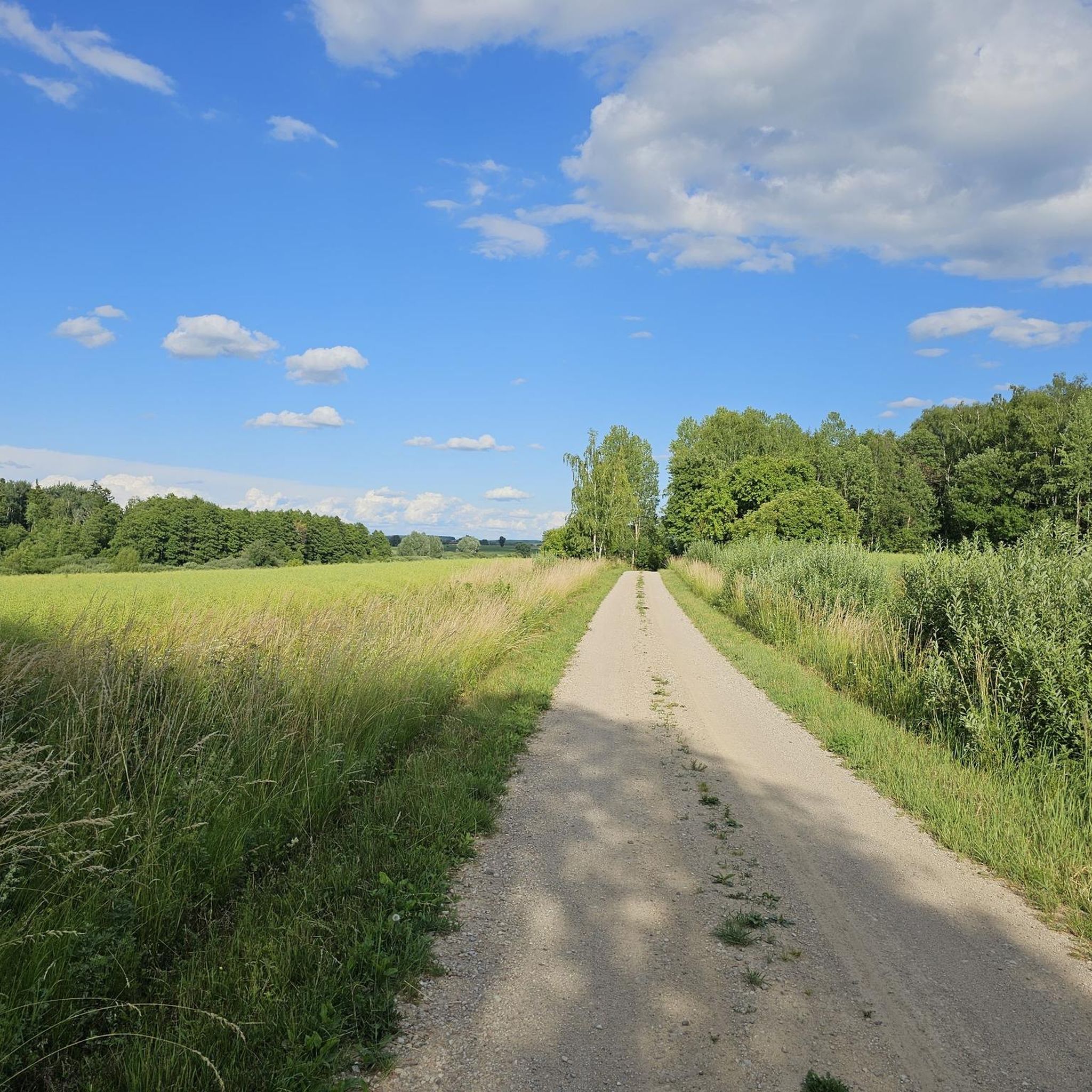
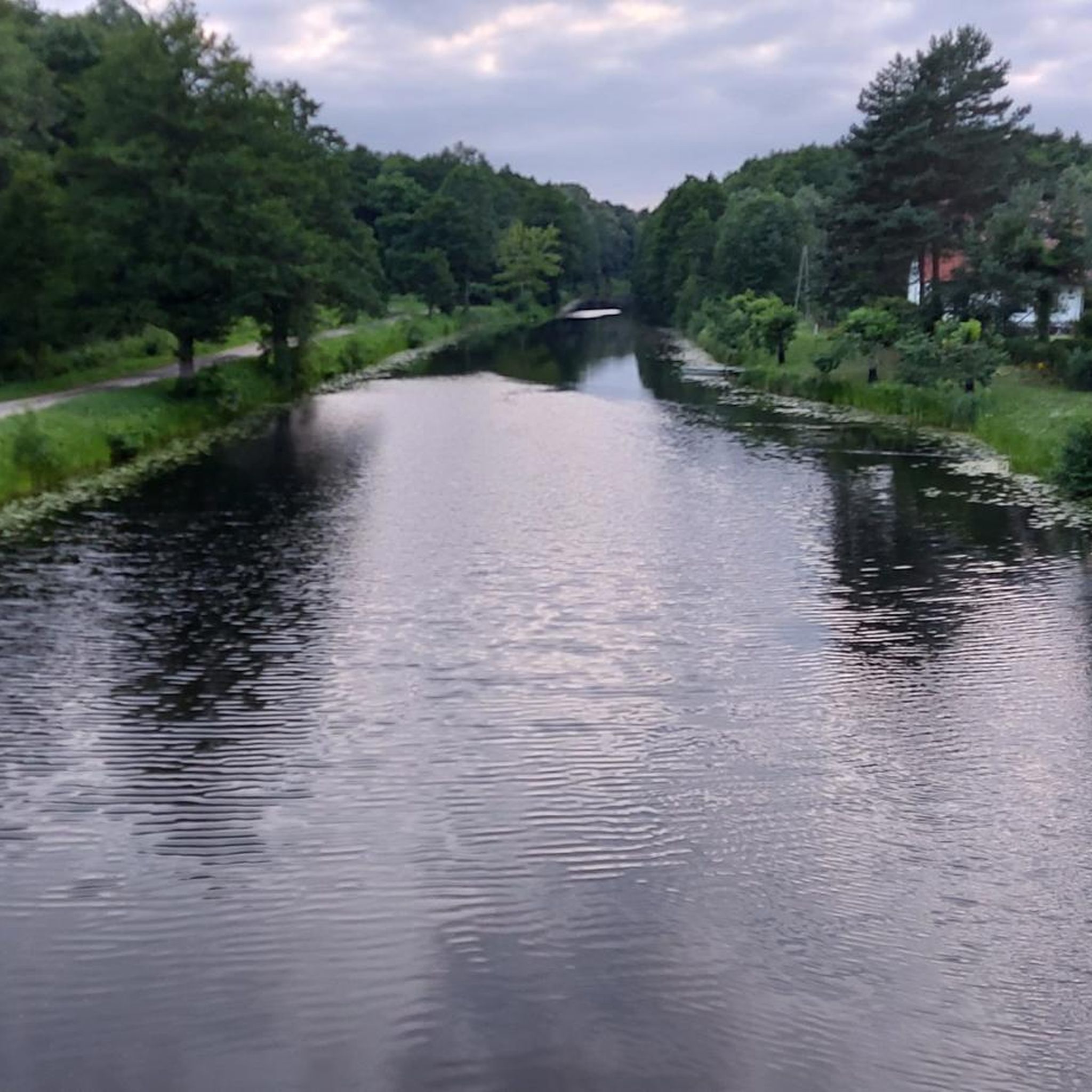
Tips from the Community

The Masurian Canal is an unfinished, impressive project that was intended to connect Mamry with Łyna and the Baltic Sea. Today, it runs through Poland and the Kaliningrad Oblast and is closed to navigation. On the Polish side, it's worth seeing the monumental locks in Leśniewo and the only operational lock, Piaski. Along the canal are embankments and former towpaths, perfect for walking or cycling.
2
0
Lake Przystań, a deep bay of Mamr, is a great destination for a bike trip in the vicinity of Węgorzewo. There is a picturesque section of Green Velo along the Mała Pętla Mamr. The lake is famous for its crystal clear water and great depth - it is popular with divers, who can explore here, among others, the sunken tug Arabela. There is a comfortable MOR and a small beach with a pier in this place. In the area it is also worth seeing bunkers from World War II.
2
0

There is a museum here and the main building has long been under renovation.
0
0

I didn't quite understand what our tour guide was trying to explain to me as historical background 🤔 We cycled all around the never-completed canal on wonderfully accessible forest paths.
2
2

A trip into history is definitely worth it
1
0

Palace (a pearl among the architectural monuments of Warmia and Mazury), a historical park and the remains of the former Lehndorff family estate, a historic oak avenue, a cult sailing port, compact, orderly buildings in the village, a nature reserve in the immediate vicinity and the largest bridge in Masuria, erected between the lakes of Dargin and Kirsayts. The palace was built in the years 1689-1691 on the initiative of Countess Maria Eleonora von Dӧnhoff, wife of Ahasverus Gerhard Lehndorff. The seat of the family was established on the foundations of a building erected here earlier, in the years 1554-1572 (the remains of the previous palace are basements with cross and barrel vaults, as well as the three-bay layout of the building). At the end of the 17th century, a two-story palace was built, covered with a hipped, steep roof. A small break is topped with a high, flattened pediment. In the hall, there are representative two-speed oak stairs. Countess von Dӧnhoff also arranged an 18-hectare park, surrounding the palace from the north. Near the palace there were flower floors, then regular oak alleys. The park was decorated with numerous sculptures. On the clearing, on the main axis, there was a sundial from 1741 (currently located in the courtyard of the museum in Morąg). In the years 1829-1880, the palace was rebuilt (also side wings were added). The west wing was closed with a tower covered with a hipped roof. The elevation of the façade was rebuilt in the neo-Gothic style. From the side of the garden elevation, alcove towers were added to both corners. In the 19th century, a number of buildings were also erected in the park: a neoclassical teahouse (designed by Langhans from 1816) in the eastern part, a neo-Gothic chapel (around 1830) in the western part, an octagonal, neo-Gothic tomb chapel of the Lehndorffs on the western tip of Lake Sztynorcki 1830, builder Staudener, design by Schinkel). The chapel is two-story and there is a crypt in the basement. The upper storey served as a chapel, used not only by the inhabitants of the palace, but also by the town. In 1941, the palace was taken over by the Ministry of Foreign Affairs of the German Reich. Minister Joachim von Ribbentrop was here. During the war in 1945, Sztynort escaped destruction. Until 1947, the headquarters of the Soviet army was located in the palace. https:// Klimatyzacjacje.mazury.pl/palac-sztynort/ https://wegorzewo.pl/ Klimatyzacjacje/awodcja/736/palac_lehndorffow_w_sztynorty https://www.youtube.com/watch?v=EDm4alvCnII
3
0
The Masurian Canal (German: Masurischer Kanal, Russian: Канал Мазурский) is an unfinished water canal that was intended to connect the Great Masurian Lakes with the Baltic Sea via the Łyna and Pregoła rivers. Currently, the Masurian Canal runs through the territory of two countries: Poland and the Russian Federation. It is not open to navigation. The Masurian Canal project, conceived in the late 19th century, was based on earlier work by Polish brothers who settled in Ducal Prussia. In the 17th century, Józef Naronowicz-Naroński developed detailed maps of the lakes and a plan to connect the Pregoła River with the Neman River by a canal. His successor, Samuel Suchodolec (Suchodolski), developed a design for a canal connecting Lake Śniardwy with Lake Niegocin and then with the Pregoła River. With the construction of canals between the Masurian lakes, which began in 1764, the idea of connecting them with the Baltic Sea through a new canal began to be seriously considered. From several possible options, the route connecting Lake Mamry with the Łyna River was selected as the most economically viable. A design for a canal approximately 50 km long, with six water stages and a drop of approximately 111 meters, was developed between 1849 and 1862. However, it was never implemented. Another design, developed in 1874, had already been approved by the East Prussian State Parliament, but due to land ownership issues along the construction route, it also failed to materialize. Between 1890 and 1898, attempts were made to implement a further version of the project. This involved the construction of locks instead of the previously proposed inclined planes, and the construction of hydroelectric power plants at each of the canal's stages (six of which were to be built). Two safety gates in the form of cylindrical weirs were also designed. This concept was also not implemented, primarily due to protests from residents of the Pregolya and Dejma valleys, who feared an increased flood risk. There were also concerns that the planned constant supply of water to the canal at a rate of 6 m³/s would result in navigation disruptions (especially during the summer). https://pl.wikipedia.org/wiki/Kana%C5%82_Mazurski https://www.youtube.com/watch?v=4LvQrxhRHXk
5
2
Frequently Asked Questions
How many road cycling routes are available in Rezerwat Bajory?
Rezerwat Bajory offers a selection of 4 dedicated road cycling routes, catering to various skill levels. These routes traverse a landscape characterized by lakes and rolling hills within a natural park setting.
Are there road cycling routes suitable for beginners in Rezerwat Bajory?
Yes, Rezerwat Bajory has easy road cycling options. For instance, the Roadbike loop from Srokowo is an easy 18.6-mile (29.9 km) path featuring rolling terrain, perfect for those new to road cycling or looking for a relaxed ride. Another easy option is the Roadbike loop from Guja, which covers 20.2 miles (32.6 km) through undulating countryside.
What kind of terrain can I expect on road cycling routes in Rezerwat Bajory?
The terrain in Rezerwat Bajory is characterized by rolling hills and flatter sections, offering a varied experience for road cyclists. You can expect gentle ascents and descents, often with scenic views of the surrounding lakes and natural park landscapes.
Are there any challenging road cycling routes in Rezerwat Bajory?
While Rezerwat Bajory is known for its accessible and moderate routes, there are no routes classified as 'difficult' in this guide. The most challenging options are moderate, such as the Przystań Lake loop from Kolonia Rybacka, which covers 36.8 miles (59.2 km) with over 340 meters of elevation gain.
Are there circular road cycling routes in Rezerwat Bajory?
Yes, all the road cycling routes featured in this guide are circular loops, allowing you to start and finish at the same point. Examples include the View of Lake in Masuria loop from Srokowo and the Roadbike loop from Srokowo.
What is the best season for road biking in Rezerwat Bajory?
Given the region's natural park setting and lake views, spring, summer, and early autumn generally offer the most pleasant conditions for road cycling in Rezerwat Bajory. These seasons provide milder temperatures and lush scenery, enhancing the cycling experience.
What do other road cyclists enjoy most about road cycling in Rezerwat Bajory?
The road cycling routes in Rezerwat Bajory are highly rated by the komoot community, with an average score of 5.0 stars. Reviewers often praise the scenic lake views, the peaceful natural park landscapes, and the varied yet accessible undulating terrain that makes for an enjoyable ride.
Are the road cycling routes in Rezerwat Bajory suitable for families?
The region offers routes with varying difficulty levels, including easy options that could be suitable for families with older children or those comfortable with longer distances. The Roadbike loop from Srokowo, for example, is an easy 18.6-mile (29.9 km) path with rolling terrain, which might be a good fit for a family outing.
What kind of views can I expect along the road cycling routes?
The routes in Rezerwat Bajory frequently offer picturesque views of the surrounding water bodies, particularly lakes, and the serene natural park scenery. The View of Lake in Masuria loop from Srokowo is specifically highlighted for its lake views.
What is the longest road cycling route available in Rezerwat Bajory?
The longest road cycling route in this guide is the Przystań Lake loop from Kolonia Rybacka, which spans 36.8 miles (59.2 km) and is classified as moderate difficulty.
Are there any routes that offer views of Lake in Masuria?
Yes, the View of Lake in Masuria loop from Srokowo is a moderate 32.8-mile (52.8 km) route specifically designed to offer beautiful views of Lake in Masuria.

Get inspired with the komoot mobile app


Explore more
Browse the best Road cycling routes in other regions.
