The best walks and hikes in Riserva Naturale Regionale Oasi Wwf Calanchi Di Atri
4.2
(153)
884
hikers
9
hikes
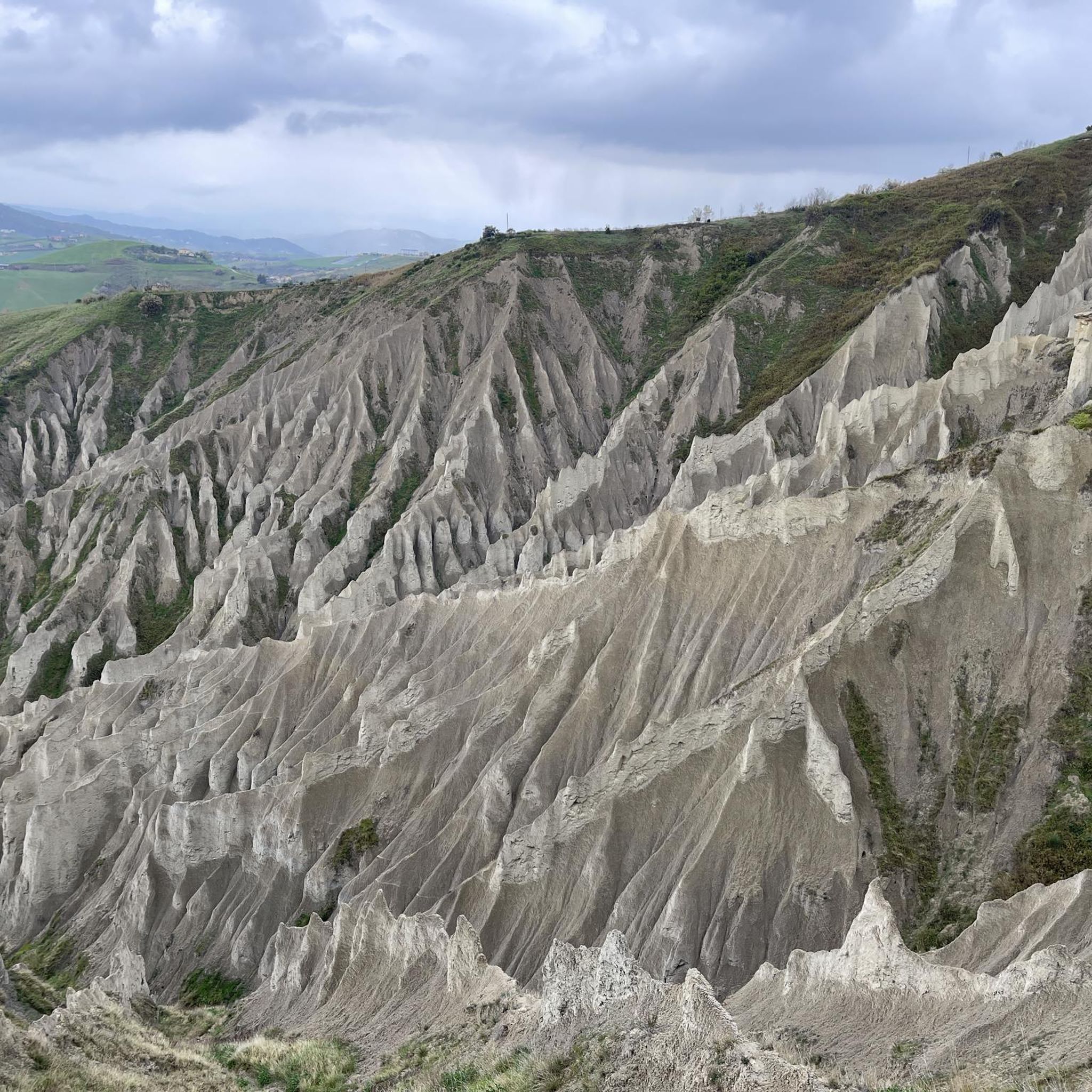
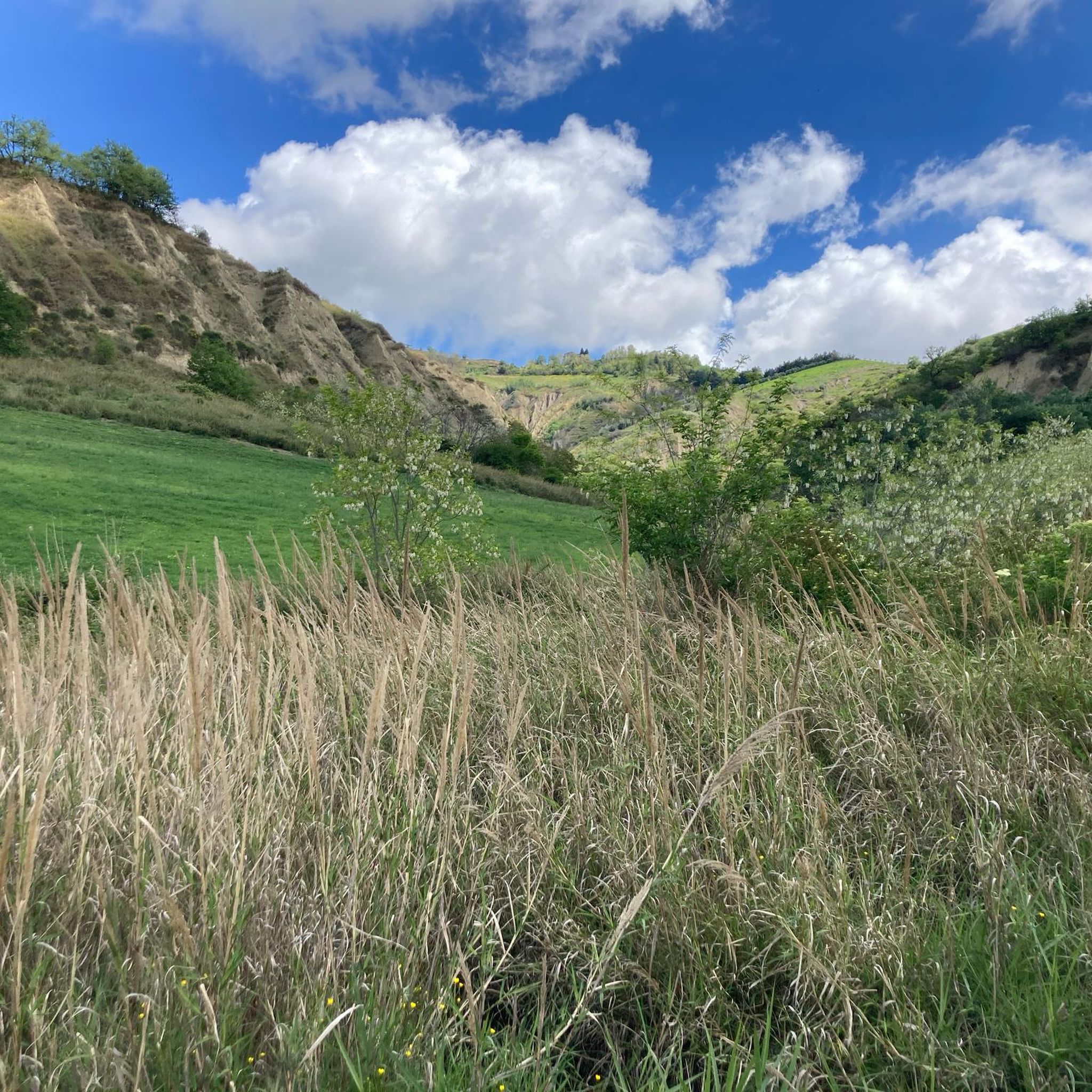
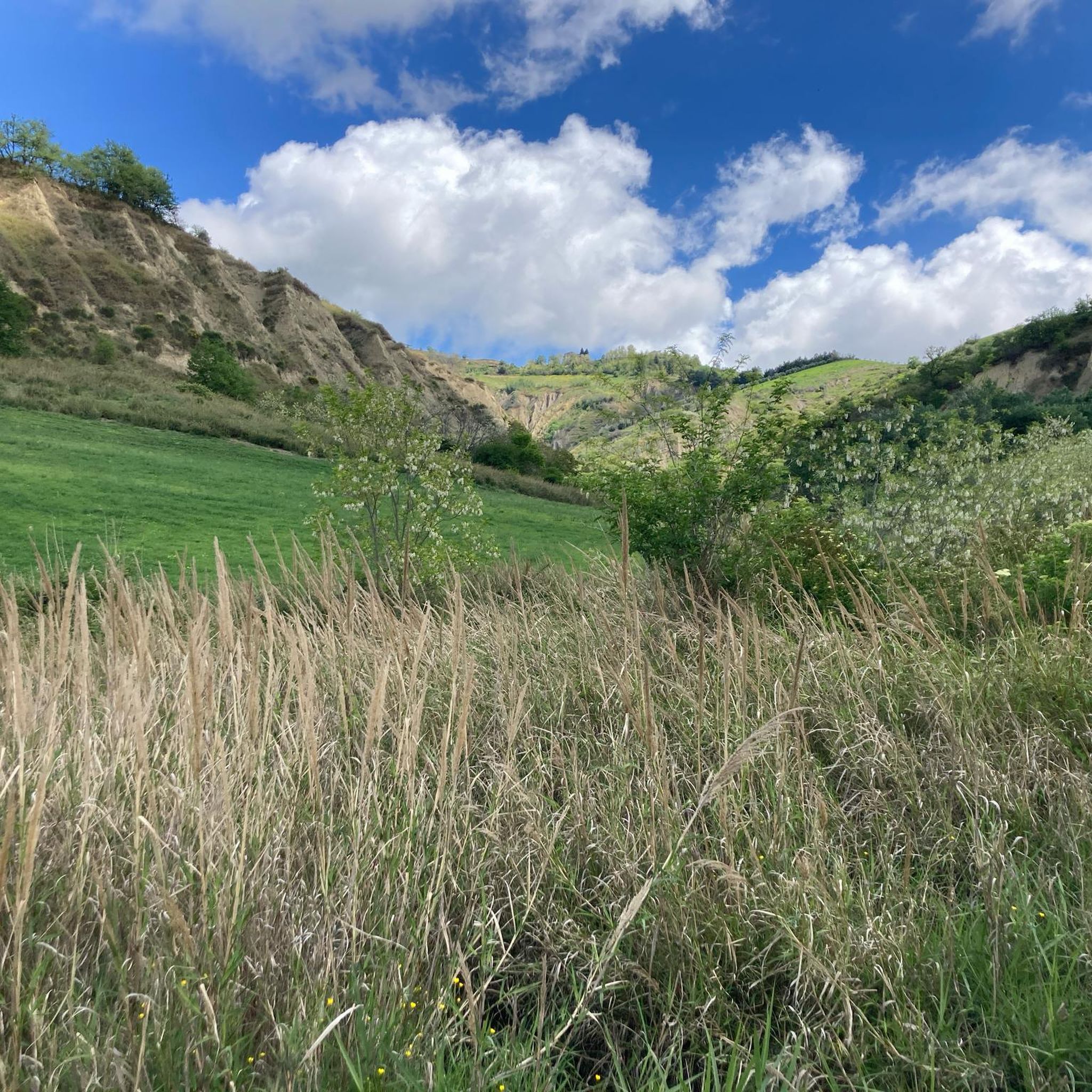
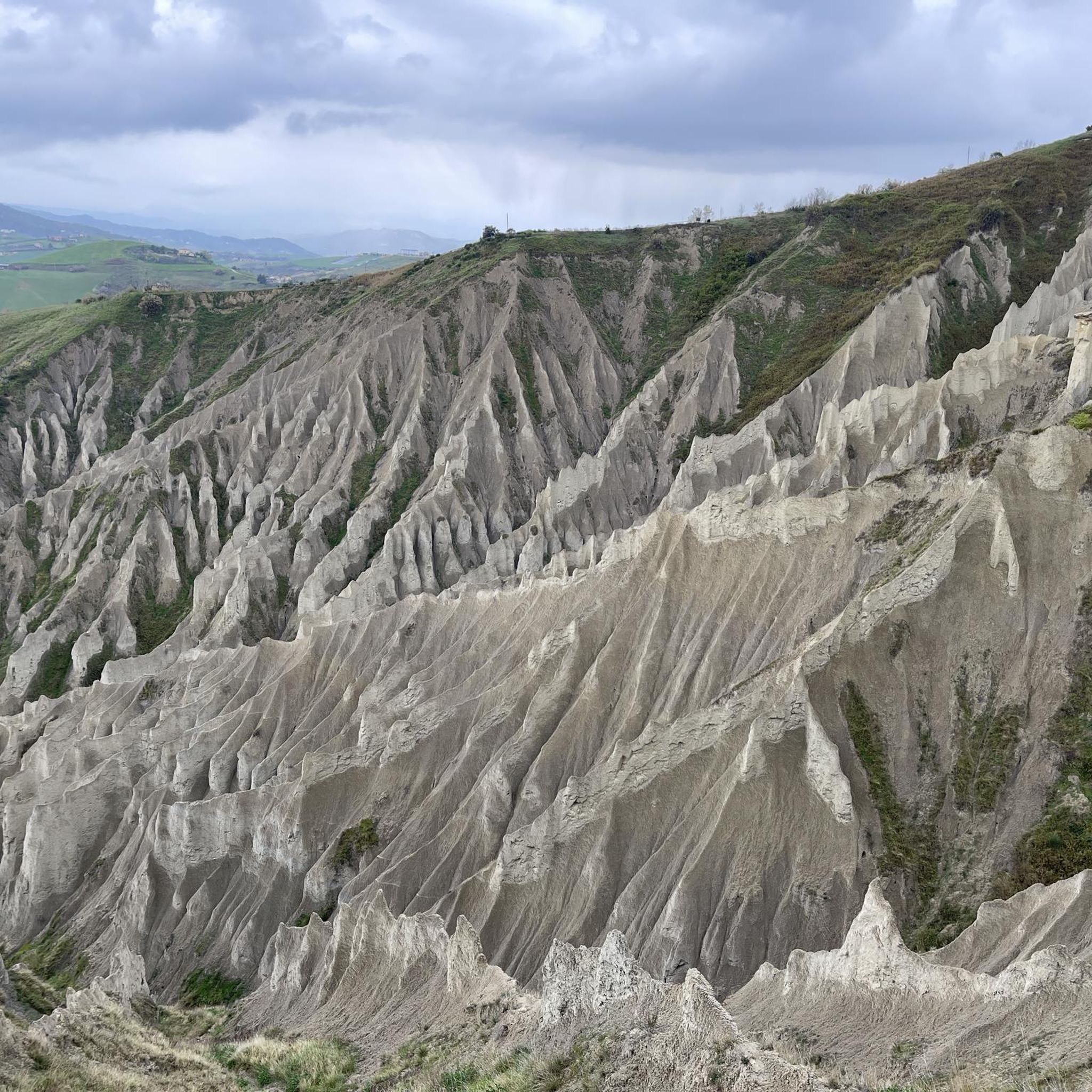
Hiking trails in Riserva Naturale Regionale Oasi Wwf Calanchi Di Atri traverse a landscape shaped by unique geological formations known as "Calanchi" badlands. These features are formed by water erosion on clayey and marly soils, creating a network of deep gullies and sharp ridges. The reserve encompasses diverse habitats, including streams, wooded areas, and cultivated fields. From elevated points, panoramic views extend from the Adriatic Sea to the Abruzzo mountains.
Best hiking trails in Riserva Naturale Regionale Oasi Wwf Calanchi Di Atri
- The most popular hiking route is Calanchi di Atri Loop, a 3.8 miles (6.2 km) trail that takes 2 hours 2 minutes to complete. This moderate route offers views of the distinctive badlands terrain.
- Another top favourite among local hikers is Fontanella loop from Atri, an easy 3.2 miles (5.1 km) path. This route traverses cultivated fields and natural areas, providing varied scenery.
- Local hikers also love the Atri Badlands – Atri Badlands loop from Atri, an 8.1 miles (13.0 km) trail leading through the Calanchi badlands, often completed in about 4 hours 1 minute.
- Hiking in Riserva Naturale Regionale Oasi Wwf Calanchi Di Atri is defined by dramatic badlands, diverse wooded areas, and open cultivated fields. The network offers options for different ability levels, from easy walks to moderate climbs.
- The routes in Riserva Naturale Regionale Oasi Wwf Calanchi Di Atri are highly rated by the komoot community with an average score of 4.4 stars from over 140 reviews. More than 700 hikers have used komoot to explore Riserva Naturale Regionale Oasi Wwf Calanchi Di Atri's varied terrain.
Last updated: September 28, 2026
4.4
(85)
307
hikers
6.19km
02:02
290m
290m
Moderate hike. Good fitness required. Easily-accessible paths. Suitable for all skill levels.
3.0
(2)
21
hikers
3.09km
01:05
180m
180m
Easy hike. Great for any fitness level. Easily-accessible paths. Suitable for all skill levels.

4.4
(10)
15
hikers
13.0km
04:00
470m
470m
Moderate hike. Good fitness required. Easily-accessible paths. Suitable for all skill levels.
5.0
(3)
23
hikers
5.71km
01:35
110m
110m
Easy hike. Great for any fitness level. Easily-accessible paths. Suitable for all skill levels.
4.0
(4)
6
hikers
7.29km
02:03
160m
160m
Moderate hike. Good fitness required. Easily-accessible paths. Suitable for all skill levels.
Get access to more routes and recommendations from other explorers.
Already have an account?
Our route recommendations are based on thousands of hikes, rides, and runs completed by other people on komoot.
Start today with a free account
Your next adventure awaits.
Popular around Riserva Naturale Regionale Oasi Wwf Calanchi Di Atri
Running Trails in Riserva Naturale Regionale Oasi Wwf Calanchi Di Atri
Cycling in Riserva Naturale Regionale Oasi Wwf Calanchi Di Atri
Road Cycling Routes in Riserva Naturale Regionale Oasi Wwf Calanchi Di Atri
MTB Trails in Riserva Naturale Regionale Oasi Wwf Calanchi Di Atri
Gravel biking in Riserva Naturale Regionale Oasi Wwf Calanchi Di Atri
Tips from the Community

The Cathedral of Santa Maria Assunta (the Duomo of Atri) is one of the most important and impressive religious monuments in the Abruzzo region. This co-cathedral was built between 1260 and 1305 on the foundations of an older Romanesque church and even older Roman baths. Open daily in the morning from 09:00 - 12:30
5
0
The artwork that can be admired here depicts the lighting of the 'Faugni' fire by a community of anthropomorphic figures. These are based on animals typical of the Abruzzo region. The costumes feature textures inspired by the culture and art of Atri, particularly the frescoes by De Litio in the cathedral of Atri. Source: information can be read on site.
5
0
San Nicola is one of the oldest churches in Atri and dates back to the 13th century. Inside, you can admire a beautiful 15th-century fresco by Andrea de Litio above the baptismal font. Outside, be sure to notice the colourful ceramic tiles from Castelli above the rose window – a typical and unique detail of Atri's architecture. Source: https://www.comune.atri.te.it/it/vivere/la-chiesa-di-s-nicola
6
0
Who was Francesco Martella? Martella was born on January 21, 1898, in Atri as a craftsman shoemaker. : Due to his anti-fascist ideas, he fled to France, where he joined the resistance movement Giustizia e Libertà. In 1936, he fought as a volunteer in the Spanish Civil War against fascism. : After his arrest by the French Vichy regime, he was extradited to Italy and exiled to the prison island of Ventotene. After the Italian armistice in September 1943, he immediately joined the armed resistance (i partigiani). : On November 17, 1943, Martella was brutally murdered in his hometown of Atri by Nazi fascists. About the monument: The memorial is a three-meter-high bronze statue symbolizing the fight against oppression. The artwork was designed and created by the artist Ireneo Janni, originally from Atri. The monument was unveiled in 1983, exactly 40 years after Martella's murder.
7
0
The Church of Santo Spirito in Atri, located on the edge of the historic center near the old city fortress Rocca di Capo d'Atri, is a hidden gem. Locals know the building better as the Santuario di Santa Rita. It is one of the most important spiritual and devotional centers in the region. The church's origins date back to the 12th or 13th century. In the early period, nuns from Santa Maria Maddalena and monks from various orders (including Franciscans and Augustinians) served there successively. In the 17th century, the complex was transferred to Augustinian nuns. They introduced the fervent devotion to Santa Rita of Cascia (the saint of impossible causes), which forever changed the church's identity. Its current appearance is the result of a major renovation in the first half of the 18th century, during which the interior was transformed into an elegant Baroque style. A fun fact when you stand in front of the place of worship: the beautiful limestone Renaissance portal dates from 1586. This portal originally belonged to the demolished Church of Sant'Antonio and was only placed on the facade of Santo Spirito in 1833. Definitely worth a visit.
6
0
Cathedral with ceramic plates! On Piazza Duomo, the Basilica di Santa Maria Assunta will surely catch your eye immediately. If you look closely, you will see that the tower of the Gothic cathedral from 1300 is decorated with ceramic plates in various colors, which change throughout the day with the position of the sun. Incidentally, the shape of the tower, an octagon with a pyramid on top, is unique for the time when the cathedral was built. The funny thing is that you also see this reflected in other churches in Atri and in other villages and towns in Abruzzo. The story goes that the architect of the cathedral applied it here first, after which the idea was adopted by other builders. Underground church and water reservoirs Around 300 BC, on the spot where the cathedral now stands, there was a large square with baths and reservoirs underneath to store rainwater. Only then was the cathedral built on top of it, after which the reservoirs were converted into an underground church. Triggered? Want to know more, click through to https://ciaotutti.nl/reizen-door-italie/abruzzen/atri-een-levendige-stad-vol-geschiedenis/
5
0
Porta San Domenico dates from the 16th century. The gate was built between 1528 and 1530. The name is derived from the church of San Giovanni Battista, which was also called San Domenico. The building has special decorative architectural elements from the Middle Ages (14th century), namely an arch with a barrel vault and a beam. At the entrance are the remains of a bastion. Source: https://www.visititaly.com/info/952799-porta-san-domenico-atri.aspx
6
0
The Church of John the Baptist is one of the city's historical highlights. It was rebuilt between 1298 and 1317 by the Dominicans on the site of a former royal residence of Emperor Frederick II of Swabia. The beautiful Gothic portal and a window with stone mullions were preserved from the original 13th-century building. Throughout the centuries, the church was modified several times and almost completely rebuilt in the 16th century. This rich history makes this church a fascinating place today where different architectural styles and eras come together. It's up to you to recognize them and place them in the correct period.
6
0
Frequently Asked Questions
What makes the landscape of Riserva Naturale Regionale Oasi WWF Calanchi di Atri unique for hiking?
The reserve is renowned for its dramatic "Calanchi" badlands, which are unique geological formations created by millennia of water erosion on clayey and marly soils. These create a striking landscape of deep gullies and sharp ridges, often described as lunar. Beyond the badlands, you'll find diverse habitats including streams, wooded areas, and cultivated fields, offering varied scenery for your hike.
How many hiking trails are available in Riserva Naturale Regionale Oasi WWF Calanchi di Atri?
There are 7 hiking routes documented in Riserva Naturale Regionale Oasi WWF Calanchi di Atri. These range from easy walks to more moderate climbs, ensuring options for different fitness levels.
Are there any easy hiking routes suitable for beginners or families?
Yes, there are several easy routes. For example, the Fontanella loop from Atri is an easy 5.1 km (3.2 miles) path that traverses cultivated fields and natural areas. Another accessible option is the Atri Badlands loop from Atri, which is 1.4 km (0.9 miles) long.
What kind of views can I expect while hiking in the Calanchi di Atri?
From elevated points within the reserve, hikers can enjoy sweeping panoramic views that stretch from the Adriatic Sea to the distant mountains of Abruzzo, providing a stunning contrast to the unique badlands formations.
What is the typical duration for hikes in Riserva Naturale Regionale Oasi WWF Calanchi di Atri?
Hike durations vary depending on the route and your pace. Shorter, easy trails like the Atri Badlands loop from Atri can be completed in about 35 minutes. Longer, moderate routes such as the Atri Badlands – Atri Badlands loop from Atri, which is 13.0 km (8.1 miles), typically take around 4 hours.
What kind of wildlife might I encounter in the reserve?
Despite its rugged appearance, the Calanchi di Atri is rich in biodiversity. You might spot the porcupine, which is the mascot of the reserve, along with kestrels, barn owls, hawks, foxes, badgers, hares, and various mustelids. The rare European green toad has also been sighted in the area.
Are there any circular hiking routes in the Riserva Naturale Regionale Oasi WWF Calanchi di Atri?
Yes, many of the trails are circular, allowing you to experience the diverse landscapes without retracing your steps. A popular moderate option is the Calanchi di Atri Loop, a 6.2 km (3.8 miles) trail that offers excellent views of the distinctive badlands terrain.
What do other hikers enjoy most about the trails in Riserva Naturale Regionale Oasi WWF Calanchi di Atri?
The trails in Riserva Naturale Regionale Oasi WWF Calanchi di Atri are highly rated by the komoot community, with an average score of 4.4 stars from over 140 reviews. Hikers often praise the unique geological formations, the panoramic views, and the varied microclimates encountered along the routes.
Is there a visitor center or any facilities available at the reserve?
Yes, the reserve features a visitor center where you can learn more about the geology, history, flora, and fauna of the area. Guided tours are also available, often led by Medium Mountain Guides, and an explanatory app can be downloaded to enhance your visit.
What is the best time of year to go hiking in the Calanchi di Atri?
The reserve can be enjoyed year-round, but spring and autumn generally offer the most pleasant hiking conditions with milder temperatures. Summers can be hot, and some trails have a lack of shade, so it's advisable to hike early in the morning or late afternoon during warmer months. The unique geological formations are striking in any season.
Are there any specific challenges or considerations for hiking in this region?
Some trails, particularly those traversing the badlands, can be moderately challenging due to steep inclines and descents. It's also important to note that shade can be limited on certain sections, so bringing adequate water and sun protection is recommended, especially during warmer periods.
Most popular routes in Riserva Naturale Regionale Oasi Wwf Calanchi Di Atri

Get inspired with the komoot mobile app


Explore more
Browse the best Hikes in other regions.
