The best walks and hikes in Monumento Naturale Pian Sant'Angelo
4.0
(169)
267
hikers
14
hikes
Hiking in Monumento Naturale Pian Sant'Angelo offers routes through a landscape characterized by deep gorges, known locally as "forre," and ancient settlements. The region features paths alongside rivers and streams, leading to waterfalls and through areas with historical significance. Elevation changes are generally moderate, making many trails accessible for various fitness levels. The natural monument's terrain combines riverine environments with the surrounding countryside.
Best hiking trails in Monumento Naturale Pian Sant'Angelo
- The most popular hiking route is Walk to Corchiano towards the Forre and surrounding trails, a 4.2 miles (6.8 km) trail that takes 1 hour 46 minutes to complete. This route explores the distinctive gorges and paths near Corchiano.
- Another top favourite among local hikers is Corchiano Waterfall – Staircase to the Old Town loop from Corchiano, an easy 3.2 miles (5.2 km) path. This trail features a waterfall and leads to the historic old town of Corchiano.
- Local hikers also love the Staircase to the Old Town – Corchiano Waterfall loop from Corchiano, a 3.7 miles (6.0 km) trail leading through historical town features and natural waterfalls, often completed in about 1 hour 36 minutes.
- Hiking in Monumento Naturale Pian Sant'Angelo is defined by deep river gorges, waterfalls, and paths connecting to historic towns. The network offers options for easy walks and moderate trails, catering to different ability levels.
- The routes in Monumento Naturale Pian Sant'Angelo are highly rated by the komoot community with an average score of 4.0 stars from over 160 reviews. More than 200 hikers have used komoot to explore Monumento Naturale Pian Sant'Angelo's varied terrain.
Last updated: May 8, 2026
4.6
(17)
79
hikers
6.76km
01:47
60m
60m
Easy hike. Great for any fitness level. Easily-accessible paths. Suitable for all skill levels.
4.7
(16)
50
hikers
Easy hike. Great for any fitness level. Easily-accessible paths. Suitable for all skill levels.

Sign up for free
3.2
(5)
22
hikers
Easy hike. Great for any fitness level. Easily-accessible paths. Suitable for all skill levels.
4.3
(12)
53
hikers
Easy hike. Great for any fitness level. Easily-accessible paths. Suitable for all skill levels.
3.0
(1)
5
hikers
5.77km
01:34
80m
80m
Easy hike. Great for any fitness level. Easily-accessible paths. Suitable for all skill levels.
Get access to more routes and recommendations from other explorers.
Sign up for free
Already have an account?
Our route recommendations are based on thousands of hikes, rides, and runs completed by other people on komoot.
Start today with a free account
Your next adventure awaits.
Login or Signup
Popular around Monumento Naturale Pian Sant'Angelo


Tips from the Community

Walking along via S. Egidio, you will find the beginning of this short but very suggestive path inside a "via cava" (roads dug through the tuff that connected the bottom of the valley with the territories above and, in other areas, were also used to drain excess water from agricultural land). This via cava is full of caves dug directly into the tuff, probably used as stables or cellars to store wine or food.
0
0
The waterfall was built to feed a canal, probably built by the populations that lived in this area even before the arrival of the Romans (at least the 5th century BC) and later, in the 1940s, the same canal fed a hydroelectric plant, now decommissioned. Currently, the canal is passable on foot (or by mountain bike) and connects the waterfall to the gorge below the town of Corchiano. The entire route, without difficulties, lasts about thirty minutes.
0
0
Corchiano is a small town in the province of Viterbo, apparently similar to many others, a little modest... and yet, it has become famous for some events, such as the infiorata, which is held at the end of May and sees the entire town involved in decorating a good part of the streets of the town with flower petals, colored sawdust, coffee grounds and in general any material that can be colored and applied in designs of great beauty. Then, in December, the living nativity scene takes place in a natural setting of great suggestion, finally, the exploration on foot of the ravines should not be overlooked, a true natural monument and archaeological site of great interest... in short, a place that is worth visiting. The difficulty in walking the paths, all equipped, is generally T (tourist) and suitable for all age levels.
1
0

The waterfall is located in an area known as “Orto del Sambuco”, along the course of the Rio Fratta. This place is characterized by a small grassy plain where the Rio Fratta creates a suggestive waterfall. In the immediate vicinity there is also an ancient Roman humpback bridge, adding a historical element to the natural landscape
0
0
The Church of the Madonna del Soccorso dates back to the 15th century, it is a work of great architectural value, so much so that it was declared a national monument at the beginning of the 20th century (1902). It is said that the project was carried out by Giuliano da Sangallo, a famous architect of the Renaissance period. The church has an imposing façade, characterized by a large staircase and decorated with columns and pillars in peperino, the typical volcanic stone of the area. The central portal is particularly elaborate and above it there is a beautiful rose window. One of the most interesting elements is the mosaic of the Madonna del Soccorso, which replaced an ancient painting unfortunately stolen in the 1930s. The walls of the church are decorated with frescoes by the Torresani brothers, which tell the story of the foundation of the church and religious scenes. Particularly notable is the Cappella del Paradiso, with its frescoes attributed to the Zuccari or Torresani. The Church of the Madonna del Soccorso is not only a place of worship, but also an important historical and artistic testimony. Its similarity to the more famous Basilica della Madonna della Quercia in Viterbo increases its interest for architecture enthusiasts. Furthermore, under the church there is an ossuary where the Augustinian fathers were buried, adding an element of mystery and history to the already fascinating structure.
0
0


Corchiano is an ancient Faliscan city, a people who shared the dominion of Tuscia with the Etruscans. The village retains its medieval layout, with winding alleys and suggestive squares.
0
0
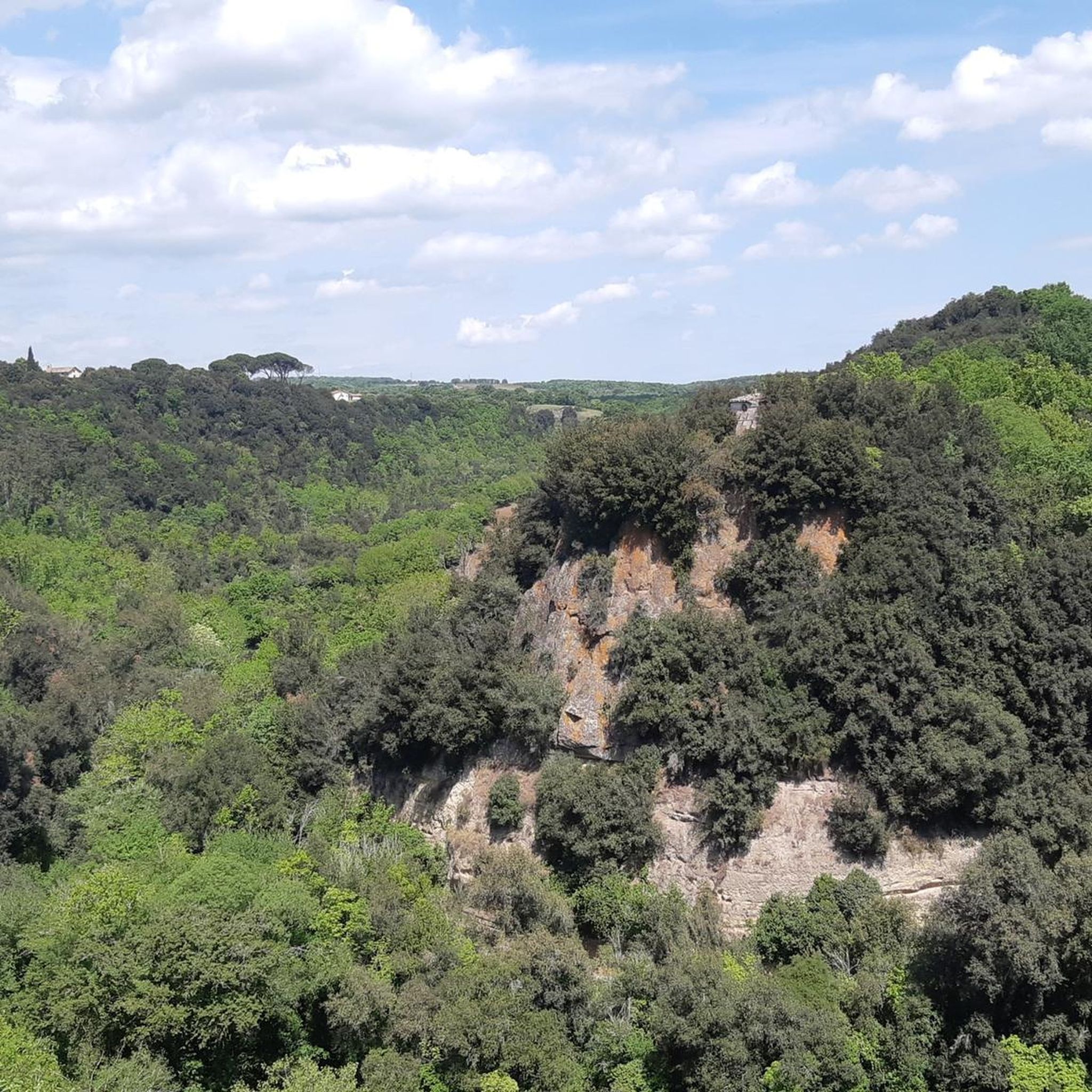
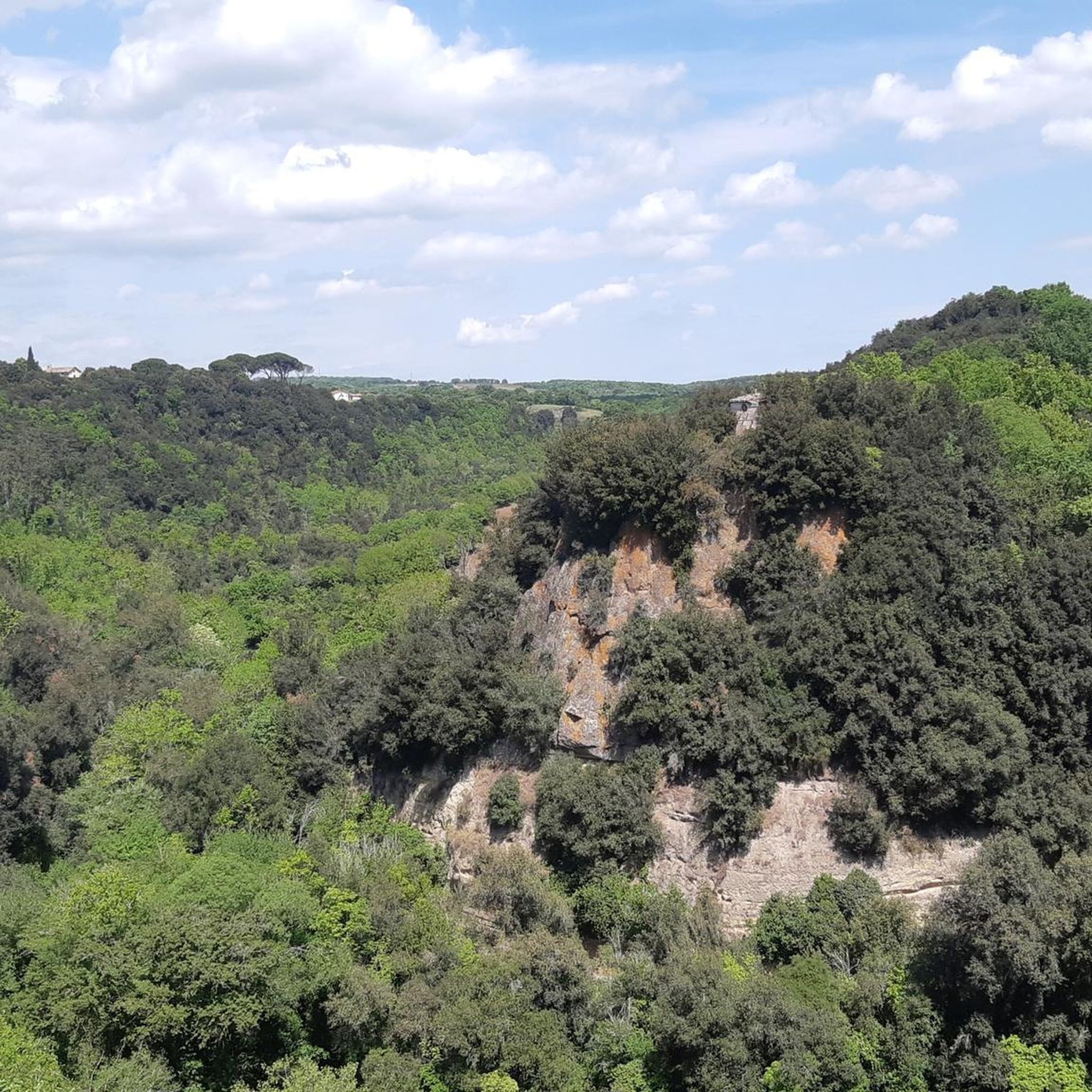
The Forre di Corchiano (vie cave) are works declared a natural monument. They are located in the town of Corchiano (which stands on a tufaceous cliff), the vie cave are a work created by man. It is a vertical cut to create a road that softens the sometimes harsh slopes of nature.
1
0
Frequently Asked Questions
How many hiking trails are available in Monumento Naturale Pian Sant'Angelo?
There are over 10 hiking trails documented in Monumento Naturale Pian Sant'Angelo, offering a variety of experiences through its unique landscape of deep gorges and ancient settlements.
Are there easy trails suitable for beginners or families in Monumento Naturale Pian Sant'Angelo?
Yes, the region is well-suited for beginners and families, with 8 out of 11 trails rated as easy. An excellent option is the Corchiano Waterfall – Staircase to the Old Town loop from Corchiano, which is 3.2 miles (5.2 km) long and features a waterfall.
What kind of natural features can I expect to see on hikes in Monumento Naturale Pian Sant'Angelo?
The Monumento Naturale Pian Sant'Angelo is characterized by its deep gorges, known locally as "forre," and numerous waterfalls. Trails often follow rivers and streams, leading through these dramatic geological formations and past ancient settlements.
Are there any circular hiking routes in Monumento Naturale Pian Sant'Angelo?
Yes, many of the trails in the area are circular, allowing you to start and end at the same point. For example, the Staircase to the Old Town – Corchiano Waterfall loop from Corchiano is a popular 3.7 miles (6.0 km) loop that combines historical features with natural waterfalls.
What is the best season for hiking in Monumento Naturale Pian Sant'Angelo?
The best seasons for hiking are generally spring and autumn, when the weather is mild and the natural scenery is vibrant. Summer can also be pleasant, especially along the shaded river paths, but remember to stay hydrated. Winter hiking is possible, but some paths might be slippery or less accessible.
Are dogs allowed on the hiking trails in Monumento Naturale Pian Sant'Angelo?
Most trails within Monumento Naturale Pian Sant'Angelo are dog-friendly, but it's always recommended to keep your dog on a leash, especially in areas with wildlife or near historical sites. Be sure to carry water for your pet, particularly on warmer days.
Where can I park when visiting Monumento Naturale Pian Sant'Angelo for a hike?
Parking is typically available near the trailheads, especially in towns like Corchiano and Gallese, which serve as common starting points for many routes. Look for designated parking areas within or on the outskirts of these villages.
Are there any challenging hikes for experienced hikers in the region?
While most trails are easy to moderate, there is 1 trail rated as difficult for those seeking a more strenuous experience. These routes may involve steeper ascents or more rugged terrain, offering a greater challenge.
What should I pack for a summer hike in Monumento Naturale Pian Sant'Angelo?
For summer hikes, pack light, breathable clothing, sturdy hiking shoes, and plenty of water. Sunscreen, a hat, and insect repellent are also advisable. Consider bringing a light snack and a camera to capture the scenic gorges and waterfalls.
What do other hikers enjoy most about Monumento Naturale Pian Sant'Angelo?
The area is highly rated by the komoot community, with an average score of 4.0 stars from over 160 reviews. Reviewers often praise the unique combination of deep river gorges, stunning waterfalls, and the historical charm of the ancient towns connected by the trails.
Are there any trails that feature multiple waterfalls?
Yes, several trails in the natural monument lead to or pass by multiple waterfalls. For instance, the Gallese – Cascata dei Frati loop from Gallese is a 3.6 miles (5.8 km) route that specifically highlights the Cascata dei Frati (Friars' Waterfall) and other water features in the area.
Can I reach Monumento Naturale Pian Sant'Angelo using public transport for hiking?
Public transport options to the towns bordering Monumento Naturale Pian Sant'Angelo, such as Corchiano and Gallese, are available, though they might be limited. It's advisable to check local bus or train schedules in advance, as services can vary, especially on weekends.
Most popular routes in Monumento Naturale Pian Sant'Angelo

Get inspired with the komoot mobile app


Explore more
Browse the best Hikes in other regions.
