Studland And Godlingston Heath National Nature Reserve
Studland And Godlingston Heath National Nature Reserve
The best walks and hikes in Studland And Godlingston Heath National Nature Reserve
4.7
(1942)
26,027
hikers
13
hikes
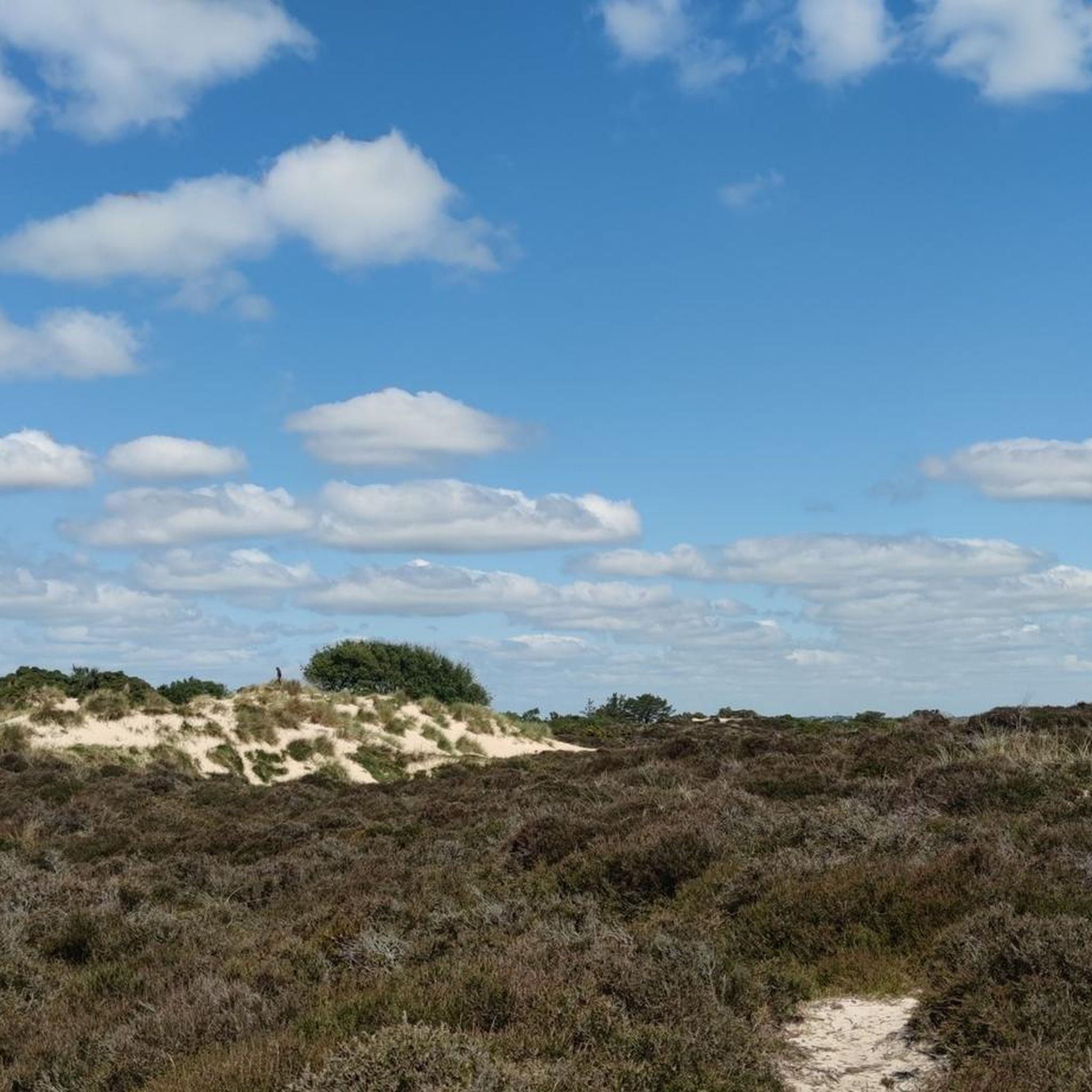
Hikes in Studland and Godlingston Heath National Nature Reserve feature a varied landscape of sandy beaches, dunes, and the largest area of lowland heath in Dorset. The terrain is characterized by coastal paths along Studland Bay and inland trails that cross heathland and pass through small woodlands. The topography is generally gentle, with a few low hills offering wider views of the reserve, which includes the freshwater lake known as Little Sea.
Best hiking trails in Studland And Godlingston Heath…
Last updated: May 11, 2026
4.9
(7)
38
hikers
18.7km
05:01
230m
230m
Hike the difficult 11.6-mile Old Harry Rocks and Ballard Down Circular Trail for stunning Jurassic Coast views and iconic chalk formations.
4.6
(11)
28
hikers
10.0km
02:38
80m
80m
Moderate hike. Good fitness required. Easily-accessible paths. Suitable for all skill levels.

Sign up for free
3.3
(4)
20
hikers
16.4km
04:19
140m
140m
Moderate hike. Good fitness required. Easily-accessible paths. Suitable for all skill levels.
4.4
(7)
25
hikers
7.84km
02:00
20m
20m
Easy hike. Great for any fitness level. Easily-accessible paths. Suitable for all skill levels.
22
hikers
5.76km
01:27
10m
10m
Easy hike. Great for any fitness level. Easily-accessible paths. Suitable for all skill levels.
Get access to more routes and recommendations from other explorers.
Sign up for free
Already have an account?
Our route recommendations are based on thousands of hikes, rides, and runs completed by other people on komoot.
Start today with a free account
Your next adventure awaits.
Login or Signup
Popular around Studland And Godlingston Heath National Nature Reserve
Running Trails in Studland And Godlingston Heath National Nature Reserve
MTB Trails in Studland And Godlingston Heath National Nature Reserve
Cycling in Studland And Godlingston Heath National Nature Reserve
Road Cycling Routes in Studland And Godlingston Heath National Nature Reserve
Gravel biking in Studland And Godlingston Heath National Nature Reserve
Tips from the Community

The "Why" Behind the Hill Burt didn't just put it there because it looked nice. He dedicated it to his uncle and mentor, John Mowlem (another massive figure in Swanage history). But there was a practical side, too: A Landmark: It served as a waypoint for ships navigating the tricky waters around Old Harry Rocks. The View: Burt was obsessed with showing off the beauty of his hometown. By placing it on the ridge, he essentially gave people a reason to climb the hill and look down at the town he was helping to build. The Great Disappearing Act (WWII) If you look closely at the obelisk today, it looks remarkably "clean." That’s because the one you see now is a reconstruction. During World War II, the original stone obelisk was considered a "navigational hazard." The British military was worried that German pilots would use the tall, white stone pillar as a landmark to help them find their bearings for bombing raids on nearby Bournemouth or Poole. So, in 1941, they knocked it down. For decades, it lay in pieces in the grass. It wasn't until 1973 that the Encombe Estate and local residents gathered the resources to rebuild it (using a mix of the original stone and some fresh Purbeck masonry) to celebrate "Plant a Tree in '73"—though ironic, as there isn't a tree in sight on that windy ridge!
0
0
If you’ve been hiking those ridges, that lone stone pillar standing guard over Swanage has likely caught your eye. It’s officially known as the Ballard Down Obelisk (or the Burt Memorial), and the story behind it is a classic tale of Victorian pride, a bit of eccentricity, and some very literal "re-gifting." The "Stolen" Monument The obelisk wasn't originally built for the Purbeck Hills. It actually started its life in London. In the mid-1800s, it served as a monument to a man named James Thompson, standing near the entrance to the Vauxhall Bridge. However, when the bridge was being rebuilt in the late 19th century, the obelisk became an "obstruction" and was destined for the scrap heap. Enter George Burt: The Man Who Moved London Swanage looks the way it does today largely because of George Burt, a local businessman who ran a massive masonry firm in London. He had a habit of taking "architectural leftovers" from London and shipping them back to Swanage as ballast on his empty stone boats. When he saw the obelisk was going to be demolished in 1892, he stepped in. He didn't just save it; he dismantled it, shipped it down the coast, and hauled it all the way to the top of Ballard Down.
0
0
The Bay: You’ll see the curve of Swanage Bay, dotted with colorful buoys and the occasional fishing boat or yacht making its way toward the pier. The Steam Train: If you time it right, you’ll see a literal plume of white steam puffing across the valley. The Swanage Railway runs right through the landscape below, looking like a high-end model railway set from this height. Peveril Point: To the far left of the town, the land juts out into the sea. You can often see the "white water" where the tides churn around the ledge—it’s a great reminder of how powerful the coast is, even when it looks peaceful from your perch. The Isle of Wight: On a crisp day, look straight out past the cliffs. You’ll see the Needles rising out of the water like jagged white teeth in the distance.
0
0

Formerly an "anvil" shape with a flat top, in 1970 it fell on one end and one side, leaving the top at an angle of about 45°.
0
0

Dogs permitted off lead on beach and dunes between 1st October and 31st March. Must be on lead between April and September.
0
0

There's no better place to wait out a rain shower. A classic pub with a selection of beers and ciders and actually good food.
0
0
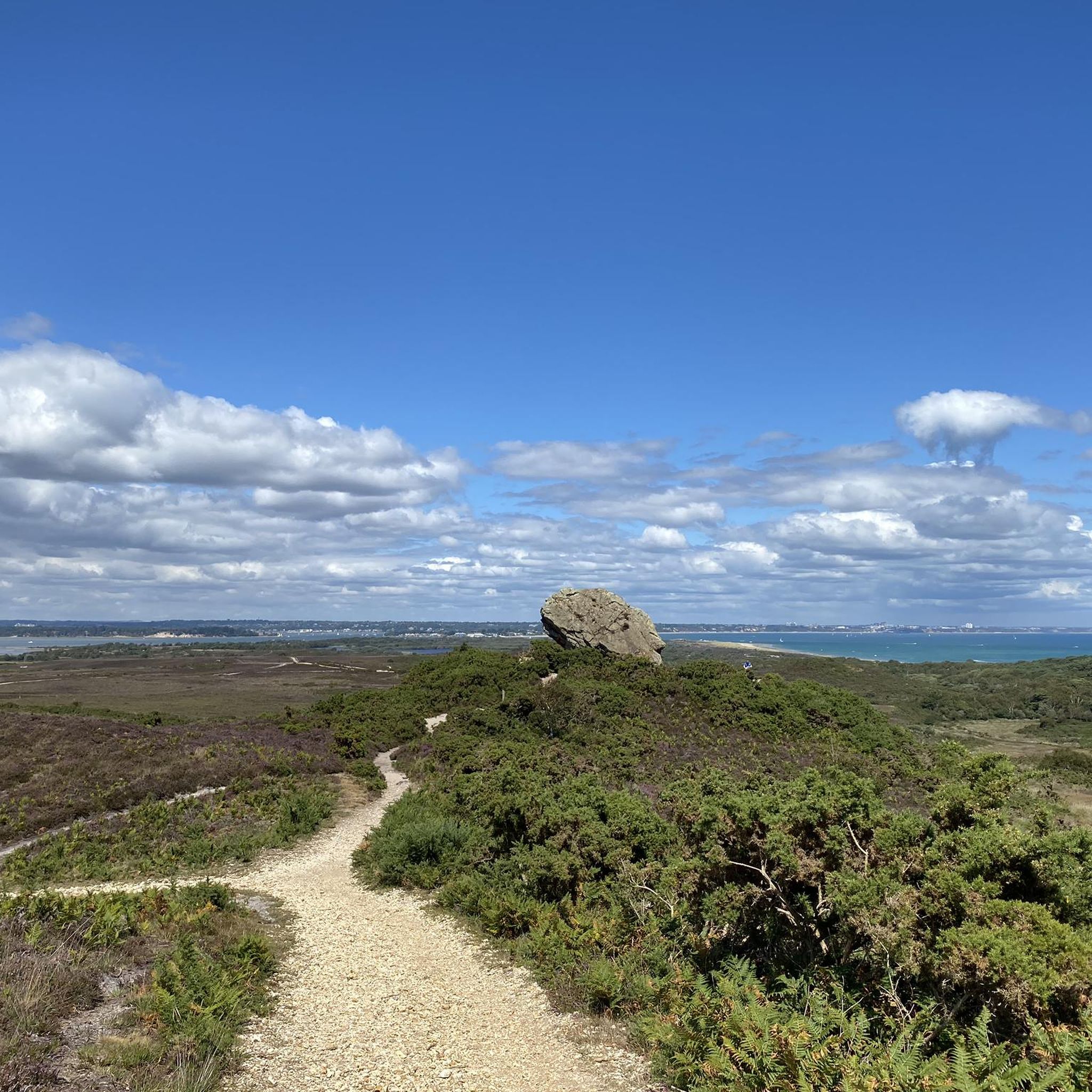
also known as the "Devil's Anvil," is a large, distinctive sandstone block located on a conical hill on Godlingston Heath near the village of Studland in south Dorset, England. This impressive rock, weighing approximately 400 tonnes, is a popular landmark and a local curiosity. Local legends offer a more dramatic explanation for the rock's existence. The most famous myth says the Devil, standing on The Needles on the Isle of Wight, hurled the massive rock with the intention of hitting Corfe Castle, Bindon Abbey, or Salisbury Cathedral. However, his aim was poor, and the rock landed short of its target, where it now sits. Before it toppled over in 1970, the rock had a flat top and an anvil-like shape, which led to its nickname "the Devil's Anvil." Some folklore also suggests that the rock was a holy stone or a Druidical altar.
0
0
Frequently Asked Questions
Are dogs allowed on the trails in Studland and Godlingston Heath?
Yes, dogs are welcome in the nature reserve. However, to protect the rare ground-nesting birds and other wildlife, they must be kept on a lead, especially between March and July. The heath is home to all six native British reptiles, so keeping your dog close is important for their safety and the conservation of the area.
What are the parking options for hiking in the nature reserve?
There are several National Trust car parks available. The main ones are located at Knoll Beach, Middle Beach, and South Beach in Studland, which provide good access to both the coastal paths and the heathland trails. For routes starting further away, there are also parking options in Sandbanks, from where you can take a short ferry ride across to Studland.
Are there any easy, family-friendly walks available?
Absolutely. The reserve offers several gentle walks perfect for families. The Shell Bay Beach loop from Studland is a very easy 4.7 km (2.9 mi) walk through the sand dunes with great views. Another excellent choice is the Studland Beach Sand Dunes Trail, a one-mile path that is great for all ages.
What is Agglestone Rock and how can I get there?
Agglestone Rock is a remarkable 400-ton sandstone block sitting mysteriously on the heath. Local legend says the Devil threw it from the Isle of Wight. You can see this impressive landmark on the Agglestone Rock – Studland Beach loop from Studland, a moderate 10 km (6.2 mi) circular hike that takes you across the heath and back along the coast.
Can I see Old Harry Rocks on a circular walk?
Yes, there are fantastic circular routes to the iconic Old Harry Rocks. For an easy and popular option, consider the Old Harry Rocks – Knoll Beach loop from Sandbanks. This 7.8 km (4.8 mi) trail offers stunning coastal scenery leading to the famous white chalk stacks.
What kind of wildlife can I expect to see?
The reserve is a haven for wildlife. The heathland is a prime location for spotting all six native UK reptiles, including the rare sand lizard. Birdwatchers can look for the Dartford warbler, nightjar, and stonechats. The mix of heath, woodland, and coast provides a rich habitat for a wide variety of flora and fauna.
Are there any pubs or cafes on the walking routes?
Yes, you can plan a hike that includes a stop for refreshments. The Bankes Arms Inn – Studland Beach loop from Sandbanks is a moderate trail that passes the well-regarded Bankes Arms pub in Studland, which is known for its great views and is a popular spot for walkers to take a break.
What do other hikers think of the trails in this area?
The trails in Studland and Godlingston Heath are highly rated by the komoot community, with an average score of 4.6 stars. Hikers frequently praise the stunning variety of scenery, from the dramatic coastal views of Old Harry Rocks to the unique, wild beauty of the heathland. The well-maintained paths are also a common highlight.
How many hiking trails are there in the nature reserve?
You can explore over 10 different hiking routes within the Studland and Godlingston Heath National Nature Reserve on komoot. These range from easy beach strolls and family-friendly loops to more challenging all-day hikes, ensuring there's a trail for every ability level.
What is the terrain like for hiking in the reserve?
The terrain is incredibly varied. You'll encounter sandy paths along Studland Bay, winding trails through large sand dunes, and open, gently undulating tracks across the lowland heath. While most routes are generally easy to moderate, there are a few slopes that lead to rewarding viewpoints over the coast and countryside.
Are there any particularly challenging hikes for experienced walkers?
Yes, for those seeking a longer and more strenuous day out, the Old Harry Rocks loop from Jerry's Point — Dorset is a great option. This difficult hike covers over 18 km (11 mi) and includes more elevation gain, offering a comprehensive tour of the coastline and heath.
Most popular routes in Studland And Godlingston Heath National Nature Reserve
Most popular attractions in Studland And Godlingston Heath National Nature Reserve

Get inspired with the komoot mobile app


Explore more
Browse the best Hikes in other regions.
