The best walks and hikes in Bandelier National Monument
4.7
(70)
1,050
hikers
27
hikes
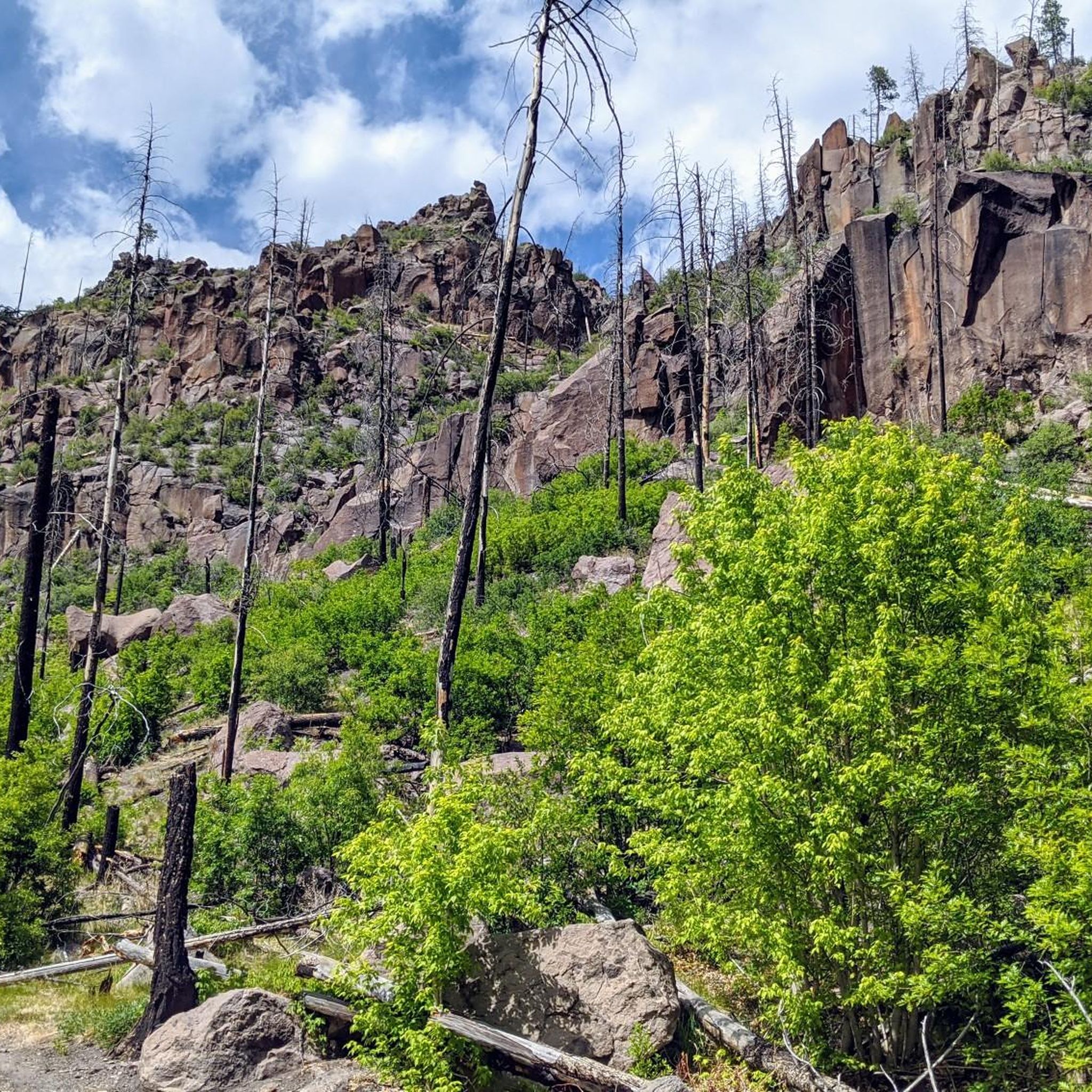
Hiking trails in Bandelier National Monument lead through a landscape of broad mesas and steep-walled canyons carved from volcanic tuff. The area contains numerous Ancestral Pueblo dwellings accessible from the trail network. Routes follow paths along the floor of Frijoles Canyon and also climb to higher elevations, offering a mix of terrain for hikers.
Best hiking trails in Bandelier National Monument
- The most popular hiking route is Bandelier National Monument loop via Alcove House Trail — Bandelier National Monument, a 2.8 mile (4.4 km) trail that takes around 1 hour 15 minutes to complete. This route passes by Ancestral Pueblo sites within Frijoles Canyon.
- Another top favourite among local hiking enthusiasts is Frey Trail to Pueblo Loop — Bandelier National Monument, a moderate 4.5 mile (7.3 km) path. The trail involves a descent into the canyon with an elevation change of over 600 feet (184 m).
- Local hiking enthusiasts also love the Tsankawi loop — Bandelier National Monument — Los Alamos, a 2.0 mile (3.1 km) trail leading through a separate section of the monument, often completed in about 55 minutes.
- Hiking in Bandelier National Monument is defined by canyon floors, mesa tops, and paths worn into volcanic rock. The trail network offers options for different ability levels, from short, easy loops to more strenuous backcountry hikes.
- The routes in Bandelier National Monument are highly rated by the komoot community with an average score of 4.6 stars from more than 50 reviews. More than 700 hikers have used komoot to explore Bandelier National Monument's varied terrain.
Last updated: October 11, 2026
5.0
(2)
41
hikers
3.36km
00:54
40m
60m
Step back in time on the Pueblo Loop Trail, an easy 2.1-mile (3.4 km) hike through the ancient dwellings of the Ancestral Pueblo people in Bandelier National Monument. The route winds through a landscape shaped by volcanic eruptions, offering glimpses of rugged canyons and sweeping mesas. You'll encounter a "metropolis" of archaeological sites, including the partially restored Big Kiva and the remnants of Tyuonyi, a circular pueblo that once housed over 400 rooms. The trail's varied terrain, from paved sections to unpaved paths, makes for an engaging journey that takes around 54 minutes to complete.
Planning your visit to the Pueblo Loop Trail is straightforward, as it's known for its accessibility and family-friendly nature. With only 126 feet (39 metres) of elevation gain, it's suitable for most visitors, though optional wooden ladders allow you to climb into cavates for a more adventurous experience. This trail is unique because it's open year-round and cleared of snow, making it a reliable option regardless of the season. Consider an early start to fully enjoy the historical sites and natural beauty.
What truly sets the Pueblo Loop Trail apart is its exceptional preservation of Ancestral Pueblo cultural history, offering a direct and immersive way to learn about this ancient civilization. The ability to climb into some of the cliff dwellings provides a unique, hands-on perspective that few other trails offer. It's one of the most popular trails and routes in the monument, blending natural beauty with rich archaeological discoveries, making it a compelling and educational hike for all ages.
1
hikers
8.02km
02:57
250m
280m
The Middle Alamo Trail presents a moderate hiking challenge, covering 5.0 miles (8.0 km) with an elevation gain of 833 feet (254 metres). You can expect to spend about 2 hours and 56 minutes immersed in its varied landscapes. As you hike, you will traverse forested areas filled with ponderosa pines and junipers, navigating switchbacks and canyons carved by erosion. The route offers expansive views of canyon walls, leading to panoramic vistas from the Frijoles Rim, providing a rewarding experience for those seeking both natural beauty and a balanced workout.
Before you begin your hike, it is wise to consult the Bandelier National Monument website for the latest conditions and any specific requirements. Parking is typically available at designated trailheads within the monument area. While the trail is suitable for moderately experienced hikers, be prepared for some sections with rocky and uneven terrain. Plan your visit to allow ample daylight for the nearly three-hour journey, ensuring you have enough time to enjoy the surroundings safely.
This trail offers more than just scenic views; it provides a tangible link to the area's rich history. Along the route, you will discover significant cultural landmarks such as the ancient Yapashi Pueblo ruins. Further along, you can visit the Shrine of the Stone Lions, offering a deeper insight into the historical and cultural heritage of the region. These sites make the Middle Alamo Trail a notable destination for those interested in both outdoor activity and historical exploration.

1
hikers
2.81km
00:49
20m
180m
Embark on an easy hike along the Ponderosa Trail, a peaceful route that winds through a characteristic Ponderosa pine forest within Bandelier National Monument. This 1.7-mile (2.8 km) path offers a gentle ascent, gaining only 66 feet (20 metres) in elevation, making it suitable for nearly everyone. As you hike, you'll catch glimpses of the Frijoles Canyon area, particularly as you near the Upper Frijoles Crossing, providing scenic views. The entire journey is estimated to take about 49 minutes, offering a quick immersion into New Mexico's natural beauty.
To plan your visit, remember that the Ponderosa Trail is situated inside Bandelier National Monument, which means you should account for park entrance fees and check their operating hours before you go. Parking is typically available either directly at the trailhead or at nearby visitor facilities, offering convenient access. It's always a good idea to consult the park's official website for the most up-to-date information on conditions. This is especially important for any potential seasonal closures or if shuttle services are required to reach the trailhead during peak times.
The Ponderosa Trail provides an excellent opportunity to experience the unique ecosystem of Bandelier National Monument. It showcases the distinctive Ponderosa pine forests that define much of the park's landscape. This route is a great way to connect with the natural environment and understand the area's ecological significance. It offers a straightforward yet rewarding outdoor experience within a protected and historically rich setting.
4.8
(15)
279
hikers
4.43km
01:12
70m
70m
The Main Loop and Alcove House Trail offers a captivating journey through Frijoles Canyon, where you'll walk among ancient Ancestral Pueblo sites carved into dramatic tuff cliffs. The initial section is paved and meanders past the village of Tyuonyi and the Big Kiva, offering a glimpse into history. The real highlight for many is the challenging climb to Alcove House, reached by four wooden ladders and stone stairs, rewarding you with commanding views of the canyon.
This 2.8-mile (4.4 km) hike is rated easy overall, but the Alcove House portion adds a significant challenge with 214 feet (65 metres) of elevation gain, taking about 1 hour and 12 minutes to complete. Be aware that the ladder section to Alcove House can be closed during winter due to ice, so check conditions before you go. It's best suited for those without a fear of heights who want an active historical exploration.
This trail provides a tangible link to the past, allowing you to explore cavates and village remnants where people lived between 600 and 1600 CE. The Alcove House itself once housed about 25 people and features a reconstructed kiva, offering a unique opportunity to connect with thousands of years of human history within Bandelier National Monument.
4.8
(6)
83
hikers
3.14km
00:53
60m
60m
Embark on an easy hike along the Tsankawi Loop Trail, where you'll follow ancient Ancestral Pueblo footpaths deeply worn into volcanic tuff. The route offers 360-degree panoramic vistas of the Jemez and Sangre de Cristo Mountains, providing a sense of vastness and history. This easy 2.0-mile (3.1 km) loop involves a gentle elevation gain of 205 feet (62 metres), making it accessible for many. You can expect to complete the hike in approximately 52 minutes, immersing yourself in the unique high desert landscape. The trail's atmosphere is one of quiet reflection, inviting you to connect with the past.
Before you visit, be aware that the trail includes climbing three wooden ladders. This feature makes the route unsuitable for those with limited mobility or service animals, so plan your trip accordingly. An interpretive trail guide is available at the trailhead, which can enrich your understanding of the historical and natural surroundings. Check the Bandelier National Monument website for current operating hours and any potential entrance fees or specific access requirements.
The Tsankawi Loop Trail is distinguished by its rich cultural history, taking you directly to the remains of Tsankawi Village. Along the way, you will discover numerous petroglyphs carved into the rock faces, offering glimpses into ancient artistry. You can also explore cavate cliff dwellings, some of which still show ceilings blackened by ancient fires. This trail provides a unique opportunity to walk through history and experience a significant archaeological site firsthand.
Get access to more routes and recommendations from other explorers.
Already have an account?
Our route recommendations are based on thousands of hikes, rides, and runs completed by other people on komoot.
Start today with a free account
Your next adventure awaits.
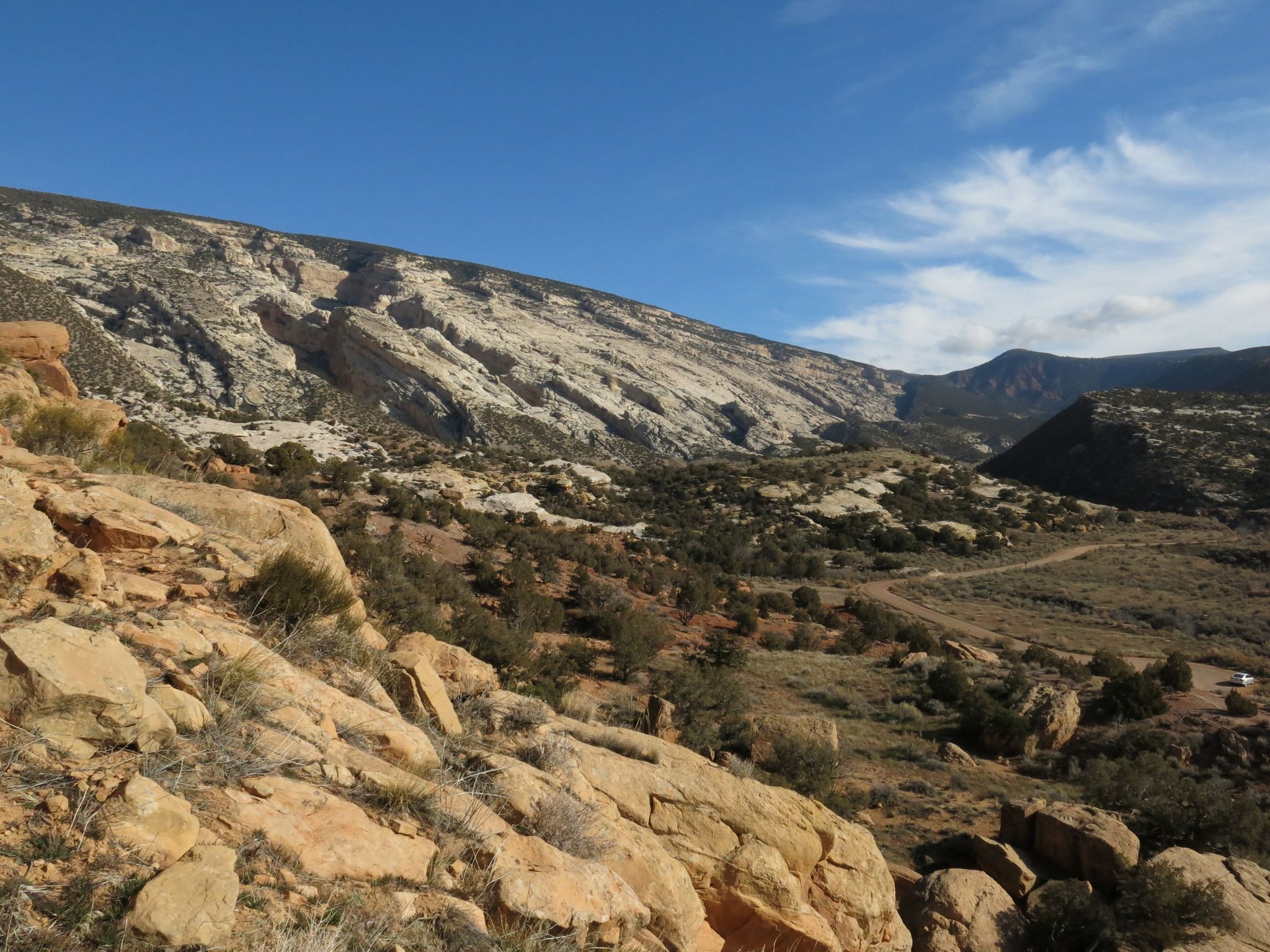
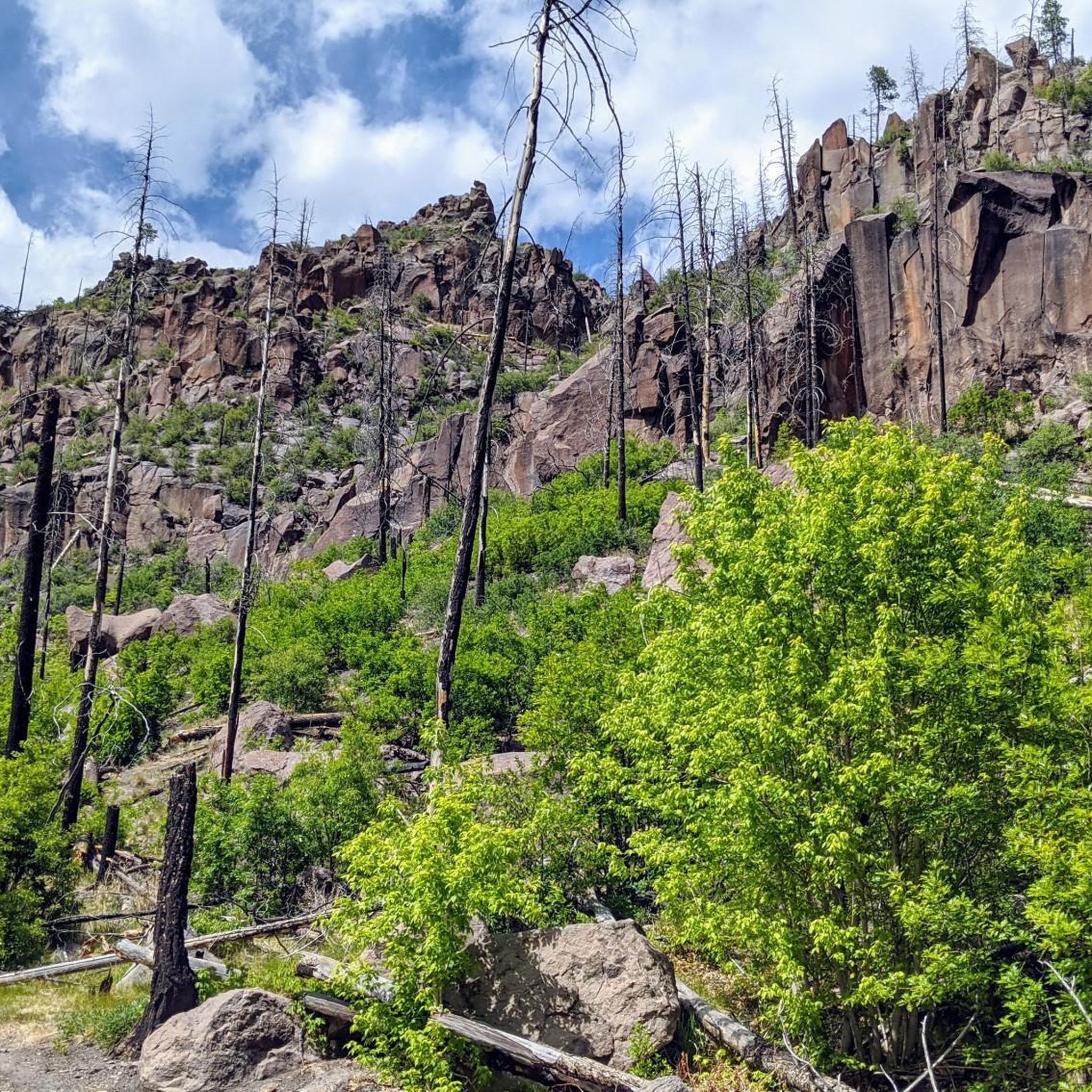
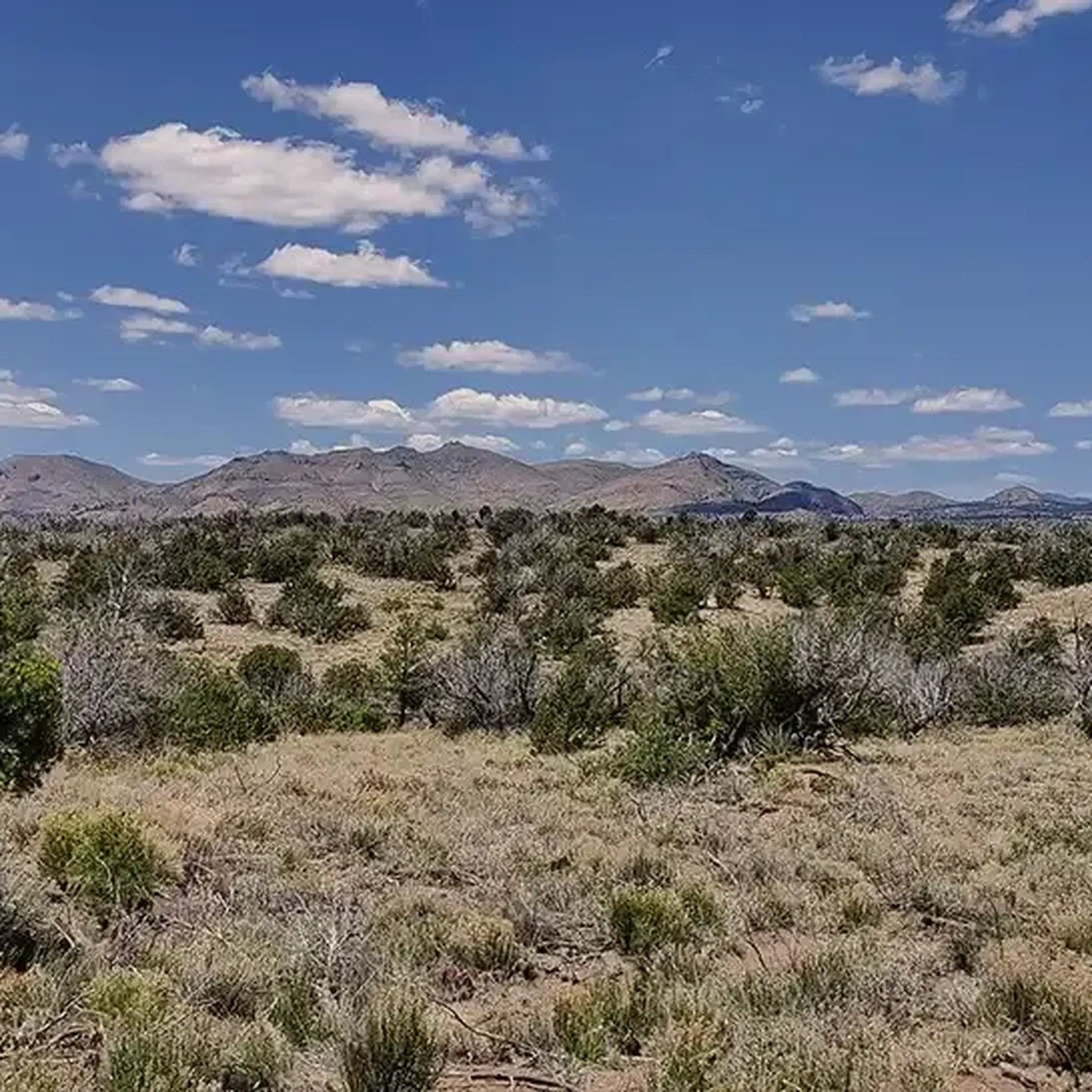
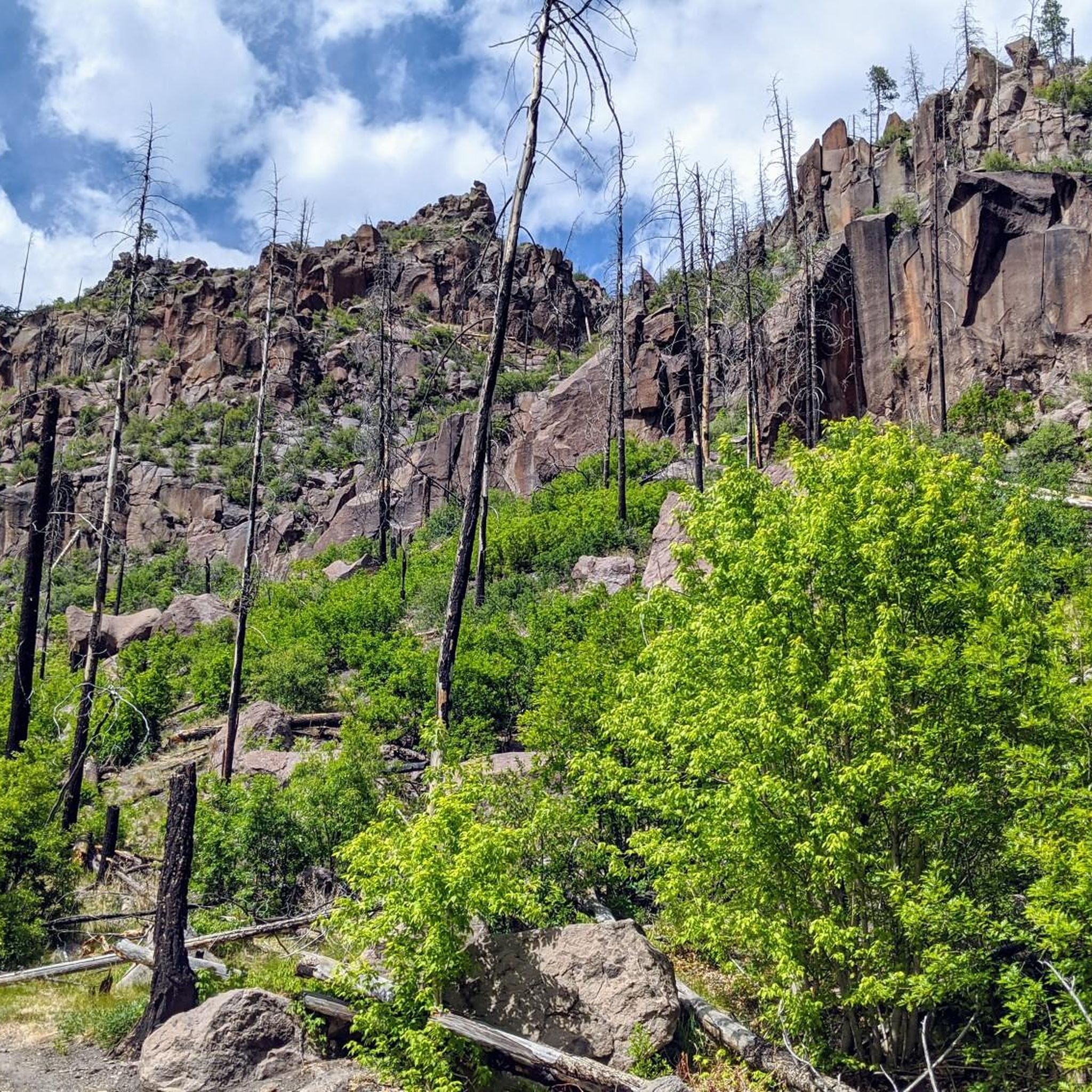
Other adventures in Bandelier National Monument

Tips from the Community

Located 12 miles from the main section of Bandelier National Monument on State Highway 4, the Tsankawi section offers a 1.5-mile walk along a mesa, showcasing cavates, petroglyphs, and an Ancestral Pueblo village. The trail is sometimes narrow in places, requires some scrambling in addition to climbing several ~12 foot ladders, and is quite exposed to the elements so it should be avoided during thunderstorms and inclement weather. In winter, the path may be slippery and icy. Tsankawi also can be a little challenging to locate, in large part because it signs on Highway 4. From Santa Fe, turn from State Highway 502 to 4, finding Tsankawi less than 1/4 mile on the left. Coming from Bandelier, it's easier to locate, with the gravel parking lot on the right past the 3rd stoplight. Here is a link to a great virtual tour of the site by the NPS: nps.gov/band/learn/photosmultimedia/tt-vt-intro.htm
0
0

The Yapashi Ancestral Pueblo site's ruins are on the Pajarito Plateau in the Bandelier backcountry. Beyond the ancient ruins, runners can enjoy the panoramic views of the volcanic landscape formed by the ancient Valles Caldera eruption. These ruins were made by the Keres people in 1200–1500 CE. Some of the buildings were up to three stories tall and had hundreds of rooms.
0
0
The trail passes by large panels of petroglyphs (carved pictures), that are thought to be hundreds of years old. Although their exact meaning is unknown, they are most likely not a type of written language, but rather held deep spiritual and artistic significance to ancient (and modern) indigenous people. There are many petroglyphs in this area, so be sure to take your time to try to find all of them - many of them blend in with their surroundings! Like in most archeological sites, please do not touch these ancient carvings.
0
0
The cavetes are located just below the ancient central village plaza in the cliff bands that make up the mesa. These cavates (human excavated cavities) were places where people could take shelter from the elements; the thick stone walls provided insulation from both the cold of winter and heat of summer. Talus pueblos were also most-likely constructed in front of the entrance to the cavates to further protect people from wind, rain, snow, and perhaps most importantly in the desert, heat. Please only enter cavetes that are immediately adjacent to the trail - the other cavets are dangerous to access.
0
0
This spot is near where the center ancient Tsankawi Village once stood. From here you get fantastic views out over the mesa of Jémez Mountains to the west, the Sangre de Cristo Mountains and the Española Valley to the east, and about 70 miles south you can see the Sandia Mountains, near Albuquerque. In addition to the natural high ground that the mesa afforded the Indigenous people and caves that dot the cliffsides, there used to be tall defensive walls to protect this central plaza. You can see the remains of these walls and other structures as well as pottery shards. Collecting these important historical artifacts is illegal and even moving them from one spot to another in the village can disrupt our understanding of the area. As you leave this area you get to walk on ancient pathways carved into the rock itself. There are some ancient small stone steps carved in the cliffs, but please stick to the ladders rather than climb the steps.
0
0
Located 12 miles from the main section of Bandelier National Monument on State Highway 4, the Tsankawi section offers a 1.5-mile walk along a mesa, showcasing cavates, petroglyphs, and an Ancestral Pueblo village. The trail is sometimes narrow in places, requires some scrambling in addition to climbing several ~12 foot ladders, and is quite exposed to the elements so it should be avoided during thunderstorms and inclement weather. In winter, the path may be slippery and icy. Tsankawi also can be a little challenging to locate, in large part because it signs on Highway 4. From Santa Fe, turn from State Highway 502 to 4, finding Tsankawi less than 1/4 mile on the left. Coming from Bandelier, it's easier to locate, with the gravel parking lot on the right past the 3rd stoplight. Here is a link to a great virtual tour of the site by the NPS: https://www.nps.gov/band/learn/photosmultimedia/tt-vt-intro.htm
0
0
Ponderosa Group Campground has vault toilets and water spigots and is just off of New Mexico Highway 4. The campsites can hold 10–50 people, and there is access to the Frijoles Canyon Shuttle running from mid-May to mid-October. This campground was affected by the Las Conchas Fire back in 2011, and today it is repaired and running well.
0
0
Upper Frijoles Crossing is where the Ponderosa, Frijoles Rim, Frijoles, and Apache Springs Trails all intersect. This spot also has fantastic views down the lush canyon and is a great place to pause and take some photos and sip some water because it can get hot out there!
0
0
Frequently Asked Questions
Are dogs allowed on the hiking trails in Bandelier National Monument?
No, pets are not permitted on any of the trails within Bandelier National Monument. They are only allowed in the parking area at the visitor center and at the Juniper Campground.
What are the best hiking options for families with children?
The Main Loop Trail is an excellent choice for families. It's a relatively flat 1.2-mile (1.9 km) walk that offers a fantastic introduction to the area's history, with accessible cliff dwellings and petroglyphs. It provides an immersive experience without being too strenuous for younger hikers.
Is there a trail that leads to a waterfall?
Yes, the Frijoles Falls – Bandelier National Monument trail takes you to the Upper Falls of Frijoles Creek. This route is about 3 miles (4.8 km) round-trip and is considered an easy hike, making it a great option for seeing some of the area's natural beauty.
How difficult are the hikes in Bandelier?
The difficulty varies greatly. You'll find everything from easy, paved loops on the canyon floor to strenuous backcountry climbs. The main area in Frijoles Canyon offers mostly easy to moderate trails. The Tsankawi section and backcountry routes require more fitness due to elevation changes and rugged terrain.
What is the Alcove House and how do I get there?
The Alcove House is a large, reconstructed kiva located 140 feet (43 m) up a canyon wall. To reach it, you must climb a series of four steep wooden ladders and stone stairs. It's accessible via a trail that extends from the Main Loop Trail, adding about a mile to your hike. It's a challenging but rewarding climb for those comfortable with heights.
Are there any good circular hikes?
Yes, the Tsankawi loop is a popular circular trail. This 2-mile (3.1 km) hike is in a separate part of the monument and follows ancient pathways worn into the volcanic tuff, offering a unique experience with petroglyphs and views from the mesa top.
What should I pack for a day hike in Bandelier?
It's essential to bring plenty of water, as the New Mexico climate is very dry and most trails are exposed to the sun. Also pack sun protection like a hat and sunscreen, wear sturdy hiking shoes, and bring snacks. A camera is also a great idea to capture the stunning landscapes and archaeological sites.
What do other hikers enjoy most about Bandelier National Monument?
The area is highly regarded by the komoot community, with an average rating of 4.6 stars. Reviewers frequently praise the unique opportunity to walk through history by exploring the ancient cliff dwellings and petroglyphs up close. The dramatic canyon scenery and well-maintained trails are also consistently mentioned as highlights.
Are there options for longer, more challenging hikes?
For a moderate challenge, the Frey Trail to Pueblo Loop is a great choice, involving a significant descent into the canyon. For more strenuous, multi-day trips, the monument has over 70 miles of backcountry trails. A free permit is required for any overnight trips into the backcountry.
What is the elevation at Bandelier National Monument?
The elevation varies significantly. The Visitor Center in Frijoles Canyon sits at about 6,066 feet (1,849 m). However, trails can climb up to the surrounding mesa tops, which reach elevations over 7,000 feet (2,133 m). Be prepared for the effects of high altitude, especially if you are arriving from a lower elevation.
When is the best time of year to hike in Bandelier?
Spring and fall are ideal, offering pleasant temperatures for hiking. Summer can be very hot, especially on exposed trails, so it's best to start early in the morning. Winter is colder and can bring snow, which offers a different kind of beauty, but be sure to check trail conditions for ice and closures.
How many hiking trails are there in the monument?
Bandelier National Monument features over 25 designated hiking trails, covering more than 70 miles of terrain. These range from short, interpretive walks in Frijoles Canyon to extensive backcountry routes on the mesas.
Most popular routes in Bandelier National Monument
Most popular attractions in Bandelier National Monument

Get inspired with the komoot mobile app


Explore more
Browse the best Hikes in other regions.
