The best waterfall hikes and walks in Rocky Mountain National Park
4.7
(837)
14,415
hikers
59
hikes
Waterfall hiking trails in Rocky Mountain National Park traverse diverse landscapes, from montane forests to alpine tundra. The park is characterized by its majestic mountains, with numerous peaks exceeding 11,000 feet, and a significant portion of the Continental Divide. Ancient glaciers have sculpted the topography, creating valleys, cirques, and numerous pristine alpine and subalpine lakes. Rushing waters form various cascades and waterfalls throughout these varied ecosystems.
Best waterfall hiking trails in Rocky Mountain National Park
- The most popular waterfall hiking…
Last updated: July 22, 2026
4.9
(87)
727
hikers
17.6km
05:52
930m
410m
Hard hike. Very good fitness required. Mostly accessible paths. Sure-footedness required.
4.8
(68)
557
hikers
11.2km
03:33
370m
370m
Moderate hike. Good fitness required. Mostly accessible paths. Sure-footedness required.

Sign up for free
5.0
(2)
102
hikers
13.0km
04:10
410m
420m
Moderate hike. Good fitness required. Mostly accessible paths. Sure-footedness required.
4.9
(44)
563
hikers
14.0km
04:20
520m
520m
Moderate hike. Good fitness required. Easily-accessible paths. Suitable for all skill levels.
5.0
(7)
83
hikers
19.6km
06:34
930m
700m
Hard hike. Very good fitness required. Mostly accessible paths. Sure-footedness required.
Get access to more routes and recommendations from other explorers.
Sign up for free
Already have an account?
Our route recommendations are based on thousands of hikes, rides, and runs completed by other people on komoot.
Start today with a free account
Your next adventure awaits.
Login or Signup
Popular around Rocky Mountain National Park
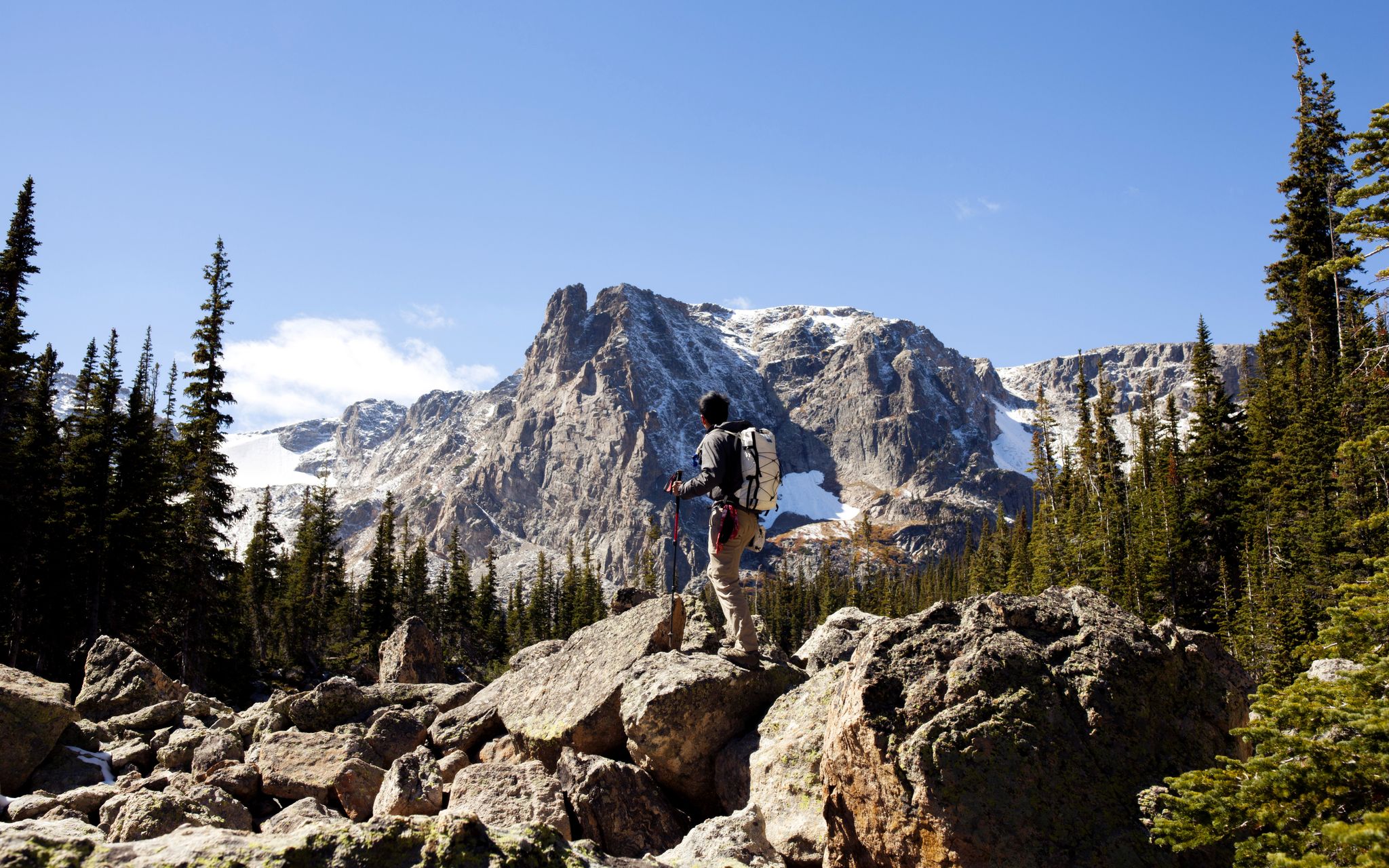
Other adventures in Rocky Mountain National Park


Tips from the Community

A very beautiful mountain lake with a wonderful color. Many rocks line the lake, offering places to rest.
0
0
Beautiful views of the lake and the surrounding mountains, nice little wooden bridge.
0
0
A scenic hike in the eastern part of Rocky Mountains National Park, passing several lakes, including The Loch, Lake Haiyaha, Dream Lake, Nymph Lake, and Bear Lake. After about 3 kilometers on the Glacier Gorge Trail, you first pass the 9-meter-high Alberta Falls. Continuing uphill through the autumn-colored forest, you pass numerous viewpoints and reach the picturesque "The Loch," framed by a majestic mountain backdrop with occasional snowcapped peaks.
0
0
A scenic hike in the eastern part of Rocky Mountains National Park, passing several lakes, including The Loch, Lake Haiyaha, Dream Lake, Nymph Lake, and Bear Lake. After about 3 kilometers on the Glacier Gorge Trail, you first pass the 9-meter-high Alberta Falls. Continuing uphill through the autumn-colored forest, you pass numerous viewpoints and reach the picturesque "The Loch," framed by a majestic mountain backdrop with occasional snowcapped peaks.
0
0
Rocky Mountain National Park (RMNP) in Colorado is one of the most famous and highest national parks in the USA. Longs Peak is the highest point at 4,345 meters. The landscape is characterized by mountain forests with aspens, pines, and expansive meadows, where elk are common. Dense coniferous forests and mountain lakes, as well as rugged, treeless plateaus with only low-growing plants, bighorn sheep, and marmots can also be found. A highlight is the Trail Ridge Road, the highest continuously paved mountain pass in North America, leading through the alpine tundra. The most popular hiking area, with its numerous lakes, is the Bear Lake Corridor. The park is open year-round, although many roads and trails are closed during the winter months due to snow or are only accessible with appropriate equipment. Due to its immense popularity, time-slot reservations are often required for access during peak season.
1
0
Beautiful, quiet lake with a great view.
1
0

Not far from the hiking trail you can enjoy this beautiful view over the valley.
0
0
A scenic route with beautifully lined paths lined with birch and aspen trees. Along partially rocky paths, it passes numerous lakes. These are framed by majestic mountains and offer a truly beautiful view.
0
0
Frequently Asked Questions
How many waterfall hiking trails are available in Rocky Mountain National Park?
Rocky Mountain National Park offers a wide array of hiking opportunities, with over 50 trails specifically featuring waterfalls. These routes cater to various skill levels, from easy strolls to challenging mountain ascents.
What kind of terrain and elevation can I expect on waterfall hikes in Rocky Mountain National Park?
The terrain varies significantly, ranging from montane forests to subalpine and alpine tundra. You can expect trails with moderate to difficult elevation gains, as the park features over 100 peaks above 11,000 feet. For example, the difficult Sky Pond, The Loch, and Timberline Falls via Glacier Gorge Loop involves an elevation gain of over 900 meters.
What are some notable landmarks and natural features I might see on waterfall trails?
Many waterfall trails lead past stunning natural features. You might encounter pristine alpine lakes like Bear Lake and Emerald Lake, or other cascades such as Alberta Falls. The park is also bisected by the Continental Divide, and its landscapes are profoundly shaped by ancient glacial formations.
What is the best time of year to visit Rocky Mountain National Park for waterfall hikes?
The best time to experience the waterfalls is typically during late spring and early summer (May to July) when snowmelt is at its peak, resulting in the most powerful cascades. Fall offers beautiful foliage, but water levels might be lower. Winter hikes can be stunning, but require snowshoes or microspikes, and some trails may be inaccessible.
Are there family-friendly waterfall hikes in Rocky Mountain National Park?
Yes, there are several options suitable for families. While specific easy waterfall routes are not detailed here, the park offers a variety of trails for different ability levels. Always check the difficulty and length of a trail before heading out with children. Many trails around the Bear Lake area are generally considered more accessible.
What do other hikers enjoy most about hiking in Rocky Mountain National Park?
The area is highly rated by the komoot community, with an average score of 4.7 stars from over 750 reviews. Hikers frequently praise the majestic mountain scenery, the abundance of pristine alpine lakes, and the diverse ecosystems encountered along the trails. The extensive network of paths offers something for everyone, from peaceful lakeside strolls to challenging ascents.
What should I know about parking, permits, and public transport for waterfall hikes?
Rocky Mountain National Park operates a timed entry system during peak seasons, which affects access to popular trailheads. Parking can be very limited, especially at popular spots like Bear Lake Road. The park offers a shuttle bus service to reduce congestion. It's highly recommended to check the official NPS website for current timed entry requirements, shuttle schedules, and parking information before your visit: nps.gov.
Are there any circular waterfall hiking routes in the park?
Yes, several routes offer a loop experience, allowing you to see varied scenery without retracing your steps. An example is the moderate Glacier Gorge, Lake Haiyaha and Emerald Lake Loop, which provides views of multiple alpine lakes and waterfalls.
Can I bring my dog on waterfall trails in Rocky Mountain National Park?
Dogs are generally not permitted on hiking trails, tundra, or in wilderness areas within Rocky Mountain National Park. They are allowed only on roads, in campgrounds, and in picnic areas. Always check the most current regulations on the official park website before bringing your pet.
What should I wear for waterfall hikes in Rocky Mountain National Park, especially in the fall?
Layering is key due to rapidly changing mountain weather. Even in fall, temperatures can vary significantly from morning to afternoon, and at different elevations. Wear moisture-wicking base layers, insulating mid-layers, and a waterproof/windproof outer shell. Sturdy hiking boots are essential, and bringing a hat, gloves, and plenty of water is always advisable. Be prepared for cooler temperatures and potential snow at higher elevations, even in early fall.
Are there any less crowded or 'hidden gem' waterfall hikes?
While many popular waterfall trails can be busy, especially during peak season, exploring routes that require a bit more effort or are further from main access points can lead to a more secluded experience. Consider trails that venture deeper into the backcountry, such as the difficult Mills Lake, Black Lake, and Frozen Lake via Glacier Gorge Trail, which offers stunning views and multiple water features.
Is wild swimming permitted near waterfalls in Rocky Mountain National Park?
Swimming in lakes and streams within Rocky Mountain National Park is generally discouraged due to cold water temperatures, fragile ecosystems, and potential safety hazards. It's best to enjoy the beauty of the waterfalls and lakes from the shore.
Most popular routes in Rocky Mountain National Park
Most popular attractions in Rocky Mountain National Park

Get inspired with the komoot mobile app


Explore more
Browse the best Hikes in other regions.
