Attractions and Places To See around Area D (Oyster Bay/Buttle Lake) - Top 20
Best attractions and places to see around Area D (Oyster Bay/Buttle Lake) include a diverse range of natural features and recreational opportunities on Vancouver Island, British Columbia. This region is characterized by its provincial parks, such as Strathcona Provincial Park, and numerous waterfalls and trails. Visitors can explore significant natural landmarks, including the dramatic Elk Falls and various scenic viewpoints. The area offers opportunities for hiking, cycling, and connecting with nature amidst its varied landscapes.
Best attractions and places to…
Last updated: July 24, 2026
Elk Falls
Highlight • Waterfall
Tip by

Millennium Trail, Elk Falls Provincial Park
Highlight (Segment) • Trail
Tip by
Sign up now to discover places like this
Get recommendations on the best single tracks, peaks, & plenty of other exciting outdoor places.
Sign up for free
Deer Falls
Highlight • Waterfall
Tip by
Small Waterfall at the Outlet of Dolphin Lake
Highlight • Waterfall
Tip by
Moose Falls
Highlight • Waterfall
Tip by
Sign up for free to discover even more attractions around Area D (Oyster Bay/Buttle Lake).
Sign up for free
Already have an account?
Start today with a free account
Your next adventure awaits.
Login or Signup
Tips from the Community

The Millennium Trail begins near the upper parking lot. First, follow the Parking Lot Trail and cross the corridor where three massive penstocks of the hydroelectric power plant were once laid above ground. Following the power plant's reconstruction in 2019 and its relocation into the rock at a depth of 65 meters, the pipes were removed. This created an open area that is gradually being filled and will be planted in the future. Recent maps still show a pedestrian bridge for crossing the low-lying corridor; this bridge has since been removed and replaced by an earthen dam (status May 2025). The 2.5 km long Millennium Trail runs from the suspension bridge at Elk Falls through a forest of old-growth Douglas firs, between the Campbell River Gorge and the aforementioned corridor. At the Canyon View Pedestrian Bridge, the trail merges into the Canyon View Trail. https://bcparks.ca/elk-falls-park/hiking/#millennium-trail
2
0
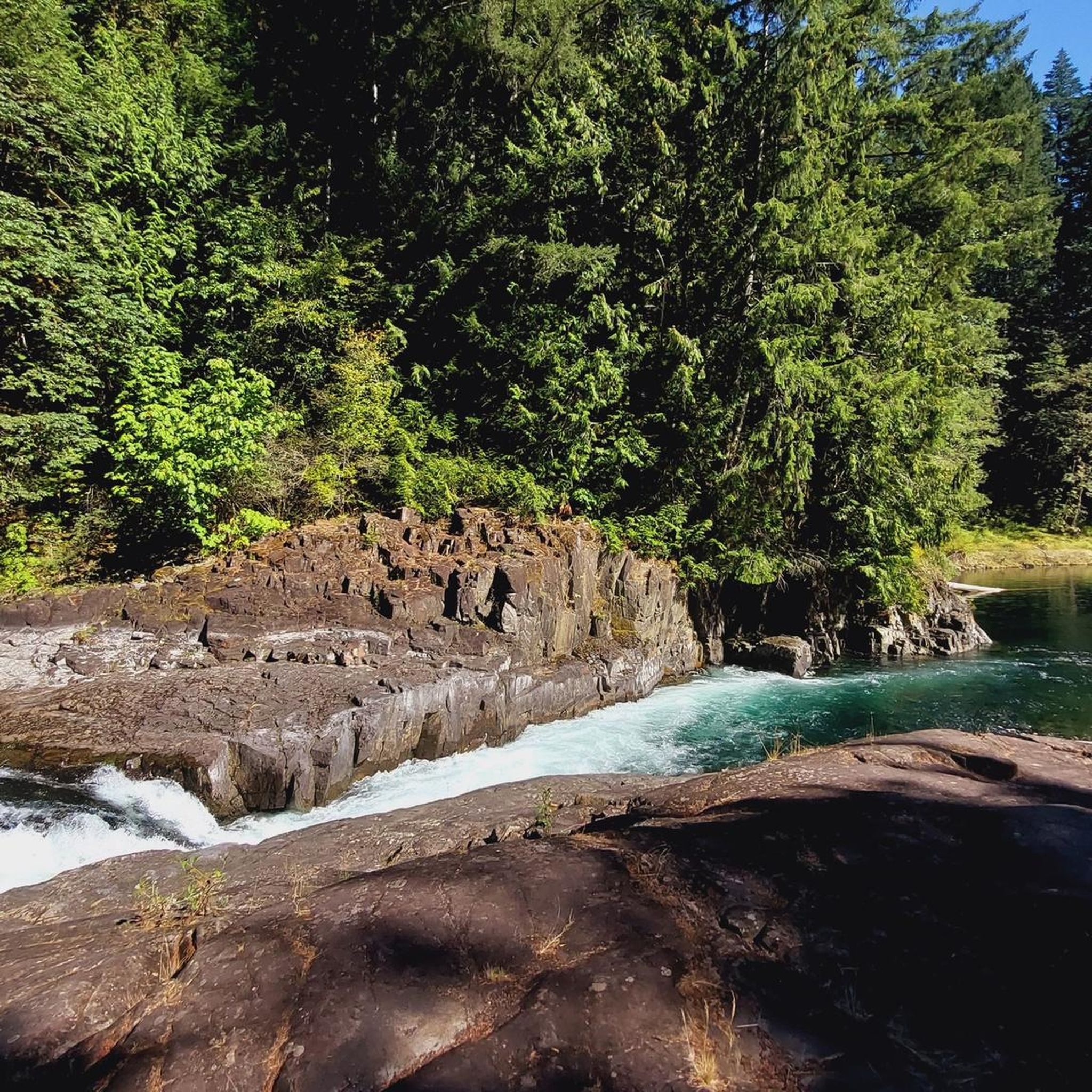
Deer Falls is the middle of three waterfalls in Elk Falls Provincial Park. The drop over the basalt outcrop is minimal, about 1 Meter. Deer Falls probably only became visible after the Campbell River was dammed and the water flow in the river decreased significantly. https://www.worldwaterfalldatabase.com/waterfall/Deer-Falls-1909 While walking along the Riverside Loop Trail you have a good view of Deer Falls – be careful, the rocks are in the danger zone.
2
0
Moose Falls is the uppermost of three waterfalls in Elk Falls Provincial Park on the Campbell River below the John Hart Reservoir. The water flows from the reservoir over Moose Falls into Dolphin Pool. https://www.worldwaterfalldatabase.com/waterfall/Moose-Falls-1908 Walking along the Riverside Loop Trail, you have a good view of Moose Falls and Dolphin Pool with the John Hart Dam in the background - be careful, the rocks are in the danger zone.
2
0
Between the outlet at John Hart Reservoir and the large Elk Falls lie several small waterfalls. The rocky outcrop at the outlet of Dolphin Lake remains unnamed.
2
0
The 27-meter-high Elk Falls are located in Elk Falls Provincial Park near the town of Campbell River. Since 1948, the waters of the river of the same name have been dammed by John Hart Reservoir and largely diverted for hydroelectric power generation. The waterfall maintains a constant flow year-round, although this flow never reaches its original levels. https://www.worldwaterfalldatabase.com/waterfall/Elk-Falls-1910 The Campbell River Hydroelectric Facilities Discovery Centre/Museum at Campbell River displays a photo from December 2016, when BC Hydro released large amounts of water from John Hart Lake to reduce flood risk, plunging it over Elk Falls into the gorge.
2
0


Frequently Asked Questions
What are the main natural attractions to explore in Area D (Oyster Bay/Buttle Lake)?
The region is rich in natural beauty, with a strong focus on its provincial parks and wilderness areas. Key attractions include the dramatic Elk Falls, located in Elk Falls Provincial Park, which maintains a constant flow year-round. You can also visit Deer Falls and a Small Waterfall at the Outlet of Dolphin Lake within the same park. Beyond waterfalls, the area features extensive trails, scenic viewpoints, and diverse ecosystems.
Are there any notable bridges or viewpoints in the area?
Yes, the Canyon View Bridge is a must-see, offering spectacular views into the Campbell River canyon. From this pedestrian bridge, visitors might spot salmon in the clear water below and eagles throughout the year. The bridge is part of the trail network in Elk Falls Provincial Park.
What kind of hiking opportunities are available near these attractions?
Area D offers a variety of hiking trails, particularly around Elk Falls Provincial Park. Popular options include the Millennium Trail, which runs through a forest of old-growth Douglas firs, and the Canyon View Trail. For more detailed routes, you can explore guides like Waterfall hikes around Area D or Easy hikes around Area D, which feature trails like the Elk Falls via Millennium Trail loop.
Are there easy hiking trails suitable for families or beginners?
Absolutely. Elk Falls Provincial Park offers several family-friendly and easy trails. The Millennium Trail is a good example, leading through beautiful forest. The Easy hikes around Area D guide lists routes like the Elk Falls via Millennium Trail loop and the Canyon View Trail, which are generally considered easy.
Can I go cycling in Area D (Oyster Bay/Buttle Lake)?
Yes, the region provides cycling opportunities. While specific routes directly adjacent to the main waterfall attractions might be hiking-focused, the broader Area D and Vancouver Island offer diverse cycling experiences. You can find various routes in the Cycling around Area D guide, including options like the Rotary Seawalk loop.
When is the best time of year to visit Area D (Oyster Bay/Buttle Lake)?
The mild climate of Vancouver Island makes Area D enjoyable for outdoor activities for much of the year. Spring and summer (May to September) are ideal for hiking, cycling, and water activities, with pleasant temperatures and longer daylight hours. The waterfalls, like Elk Falls, maintain a constant flow year-round, making them accessible even in other seasons.
Are there any parks in the Oyster Bay area specifically for nature observation or recreation?
Yes, Oyster Bay features several parks. The Oyster River Nature Park is notable for its significant trees and wildflowers, located within the Oyster River's floodplain. The Oyster Bay Shoreline Protection Park offers waterfront trails, beach access, and is an excellent spot for bird watching. Hagel Park is the largest recreational park in Area D, providing various community amenities.
What do visitors enjoy most about the attractions in Area D?
Visitors frequently praise the stunning natural beauty and the accessibility of the attractions. The dramatic Elk Falls and the views from the Canyon View Bridge are often highlighted as true hiking highlights and must-see spots. The opportunity to immerse oneself in nature, observe wildlife, and explore well-maintained trails is a major draw.
Are there any dog-friendly trails or parks in the Area D region?
While specific dog regulations can vary by park and trail, many outdoor areas on Vancouver Island are generally dog-friendly, often requiring dogs to be on a leash. It's always best to check the specific park's rules before visiting, especially in protected areas like Strathcona Provincial Park. Local community parks like Maple Park and Mitlenatch are typically welcoming to leashed dogs.
What kind of wildlife can I expect to see in Area D (Oyster Bay/Buttle Lake)?
The region's diverse ecosystems support a variety of wildlife. Bird watching is popular, especially at Oyster Bay Shoreline Protection Park, which provides feeding grounds for water birds. In the broader wilderness areas, including Strathcona Provincial Park, you might encounter black bears, deer, and various bird species. Keep an eye out for eagles, particularly around the Campbell River canyon near the Canyon View Bridge.
Are there any cultural or historical sites near Area D (Oyster Bay/Buttle Lake)?
While Area D itself is primarily focused on natural landscapes and outdoor recreation, the broader Vancouver Island area has a rich Indigenous history and cultural heritage. Elk Falls Provincial Park, adjacent to Area D, features some native artwork. For deeper cultural exploration, you might need to venture slightly further into other communities on Vancouver Island.
Is there accommodation or dining available near the attractions?
While the guide focuses on attractions, the region around Oyster Bay and Buttle Lake, particularly near Campbell River, offers various accommodation options from campgrounds to hotels. For dining, you'll find local pubs and cafes in nearby communities. Specific establishments are not detailed in the attraction guide, but options are available within a short driving distance.
Most popular routes around Area D (Oyster Bay/Buttle Lake)
Most popular attractions around Area D (Oyster Bay/Buttle Lake)

Get inspired with the komoot mobile app


Explore more
Still not found the Highlight you’re looking for? See guides of the top attractions in other regions:
