Attractions and Places To See in Krapina-Zagorje - Top 20
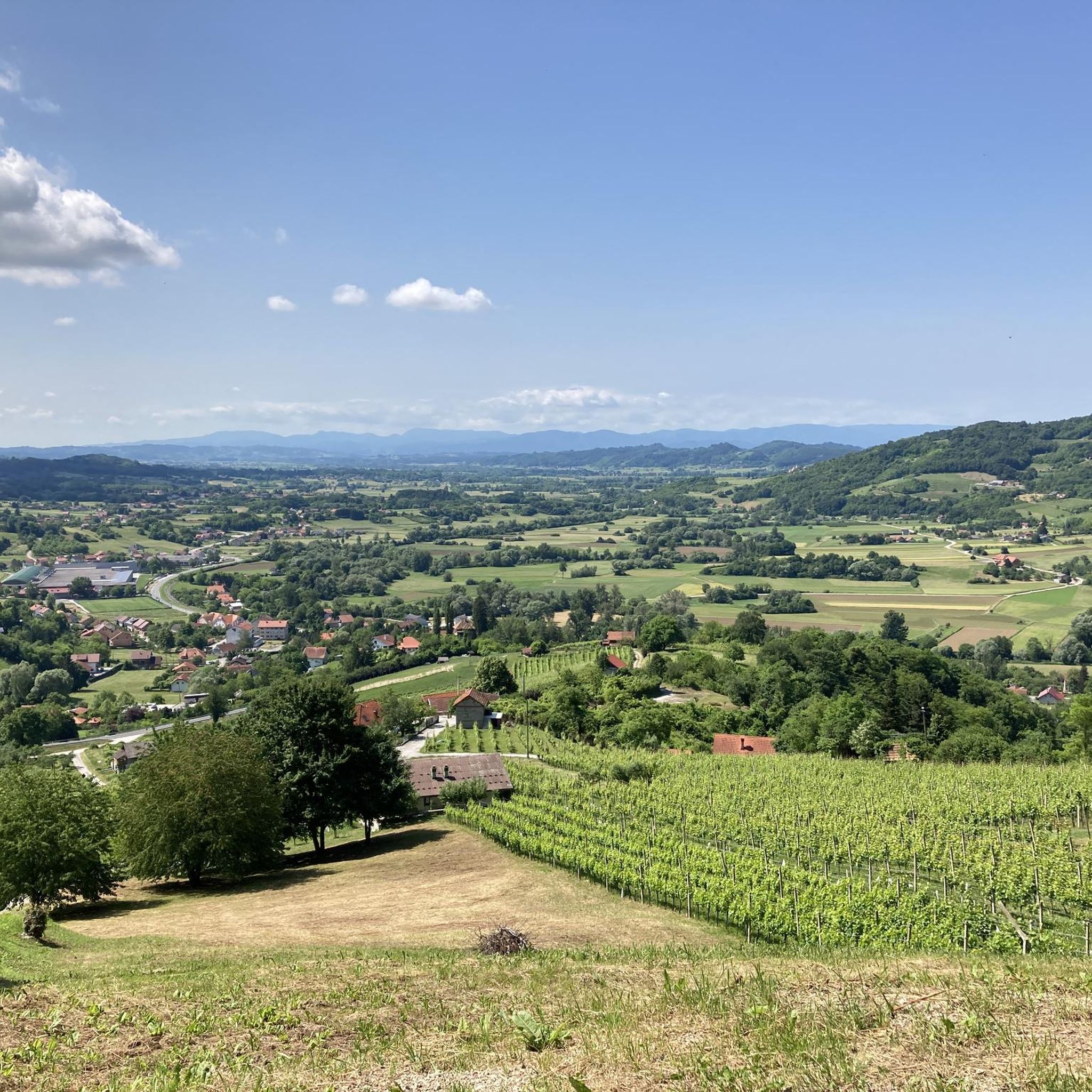
Best attractions and places to see in Krapina-Zagorje include a rich array of historical, cultural, and natural sites. This region, often called the "Green Heart of Croatia," features ancient castles, significant archaeological locations, and important pilgrimage destinations. Its landscape is characterized by mountains like Ivanščica and protected areas such as the Zagorje Mountains Nature Park. Visitors can explore diverse environments, from mountain peaks to traditional villages.
Best attractions and places to see in Krapina-Zagorje
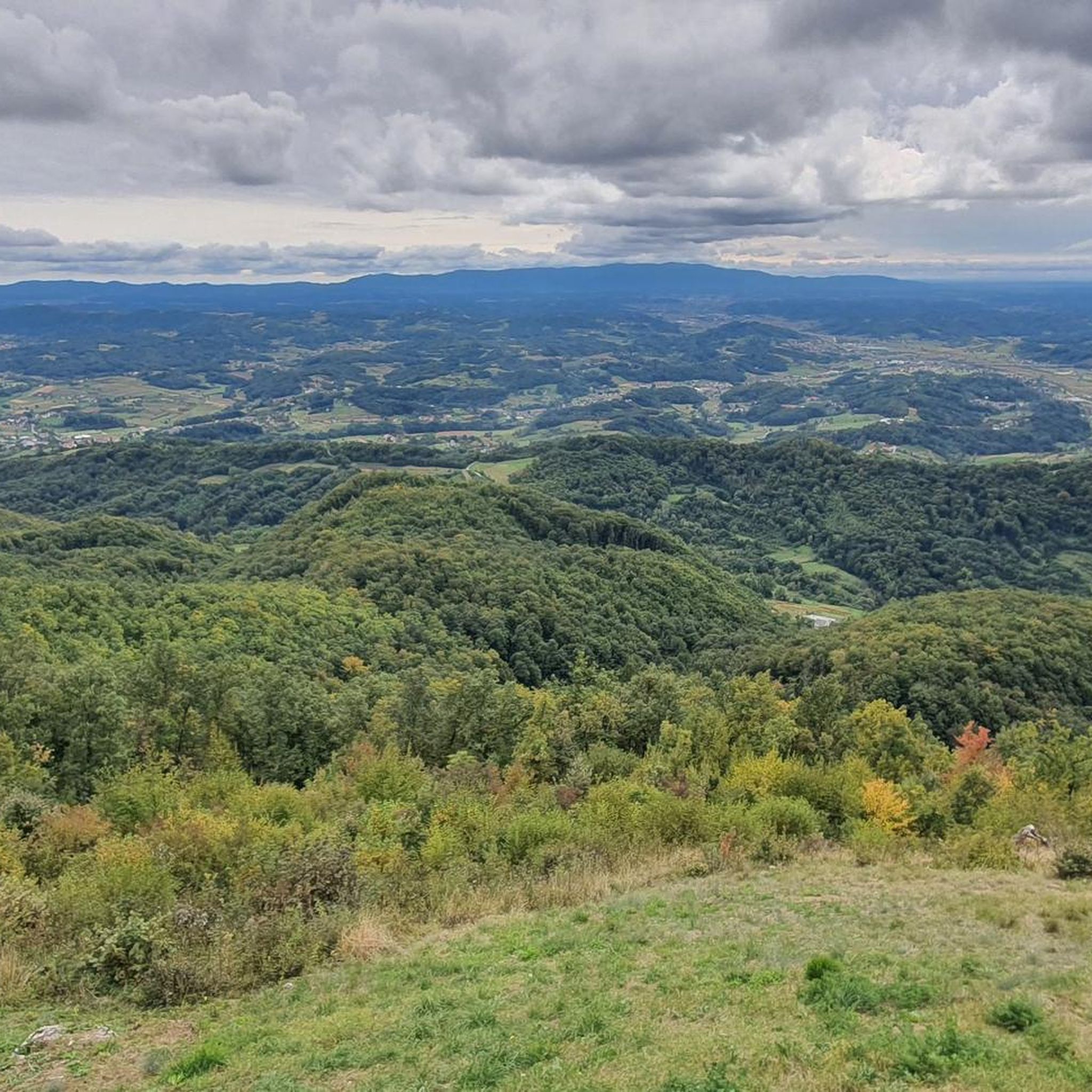
- The most popular attractions is Ivanščica Peak (1,060 m), a summit that is the highest point of Hrvatsko Zagorje. It features a 10-meter high iron lookout pyramid and offers views of the surrounding region, extending to Slovenia on clear days.
- Another must-see spot is Horvat's Stairs, a trail featuring 500 stone steps built by Vladimir Horvat. This area is notable for its diverse karst forms, including caves, sinkholes, and unique rock formations within a varied forest environment.
- Visitors also love Cesargrad Castle Ruins, medieval fortress ruins. This site, first mentioned in 1399, stands on a prominent ridge above the Sutla valley and offers historical insights into the region's past.
- Krapina-Zagorje is known for its historical castles, significant religious buildings, and prominent mountain peaks. The region offers a variety of attractions to see and explore, from ancient ruins to natural monuments.
- The attractions in Krapina-Zagorje are appreciated by the komoot community, with over 150 upvotes and more than 250 photos shared across 174 highlights.
Last updated: October 11, 2026
Ivanščica Peak (1,060 m)
Highlight • Summit
On the highest spot on the mountain a lookout tower shaping an iron "Pyramid" is built. It is 10 meter high. On the same spot in 1893 mountaineers from Ivanec built a small wooden pyramid and next to it a small shelter, that was predecessor of today’s modern tower and huts.
Around the hut and the tower there are several wooden benches and tables for hundreds of mountaineers.
summitpost.org/ivan-269-ica/522702
Tip by

Horvat's Stairs
Highlight • Trail
Translated by Google •
Tip by

Sign up now to discover places like this
Get recommendations on the best single tracks, peaks, & plenty of other exciting outdoor places.
Hunjka Pass and mountain huts
Highlight • Mountain Pass
Translated by Google •
Tip by

Cesargrad Castle Ruins
Highlight • Castle
According to tradition, the fortress of Cesargrad was built by the Templars, a knightly order founded in 1119 to protect pilgrims on their way to the tomb of Jesus in the Holy Land. On the opposite side, on the other side of the Sutla, at almost the same height of Bizeljska gora, is the rest of the Konigsberg fortress, or as the people of Klanje call it, Kunšperg, which is attributed to the same builders. The Order of the Templars was abolished in 1312, and their goods were assigned to other orders or became the property of the Crown.
Cesargrad (Kayersperg), on the prominent ridge of Cesarska gora, was first mentioned in 1399 in a gift from King Sigismund, with which he gave Cesargrad to Count Herman of Celje. As the last of the Celje deaths in Belgrade in 1456, Cesargrad came under the rule of the royal crown.
The medieval structure of the city consists of a semicircular stone building that had a residential function, surrounded by a system of walls, and a defensive tower. The fort was expanded and upgraded in several phases.
In 1573, Cesargrad was killed in the Peasant Revolt when it was looted and set on fire. The Erdody family partially restored it, but with the construction of the New Klanječki Palace (built by Ban Toma Bakač Erdody in 1603), the Erdody family slowly moved to the new castle, and the Cesargrad fortress was slowly falling into disrepair.
Source of text and images: klanjec.hr/kultura/spomenici-kulture/cesargrad
Translated by Google •
Tip by

Belecgrad Fortress Ruins
Highlight • Castle
Translated by Google •
Tip by
Mountain Hut on Strahinjčica
Highlight • Mountain Hut
- Category: B
- Contact: Miro Klasiček, Mob: 091 / 677-67-70,
Mail: mklasicek76@gmail.com
- Open: Sundays, April to October - 09.00 - 16.00
- stay in the home on weekends and overnight stay - by prior arrangement and agreement
- Bypasses: Croatian Mountain Houses, Zagorski planinarski put
Infrastructure
- Electricity: Network
- Water: Source - water supply
- Sanitary facilities with shower; external toilet
- Access: on foot, by bicycle, off-road vehicle and car, small bus at your own risk
- Garbage collection: Yes
- Parking on the plateau above the house
Accommodation
- Number of beds in rooms: 8 (2 + 2 + 4)
- Shared beds: 28 (10 + 18)
- The house doesn't have a winter room
- Dining room seats: 65
- Seats under the terrace 25, and 40 seats under the beech
- Supply: drinks, food by arrangement
Activities
- May Day gathering
- Society Day
- Chestnut Festival
- Organized tour of Kajbumščak's path
Other
- City: Krapina
- County: Krapina-Zagorje
- Owner: PD “Strahinjčica”
- Area: 200 m2
- Number of floors: 2
- Construction: masonry
- Built: 1940
Remote control
On the slopes near the house, there is a mini botanical garden of wild plants Strahinjčica.
There are several marked paths and trails leading to the house (see Gorje - Strahinjčica).
In the immediate vicinity of the house are beautiful meadows with the possibility of recreation, and at a distance of 10 minutes walk from the house you come to a rocky head called Dedek, which offers beautiful views of the mountain house, Hrvatsko Zagorje, Samoborsko gorje and the mountains of neighboring Slovenia. nice weather to the Kamnik Alps and Snježnik.
The peak of Strahinjčica (846 m), called Sušec, is a 30-minute walk from Dedek.
If you want to enjoy the natural beauty, meet new places, find new friends, spend free time in a different way, gain new knowledge, feel the contact with nature, climb Strahinjčica and visit our house, our mountain lodge.
Translated by Google •
Tip by

Franciscan Monastery and Church of the Annunciation of the Blessed Virgin Mary in Klanjec
Highlight • Religious Site
Translated by Google •
Tip by

Kostelgrad Castle Ruins
Highlight • Castle
Today, the fort is in a dilapidated condition, but it is in the phase of consolidating the walls, the project is financed by the Ministry of Culture. The fort is a favorite picnic spot with a beautiful view of the Sutinska valley, a narrow gap along the river Kosteljina through which you enter the town of Pregrada from the north. Access to the fort is easy and accessible from its northern side from the village of Kostel.
Historical existence Kostelska pištola - Keglević's guard Kostel
Church 7, 49218 Partition
kostelska-pistola.hr
+385 98 981 7041
Translated by Google •
Tip by
Church of the Assumption of the Blessed Virgin Mary (Zagorska Cathedral), Pregrada
Highlight • Religious Site
The church is 38 meters long and 19 meters wide. Built in the neoclassical style with a pronounced tendency towards a central building consistently executed symmetry. The facade of the church is dominated by two 45-meter high bell towers, a triangular gable with a fresco of the Assumption of the Mother of God, built during the renovation of the church in 1874-1876. The builder managed to give the church harmony inside and out, so it is an extremely suitable place for worship.
Over time, the church was repaired several times. Due to its dilapidation, a major intervention was made on it in 1873-1876. It was necessary to arrange the environment, repair the doors, windows, roof, cover the towers with tin, plaster the walls, redecorate the gable on the facade and paint the church.
pregrada.hr/zagorska-katedrala
Translated by Google •
Tip by
Gubec Linden (Gupčeva Lipa)
Highlight • Natural Monument
Since 1957 the linden tree was declared a natural monument and placed under state protection and is a protected cultural monument.
Gupčeva lipa is an ancient living witness of the Great Peasant Revolt that took place in 1573. Under its canopy, according to folklore, Matija Gubec gathered his like-minded people and led them from this place into the fight for justice. Due to its age and historical significance, the linden tree was declared a protected natural monument in 1957. How valuable this linden is to our people is also proved by the fact that Gupčeva lipa seedlings were grown in the Croatian Forestry Institute Jastrebarsko by vegetative means.
In order to preserve the gene pool of Gupčeva lipa, in 2011. the Living Archive of Gupčeva lipa was founded.
Translated by Google •
Tip by
Sign up for free to discover even more attractions in Krapina-Zagorje.
Already have an account?
Start today with a free account
Your next adventure awaits.
Tips from the Community

Hunjka (877 m) is an important pass on the Medvednica ridge, over which the road from Zagreb to Stubičke Toplice passes. Next to it is the new mountain hut "Mala Hunjka", built on the foundations of the old Rauch forester's lodge, and the large Craftsmen's Lodge (Zvonimirov Dom, formerly the "Janica" hotel). Hunjka is also known as a beautiful meadow with beautiful views of Zagorje and the Slovenian mountains.
0
0
the home is open on weekends, they have tea, beer, hydra...
1
0
The mountain lodge is open on Fridays from 3 pm :(
0
0

The more than 400-year-old linden tree is considered the only living witness of the Peasants' Revolt that took place in 1573. It is a protected cultural monument. Next to it is the "Pod lipom" pub, a traditionally decorated restaurant.
1
0

The path up and down was very, very steep, and on the way down, there were some slippery slopes. The hut at the top is only open on weekends and public holidays (and probably also on the day before a holiday). Good fitness is required.
1
0

Parish Church of the Assumption of the Blessed Virgin Mary - Zagorje Cathedral
0
0
Parish Church of the Assumption of the Blessed Virgin Mary in Pregrada, also known as Zagorje Cathedral. Right behind the church is the beginning of the trail to Kunagoro.
0
0

A great lover of Medvednica, mountaineer, journalist, publicist and photographer, Vladimir Horvat (1891-1962) in the period from 1946-53. he built 500 stone steps with his own hands in the then inaccessible part of Medvednica. Horvat's steps are undoubtedly the most beautiful man-made excursion facility on Medvednica. Horvat also arranged for a visit to the cave Medvednica, discovered another new cave and several sinkholes, and on the bank of a small stream in the dense forest shade, under 500 steps, arranged a nice picnic area with terraces, benches for picnickers and a canopy in case of storms, and named it Srnec .
1
0
Frequently Asked Questions
What are the best hiking opportunities in Krapina-Zagorje?
The region offers diverse hiking experiences, from challenging mountain ascents to scenic trails. A popular destination is Ivanščica Peak (1,060 m), the highest point in Hrvatsko Zagorje, featuring a lookout pyramid and mountain huts. Another unique trail is Horvat's Stairs on Medvednica, known for its 500 stone steps and diverse karst formations. For more options, you can explore various routes in the Hiking in Krapina-Zagorje guide.
Where can I find the best viewpoints in Krapina-Zagorje?
Excellent viewpoints are scattered throughout the region. Ivanščica Peak (1,060 m) offers expansive views that can reach Slovenia on clear days. The Hunjka Pass on Medvednica provides beautiful vistas of Zagorje and the Slovenian mountains. Historic sites like Cesargrad Castle Ruins and Belecgrad Fortress Ruins also offer panoramic views from their elevated positions.
What historical castles can I visit in the region?
Krapina-Zagorje is rich in historical castles. You can explore the well-preserved 15th-century Veliki Tabor Castle, which houses a museum, or the fairytale-like Trakošćan Castle, set by a serene lake. Other notable ruins include Cesargrad Castle Ruins, a medieval fortress above the Sutla valley, Belecgrad Fortress Ruins, and Kostelgrad Castle Ruins.
Are there any significant religious sites or pilgrimage destinations?
Yes, Marija Bistrica is a central Marian shrine and a significant pilgrimage destination in Croatia, especially popular on August 15th. You can also visit the magnificent Church of the Assumption of the Blessed Virgin Mary in Pregrada, also known as Zagorje Cathedral, or the Franciscan Monastery and Church of the Annunciation of the Blessed Virgin Mary in Klanjec.
Where can I learn about the region's history and heritage?
The Krapina Neanderthal Museum offers an interactive journey into human origins near the Hušnjakovo archaeological site. The Museum "Staro selo" Kumrovec is an open-air ethnographic museum showcasing traditional life and includes Josip Broz Tito's birthplace. Oršić Castle houses a museum dedicated to the Peasant Revolt of 1573, a historical event also commemorated by the ancient Gubec Linden.
What natural features can I explore in Krapina-Zagorje?
The region is known as the "Green Heart of Croatia" and features the newly established Zagorje Mountains Nature Park, encompassing ranges like Ivanščica, Maceljske Gore, and Strahinjčica. You can explore dense forests, mountain meadows, and diverse ecosystems. Key natural highlights include Ivanščica Peak (1,060 m), Strahinjčica Mountain with its peak Sušec, and the unique karst formations around Horvat's Stairs on Medvednica.
Are there family-friendly attractions in Krapina-Zagorje?
Many attractions are suitable for families. The Krapina Neanderthal Museum offers interactive exhibits that engage all ages. The Museum "Staro selo" Kumrovec provides an educational and immersive experience into traditional village life. Natural sites like Hunjka Pass and the Mountain Hut on Strahinjčica are marked as family-friendly, offering pleasant outings in nature.
What other outdoor activities are available besides hiking?
Beyond hiking, Krapina-Zagorje offers opportunities for running and road cycling. You can find various routes in the Running Trails in Krapina-Zagorje guide and the Road Cycling Routes in Krapina-Zagorje guide. The region's green hills are also dotted with vineyards, offering opportunities for leisurely exploration and wine tasting.
What are some hidden gems or lesser-known places to visit?
For those looking beyond the main highlights, consider exploring the Cesargrad Castle Ruins for a historical site with great views and fewer crowds. The Belecgrad Fortress Ruins also offer a well-preserved ruin experience with good views. The region's numerous vineyards and wineries provide a chance to discover local traditions and culinary delights off the beaten path.
What is the best time to visit Krapina-Zagorje?
The Krapina-Zagorje region is beautiful year-round, but the best time depends on your preferred activities. Spring and autumn offer pleasant temperatures for hiking and exploring historical sites, with vibrant foliage in autumn. Summer is ideal for enjoying outdoor activities and thermal spas. Winter can be cold, especially on mountain peaks like Ivanščica Peak, but can offer unique snowy landscapes for those prepared for colder conditions.
Are there any thermal spas or wellness centers in the area?
Yes, Krapinske Toplice is a well-known health resort famous for its thermal springs and spa facilities. Tuhelj is another popular destination, renowned for its thermal springs and the Terme Tuhelj spa center, offering relaxing massages, warm pools, and saunas, perfect for relaxation after exploring the region.
Most popular routes in Krapina-Zagorje
Most popular attractions in Krapina-Zagorje

Get inspired with the komoot mobile app


Didn’t find what you were looking for?
Are you keen on exploring more awesome places nearby? Browse our guides:
Explore more
Still not found the Highlight you’re looking for? See guides of the top attractions in other regions:
