Top 20 Castles in L'Aquila
Best castles in L'Aquila are found in a region characterized by its historical depth and diverse landscapes. This area, nestled within the Apennine mountains, features a blend of medieval and Renaissance architecture. The castles here often occupy strategic positions, offering insights into past military and noble life. L'Aquila's terrain includes mountain ranges and valleys, providing varied settings for these historical structures.
Best castles in L'Aquila
- The most popular castles is Rocca Calascio Castle, a castle located at an altitude of 1,460 meters in the Gran Sasso e Monti della Laga National Park. It is recognized as one of the highest fortresses in the Apennines.
- Another must-see spot is Pacentro Castle, a castle located at an altitude of 718 meters on Mount Morrone. It is one of the best preserved fortified structures in Abruzzo.
- Visitors also love Forte Spagnolo (Cinquecento Castle), L'Aquila, a 16th-century fortress built during Spanish domination. It is considered one of the largest and best-preserved examples of modern military architecture in Europe.
- L'Aquila is known for its medieval fortresses, Renaissance residences, and strategic hilltop castles. Visitors can explore structures ranging from well-preserved examples to partially ruinous sites.
- The castles in L'Aquila are appreciated by the komoot community, with more than 400 upvotes and over 400 photos shared by users.
Last updated: August 17, 2026
Rocca Calascio Castle
Highlight • Castle
Translated by Google •
Tip by

Santo Stefano di Sessanio
Highlight • Settlement
Translated by Google •
Tip by

Sign up now to discover places like this
Get recommendations on the best single tracks, peaks, & plenty of other exciting outdoor places.
Sign up for free
Pacentro Castle
Highlight • Castle
Translated by Google •
Tip by

Forte Spagnolo (Cinquecento Castle), L'Aquila
Highlight • Castle
In 1902, it was officially declared a national monument. Shortly after World War II, it became the home of the National Museum of Abruzzo (MuNDA).
Since the devastating earthquake of 2009, the fort has been undergoing a lengthy and complex restoration, but it remains one of the most impressive symbols of the city when viewed from the outside.
Showing Translation
Tip by

Forte Spagnolo
Highlight • Castle
In 1902 it was officially declared a national monument. Shortly after World War II, it became the home of the Museo Nazionale d'Abruzzo (MuNDA).
Since the devastating earthquake of 2009, the fort has been undergoing a lengthy and complex restoration, but it remains one of the most impressive symbols of the city when viewed from the outside.
Showing Translation
Tip by
Capestrano Castle
Highlight • Castle
Translated by Google •
Tip by

Castello Cantelmo
Highlight • Castle
Timetables or services may vary:
Monday 10-13, 15-18
Tuesday 10-13, 15-18
Wednesday 10-13, 15-18
Thursday 10-13, 15-18
Friday 10-13, 15-18
Saturday 10-13, 15-18
Sunday 10-13, 15-18
Translated by Google •
Tip by

Medieval Castle and Stone Wall Houses
Highlight • Castle
Translated by Google •
Tip by
Gagliano Aterno Castle
Highlight • Castle
The importance of the village is linked to the set of monuments and works of art of considerable social and religious value, with original profiles preserved in good condition. With its medieval center and its location in the Sirente-Velino Park.
Translated by Google •
Tip by
Ovindoli
Highlight • Settlement
Translated by Google •
Tip by

Sign up for free to discover even more castles in L'Aquila.
Sign up for free
Already have an account?
Start today with a free account
Your next adventure awaits.
Login or Signup
Popular around L'Aquila
Tratturo Magno – On the roads of transhumance
The Tratturo Magno – From the Apennines to the TavoIiere, 300 kilometers
Cycling in Abruzzo – among villages, history and nature
The Apennine Cycleway (Part 2) - From Umbria to Calabria
Hike along shepherds tracks in Italy – Via del Tratturo
Hike from Rome to the Adriatic Sea – Way of St. Thomas
A colourful journey – hike in the Simbruini Mountains
Interiora - A Journey into the Remote Areas of Italy
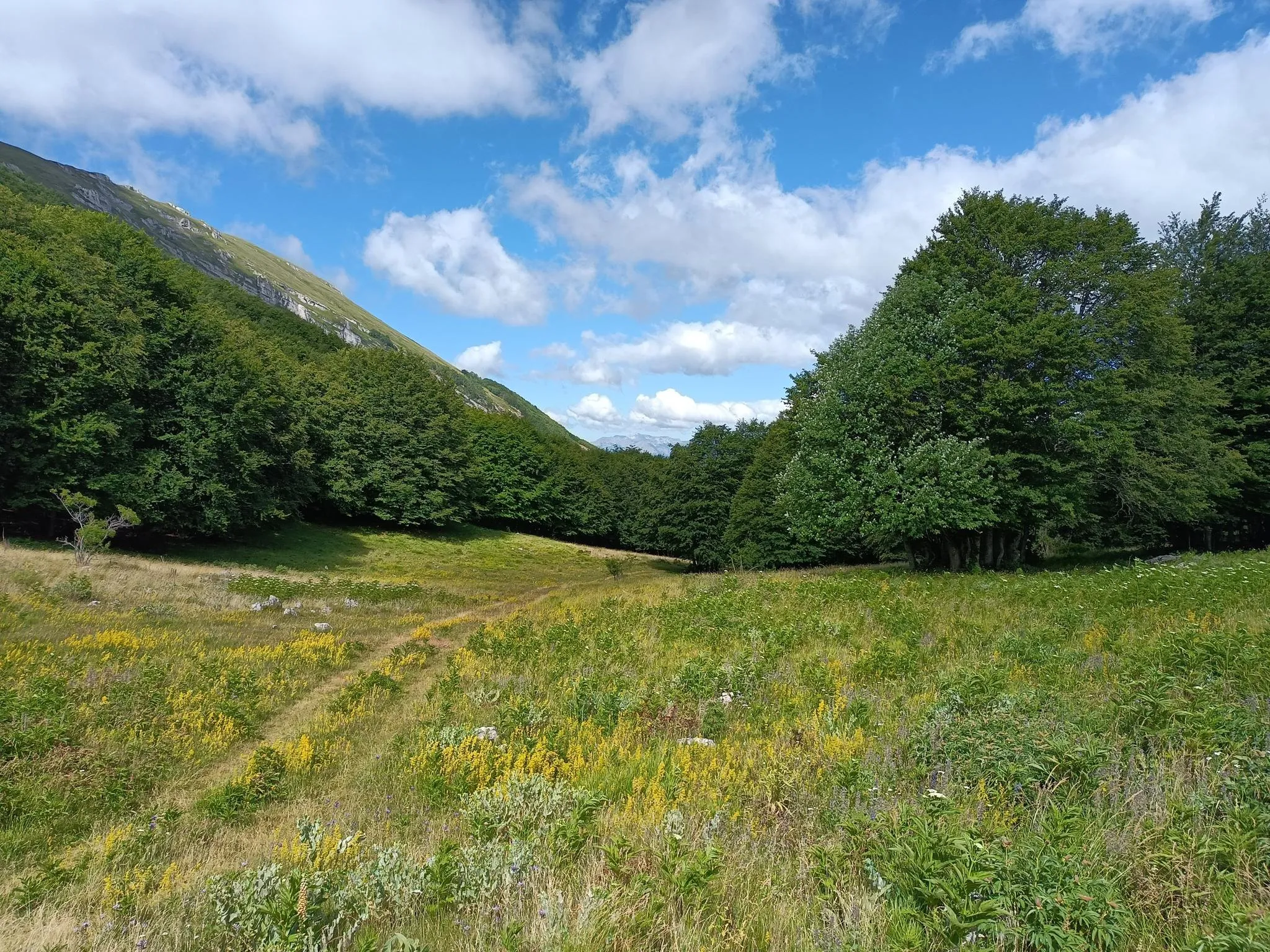
Natural Park Walk – part 4 from Accumoli to L'Aquila
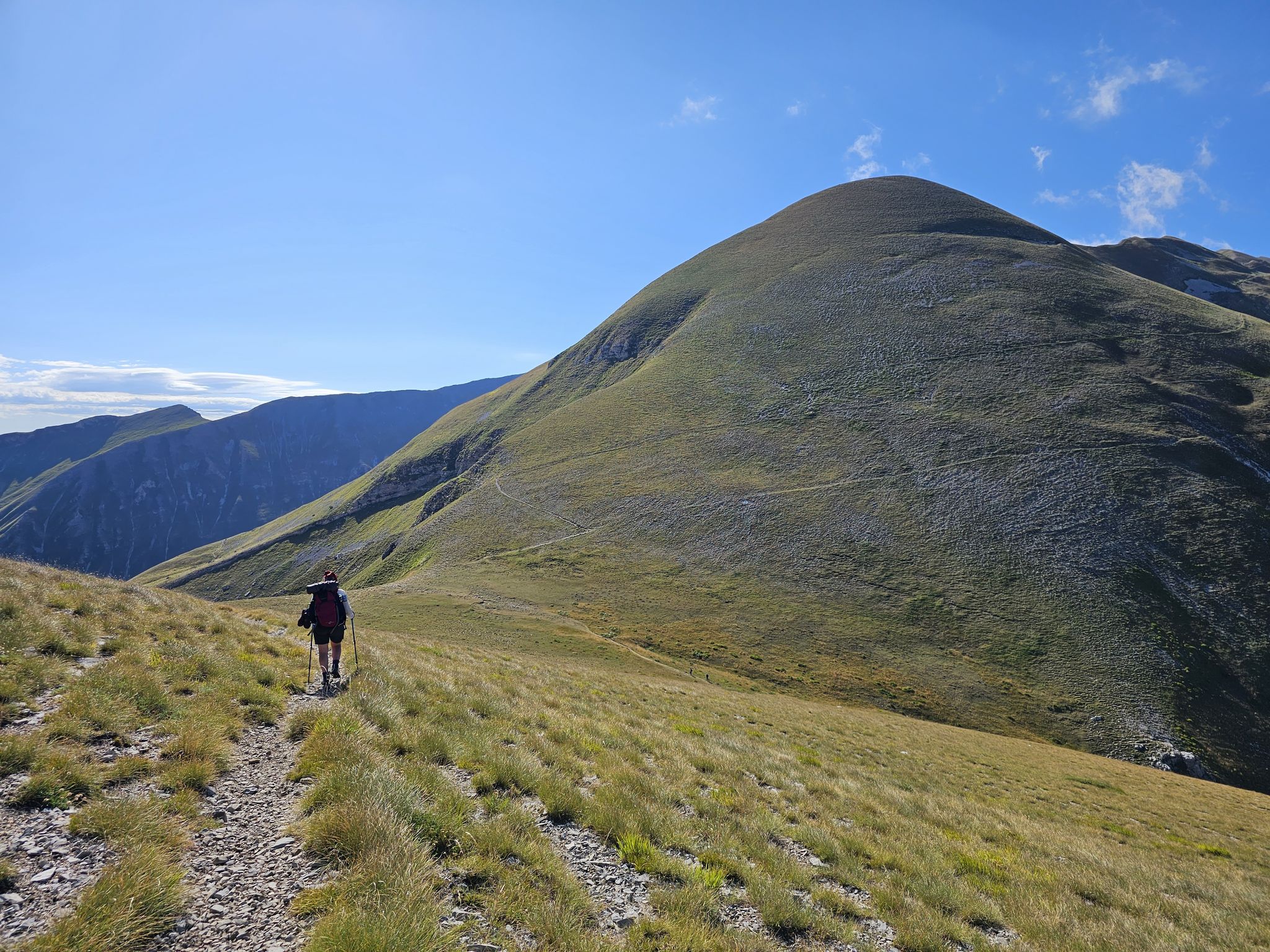
The Sibillini Mountains to Gran Sasso – the Great Apennine Crossing
Other adventures in L'Aquila


Tips from the Community

The Piccolomini Castle, which overlooks the town center and today also houses the Town Hall. It is located right on the main square, which is why it is so distinctive in the village's panorama. It is a structure with medieval origins, built on the remains of a previous fortification, of which the central prismatic tower still remains. The current appearance is the result of various interventions by the noble families who owned it over time, particularly the Acquaviva, Piccolomini, and Medici families; the fifteenth-century configuration is generally attributed to 1485, while the interior was restored in 1924.
0
0

The Forte Spagnolo (also known as Castello Cinquecentesco) is one of the most impressive 16th-century military strongholds of Central and Southern Italy. Although it is a defensive work, its true historical significance lies in the fact that it was never built to protect the city, but rather to suppress it. After the Spanish threat diminished over time, the complex successively served as the residence of the Spanish governor, barracks for French troops in the 19th century, and headquarters for the German occupier during World War II. In 1902, it was officially declared a national monument. Shortly after World War II, it became the home of the National Museum of Abruzzo (MuNDA). Since the devastating earthquake of 2009, the fort has been undergoing a lengthy and complex restoration, but it remains one of the most impressive symbols of the city when viewed from the outside.
4
0
The Forte Spagnolo (also known as Castello Cinquecentesco) is one of the most impressive 16th-century military strongholds in Central and Southern Italy. Although it is a defensive work, its true historical significance lies in the fact that it was never built to protect the city, but rather to suppress it. Once the Spanish threat subsided over time, the complex successively served as the residence of the Spanish governor, barracks for French troops in the 19th century, and headquarters for the German occupiers during World War II. In 1902 it was officially declared a national monument. Shortly after World War II, it became the home of the Museo Nazionale d'Abruzzo (MuNDA). Since the devastating earthquake of 2009, the fort has been undergoing a lengthy and complex restoration, but it remains one of the most impressive symbols of the city when viewed from the outside.
5
0


lovely lunch here. you have to book on a Sunday
0
0

It will be my next destination
2
0

the symbolic tower of santo stefano di sessanio
1
0

Interesting, well-restored castle complex with worthwhile views from the tower of the entire old town of the medieval village of Pacentro and the beautiful surroundings.
0
0
Frequently Asked Questions
Which castles in L'Aquila offer the most impressive panoramic views?
For breathtaking panoramic views, visit Rocca Calascio Castle, perched at 1,460 meters in the Gran Sasso e Monti della Laga National Park. Its partially ruinous state adds to its dramatic charm, offering stunning vistas of the surrounding mountains and the Tirino Valley. Another excellent spot is the Castle of Bominaco, which provides a commanding view of the Navelli plateau.
Are there family-friendly castles to visit in L'Aquila?
Yes, several castles in L'Aquila are suitable for families. Forte Spagnolo (Cinquecento Castle), L'Aquila is categorized as family-friendly and features a large surrounding park. Capestrano Castle and Ovindoli (which includes a castle) are also listed as family-friendly options.
What is the best time of year to visit the castles in L'Aquila?
The best time to visit the castles in L'Aquila, especially those in mountainous areas like Rocca Calascio Castle, is typically during spring (April-June) and autumn (September-October). During these seasons, the weather is generally mild and pleasant for exploring, hiking, and enjoying the scenic views without the intense heat of summer or the snow of winter at higher elevations.
What kind of historical significance do L'Aquila's castles hold?
L'Aquila's castles are rich in history, reflecting medieval military architecture and Renaissance noble residences. For example, Forte Spagnolo is a formidable 16th-century Renaissance fortress built for military control, though never used in war. Castello Piccolomini in Celano showcases a transition from a medieval fortress to a Renaissance residence, housing a museum of sacred art. Rocca Calascio Castle, originally a 10th-century watchtower, is one of the highest fortresses in the Apennines.
Are there hiking opportunities near the castles in L'Aquila?
Yes, the region around L'Aquila's castles offers numerous hiking opportunities. Rocca Calascio Castle is located within the Gran Sasso e Monti della Laga National Park, making it a popular destination for hiking enthusiasts. You can find various trails, including challenging routes like 'Corno Grande (Gran Sasso) from Campo Imperatore' or moderate ones like 'Camosciara and Nymphs' Waterfall Trail'. For more details on hiking routes, refer to the Hiking in L'Aquila guide.
Can I find cycling or mountain biking trails near the castles?
Absolutely. The L'Aquila region provides excellent terrain for both cycling and mountain biking near its historical sites. For instance, you can find routes like 'Ascent to Campo Imperatore from Calascio' for cycling or 'Campo Imperatore da Santo Stefano di Sessanio - Giro ad anello' for mountain biking. These routes often pass through scenic areas close to castles. Explore more options in the Cycling in L'Aquila and MTB Trails in L'Aquila guides.
What unique features does Forte Spagnolo in L'Aquila have?
Forte Spagnolo (Cinquecento Castle), L'Aquila is a remarkable example of Renaissance military architecture. Built between 1534 and 1567, it features a square plan with imposing, 'spearhead'-shaped bastions at each corner, designed to resist attacks. Its innovative design included double projections connecting the bastions to the curtain walls, improving its plasticity and doubling gun ports for powerful flanking fire. Despite its military purpose, it was never used for war.
Are there any castles in L'Aquila that are partially ruined but still worth visiting?
Yes, Rocca Calascio Castle is a prime example. Its partially ruinous state, resulting from an earthquake in 1461, adds to its dramatic charm and offers a unique aesthetic. Similarly, the Castle of Bominaco, largely reconstructed after being destroyed in 1424, features recovered and valued ruins that are visitable and provide panoramic views.
What can I expect to see at Castello Piccolomini in Celano?
Castello Piccolomini in Celano is a striking example of a medieval military fortress transitioning into a Renaissance noble residence. Today, it houses the Museum of Sacred Art of Marsica and the Torlonia Collection of Antiquities of Fucino. Visitors can explore valuable artifacts and art, including a 14th-century triptych and a collection of paintings, sculptures, and sacred vestments dating from the 6th to the 18th century. The compact museum and its porticoed courtyard are considered well worth a visit.
Are there any lesser-known or 'hidden gem' castles in the L'Aquila region?
While Rocca Calascio Castle and Forte Spagnolo are well-known, you might also consider visiting Gagliano Aterno Castle or San Donato Castle. The ruins of San Donato Castle, for instance, offer a beautiful view of the surrounding mountain ranges. These provide a glimpse into the region's rich history away from the most popular sites.
What should I wear when visiting castles in L'Aquila, especially those in mountainous areas?
When visiting castles in L'Aquila, particularly those at higher altitudes like Rocca Calascio Castle, it's advisable to wear comfortable walking shoes suitable for uneven terrain. Layers of clothing are recommended, as weather conditions can change quickly, especially in the mountains. Even on sunny days, it can be windy at the top of some castle sites, so a windbreaker or light jacket is often useful.
Most popular routes in L'Aquila
Most popular attractions in L'Aquila

Get inspired with the komoot mobile app


Didn’t find what you were looking for?
Explore L'Aquila’s best castles region by region:
Explore more
Looking for the best castles somewhere else? Discover other guides in L'Aquila:
