Top 20 Caves in Japan
Best caves in Japan include a diverse range of subterranean formations, from extensive limestone caverns to volcanic lava tubes and marine grottoes. These natural features offer insights into Japan's geological history and unique ecosystems. The country's varied topography, shaped by volcanic activity and tectonic movements, contributes to the formation of these distinct underground environments. Exploring these caves provides a direct experience with Japan's natural landscape.
Best caves in Japan
- The most popular caves is Zeniarai Benzaiten Ugafuku Shrine, a religious_building that can be reached via a cave on the side of the road. This site is known for its sacred spring where visitors wash money for prosperity.
- Another must-see spot is Biwataki Waterfall and Cave Shrines, a waterfall with 2 shrines located in the rock below. Visitors can expect to see a small temple complex integrated with natural water features.
- Visitors also love Udo Shrine (Udo-jingū), a religious_building located inside a cave. This shrine is notable for its unique setting within a natural cavern.
- Japan is known for its limestone caves, lava tubes, and marine grottoes. These include large caverns with impressive formations and underwater caves with unique light effects.
- The caves in Japan are appreciated by the komoot community, with more than 16 upvotes and 6 photos shared by users.
Last updated: September 29, 2026
Zeniarai Benzaiten Ugafuku Shrine
Highlight • Religious Site
Translated by Google •
Tip by

Jochiji Temple
Highlight • Religious Site
In a small cave in the lower cemetery there is a statue of the god of luck. Some people stroke the belly of the god of luck, which is supposed to bring good luck.
Translated by Google •
Tip by
Sign up now to discover places like this
Get recommendations on the best single tracks, peaks, & plenty of other exciting outdoor places.
Iwayataishiryuketsu Cave
Highlight • Cave
Mount Misen hiking map: chushikoku.env.go.jp/nature/miyajima_guide_map/pdf/en/02_wildlife.pdf
Translated by Google •
Tip by

Biwataki Waterfall and Cave Shrines
Highlight • Waterfall
Translated by Google •
Tip by

Oshima Island Buddhist Caves and Red Bridge
Highlight • Cave
Translated by Google •
Tip by

Unzen-Amakusa National Park Cave Entrance
Highlight • Cave
Translated by Google •
Tip by

Chibichiri-gama Cave
Highlight • Cave
Chibi Chirigama is a symbol of the suffering inflicted on the people of Okinawa by the Japanese military during the Battle of Okinawa.
Translated by Google •
Tip by

Udo Shrine (Udo-jingū)
Highlight • Religious Site
Translated by Google •
Tip by
The cave of a thousand Buddhas
Highlight • Monument
Translated by Google •
Tip by

Sandanbeki Rock and Cave
Highlight • Viewpoint
Translated by Google •
Tip by

Sign up for free to discover even more caves in Japan.
Already have an account?
Start today with a free account
Your next adventure awaits.
Popular around Japan
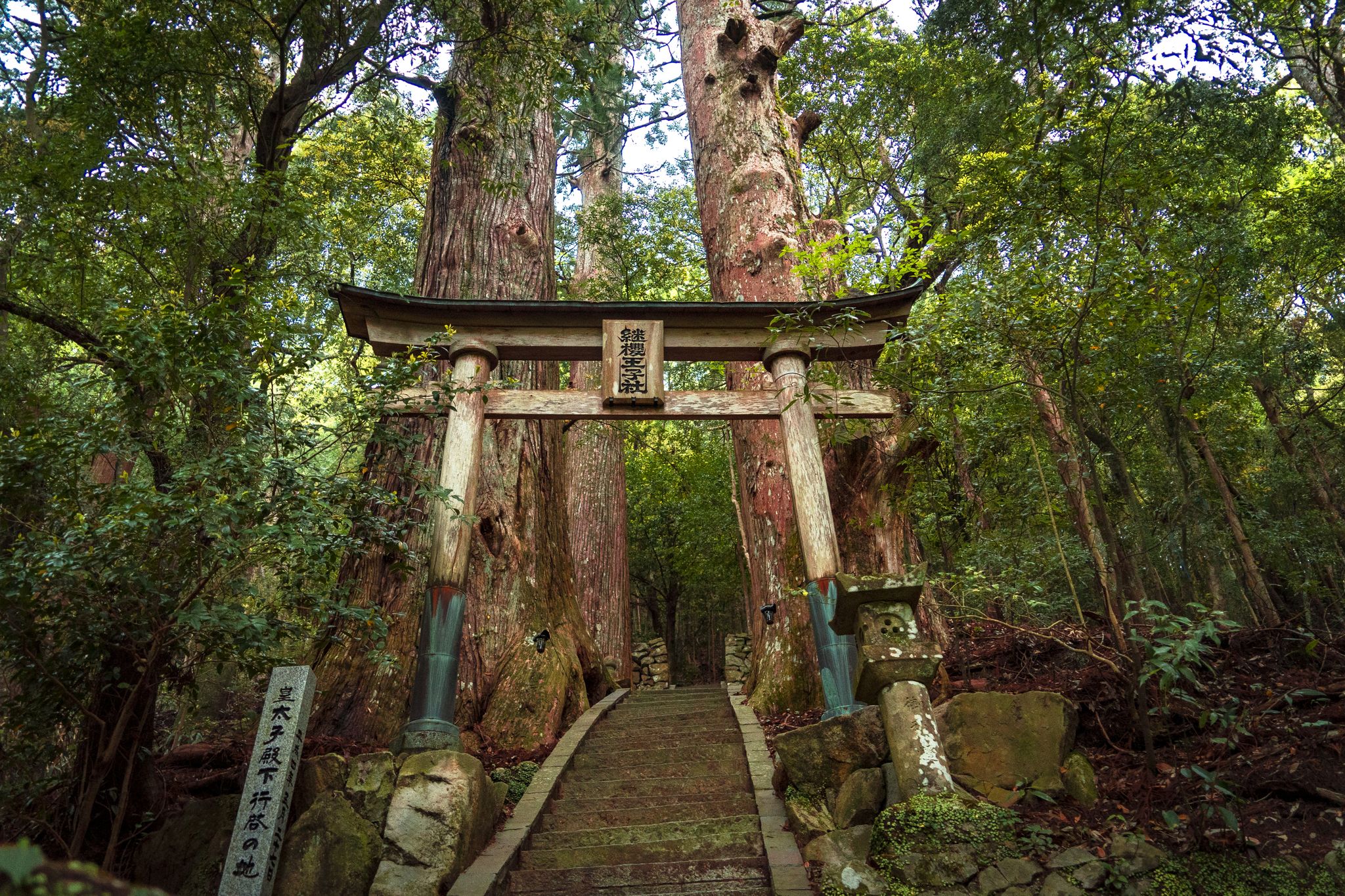
Kumano Kodo – a pilgrimage in the sacred forests of Japan
Oshika Akiha Kodo Hanami Tours
Spiritual peaks — hiking Bandai Asahi National Park’s Volcano Trail
The Japanese Odyssey — 1,600km of volcanic islands to Tokyo
Hiking in Japan
Running Trails in Japan
Cycling in Japan
Road Cycling Routes in Japan
Mountain Hikes in Japan
MTB Trails in Japan
Other adventures in Japan


Tips from the Community

The Kōsan-ji temple complex features a stone tunnel with countless Buddha statues and an underground waterfall. The temple complex is open until 5 pm, with last entry at 4:30 pm.
0
0


The karst cave is a place of remembrance with a very tragic history. During the Battle of Okinawa, more than a hundred people hid in the cave. Chibi Chirigama was cut off from the outside world, and those inside experienced extreme isolation, feeling like they were the only ones still alive. The civilians in the cave were driven to mass suicide by coercion and orders from the Japanese military. Chibi Chirigama is a symbol of the suffering inflicted on the people of Okinawa by the Japanese military during the Battle of Okinawa.
2
0


The cave is relatively small and easy to explore. It features a shrine, a small exhibition, and a view of the sea spray.
1
0

Zeniarai Benzaiten Ugafuku Shrine was founded in 1185 by Minamoto no Yoritomo, the first shogun of the Kamakura shogunate. Legend has it that Yoritomo had a dream in which a god told him to find a sacred spring in Kamakura. He discovered the spring and built the shrine to Benzaiten, the goddess of wealth, music, and eloquence. Zeniarai Benzaiten is famous for its ritual of money laundering at the sacred spring. It is believed that money laundered here will multiply and bring prosperity. Visitors often come to the shrine to purify their money and pray for financial success. Money laundered at Zeniarai Benzaiten is believed to increase financial prosperity, and it is considered even more auspicious to spend the money rather than save it. It is believed that by spending the money, wealth will circulate and lead to even greater prosperity. In addition, if you are lucky enough to see a white snake, which is the messenger of Benzaiten, on the shrine grounds, your luck is said to be even greater.
0
0

The Jochiji Temple is one of the five largest temples in Kamakura. There are temples, two cemeteries, residential buildings with gardens and a bell tower. The complex is well worth seeing and well maintained. In a small cave in the lower cemetery there is a statue of the god of luck. Some people stroke the belly of the god of luck, which is supposed to bring good luck.
2
0
The Zeniarai Benten shrine can be reached via a cave on the side of the road. There are a few stalls where you can buy food and incense candles. Some people wash money in a small spring inside a temple. The money washed there is said to bring good luck and increase. It should then only be spent on something very special.
2
0
Frequently Asked Questions
What types of caves can I explore in Japan?
Japan offers a diverse range of subterranean formations, including extensive limestone caverns, volcanic lava tubes, and breathtaking marine grottoes. You can find massive limestone caves like Akiyoshido and Ryusendo, frozen lava tubes such as Narusawa Ice Cave and Fugaku Wind Cave, and unique marine caves like Okinawa's Blue Cave.
Are there any caves in Japan known for their unique geological formations?
Yes, several caves are famous for their distinct geological features. Zeniarai Benzaiten Ugafuku Shrine is accessible via a cave. Akiyoshido Cave features impressive formations like the 'Hyakumaizara' (One Hundred Plates) and the 'Golden Column'. Ryusendo Cave is renowned for its strikingly clear, deep blue underground lakes, while Gyokusendo Cave boasts over a million stalactites and 37 types of formations, the largest collection in Japan.
Which caves offer a historical or cultural experience?
Many caves in Japan have historical significance. Zeniarai Benzaiten Ugafuku Shrine is a religious site where visitors wash money for prosperity. Biwataki Waterfall and Cave Shrines features two shrines within the rock. Udo Shrine (Udo-jingū) is a notable religious building located inside a natural cavern. Narusawa Ice Cave and Fugaku Wind Cave were historically used as natural refrigerators. Ryugado Cave is an archaeological site where human artifacts from the Yayoi period were discovered.
Are there family-friendly caves in Japan?
Yes, several caves are suitable for families. Jochiji Temple, with its statue of the god of luck in a small cave, is considered family-friendly. Futenma Shrine is also listed as family-friendly. Gyokusendo Cave, located within Okinawa World theme park, offers an accessible and engaging experience for all ages with its illuminated formations.
What is the best time of year to visit caves in Japan?
The best time to visit depends on the type of cave. Limestone caves like Akiyoshido and Ryusendo maintain a comfortable, constant temperature year-round (around 17°C and 10°C respectively), making them suitable for any season. Lava tubes like Narusawa Ice Cave and Fugaku Wind Cave, which stay around 3°C, are particularly refreshing in summer but also offer unique ice formations in winter. Gyokusendo Cave in Okinawa has a constant temperature of about 21°C, ideal for year-round visits.
What are some unique experiences offered by Japan's caves?
Japan's caves offer diverse experiences. You can witness the ethereal blue glow and abundant marine life in Okinawa's Blue Cave, perfect for snorkeling and diving. Narusawa Ice Cave and Fugaku Wind Cave provide a rare chance to explore frozen subterranean worlds, with ice pillars and luminous moss. Ryugado Cave offers a journey through ancient geological history combined with archaeological insights.
Are there any caves that are particularly challenging or require specific gear?
While many popular caves in Japan are well-developed with walkways, some sections of lava tubes like Narusawa Ice Cave may require crouching due to low ceilings. For more adventurous exploration beyond public access, specific gear and permits would be necessary, though this guide focuses on publicly accessible sites. Always check specific cave requirements before visiting.
What kind of outdoor activities can I do near caves in Japan?
Many caves are located in regions offering various outdoor activities. For instance, the Akiyoshidai Quasi-National Park surrounding Akiyoshido Cave is Japan's largest karst plateau, ideal for hiking and enjoying limestone pinnacles. You can find numerous cycling routes across Japan, including difficult ones like the Tatara Bridge – Kurushima-Kaikyō Bridge loop, or easy hikes such as the Fushimi Inari Shrine loop. For more options, explore the Cycling in Japan or Easy hikes in Japan guides.
Which caves are known for their underground water features?
Ryusendo Cave is famous for its strikingly clear, deep blue underground lakes, some reaching 120 meters deep. Gyokusendo Cave also features an underground river and waterfalls. The Blue Cave in Okinawa is a marine grotto where sunlight filters through the ocean water, creating a luminous blue glow in its waters.
Can I find caves with viewpoints or scenic surroundings?
Yes, several caves are situated in scenic locations. Oshima Island Buddhist Caves and Red Bridge offers great views of the bay. Sandanbeki Rock and Cave is a viewpoint offering impressive coastal scenery. The Aokigahara Forest, where Narusawa Ice Cave and Fugaku Wind Cave are located, is near Mount Fuji, providing beautiful natural surroundings.
What should I wear when visiting caves in Japan?
Given the varying temperatures, it's best to dress in layers. For colder caves like Narusawa Ice Cave and Fugaku Wind Cave (around 3°C), warm clothing, including a jacket, is essential. For limestone caves like Akiyoshido (17°C) and Gyokusendo (21°C), a light jacket might be comfortable. Sturdy, non-slip shoes are recommended for all cave explorations due to potentially damp or uneven surfaces.
Most popular routes in Japan
Most popular attractions in Japan

Get inspired with the komoot mobile app


Explore more
Extend your search for the best caves by checking out these guides of the top ones in Japan:
