Top 18 Caves around Gornau
Caves around Gornau are primarily historical mining tunnels and shafts, reflecting the region's extensive mining history within the Erzgebirgskreis (Ore Mountains district) in Saxony, Germany. This area is characterized by its geological composition, predominantly slate, which means natural karst formations are rare. Visitors can explore underground structures that offer insights into historical mining practices and local legends. The landscape provides opportunities to discover these unique underground sites.
Best caves around Gornau
- The most popular caves is Kunnerstein, a natural…
Last updated: July 10, 2026
Kunnerstein
Highlight • Mountain Hut
Translated by Google •
Tip by

Upper Schwedenlöcher Limestone Caves
Highlight • Cave
Translated by Google •
Tip by

Sign up now to discover places like this
Get recommendations on the best single tracks, peaks, & plenty of other exciting outdoor places.
Sign up for free
Augusta Stolln
Highlight • Cave
Translated by Google •
Tip by

Heilige Dreifaltigkeit Visitor Mine
Highlight • Historical Site
Translated by Google •
Tip by

Pfaffens Ruh Cave
Highlight • Cave
Translated by Google •
Tip by

Sign up for free to discover even more caves around Gornau.
Sign up for free
Already have an account?
Start today with a free account
Your next adventure awaits.
Login or Signup

Other adventures around Gornau

Tips from the Community

I can highly recommend this area - it's so great, interesting and varied.
0
1

exciting what nature creates...
0
1

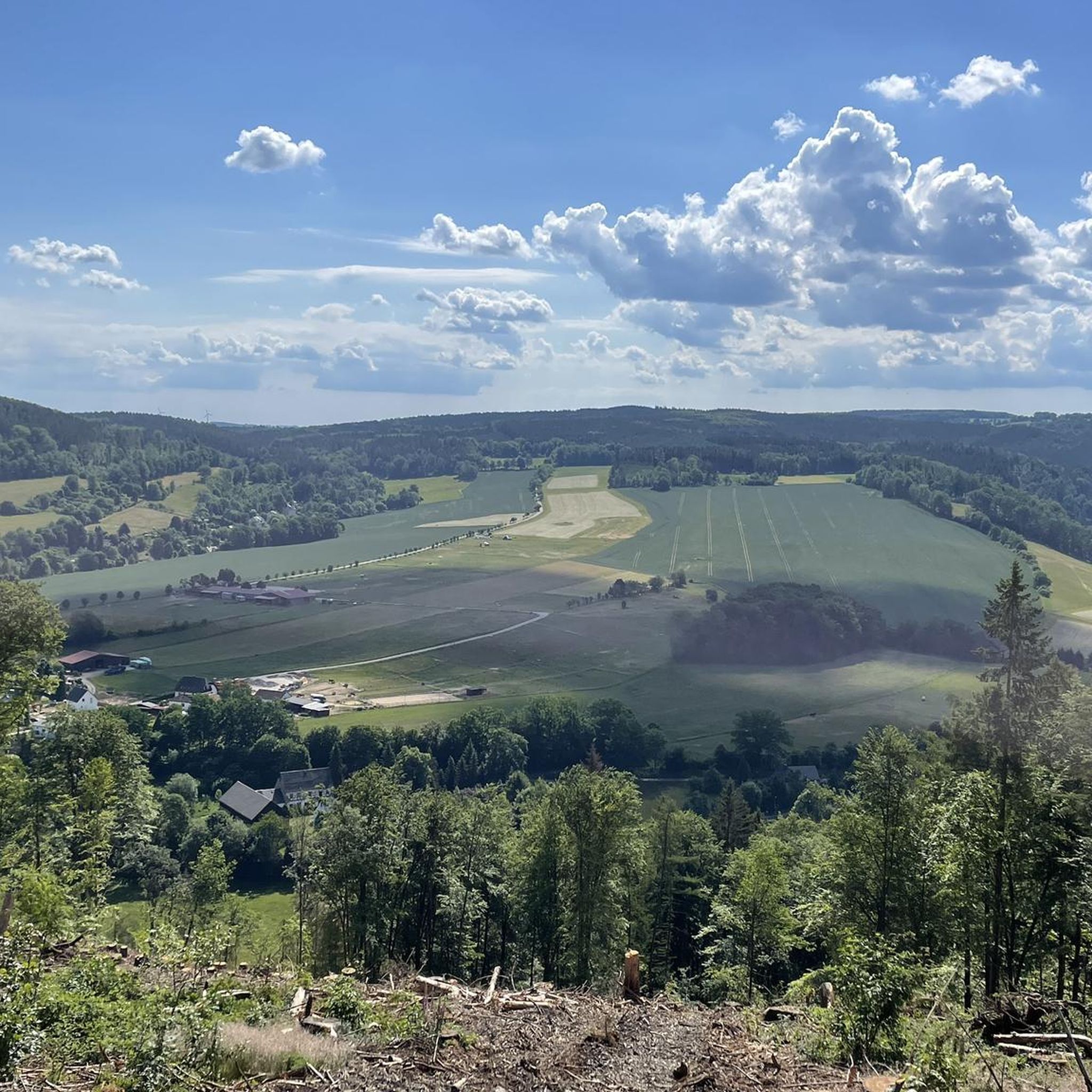
You have to climb a little, but you get a great view into the Swedish holes
0
1

Pfaffens Ruh is a small cave located above the Zschopau River on the left bank of the river on the hiking trail towards Witzschdorf. This small burrow, which once housed the wheel bearing of a winch, was named after the landowner who owned the property here: Pfaff. The winch pulled tree trunks up the slope for the blue dye factory. Today, a date and mining symbols can still be seen carved into the stone. But be careful, as you walk past, you can hear the sand trickling a little. Entering the cave is therefore not recommended. https://www.ins-erzgebirge.de/Pfaffens-Ruh#google_vignette
2
0


Really interesting! 👍🏻
0
1
what a beautiful landscape
0
2
Frequently Asked Questions
What kind of "caves" can I expect to find around Gornau?
The "caves" around Gornau are primarily historical mining tunnels and shafts, reflecting the region's extensive mining history within the Erzgebirgskreis (Ore Mountains district) in Saxony, Germany. Due to the geological composition, natural karst formations with stalactites and stalagmites are rare. Instead, you'll discover underground structures offering insights into historical mining practices and local legends.
Are there any natural caves with stalactites and stalagmites in the Gornau region?
No, the geological composition of the Erzgebirgskreis, predominantly slate, means that the region lacks the conditions necessary for the formation of natural dripstone caves with stalactites and stalagmites. The underground sites here are mainly historical mining tunnels and rock formations.
Which historical mining sites or "caves" can I visit near Gornau?
You can explore several historical sites. The Heilige Dreifaltigkeit Visitor Mine offers insights into medieval silver mining. The Upper Schwedenlöcher Limestone Caves are a historical site used for lime mining. Additionally, the Augusta Stolln is another historical mine mouth hole.
Are there any "caves" around Gornau associated with local legends or famous figures?
Yes, the region has sites steeped in history and folklore. The Karl May Cave, a former mine tunnel near Hohenstein-Ernstthal, gained fame as a hiding place for the renowned German author Karl May. The Stülpner Cave, a medieval mine tunnel in the Greifenstein region, is historically significant as a reported hiding place for Karl Stülpner, a local folk hero. The Leuchtmoos Cave at Totenstein is also known for local legends of Sorbian treasures.
Are there family-friendly "caves" or underground attractions near Gornau?
Yes, the Heilige Dreifaltigkeit Visitor Mine is listed as family-friendly and offers guided tours that teach about mining, geology, and traditions. The Kunnerstein, a natural monument with a spacious shelter, is also considered family-friendly and ideal for a rest during a hike.
What unique natural features can be found in the "caves" or rock formations near Gornau?
While natural karst formations are absent, the Leuchtmoos Cave at Totenstein is notable for its rare luminous moss, which, according to local legends, loses its shimmer upon touch. The Kunnerstein offers a wonderful view over the Zschopau valley from its position about 100 meters above the river.
What outdoor activities can I do near these "caves"?
The region around Gornau offers various outdoor activities. You can find numerous cycling routes, including easy and moderate options like the 'Viewpoint on the Cycle Path – View of Augustusburg loop' or the 'Golden Rooster Inn – View of the Ore Mountains loop'. For mountain biking, there are trails ranging from easy to difficult, such as the 'Weir on the Zschopau – Stülpner Fountain loop'. Hiking is also popular, with routes like the 'Heidberg Loop' or the 'Einsiedel Dam – View of the Einsiedel Reservoir loop'. You can find more details on cycling, MTB trails, and hiking around Gornau.
Are there hiking trails that lead to or near the "caves" around Gornau?
Yes, many of the "caves" and historical sites are integrated into hiking networks. For instance, the Kunnerstein is a popular resting place for hikers. You can explore various hiking routes around Gornau, such as the 'Heidberg Loop' or the 'Einsiedel Dam – View of the Einsiedel Reservoir loop', which may offer access to these sites. More hiking options are available on the hiking guide for Gornau.
What do visitors enjoy most about the "caves" and underground sites in the Gornau area?
Visitors appreciate the unique blend of history and nature. Many enjoy the insights into medieval mining practices offered by sites like the Heilige Dreifaltigkeit Visitor Mine. The historical significance of places like the Upper Schwedenlöcher Limestone Caves and the Vaulted Passages at Kaßberg, often explored through guided tours, is also highly valued. The scenic views from natural monuments like the Kunnerstein are also a highlight.
What is the best time to visit the "caves" and underground attractions near Gornau?
Many of the historical mining sites and visitor mines, such as the Heilige Dreifaltigkeit Visitor Mine, are accessible year-round, though it's always advisable to check specific opening hours. For sites that are part of hiking trails or offer outdoor viewing points like the Kunnerstein, spring through autumn generally offers the most pleasant weather for exploration.
Are there any "caves" or underground passages that require guided tours or advance booking?
Yes, for sites like the Heilige Dreifaltigkeit Visitor Mine, guided tours are typically offered to provide context and ensure safety. The Vaulted Passages at Kaßberg also strongly recommend guided tours for a more enriching historical experience. It's always best to check with the specific attraction for their current visitor information and booking requirements.
How accessible are the "caves" and historical mining sites around Gornau by public transport?
While Gornau itself has public transport connections, reaching specific, more remote "caves" or historical mining sites might require a combination of public transport and walking or cycling. For example, the Greifensteine region, home to the Stülpner Cave, can be accessed, but direct public transport to the cave entrance might be limited. Planning your route in advance using local transport schedules is recommended.
Most popular attractions around Gornau

Get inspired with the komoot mobile app


Explore more
Extend your search for the best caves by checking out these guides of the top ones around Gornau:
