Top 16 Castles around Obergurig
Best castles around Obergurig are found in the surrounding district of Bautzen, Saxony, Germany. This region, part of Upper Lusatia, offers a rich historical landscape with various architectural styles. Visitors can explore a range of historical sites, from medieval fortifications to elegant baroque palaces. The area's castles provide insight into regional history and cultural heritage.
Best castles around Obergurig
- The most popular castles is Ortenburg Castle, a medieval castle located in Bautzen's old town. It sits on a rocky…
Last updated: May 15, 2026
View of Bautzen's Old Town from Friedensbrücke
Highlight • Viewpoint
Translated by Google •
Tip by

Ortenburg Castle
Highlight • Castle
Translated by Google •
Tip by

Sign up now to discover places like this
Get recommendations on the best single tracks, peaks, & plenty of other exciting outdoor places.
Sign up for free
Matthias Tower (Matthiasturm), Ortenburg Castle, Bautzen
Highlight • Historical Site
Translated by Google •
Tip by

Körse Castle Ruins
Highlight • Castle
Translated by Google •
Tip by

St. Benno
Highlight • Castle
It was the country residence of Charlotte Countess von Kielmannsegge (1777-1863), Napoleon's spy by profession.
Her enthusiasm for Napoleon dates back to …
Translated by Google •
Tip by
Sign up for free to discover even more castles around Obergurig.
Sign up for free
Already have an account?
Start today with a free account
Your next adventure awaits.
Login or Signup
Tips from the Community

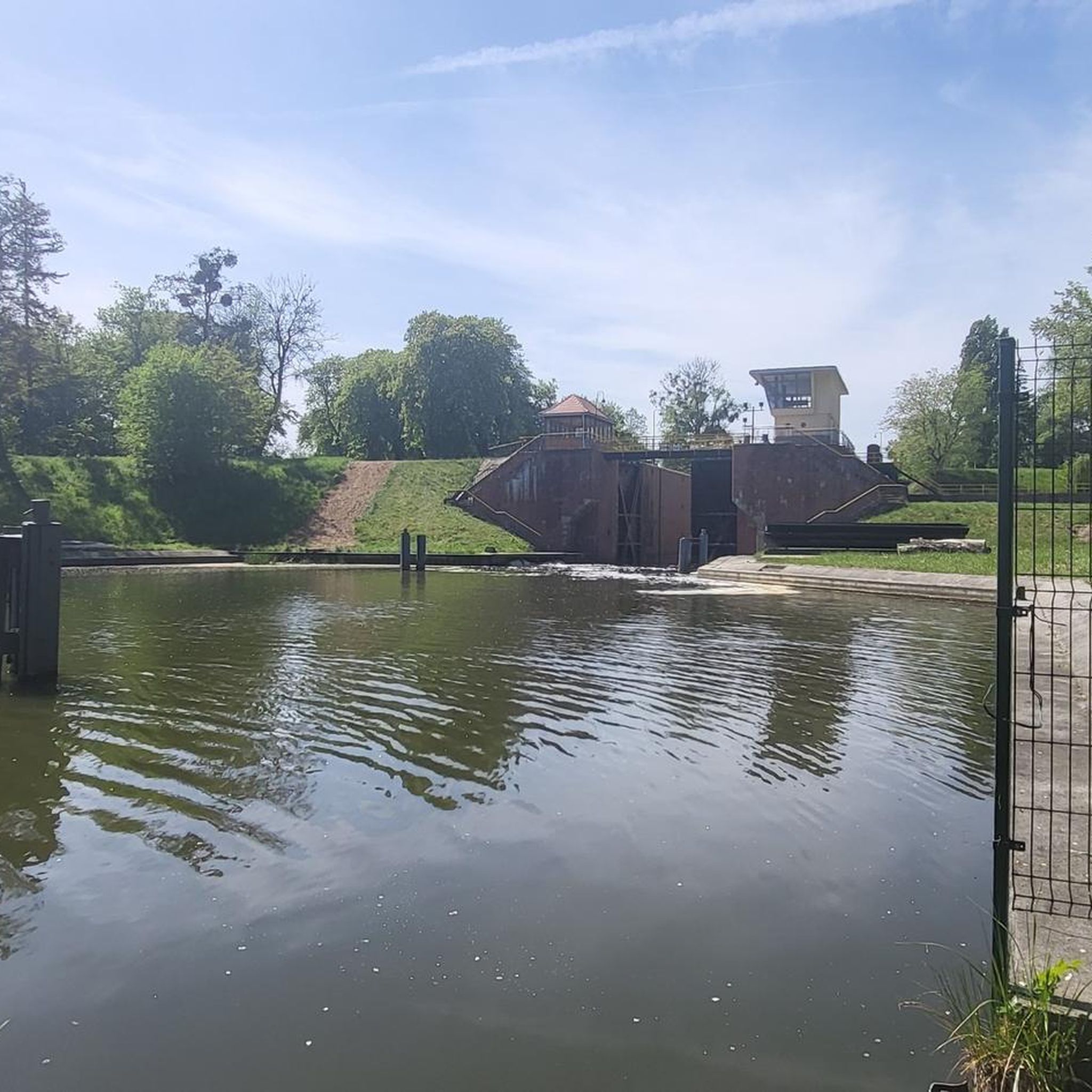
Bautzen boasts several important fountains, including the Ritter-Dutschmann Fountain on the main market square, the historic New Waterworks in the city fortifications, the Nymph and Unicorn drinking fountain on Reichenstraße, and the Elector Johann Georg Fountain. There's also the historic Gesundbrunnen fountain, whose spring was once considered to have healing properties. These fountains are part of the city's sights and history.
1
0

The former entrance to Ortenburg
3
0

A very beautiful tower.
1
0

The chapel, consecrated in 1225 by Meissen Bishop Bruno II in the castle tower, was redesigned in the 15th century. Destroyed as St. George's Chapel during the Thirty Years' War, it was never restored. The monument on the tower, created in 1486 by a South German master, depicts the Hungarian King Matthias Corvinus (1443 to 1490). Matthias was Bohemian anti-king and ruler of the Bohemian crown lands, including Lusatia, from 1469 to 1490. The coats of arms in the monument to the right of King Matthias are, from top to bottom, the coat of arms of Galicia, that of the Hunyadi and Luxembourg, and to the left the coats of arms of Styria, Austria, Silesia, and Lusatia. Two four-part alliance coats of arms above the king show on the right that of Hungary and Dalmatia and on the left that of Bohemia and Moravia. Four copies of the monument are known: three in Budapest and Szeged (Hungary) and one in Král'ova Lehota (Slovakia). Source:https://www.bautzen.de/tourismus-kultur-freizeit/sehen-erleben/rundgaenge-fuehrungen/geschichtspfad
1
0

It's worth a detour if you're passing by here anyway.
1
0

...to the old water art with the remains of the city wall, to the Mühlbastei, Ortenburg and Michaeliskirche, to the water tower and to the St. Petri Cathedral.
6
1

Ruins of a hilltop castle at 275 m above sea level. NN on a granite cone surrounded by the Spree. The name Körse refers to the Sorbian origin. From the 10th century onwards, the rocky spur was used to build a fortification, a redoubt, as the Sorbian settlement area was extended to the region of today's Kirschau. The purpose of the rampart was to protect the settlement area from unexpected attacks. Occupied and destroyed around 1100, a stone German fortification was built on the same site between 1200 and 1250 At that time, the castle was the largest and strongest defensive structure in Upper Lusatia. Their task was to protect the Bohemian Trail, one of the oldest traffic connections between Upper Lusatia and Bohemia (known there as Alte Prager Straße). It led from Bautzen via Obergurig, Kirschau, Schirgiswalde and Sohland to Sderchluckenau (Šluknov), Bohemian Leipa (Česká Lípa) and Prague. In addition, a salt road crossed nearby, which also had to be guarded. Later, however, the lords of the castle were accused of robbery, so that in 1352 the castle was stormed and destroyed by troops from the League of Six Towns. An information board in the remains of today's complex claims that the lords of the castle were declared enemies more because of their opposition to the Bohemian king and the League of Six Towns. In 1359 the castle was again destroyed and razed. There was no reconstruction. Source: Wikipedia
1
0
Built between 1483 and 1486 on the basis of the Matthiastor in the late Gothic style. Named after the Hungarian King Matthias Corvinus, who owned the castle as lord of Upper Lusatia from 1469 to 1490. On the city side of the tower, since 1486, there has been a monumental sandstone relief by Briccius Gauske, depicting King Matthias. Source: Wikipedia
1
1
Frequently Asked Questions
What types of castles can I explore around Obergurig?
The area around Obergurig offers a diverse range of historical sites, including medieval fortifications like Ortenburg Castle in Bautzen, elegant baroque palaces such as Rammenau Baroque Palace, and atmospheric castle ruins like Körse Castle Ruins. You can also find historical country residences like St. Benno.
Are there family-friendly castles to visit near Obergurig?
Yes, several castles and historical sites in the area are suitable for families. Ortenburg Castle and St. Benno are both listed as family-friendly. Exploring castle ruins like Körse Castle Ruins can also be an engaging experience for children, offering a glimpse into ancient fortifications.
Which castles near Obergurig offer significant historical insights?
Many castles provide deep historical context. Ortenburg Castle is considered the starting point for Bautzen's development, with its history dating back to the 10th century. Körse Castle Ruins was once the largest defensive structure in Upper Lusatia, protecting important trade routes. Milkel Castle has a rich history with various noble families and impressive interior stucco work, while Gröditz Castle boasts a long chronicle of owners significant in Saxon history.
Are there any castle ruins to explore around Obergurig?
Yes, Körse Castle Ruins are a notable example. These remains of a hilltop castle offer information about its past as a significant defensive structure in Upper Lusatia. The site is open throughout the year, allowing visitors to explore its ancient fortifications and learn about its role in regional history.
What outdoor activities can I do near these castles?
The region around Obergurig offers various outdoor activities. You can find numerous cycling routes, including easy to difficult options for touring and gravel biking. There are also easy hiking trails available. For example, you can explore routes like the 'Swimming beach at Bautzen Reservoir' for cycling or the 'Al Janko Mill – Fuchsweg Trail' for hiking. More details can be found in the Cycling around Obergurig, Gravel biking around Obergurig, and Easy hikes around Obergurig guides.
Are there hiking trails around the castles near Obergurig?
Yes, you can combine castle visits with hiking. While not directly adjacent to every castle, the region offers easy hiking trails that can be accessed from areas near some castles. For instance, you can find routes like the 'Al Janko Mill – Fuchsweg Trail' or 'View of Bautzen – Creative Garden in Singwitz loop' in the vicinity. Check the Easy hikes around Obergurig guide for more options.
Are any castles near Obergurig accessible for visitors with limited mobility?
Ortenburg Castle in Bautzen is listed as wheelchair accessible, making it a good option for visitors with limited mobility. Additionally, the View of Bautzen's Old Town from Friedensbrücke, which offers a great perspective of Ortenburg, is also wheelchair accessible.
What do visitors particularly enjoy about the castles around Obergurig?
Visitors appreciate the rich history and architectural beauty of the castles. Highlights like Ortenburg Castle are valued for their historical significance as the starting point of Bautzen. The unique story of St. Benno, once home to Napoleon's alleged spy, also captivates visitors. The scenic views, especially from places like the Friedensbrücke overlooking Bautzen's old town and Ortenburg, are also highly praised.
Are there options for accommodation near the castles?
While specific castle accommodations are rare, Gröditz Castle offers a unique option with the pilgrim hostel Refugio Santa Martha located within its park. This hostel provides amenities like showers, toilets, a washing machine, a fireplace, and Wi-Fi, inviting visitors to linger in its generous space. For other castles, nearby towns like Bautzen offer various accommodation choices.
Which castles offer unique historical stories or connections?
St. Benno stands out as the former country residence of Charlotte Countess von Kielmannsegge, known for her connections to Napoleon and her alleged role as a spy. Milkel Castle is also notable for its rich history, having been home to various noble families over centuries, and is believed to have served as a pilot project for the more famous Moritzburg Castle.
Can I visit castles near Obergurig during winter?
Some sites, like Körse Castle Ruins, are open throughout the year, making them accessible even in winter. While specific winter opening hours for all castles are not provided, many outdoor castle grounds and parks, such as Seifersdorf Park, can generally be enjoyed year-round, weather permitting.
Are there castles near Obergurig with parks or natural settings?
Yes, several castles are set within beautiful parks or natural surroundings. Seifersdorf Castle is known for its picturesque park, which is open year-round. Gröditz Castle is situated within a manor complex that includes a charming park and a 1,200-year-old Sorbian rampart. Rammenau Baroque Palace also features an elegant park and surrounding ponds, creating a harmonious natural ensemble.
Are there any hidden gem castles near Obergurig worth discovering?
While the main highlights are well-known, Milkel Castle could be considered a hidden gem. It boasts a rich history with various noble families and impressive interior features like cell vaults and Rococo stucco work. Its connection as a potential pilot project for Moritzburg Castle also adds to its unique appeal, offering a deeper dive into regional architectural history beyond the more prominent sites.
Most popular routes around Obergurig
Most popular attractions around Obergurig

Get inspired with the komoot mobile app


Explore more
Looking for the best castles somewhere else? Discover other guides around Obergurig:
