Top 15 Caves around Altissimo
Best caves around Altissimo are found within a region characterized by diverse natural landscapes and historical significance. The area features intricate karst systems, historical sites, and natural formations, offering a range of outdoor experiences. Visitors can explore various cave types, from extensive underground networks to smaller, accessible grottoes. This region provides opportunities to discover geological wonders and historical remnants within its natural settings.
Best caves around Altissimo
- The most popular caves is Buso della Rana Cave, a cave system…
Last updated: June 29, 2026
Papalini Waterfall
Highlight • Waterfall
Translated by Google •
Tip by

Buso della Rana Cave
Highlight • Cave
Translated by Google •
Tip by

Sign up now to discover places like this
Get recommendations on the best single tracks, peaks, & plenty of other exciting outdoor places.
Sign up for free
Buso delle Anguane Cave
Highlight • Cave
Translated by Google •
Tip by
Sentinello Trail (WWI)
Highlight (Segment) • Trail
Translated by Google •
Tip by


Sign up for free to discover even more caves around Altissimo.
Sign up for free
Already have an account?
Start today with a free account
Your next adventure awaits.
Login or Signup

Tips from the Community

The Buso della Rana is the largest cave in the Veneto region and one of the most extensive in Italy, with a network of caves stretching almost 30 km in total (40 km including the Pissatèla complex above, to which it is connected). Located beneath the Faedo-Casaròn Plateau, it is an intricate karst system that collects and channels the plateau's waters into the Rio Rana, which flows at the entrance. It was formed when rainwater seeps into the permeable limestone surface layer and, encountering the underlying impermeable basalt (volcanic rock), flows laterally, eroding the rock. Over millions of years, this has created a complex labyrinth of horizontal tunnels, chambers, chimneys, siphons, and small lakes traversed by underground streams. Because it drains the plateau's waters, the cave is subject to flash floods, making exploration treacherous. Inside, the temperature remains constant between 10 and 12°C year-round. It is freely accessible through the monumental entrance and by proceeding along the Main Branch for about fifty meters, until reaching the first flooded corridor or Siphon, a horizontal constriction that requires crawling. From there, it is the preserve of speleologists or exciting and adventurous guided tours organized by associations like Biosphera (see link). The internal branches are not marked, and one must know the way. The name of the cave has nothing to do with the amphibian, but is an Italianized term from the Cimbrian word "roan," meaning "rocky wall," referring to the cliff at the entrance. https://www.busodellarana.it https://esplora.biosphaera.it/luoghi/buso-della-rana/
0
0
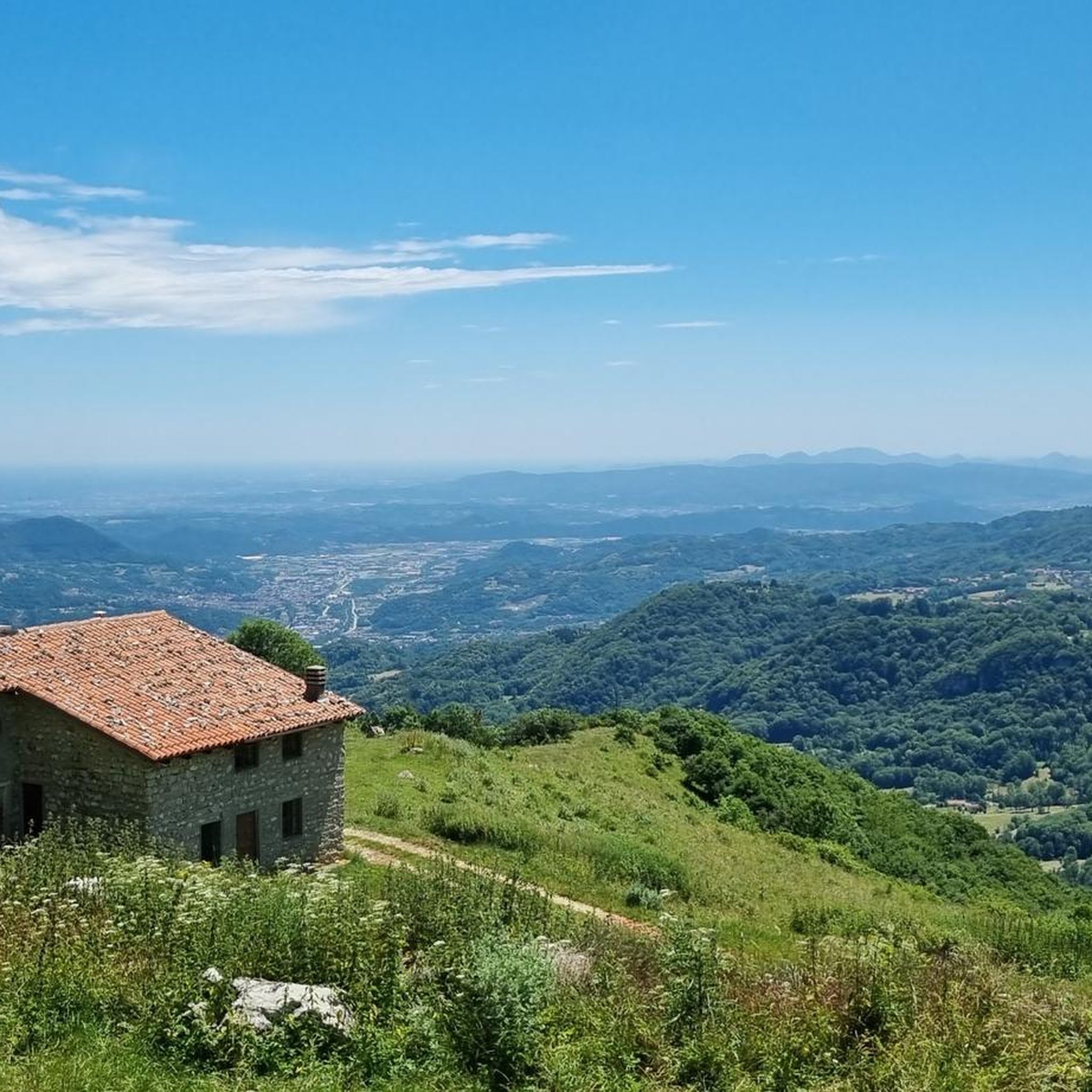
The Buso delle Anguane is a fascinating cave in the rock with a natural balcony overlooking the Chiampo Valley: a place of mystery and legends, in ancient folk tales it was the home of the anguane, evil creatures that attracted men with their comely appearance. https://it.wikipedia.org/wiki/Anguana The path to reach the cave is quite impervious and challenging, not very visible and not signposted along the asphalt road.
0
0
The Cascata dei Papalini suddenly appears in a small clearing in the heart of the forest, along the path: over time the falling water has formed a columnar deposit of gray limestone that descends like a drape and that partly acts as a springboard for the jet. But the peculiarity and spectacular nature of this waterfall is the possibility of seeing it even from behind the scenes: in fact, by climbing to the left on a short but steep path, you reach a natural roof of the rock from which you can observe the forest below through the curtain of water, without getting wet! The passage is not protected and is wet, so you need to pay particular attention. Like all torrential waterfalls, it is not always full and active: you need to look for the right period, perhaps after heavy rains, to visit it in all its thunderous splendor.
1
0

Point quite easy to reach unless it has rained recently, in which case I would advise caution. Very suggestive view from inside the "Buso"
0
0

Beautiful waterfall, it looks like a face with one eye, a big nose and teeth😊
1
0

This path runs along a long and steep edge of the Civillina, but the climb is greatly eased by a large number of hairpin bends (42) and therefore is never difficult or too tiring. It is called the Sentinello because it is nothing more than a mule track that connected all the firing positions of the Great War along its entire length.
0
0

The Papalini waterfall is a small waterfall in the middle of the woods, it deserves to be seen
0
0

beautiful waterfall of the Rana stream
0
0
Frequently Asked Questions
What types of 'caves' can I explore around Altissimo?
The Altissimo region offers a unique blend of natural karst caves and historically significant marble quarries. You can explore extensive natural cave systems like Buso della Rana Cave, smaller grottoes such as Buso delle Anguane Cave, and karst cavities like Lucio's Hole. Additionally, the famous marble quarries of Monte Altissimo, renowned for their historical importance and dramatic landscapes, are often referred to as 'caves' due to their deep excavations.
What is the historical significance of the Altissimo marble quarries?
The marble quarries on Monte Altissimo hold immense historical importance, particularly due to Michelangelo Buonarroti's involvement in the 16th century. He personally identified and utilized the high-quality Statuario marble from these mountains for his sculptures, even designing a road for its transport. This cemented Monte Altissimo's place in art history as a source of some of the world's most iconic marble.
Are there any natural caves suitable for exploration in the Altissimo region?
Yes, the region features several natural caves. Buso della Rana Cave is one of the largest cave systems in the Veneto region, known for its extensive network of tunnels. Buso delle Anguane Cave is a smaller, open-sided cave offering impressive views, while Lucio's Hole is a karst cavity famous for its 'dragon's breath' phenomenon.
What unique geological features can be observed in the caves and quarries?
The natural caves are part of intricate karst systems, featuring horizontal tunnels, chambers, and underground streams. Lucio's Hole is notable for the audible rustle of air masses, a 'dragon's breath' effect. The marble quarries showcase dramatic white rock faces carved into the mountainside, revealing high-quality marbles like the pure white Statuario and various ornamental Arabesque types.
What is the difficulty level for exploring caves around Altissimo?
The difficulty varies. Buso della Rana Cave is considered challenging, with parts requiring crawling and being subject to flash floods, making it often the preserve of speleologists or guided tours. Access to Buso delle Anguane Cave involves quite challenging and impervious steps. Many marble quarries offer tours that are generally accessible, but the terrain around them can be rugged.
Can I take a guided tour of the caves or marble quarries?
Yes, guided tours are available for certain sites. For Buso della Rana Cave, adventurous guided tours are organized by associations like Biosphera due to its complex nature. The Monte Altissimo marble quarries also often offer tours, providing insight into both ancient and modern marble extraction methods.
What is the best time of year to visit the caves in Altissimo?
The internal temperature of natural caves like Buso della Rana Cave remains constant between 10 and 12°C year-round, making them accessible in various seasons. For Lucio's Hole, the 'dragon's breath' phenomenon is particularly audible in summer. Visiting the marble quarries is generally pleasant during spring, summer, and early autumn, when the weather is milder for exploring the outdoor sites.
Are there historical cave shelters or military installations to explore?
Yes, the region has historical sites related to past conflicts. The Sentinello Trail (WWI), for instance, features numerous military artifacts dug into the rock, including observatories, artillery emplacements, and cave shelters that were part of the Italian defensive line during the Great War.
What other outdoor activities can I do near the caves in Altissimo?
The Altissimo region offers a variety of outdoor activities. You can find numerous hiking trails, including the moderate Bolca Fossil Trail or the challenging Cima Marana Summit Cross loop. There are also extensive MTB trails, such as the difficult Scenic Trail – Monte Campetto loop, and challenging running routes like the View of the Plain loop.
What do visitors enjoy most about the caves and quarries in Altissimo?
Visitors frequently appreciate the unique scenery, describing the marble quarries as a dramatic, almost lunar landscape. The historical significance, particularly Michelangelo's connection, is a major draw for art and history enthusiasts. For natural caves, the extensive networks and phenomena like the 'dragon's breath' at Lucio's Hole are often highlighted as fascinating experiences.
Are the caves around Altissimo family-friendly?
While some natural caves like Buso della Rana Cave can be challenging and are best explored with guided tours for older, more adventurous families, other sites might be more accessible. The marble quarries often have visitor centers and tours that can be engaging for families interested in history and geology. Always check specific access requirements and difficulty levels for each site.
What should I wear when visiting the caves or quarries?
When visiting natural caves, wear sturdy, closed-toe shoes with good grip, as surfaces can be uneven and wet. Layers of clothing are recommended, as cave temperatures are consistently cool (around 10-12°C) even in summer. For the marble quarries, comfortable walking shoes are essential, and sun protection is advisable due to the reflective white surfaces. If taking a guided tour, specific safety gear might be provided or required.
Most popular routes around Altissimo
Most popular attractions around Altissimo

Get inspired with the komoot mobile app


Explore more
Extend your search for the best caves by checking out these guides of the top ones around Altissimo:
