Top 9 Castles around Pitigliano
Best castles around Pitigliano are found within a captivating town perched on a tuff rock in Tuscany. This area is known for its unique blend of natural and man-made fortifications, with structures appearing to grow directly out of the volcanic tuff. Pitigliano's rich history, shaped by Etruscan, Aldobrandeschi, and Orsini families, is evident in its ancient defensive walls and prominent historical buildings. Exploring these sites offers insight into centuries of strategic importance and architectural evolution.
Best castles around Pitigliano
- The…
Last updated: October 3, 2026
Sorano
Highlight • Settlement
Translated by Google •
Tip by

Historic Route Through Sovana Old Town: From Rocca Aldobrandesca to Sovana Cathedral
Highlight (Segment) • Historical Site
Translated by Google •
Tip by

Sign up now to discover places like this
Get recommendations on the best single tracks, peaks, & plenty of other exciting outdoor places.
Orsini Fortress of Sorano
Highlight • Castle
Translated by Google •
Tip by
Vitozza
Highlight • Historical Site
Translated by Google •
Tip by

Caves and Ancient City of Vitozza
Highlight • Historical Site
Translated by Google •
Tip by

Sign up for free to discover even more castles around Pitigliano.
Already have an account?



Tips from the Community

With its imposing mass, the Orsini Fortress dominates the medieval village of Sorano and represents one of the greatest examples of medieval architecture of the Renaissance. Built by the Aldobrandeschi in the 13th century, it was later expanded and renovated by the Orsini, according to the needs imposed by the advent of firearms. The aim was to make Sorano a powerful military bulwark in the centuries-old dispute between this turbulent family and the Republic of Siena. The oldest structures, identifiable with the surviving portions of the Rocca degli Aldobrandeschi, are located in the northern area of the fortification. The complex must have been divided into two main alignments that delimited an open space facing the town below (now Piazza Cairoli) to the east and south. In the mid-16th century, other structural interventions completely modified the original layout of the ancient keep, which was adapted to the use of a count's residence. Today some of these rooms house the Civic Archaeological Museum which preserves finds from the territory of Sorano, Sovana and Castell’Ottieri. The entrance to the keep was protected by a drawbridge, now disappeared, and by a deep moat which delimited, descending into the valley, also the two gates of access to the village. The large square in front, supported on two sides by walls, was the nodal point of all the daily activities of the garrison. The sixteenth-century complex consists of a central keep where the headquarters was located and which housed the armory, the gunpowder and saltpetre warehouse, the foundry and the prisons. At the base of the building was located the guardhouse to control the main entrance to the Fortress. Above the portal stands the coat of arms with the rampant lions of the Aldobrandeschi, the rosette and the bars of the Orsini, surmounted by the crest on which rests the heraldic bear. The Mastio is connected to the two corner bastions, also decorated with a coat of arms and by embankments that delimit a second moat that was filled in during the Lorraine period. The various buildings, which make up the Renaissance complex, are connected to each other by a series of underground walkways that allowed the rapid movement of troops along the entire perimeter of the walls. The paths are dug on multiple levels and are equipped with "wolf mouth" slits suitable for defense with arquebuses and culverins. The two bastions also constituted the main deposits for food and water reserves and were used as milling rooms for the processing of grain and gunpowder. The water supply was via a system of canals connected by some cisterns dug into the tuff. In the second half of the 16th century, the political situation of the County changed radically when it became part of the Grand Duchy of Tuscany. From this moment on, the large military complex, which had withstood many battles, lost its strategic function and was gradually abandoned. Today, thanks to numerous restoration interventions, it is possible to visit the entire bastion complex of the Fortress by going to the Museum located in the fourteenth-century part.
0
0

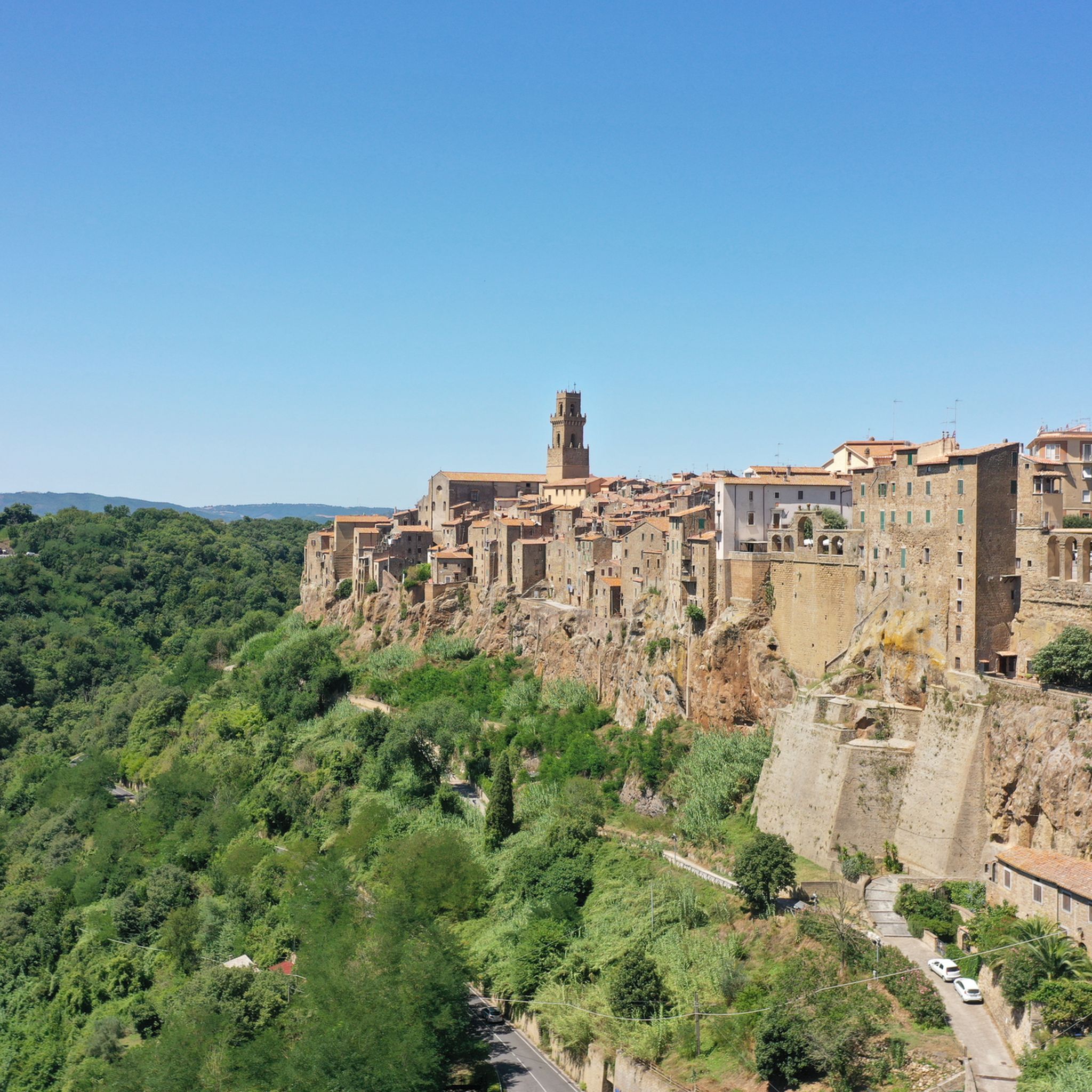
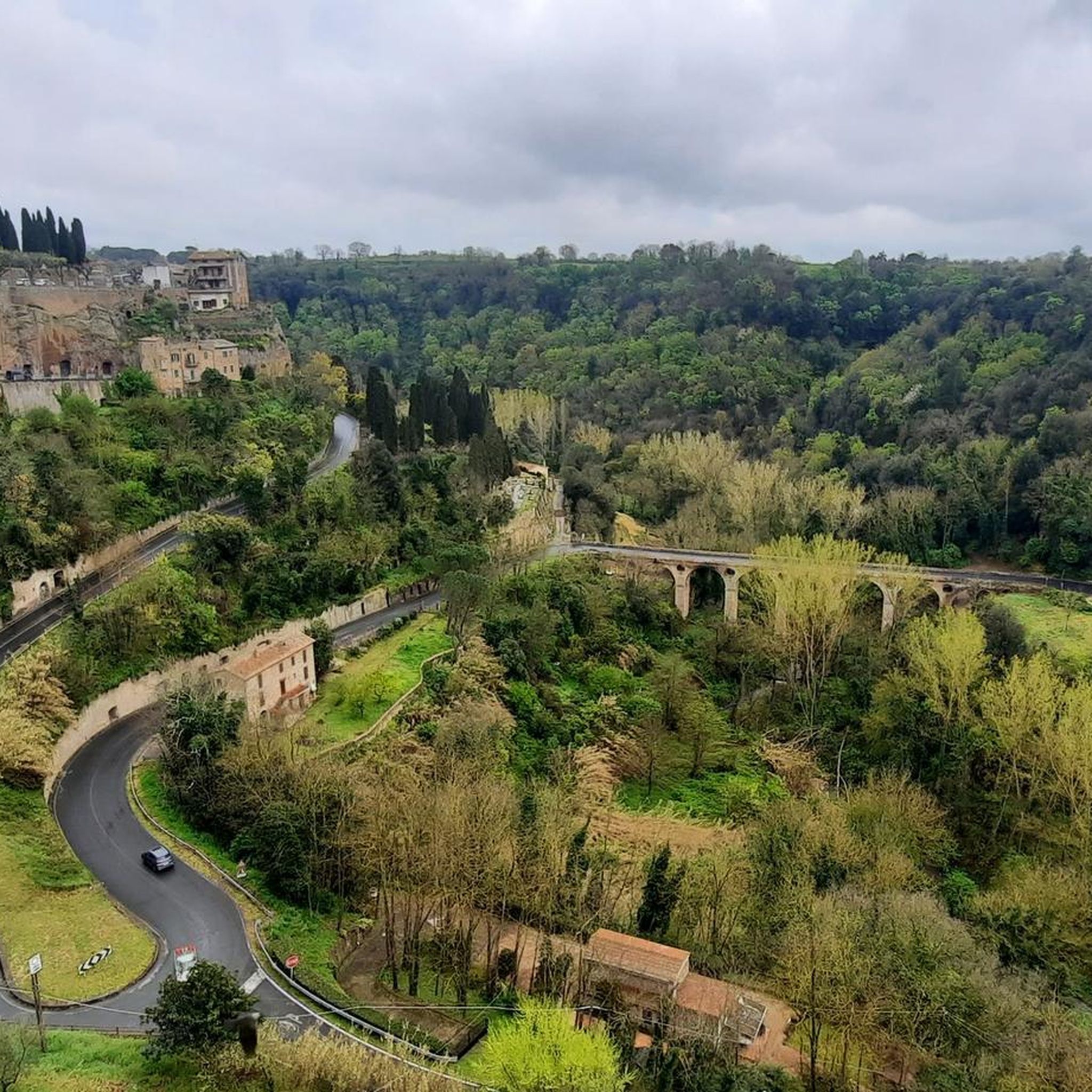
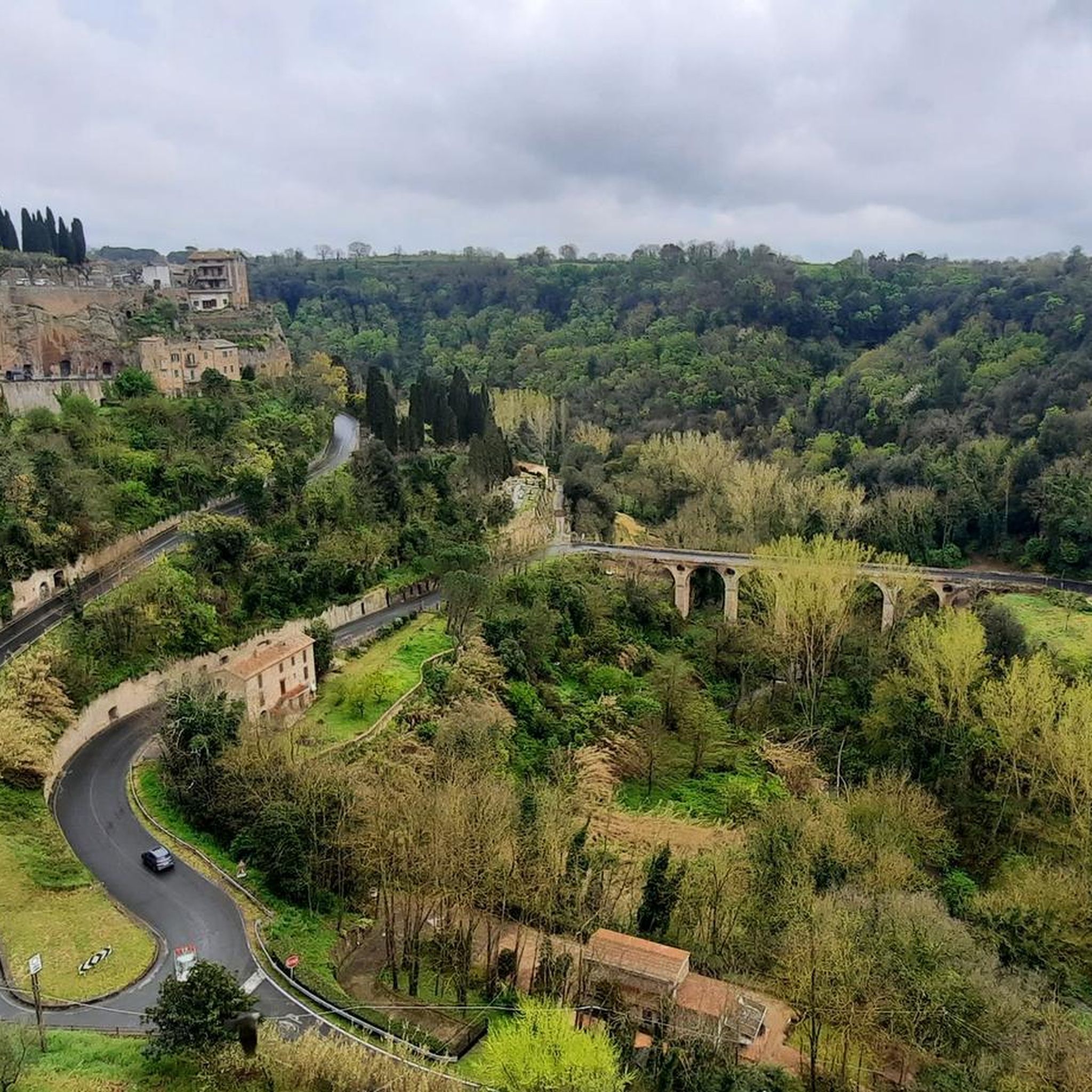
Sorano is a small medieval town built on tuff rocks in the province of Grosseto/Tuscany.
1
0

Along the Vie Cave of Vitozza we can admire the caves that have been divided into three types: mixed-use caves (as a dwelling and stable); stables (recognizable by the presence of mangers, troughs and fences); caves for residential use (present especially on the south-west side, more sheltered and better exposed to the sun). The latter are characterized by jars for grain, wells for collecting water and chimneys. The first evidence dates back to the 11th century, when numerous castles were built throughout the area. At that time Vitozza must have been part of a large fiefdom that included 15 castles among which we remember Sorano, Pitigliano, Farnese, Mezzano, etc. (Guiniccesca land). The fiefdom must have had considerable strategic importance since thanks to the fortifications it was possible to control the natural access routes to the sea.
0
0

The area of Vitozza, near San Quirico, is one of the most important medieval rock settlements in Italy that developed on a tuff spur above the Lente valley. The settlement, already existing in the 12th century, was definitively abandoned around the 15th century due to wars and depredations. Traveling along the main dirt road you can admire the remains of fortifications, churches and also numerous caves (more than two hundred) that were used as stables, homes and places of work.
1
0

Sorano is located in a suggestive mountainous region immersed in the richness of forests. The medieval village clings to a steep tuff rock called Masso Leopoldino, which dominates the valley of the Lente stream. The tower houses, the winding streets, the open spaces, the alleys and tunnels that intertwine in the heart of the rock give the neighborhood a unique charm. The panorama from the terrace on the top of the cliff offers exceptional views of Sorano, the volcanic gorges and the Lente valley. Over the centuries, Sorano has been the scene of disputes, sieges and wars, earning it the curious nickname of "Italy's match".
3
0
Vitozza, a significant rock settlement in the municipality of Sorano, has medieval roots, presumably at the end of the 11th century, around the castle built by the Aldobrandeschi. This castle structure is located in a rock settlement which probably saw settlements already in the Etruscan-Roman era. Over the centuries, Vitozza has passed through various dominations, including Orvieto, the Basques, the Aldobrandeschi, Siena and the Orsini. Despite its historical importance, the settlement suffered a slow decline and progressive abandonment, with the population moving to San Quirico in the sixteenth century. However, the Vitozza caves remained inhabited until the eighteenth century, as documented by the 1783 census conducted by the Lorena family. The history of Vitozza is today told through descriptive panels at the entrances to the caves, highlighting the people and families who lived there centuries ago.
2
0
Frequently Asked Questions
What is the main historical castle to visit within Pitigliano itself?
Within Pitigliano, the most significant historical castle is the Palazzo Orsini. Originally a convent, it became the residence of the Aldobrandeschi and later the powerful Orsini family. Today, it houses the Diocesan Museum of Sacred Art and an Archaeological Museum, offering a deep dive into the town's history and art. The town itself is also heavily fortified with ancient walls.
Are there other notable castles or fortified settlements near Pitigliano?
Yes, several other impressive sites are nearby. You can explore Sorano, known as 'the Matera of Tuscany,' featuring its majestic Orsini fortress. Another significant site is Vitozza, a medieval rock settlement with numerous caves and a castle built by the Aldobrandeschi.
What kind of historical artifacts or art can I see at Palazzo Orsini?
Palazzo Orsini houses the Diocesan Museum of Sacred Art, which displays wooden sculptures, engravings, paintings from the 14th to 19th centuries, and a fine collection of sacred art including chalices, silver, and enamel crosses. Additionally, an Archaeological Museum within the palace contains finds from local Etruscan sites, providing insight into Pitigliano's ancient past.
Are there family-friendly castles or activities around Pitigliano?
Many of the historical sites, including the fortified towns and rock settlements, can be explored by families. Places like Sorano and Vitozza offer unique environments with winding streets, caves, and historical structures that can be engaging for children. The museums within Palazzo Orsini also provide educational experiences.
What outdoor activities can I do near these castles?
The area around Pitigliano is excellent for outdoor activities. You can find numerous routes for hiking, gravel biking, and road cycling. For example, there are several hiking routes like the 'Historic center of Pitigliano — Ring tour' or the 'Edicola di San Giuseppe – View of Pitigliano loop'. You can find more details on these activities in the hiking guide, gravel biking guide, and road cycling guide for Pitigliano.
Are there specific walking routes that connect historical sites or castles?
Yes, the 'Historic Route Through Sovana Old Town' is a notable walking route that connects the ruins of Rocca Aldobrandesca with Sovana Cathedral, passing through the historic Piazza del Pretorio. This route offers a pleasant exploration of Sovana's medieval center.
What is the best time of year to visit the castles around Pitigliano?
The region generally enjoys pleasant weather for exploration from spring through early autumn. Visiting during these seasons allows for comfortable walking and sightseeing. While winter walks are possible, some facilities or routes might have reduced hours or accessibility.
What makes the Orsini Fortress of Sorano unique?
The Orsini Fortress of Sorano is an impressive example of military architecture from the Renaissance. It was built by the Aldobrandeschi and later expanded by the Orsini family, featuring a central keep, bastions, and a network of underground walkways. It was designed to be an unconquered stronghold and now houses a museum.
Can I find viewpoints near the castles for scenic photography?
Yes, the natural setting of Pitigliano and its surrounding fortified towns provides many scenic viewpoints. From the cliff-top location of Sorano, you can get exceptional views of the volcanic gorges and the Lente valley. Pitigliano itself, perched on a tuff rock, offers picturesque views from various angles, especially from the surrounding countryside.
What are the general fortifications of Pitigliano like?
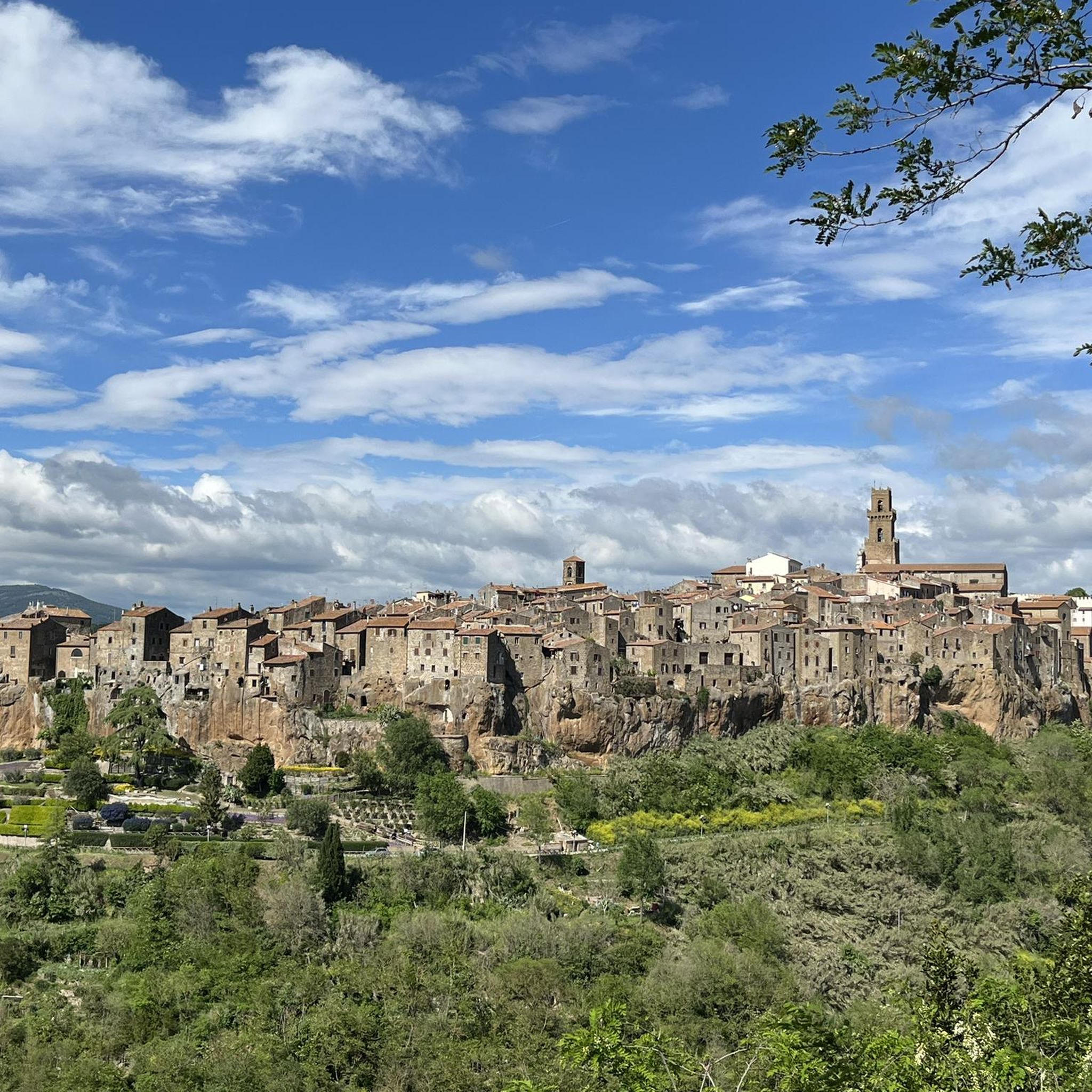
Pitigliano is a naturally and man-made fortified town. Its houses appear to grow directly out of the yellowish-red volcanic tuff rock. The town's defensive walls were initially built by the Etruscans, with later additions by the Aldobrandeschi and Orsini families, including historic gates and fortress bastions. These layers of fortification contribute to its unique and picturesque appearance.
Where can I find more information about the museums within Palazzo Orsini?
For more detailed information on the Diocesan Museum of Sacred Art and the Archaeological Museum within Palazzo Orsini, you can visit the official tourism sites. For example, Visit Tuscany provides details on the Orsini Palace Museum.
Most popular attractions around Pitigliano

Get inspired with the komoot mobile app


Explore more
Looking for the best castles somewhere else? Discover other guides around Pitigliano:
