Top 11 Natural Monuments around Steeple Langford
Best natural monuments around Steeple Langford include ancient historical sites and significant natural landscapes. The area features a diverse range of natural monuments, from prehistoric stone circles to Bronze Age burial mounds. These sites offer insights into ancient history and provide opportunities for exploration within a unique natural setting. The landscape around Steeple Langford is characterized by its historical significance and geological formations.
Best natural monuments around Steeple Langford
- The most popular natural monuments is Stonehenge, a historical site…
Last updated: July 14, 2026
Stonehenge
Highlight • Historical Site
Tip by

Sarsen Stone at Stonehenge Visitor Centre
Highlight • Monument
Translated by Google •
Tip by

Sign up now to discover places like this
Get recommendations on the best single tracks, peaks, & plenty of other exciting outdoor places.
Sign up for free
Cursus Barrows
Highlight • Natural Monument
Translated by Google •
Tip by
The Stonehenge Cursus
Highlight • Natural Monument
Tip by

King Barrow Ridge Bronze Age Burial Mounds
Highlight • Viewpoint
Tip by
Sign up for free to discover even more natural monuments around Steeple Langford.
Sign up for free
Already have an account?
Start today with a free account
Your next adventure awaits.
Login or Signup


Tips from the Community

Why exactly there? Archaeologists suspect several reasons: Line of sight From the mounds, there is a direct view of Stonehenge. Sacred landscape The entire plain was a ritual area with paths, graves, and ceremonial sites. Status symbol Important people were buried near the famous sanctuary. Interesting fact There are over 300 burial mounds in the vicinity of Stonehenge – one of the largest prehistoric burial landscapes in Europe.
0
0
Here is a simple overview map explaining the landscape south of Stonehenge and why the burial mounds are located there. Landscape south of Stonehenge The most important range of mounds is called Normanton Down Barrows. It lies about 1 km south of Stonehenge. There are over 40 burial mounds there, dating from 2600–1600 BC. The mounds are situated on a long ridge that faces directly towards Stonehenge. Simplified diagram of the location North ↑ Stonehenge ○ | | approx. 1 km | ───────────────── Hill ridge with many burial mounds (Normanton Down) ○ ○ ○ ○ ○ ○ ○ ○ ○ ○ ↓ South Important hills there One particularly famous burial mound is Bush Barrow A richly furnished grave of a Bronze Age prince, containing gold objects and weapons, was found there.
0
0

It's unbelievable what people have achieved and built in the past (without any technology) - it's simply impressive and breathtaking
2
0


Around 2 miles (3 km) long and 330 feet (100 m) wide, the Stonehenge Cursus is an earthwork, thought to have been constructed between 3630 and 3375 BC, predating Stonehenge. It forms part of the wider Stonehenge and Avebury World Heritage Site and is just a short walk from the famous stone circle. Interestingly, the word cursus, meaning an ancient ditch or trend, is derived from the Latin word for 'racecourse', as this is what the first historians surmised them to be.
1
1
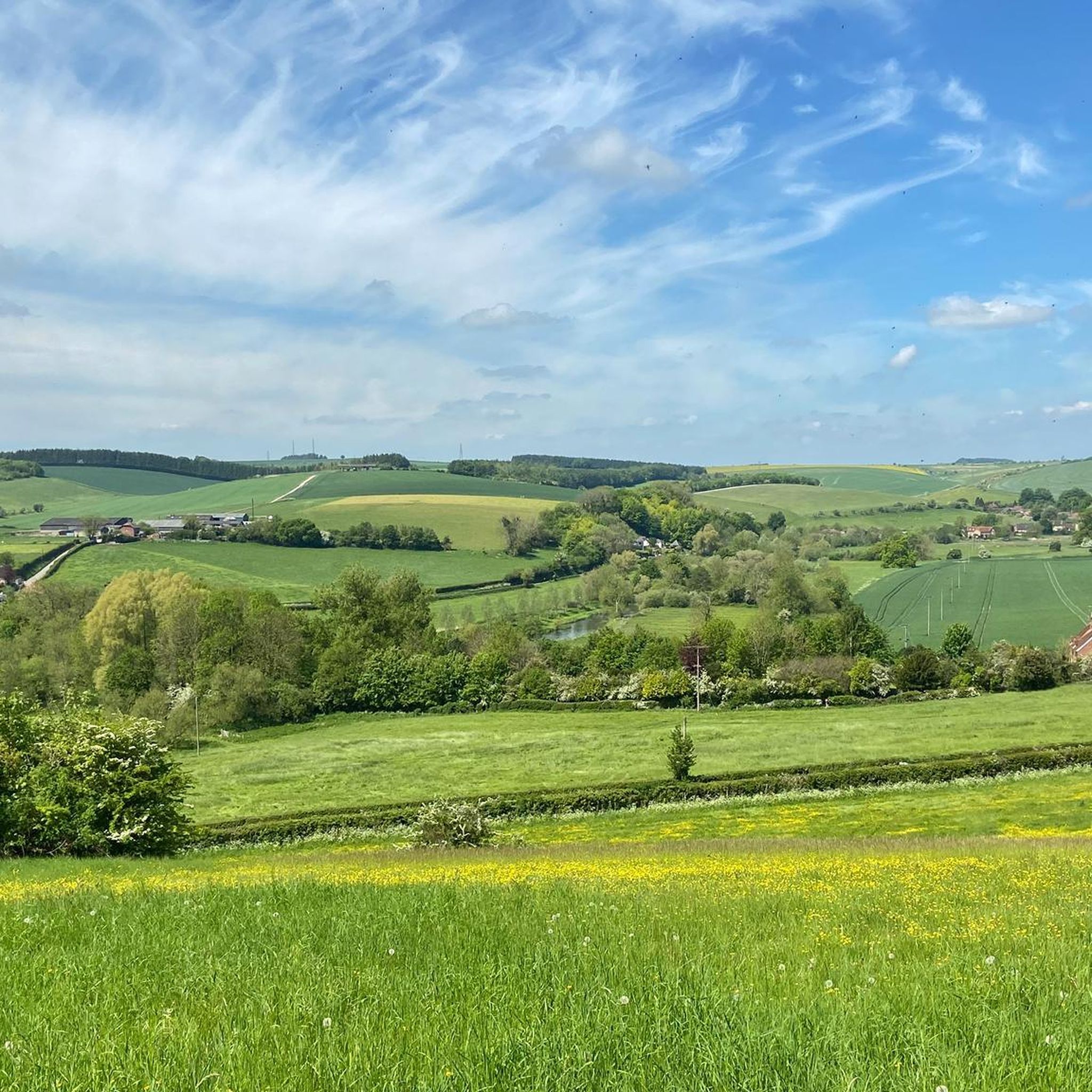
This stretch of downland is particularly notable for its tumuli (ancient burial mounds) at Old King Barrows and New King Barrows. It's just a short walk from the town of Amesbury and the famous Stonehenge. There are around a dozen beautiful yew trees to see here, as well as oak, ash, hazel and larch.
1
0

To the south lies a group of burial mounds called the Cursus Barrows. The footpath to the impressive stone circle leads across the fields with the burial mounds, which can be clearly seen and are well explained on a display board. Bone remains and various beads were found in the graves.
5
0
Sarsen stones are blocks of sandstone found in large numbers in England, it is a contraction of Saracen stone, where “Saracenic” is equivalent to “pagan”. In this respect, sarsen means something like “heathen stone”, “stone of the heathen”. The most famous sarsen stones can be found here in Stonehenge.
6
0
Frequently Asked Questions
What are the most popular natural monuments around Steeple Langford?
The most popular natural monument is Stonehenge, a world-renowned historical site and natural monument. Visitors also highly appreciate the Sarsen Stone at Stonehenge Visitor Centre, where you can interact with a sarsen stone, and the Cursus Barrows, a Neolithic and Bronze Age round barrow cemetery visible from the footpath to Stonehenge.
Are there family-friendly natural monuments in the area?
Yes, several natural monuments are suitable for families. Stonehenge offers a visitor center with exhibitions and Neolithic houses, making it an engaging experience for all ages. The Sarsen Stone at Stonehenge Visitor Centre is also family-friendly and wheelchair accessible. Additionally, the Stonehenge Cursus provides an open space for exploration.
What kind of historical natural monuments can I explore?
The area is rich in historical natural monuments. Beyond Stonehenge, you can visit the Cursus Barrows, a significant Neolithic and Bronze Age round barrow cemetery. The Stonehenge Cursus, an ancient earthwork predating Stonehenge, also offers a glimpse into prehistoric landscapes. Furthermore, the King Barrow Ridge Bronze Age Burial Mounds feature ancient tumuli with views of Stonehenge.
What natural features can I see around Steeple Langford?
Beyond the ancient monuments, the region boasts diverse natural features. Langford Lakes Nature Reserve, managed by the Wiltshire Wildlife Trust, offers tranquil waters, meadows, and is excellent for birdwatching. Grovely Wood is a large mixed woodland known for bluebells and wild daffodils in spring, and the River Wylye meanders through the village, creating picturesque water meadows with paths for gentle strolls.
Are there opportunities for birdwatching near Steeple Langford?
Yes, Langford Lakes Nature Reserve is a prime location for birdwatching. It attracts around 150 different bird species, including kingfishers, lapwings, and various ducks. Rarer sightings like ospreys and marsh harriers are also possible. The reserve features multiple bird hides for observation and offers a vital habitat for local and migratory birds.
What outdoor activities can I do near these natural monuments?
The area around Steeple Langford offers various outdoor activities. You can find numerous running trails, road cycling routes, and gravel biking routes. These routes often pass by or are close to the natural monuments, allowing you to combine sightseeing with your chosen activity.
Are there hiking trails near the natural monuments?
Yes, there are many hiking opportunities. Grovely Wood offers extensive walking trails through ancient woodlands and open downland. The paths around the River Wylye and Langford Lakes provide gentle walks. For more structured routes, you can explore the running trails around Steeple Langford, many of which are suitable for hiking and pass through scenic areas near the monuments.
What is the best time to visit the natural monuments around Steeple Langford?
Spring is particularly beautiful for visiting Grovely Wood, as it's known for its bluebells and wild daffodils. For birdwatching at Langford Lakes, different seasons offer unique sightings, with rarer birds appearing in winter. Generally, the warmer months provide pleasant conditions for exploring the outdoor sites and trails.
Are there any accessible natural monuments for visitors with mobility considerations?
The Sarsen Stone at Stonehenge Visitor Centre is noted as wheelchair accessible. Langford Lakes Nature Reserve also features well-maintained, flat paths, making it accessible for a peaceful stroll and enjoying the natural surroundings.
What do visitors enjoy most about the natural monuments in this region?
Visitors frequently enjoy the blend of historical significance and natural beauty. The awe-inspiring presence of Stonehenge and its surrounding ancient sites like the Cursus Barrows are highly appreciated. The tranquil environment of places like Langford Lakes and the scenic views from spots like King Barrow Ridge also receive high praise.
Are there cafes or facilities near the natural monuments?
Yes, the Stonehenge visitor center includes a shop and a café. Langford Lakes Nature Reserve also has an on-site cafe with views over the main lake, providing a convenient stop for refreshments during your visit.
How can I find out about opening hours and tickets for Stonehenge?
For the most up-to-date information on opening hours and ticket prices for Stonehenge, it is recommended to check the official English Heritage website. You can find details at english-heritage.org.uk.
Most popular attractions around Steeple Langford

Get inspired with the komoot mobile app


Explore more
Extend your search for the best caves by checking out these guides of the top ones around Steeple Langford:
