Top 2 Natural Monuments around Saint-Étienne-Estréchoux
Best natural monuments around Saint-Étienne-Estréchoux are primarily found within the Haut-Languedoc Regional Natural Park, a protected area in the Hérault department of Occitanie, France. This region features diverse landscapes, including forests, valleys, and waterways, characterized by a Mediterranean climate and rich ecological interest. The area offers varied terrains and unique geological formations, providing opportunities for outdoor activities. Historically tied to mountain agriculture, the commune's natural appeal is largely due to its location within this expansive park.
Best natural monuments around Saint-Étienne-Estréchoux
- The most popular natural monuments is The tower - summit of Caroux, a summit that marks the highest point of the Caroux plateau at 1091 m. This natural monument offers views from its elevated position.
- Another must-see spot is Roquandouire Arch, a natural monument formed by erosion. This stone arch is a characteristic geological feature of the Espinouse area.
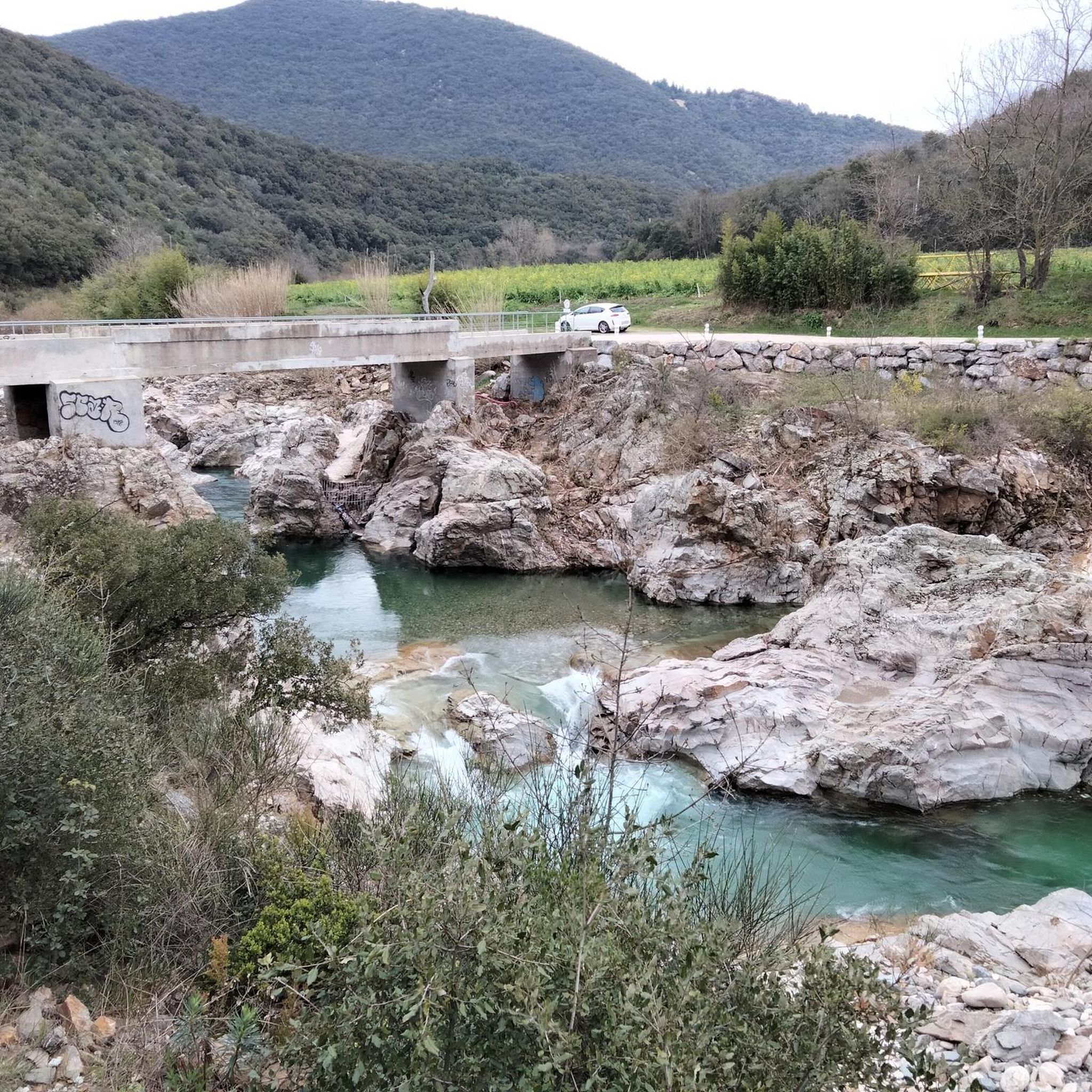
- Visitors also love Waterfall Above Colombières-sur-Orb, a waterfall that provides a natural water feature. This site is suitable for swimming and offers a natural setting.
- Saint-Étienne-Estréchoux is known for its summits, waterfalls, and unique geological formations. The area offers a variety of natural monuments to see and explore within the Haut-Languedoc Regional Natural Park.
- The natural monuments around Saint-Étienne-Estréchoux are appreciated by the komoot community, with more than 15 photos and 18 upvotes shared by visitors.
Last updated: July 15, 2026
Roquandouire Arch
Highlight • Natural Monument
Translated by Google •
Tip by

Waterfall Above Colombières-sur-Orb
Highlight • Waterfall
And please take your waste home again, so it stays amazing for everyone and the nature will thank you! :)
Tip by

Sign up now to discover places like this
Get recommendations on the best single tracks, peaks, & plenty of other exciting outdoor places.
Sign up for free
The tower - summit of Caroux
Highlight • Summit
Translated by Google •
Tip by

Viewpoint over the Espinouse summit
Highlight • Summit
Translated by Google •
Tip by
Mount Méguillou
Highlight • Summit
Translated by Google •
Tip by

Start today with a free account
Your next adventure awaits.
Login or Signup
Popular around Saint-Étienne-Estréchoux

Tips from the Community

The "tower" is simply a pile of stones. However, the highest point of the plateau is still worth the climb; the view is magnificent in all directions. On a clear day, you can see the Mediterranean from over 1,000 meters above sea level. And on an even better day, you can see the Canigou and the main ridge of the Pyrenees. At night, the city lights are impressive (watch out for wild boars on the way to the parking lot).
0
0

An incredible spot that looks like it was built by human hands.
0
0

The summit tower of Mont Caroux, not very spectacular.
1
0

Mont Méguillou with its 786m altitude is an interesting objective for a run.
0
0
The tower is, at 1091 m, the highest point of the Caroux plateau.
1
0

Here you have a superb view of the Espinouse summit, which rises to 1,124 meters above sea level on the Caroux-Espinouse massif.
0
0
The Roquandouire portal seems to be the work of humans. This door of stones, is in fact the result of erosion. This is a characteristic feature of the place and frequent on the Espinouse.
0
0

Frequently Asked Questions
What are some of the most unique natural monuments to see around Saint-Étienne-Estréchoux?
The region offers several distinctive natural monuments. You can explore the unique geological formation of Roquandouire Arch, a stone arch created by erosion, characteristic of the Espinouse area. Another notable site is The tower - summit of Caroux, which marks the highest point of the Caroux plateau at 1091 m, offering expansive views.
Are there any natural monuments suitable for families with children?
While specific family-friendly ratings aren't always available for individual monuments, the Waterfall Above Colombières-sur-Orb is a great option. It provides a natural water feature suitable for swimming, which can be a fun activity for families. Remember to bring swimming gear!
What kind of geological features can I expect to find in the Haut-Languedoc Regional Natural Park?
The Haut-Languedoc Regional Natural Park, which encompasses Saint-Étienne-Estréchoux, is known for its diverse geological formations. Beyond the Roquandouire Arch formed by erosion, the broader region features unique landscapes including a 'forest of dolomite rocks' and varied terrains from mountains to valleys.
Can I go swimming near any of the natural monuments?
Yes, the Waterfall Above Colombières-sur-Orb is a natural monument where you can swim. It's a refreshing spot, and visitors are encouraged to bring their swimming stuff to enjoy the natural setting.
What outdoor activities can I do near the natural monuments in the region?
The Haut-Languedoc Regional Natural Park is an excellent destination for outdoor pursuits. You can find numerous trails for hiking and cycling. For specific routes, consider exploring the options for gravel biking, road cycling, or general cycling around Saint-Étienne-Estréchoux, which will take you through picturesque scenery.
Are there good viewpoints among the natural monuments?
Absolutely. Both The tower - summit of Caroux and Viewpoint over the Espinouse summit offer superb panoramic views of the surrounding landscapes, including the Espinouse massif. Mount Méguillou also provides open summit views.
What is the best time of year to visit the natural monuments around Saint-Étienne-Estréchoux?
The region experiences a Mediterranean climate, making spring and autumn ideal for visiting. During these seasons, the weather is generally pleasant for outdoor activities like hiking and cycling, allowing you to fully enjoy the diverse natural environments of the Haut-Languedoc Regional Natural Park.
What kind of terrain can I expect on trails leading to these natural monuments?
The Haut-Languedoc Regional Natural Park features varied terrains, from forests and valleys to mountainous areas. Trails can range from picturesque paths winding through valley streams, like parts of the V84 / Véloccitanie route, to more challenging ascents to summits like Caroux and Espinouse. Expect a mix of natural surfaces.
What do visitors enjoy the most about the natural monuments in this area?
Visitors particularly appreciate the stunning views from elevated points like The tower - summit of Caroux and Viewpoint over the Espinouse summit. The unique geological formations, such as Roquandouire Arch, also captivate many. The opportunity for a refreshing swim at the Waterfall Above Colombières-sur-Orb is also a highlight for many.
Are there any specific cycling routes that pass by natural monuments?
Yes, the V84 / Véloccitanie route, which connects Faugères to Bédarieux via the D13E8, is a picturesque path that winds through a valley stream, forests, and flowering broom. While not directly passing by all listed natural monuments, it traverses different landscape units of the Haut-Languedoc Regional Natural Park, offering scenic views and a pleasant experience for cyclists.
What is the significance of the Haut-Languedoc Regional Natural Park to Saint-Étienne-Estréchoux?
Saint-Étienne-Estréchoux is an integral part of the vast Haut-Languedoc Regional Natural Park. This park is the most significant natural feature of the area, providing a protected environment with remarkable natural heritage, diverse landscapes, and numerous opportunities for outdoor activities. The commune's natural appeal largely stems from its location within this expansive park.
Can I find any natural monuments that are less frequented or considered 'hidden gems'?
While the listed natural monuments are well-regarded, the expansive nature of the Haut-Languedoc Regional Natural Park means there are countless hidden spots. Exploring trails to summits like Mount Méguillou, which offers open views, can lead to quieter experiences. The park's diverse terrain often reveals less-traveled paths and secluded natural beauty.
Most popular routes around Saint-Étienne-Estréchoux
Most popular attractions around Saint-Étienne-Estréchoux

Get inspired with the komoot mobile app


Explore more
Extend your search for the best caves by checking out these guides of the top ones around Saint-Étienne-Estréchoux:
