Top 20 Natural Monuments around Trélévern
Best natural monuments around Trélévern include a varied coastline with rocky foreshores and sandy beaches, situated on Brittany's Pink Granite Coast. This region is known for its unique geological formations and coastal landscapes. Trélévern serves as a base for exploring these natural wonders, which are part of the Natura 2000 protected site, Côte de Granit Rose – Sept‑Îles. The area offers diverse natural experiences, from dramatic rock formations to significant bird sanctuaries.
Best natural monuments around Trélévern
- The most popular…
Last updated: July 4, 2026
Along the pink granite coast
Highlight • Monument
Translated by Google •
Tip by

Mean Ruz Lighthouse
Highlight • Monument
Translated by Google •
Tip by

Sign up now to discover places like this
Get recommendations on the best single tracks, peaks, & plenty of other exciting outdoor places.
Sign up for free
Rock formation near Ploumanac'h
Highlight • Natural Monument
Translated by Google •
Tip by

Sainte-Anne des Rochers Chapel
Highlight • Religious Site
Translated by Google •
Tip by

Kerguntuil Megaliths
Highlight • Historical Site
Here is the translation of the information panel:
The stone monuments of Kerguntuil are remains …
Translated by Google •
Tip by

Sign up for free to discover even more natural monuments around Trélévern.
Sign up for free
Already have an account?
Start today with a free account
Your next adventure awaits.
Login or Signup

Tips from the Community

What a great trail. Climbing on the stones, hearing the sea roar, the wind whistles around your ears. Whoever lets their imagination run wild can discover figures in many of the stones. What nature has created here over the years amazes me.
0
0

The Phare de Mean Ruz, also known as the Ploumanac'h Lighthouse, is one of the most famous landmarks of Brittany's Pink Granite Coast. The original tower was built in 1860, but was destroyed during World War II and rebuilt in 1946 in its original form. Since 1948, it has once again emitted its signature flashing red light across the sea, visible for up to 11 nautical miles. At approximately 15 meters high, the lighthouse marks the entrance to Ploumanac'h Bay. Unfortunately, access to the lighthouse is closed to the public.
2
0
The Ploumanac'h Lighthouse (Phare de Mean Ruz) is nestled among the striking pink granite cliffs. Built in 1946 from pink granite, it serves to ensure navigation by marking dangerous coves and cliffs. At approximately 15 meters high, the square tower is a popular photo subject and a typical stop for hikers on the historic Sentier des Douaniers (Customs Officers' Trail). Other nearby attractions include the Château du Diable and the Petite Baie de Ploumanac'h.
1
0
Over millions of years, the interplay of wind, rain, sea, and erosion has carved the most incredible forms out of solid pink granite. Bizarre boulders rise from the ground everywhere, some resembling small castles, others resembling strange animals. Particularly striking is the Château du Diable, whose castle-like silhouette captures visitors' imaginations. The entire coastal landscape is so dramatic and unique that one almost feels as if they are in another world.
2
0

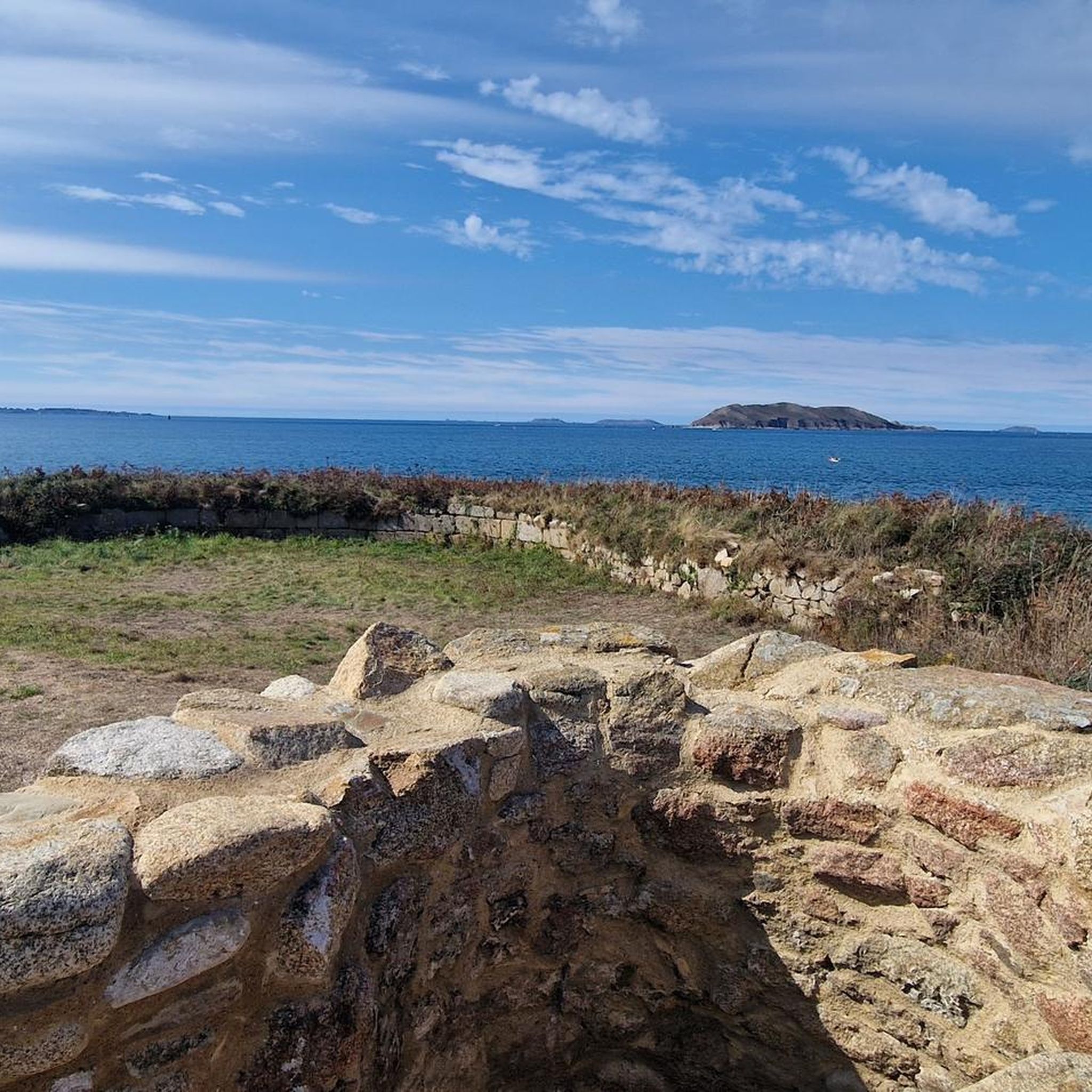
The roof table measures 5.75 m long, 3.55 m wide and 0.75 m thick. The orthostat on the north side measures 2 m high, 1.50 m wide and 0.20 m thick. It continues to the west with a dry stone wall which does not appear to be original. The orthostat on the west side is slightly domed. It measures 2.55 m wide by 2.305 m high with a thickness between 0.40 m at the base and 0.30 m at the top. The southern orthostat is backed by the slope. It measures 2.50 m wide, 2.40 m high and 0.35 m thick. The internal chamber measures 5 m long by 3 m wide with a height under the slab of 2 m
1
0

If you pass by it's quite nice, but it's not worth making the extra trip!
0
1

The current lighthouse was built in 1946 to replace the original 1860 lighthouse that German forces destroyed in August 1944, with architects required to harmonize the design with the protected surrounding landscape. The lighthouse features interior mosaics created by renowned Rennes artist Isidore Odorico and offers panoramic views of Costaérès Castle and the Seven Islands archipelago.
1
0

A large, a really large stone slab as a cover – I was really astonished. Here is the translation of the information panel: The stone monuments of Kerguntuil are remains from the late Neolithic period (around 2000 BC). The passage grave, consisting of several stone slabs, and the dolmen are two very fine examples of megaliths (assemblies of large stones) erected in Western Europe during this period. Did you know that these passages were rediscovered in the 1930s thanks to the dedication of local volunteers who excavated and restored the monument? It is very likely that our ancestors used these monuments as collective burial sites. Today, these remains bear witness to the architectural genius of these prehistoric people, but also to their worldview. Look at the engravings inside, on the pillars of the mound foundation burial: These pairs of raised protrusions, engraved in relief, are said to represent breasts and the Great Mother Goddess of the Neolithic period.
1
0
Frequently Asked Questions
What unique geological features can I expect to see among the natural monuments near Trélévern?
The region is renowned for its extraordinary pink granite rock formations, particularly along the Pink Granite Coast. These formations, sculpted by millions of years of erosion, display bizarre and captivating shapes, some resembling small castles or animals like the notable Château du Diable. You can also explore the mystical Vallée des Traouïero, which features intriguing natural formations such as the "Maison des Korrigans" and "Trou de l'Enfer" with its caves.
Are there any historical or cultural sites integrated with the natural monuments around Trélévern?
Yes, several sites combine natural beauty with historical significance. The Mean Ruz Lighthouse, built from pink granite, stands amidst rugged cliffs and features interior mosaics by Isidore Odorico. You can also visit the Sainte-Anne des Rochers Chapel, which has Neolothic origins, and the ancient Kerguntuil Megaliths, a passage grave and dolmen dating back to the late Neolithic period.
What kind of wildlife can be observed near Trélévern's natural monuments?
The Côte de Granit Rose – Sept‑Îles is a Natura 2000 protected site, highlighting its ecological importance. The Réserve Naturelle Nationale des Sept-Îles (Seven Islands National Nature Reserve), though 12km offshore, is a crucial bird sanctuary where you can observe diverse marine bird species in their natural habitat.
Are there family-friendly natural monuments around Trélévern?
Absolutely. The Mean Ruz Lighthouse and the Sainte-Anne des Rochers Chapel are both considered family-friendly. The unique rock formations along the Pink Granite Coast, such as those near Ploumanac'h, are also fascinating for all ages, offering opportunities for exploration and imagination.
What are the best outdoor activities to do near the natural monuments?
The area offers excellent opportunities for various outdoor activities. You can enjoy gravel biking, mountain biking, and cycling. For detailed routes, check out guides like Gravel biking around Trélévern, MTB Trails around Trélévern, and Cycling around Trélévern. The GR34 coastal hiking trail also winds through spectacular scenery, offering incredible views.
Are there hiking trails near these natural monuments, and what are their highlights?
Yes, the famous GR34 coastal hiking trail, also known as the Sentier des Douaniers (Customs Officers' Path), runs directly along many of the natural monuments. Highlights include walking along the Pink Granite Coast, passing the Mean Ruz Lighthouse, and enjoying the views from Saint-Guirec Beach. The trail offers a chance to explore wild beaches and experience the preserved natural environment.
What is the best time to visit the natural monuments around Trélévern?
The Pink Granite Coast and its natural monuments are beautiful year-round. Spring and early autumn offer pleasant weather for hiking and exploring, with fewer crowds than the peak summer months. Summer provides warmer temperatures, ideal for enjoying the beaches. Even in winter, the dramatic coastal landscapes have a unique charm, though some facilities might have reduced hours.
Are the natural monuments around Trélévern accessible by public transport?
While Trélévern serves as a good base, many of the most iconic natural monuments, especially those along the more rugged parts of the Pink Granite Coast or the Vallée des Traouïero, are best accessed by car or as part of a dedicated hiking route. Public transport options within the immediate vicinity of some remote natural sites might be limited, so planning your journey in advance is recommended.
Can I bring my dog to the natural monuments and trails?
Many outdoor areas and trails along the Pink Granite Coast are dog-friendly, especially the GR34 coastal path. However, specific rules may apply to certain beaches or nature reserves, particularly during peak seasons or for protected wildlife areas like the Sept-Îles. It's always best to keep dogs on a leash and check local signage for any restrictions.
What do visitors enjoy most about the natural monuments around Trélévern?
Visitors frequently praise the unique and dramatic coastal landscape, especially the extraordinary pink granite rock formations. Many find it a 'walking paradise' and appreciate the unparalleled photographic opportunities. The blend of natural beauty with historical landmarks like the Mean Ruz Lighthouse also adds to the appeal, offering a sense of being in another world.
Are there any hidden natural gems or less-known spots to discover?
While the Pink Granite Coast is famous, the Vallée des Traouïero offers a more 'secret' and mystical experience. Located slightly inland, this valley provides a contrast to the coastal grandeur with its unique geological features and intriguing formations like the "Maison des Korrigans" and "Trou de l'Enfer." It's a great spot for those looking for a different kind of natural exploration.
What should I wear when visiting the natural monuments?
Given the coastal and often rugged terrain, comfortable walking shoes or hiking boots are highly recommended. Layers of clothing are advisable as weather conditions can change quickly, especially near the coast. A waterproof jacket is also a good idea, even outside of rainy seasons. Don't forget sun protection, such as a hat and sunscreen, as well as water and snacks for longer explorations.
Most popular routes around Trélévern
Most popular attractions around Trélévern

Get inspired with the komoot mobile app


Explore more
Extend your search for the best caves by checking out these guides of the top ones around Trélévern:
