Top 5 Natural Monuments around Olszyna
Best natural monuments around Olszyna are found in Lower Silesia, Poland, an area characterized by its diverse natural features including the picturesque Kwisa River and the recently established Mokradła nad Wilką nature reserve. The region offers a variety of landscapes, from river valleys and wetlands to geological formations. Olszyna's natural environment supports a rich array of flora and fauna, with many protected species. These natural elements contribute to the ecological value and attractiveness of the area.
Best natural monuments around…
Last updated: June 29, 2026
Czocha Castle
Highlight • Castle
Translated by Google •
Tip by

Świecie Castle Ruins
Highlight • Castle
Translated by Google •
Tip by

Sign up now to discover places like this
Get recommendations on the best single tracks, peaks, & plenty of other exciting outdoor places.
Sign up for free
Basalt Columns on Steinberg Hill (Lubań)
Highlight • Natural Monument
Translated by Google •
Tip by

Marienfelsen
Highlight • Natural Monument
Translated by Google •
Tip by

Stożek Perkuna Rock Formation on Ciasnota Mountain
Highlight • Natural Monument
Translated by Google •
Tip by
Sign up for free to discover even more natural monuments around Olszyna.
Sign up for free
Already have an account?
Start today with a free account
Your next adventure awaits.
Login or Signup

Tips from the Community

Here we come across a former park with small paths and stairs, benches, viewing points and rocks with inscriptions.
0
0
The Stone Mountain (283 m) in Lubań is a remnant of tertiary volcanoes and probably the oldest "basalt" quarry near Lubań. The medieval town walls, towers and older buildings were probably built from the blocks excavated here. At the top, a large park was created between the quarries in the second half of the 19th century. There you can find interesting geological formations such as volcanic bombs or 10-15 meter high basalt columns. The park also has numerous natural monuments, including the "Herman" ash tree with a circumference of 298 cm and the "Franciszek" sycamore maple with a circumference of 281 cm.
1
0
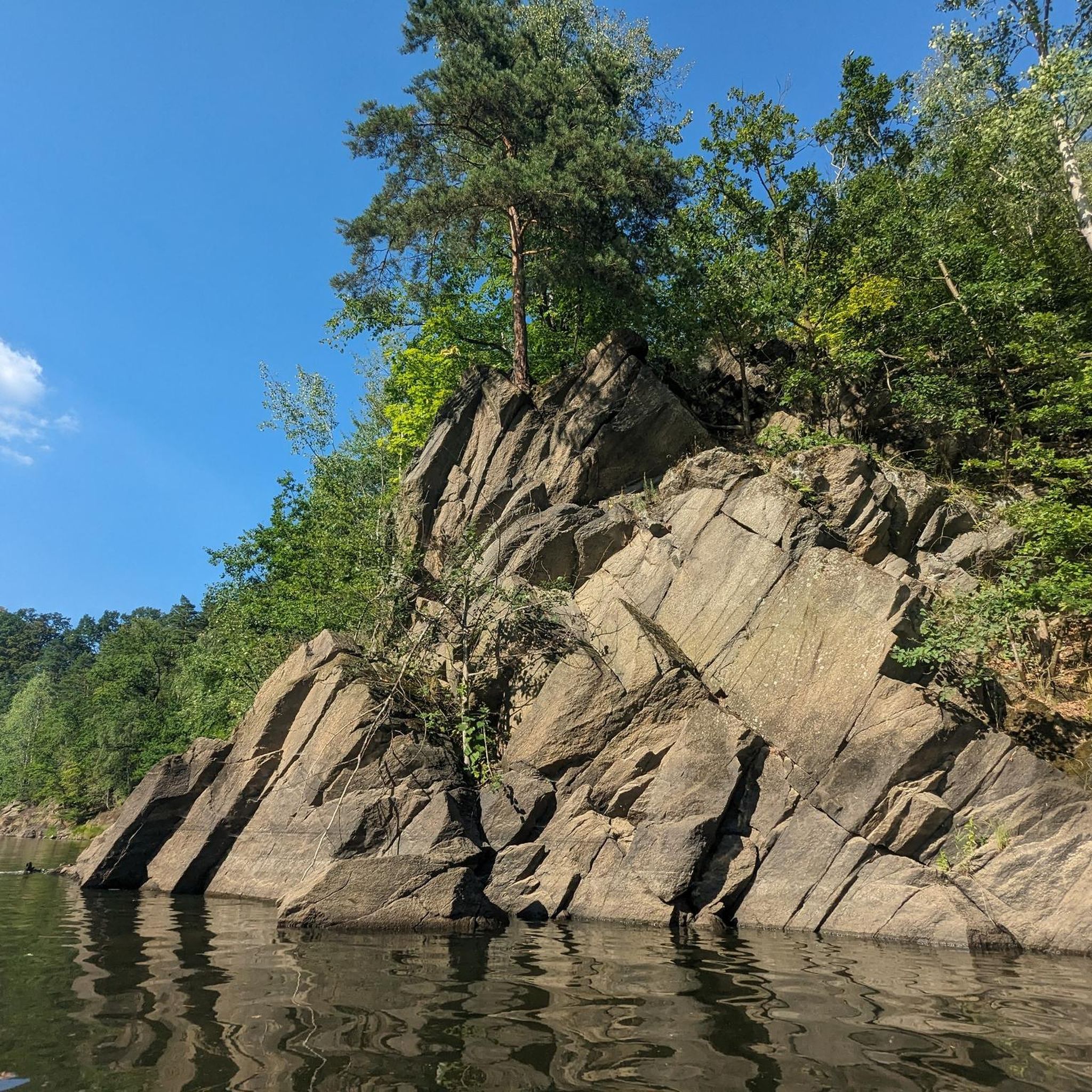
The Stożek Perkuna (Perkun Cone) is a volcanic formation on Mount Ciasnota (401 m above sea level) near the Jizera Mountains. The cone is composed of basanite or nephelinite. There are two basalt structures: the lower one with somewhat coarser columns and the upper one with smaller ones; probably eruptions at different times.
1
0

A beautiful place. The owners are renovating and rebuilding the castle at their own expense. They have no support from groups responsible for the protection of monuments. It is not surprising that there is a fee for the opportunity to enter and see the ruins, as well as hear stories about the castle, the history of the struggle with reconstruction and plans for what will be available in the castle in the future. But this fee is worth it, because really every złoty is invested in the castle. And the effects of the work of today's castle owners are really visible.
0
0

The ruins of Świecie Castle (German Burg Schwerta, 1937–1945: Schwertburg) are located in the village of Świecie (Schwerta), which since 1945 has belonged to the town and country municipality of Leśna (Marklissa) in the Lubański powiat in Poland, about five kilometers to the south from Leśna on a gneiss rock. Further information can be found at: https://de.m.wikipedia.org/wiki/Burg_%C5%9Awiecie
5
0

The castle was built by the Teutonic Order after 1335 on the initiative of Günter von Hohenstein
5
0

The garden is small but has a lot of beautiful flowers and some great figures.
6
0
In the summer months you can walk into the inner courtyard of the ruins.
11
0
Frequently Asked Questions
What unique natural features can I explore around Olszyna?
Olszyna is rich in diverse natural features. You can discover unique geological formations like the Basalt Columns on Steinberg Hill (Lubań), which are remnants of tertiary volcanoes. The region also boasts the picturesque Kwisa River, known for its clean waters and natural course, and the significant Mokradła nad Wilką nature reserve, characterized by wetlands shaped by beaver activity.
Are there any nature reserves or protected areas near Olszyna?
Yes, the Mokradła nad Wilką (Wetlands on the Wilka River) is a recently established nature reserve near Olszyna. It covers over 31 hectares, protecting the forested Wilka stream valley, its wetlands, and floodplains. This reserve is crucial for various amphibians, birds, and mammals, offering a tranquil spot for nature observation.
What kind of wildlife can I expect to see in the natural monuments around Olszyna?
The natural monuments and protected areas around Olszyna support a rich variety of wildlife. The Mokradła nad Wilką nature reserve is particularly known for its diverse wetland ecosystem, providing habitats for numerous amphibians, birds, and mammals. Additionally, a large colony of approximately 150 pairs of sand martins can be found in a disused quarry along the road from Olszyna to Radostów.
Are there family-friendly natural monuments in the Olszyna area?
Absolutely. The Basalt Columns on Steinberg Hill (Lubań) is considered family-friendly, featuring a park with interesting geological formations and seating. While not strictly a natural monument, Czocha Castle is also family-friendly and offers a blend of history and scenic surroundings.
What historical sites are integrated with the natural landscape around Olszyna?
Several historical sites are nestled within the natural beauty of the region. Czocha Castle, a 13th-century border fortress, is now a hotel with tours and is surrounded by great scenery. The Świecie Castle Ruins, located on a gneiss rock, offer a historical experience where visitors can explore the inner courtyard during summer months. Additionally, Marienfelsen features a former park with paths, stairs, and rocks with inscriptions.
What are the best times to visit the natural monuments in Olszyna?
The best time to visit depends on your interests. Spring is highly recommended for observing amphibians in the Mokradła nad Wilką nature reserve. For birdwatching, dawn or dusk offer the best opportunities. Generally, the warmer months provide pleasant conditions for exploring the outdoor sites and enjoying the picturesque landscapes of the Izera Foothills and Lower Silesian Pine Forests.
Are there good viewpoints among the natural monuments near Olszyna?
Yes, the region offers several excellent viewpoints. The Marienfelsen features designated viewing points within its former park. The Stożek Perkuna Rock Formation on Ciasnota Mountain, a volcanic formation, also provides scenic vistas. Even Czocha Castle offers great surroundings and views from its grounds.
What kind of outdoor activities can I do near Olszyna's natural monuments?
The area around Olszyna is ideal for various outdoor activities. You can find numerous routes for hiking, mountain biking, and gravel biking. For detailed trails, explore the guides for Hiking around Olszyna, MTB Trails around Olszyna, and Gravel biking around Olszyna. The Kwisa River also attracts anglers due to its clean waters.
Are there any unique geological formations to see?
Definitely. The Basalt Columns on Steinberg Hill (Lubań) are a prime example, forming a semicircle of basalt columns of varying heights, a clear remnant of tertiary volcanic activity. Another notable geological feature is the Stożek Perkuna Rock Formation on Ciasnota Mountain, which is a volcanic formation composed of basanite or nephelinite with distinct basalt structures.
What do visitors particularly enjoy about the natural monuments in Olszyna?
Visitors appreciate the diverse landscapes, from river valleys and wetlands to unique geological formations. The peaceful nature walks, opportunities for wildlife observation, and the blend of natural beauty with historical sites like castles are frequently highlighted. The region's rich flora and fauna, including protected species, also add to its appeal.
Can I find easy hiking trails near the natural monuments?
Yes, there are hiking options suitable for various fitness levels. For instance, the 'Czocha Castle loop from Czocha Castle' is an easy 4.2 km hike. You can find more details and other routes in the Hiking around Olszyna guide, which includes trails of varying difficulties.
Most popular routes around Olszyna
Most popular attractions around Olszyna

Get inspired with the komoot mobile app


Explore more
Extend your search for the best caves by checking out these guides of the top ones around Olszyna:
