The best traffic-free bike rides around Workington
4.5
(34)
460
riders
18
rides
No traffic touring cycling routes around Workington offer access to coastal landscapes, riverside trails, and paths utilizing disused railways. The town is situated on the West Cumbrian coast, where the River Derwent meets the Irish Sea, providing varied terrain for cyclists. The region features generally flatter coastal paths along the Solway Firth and dedicated cycle paths along the River Derwent. Workington also serves as a gateway to the Western Lake District, offering more challenging routes further afield.
Best no traffic…
Last updated: May 10, 2026
5.0
(4)
16
riders
28.9km
01:50
260m
260m
Moderate bike ride. Good fitness required. Mostly paved surfaces. Suitable for all skill levels.
5.0
(4)
14
riders
50.8km
03:16
550m
550m
Hard bike ride. Very good fitness required. Mostly paved surfaces. Suitable for all skill levels.

Sign up for free
8
riders
13.5km
01:00
130m
130m
Easy bike ride. Great for any fitness level. Mostly paved surfaces. Suitable for all skill levels.
8
riders
34.0km
02:11
370m
370m
Moderate bike ride. Good fitness required. Mostly paved surfaces. Suitable for all skill levels.
1.0
(1)
7
riders
27.6km
01:50
320m
320m
Moderate bike ride. Good fitness required. Mostly paved surfaces. Suitable for all skill levels.
Get access to more routes and recommendations from other explorers.
Sign up for free
Already have an account?
Our route recommendations are based on thousands of hikes, rides, and runs completed by other people on komoot.
Start today with a free account
Your next adventure awaits.
Login or Signup


Tips from the Community

St. John's Church is an Anglican parish church with a rich architectural and historical background. Located on Washington Street, the building was constructed between 1822 and 1823 to a design by Thomas Hardwick, to commemorate the Battle of Waterloo. The church is built in the neoclassical style, with a facade reminiscent of St. Paul's Church in Covent Garden, London. The building is constructed of hammered limestone, with a green slate roof and a striking east tower that begins square and transitions into an octagonal shape with pilasters and a rounded roof. Inside, you'll find a spacious interior with galleries on three sides, supported by slender cast-iron columns, and a flat ceiling decorated with ribs and 16 coats of arms of local families and towns. A distinctive feature is the gold canopy on the west side. St. John's Church is a Grade II* listed building.
10
0
Navvies Bridge is a modern pedestrian and cycle bridge over the River Derwent in Workington, Cumbria, built in 2011 to replace an earlier bridge that was destroyed in the 2009 floods. The new bridge is designed as a twin-ribbed untied bowstring arch of steel, with a span of 84.8 metres and a deck width of 3 metres — almost double the width of the original bridge.
10
0
Here, just before Workington, the Reivers Route and the Hadrian's Cycleway meet.
10
0
Siddick Ponds is a valuable nature reserve in Cumbria, designated as both a Local Nature Reserve (LNR) and a Site of Special Scientific Interest (SSSI). The area comprises two large ponds—one freshwater and one brackish—surrounded by extensive reedbeds, creating a unique ecological combination within the region. This diverse habitat makes Siddick Ponds one of Cumbria's most important birdwatching areas, hosting a diverse community of bird species year-round.
9
0
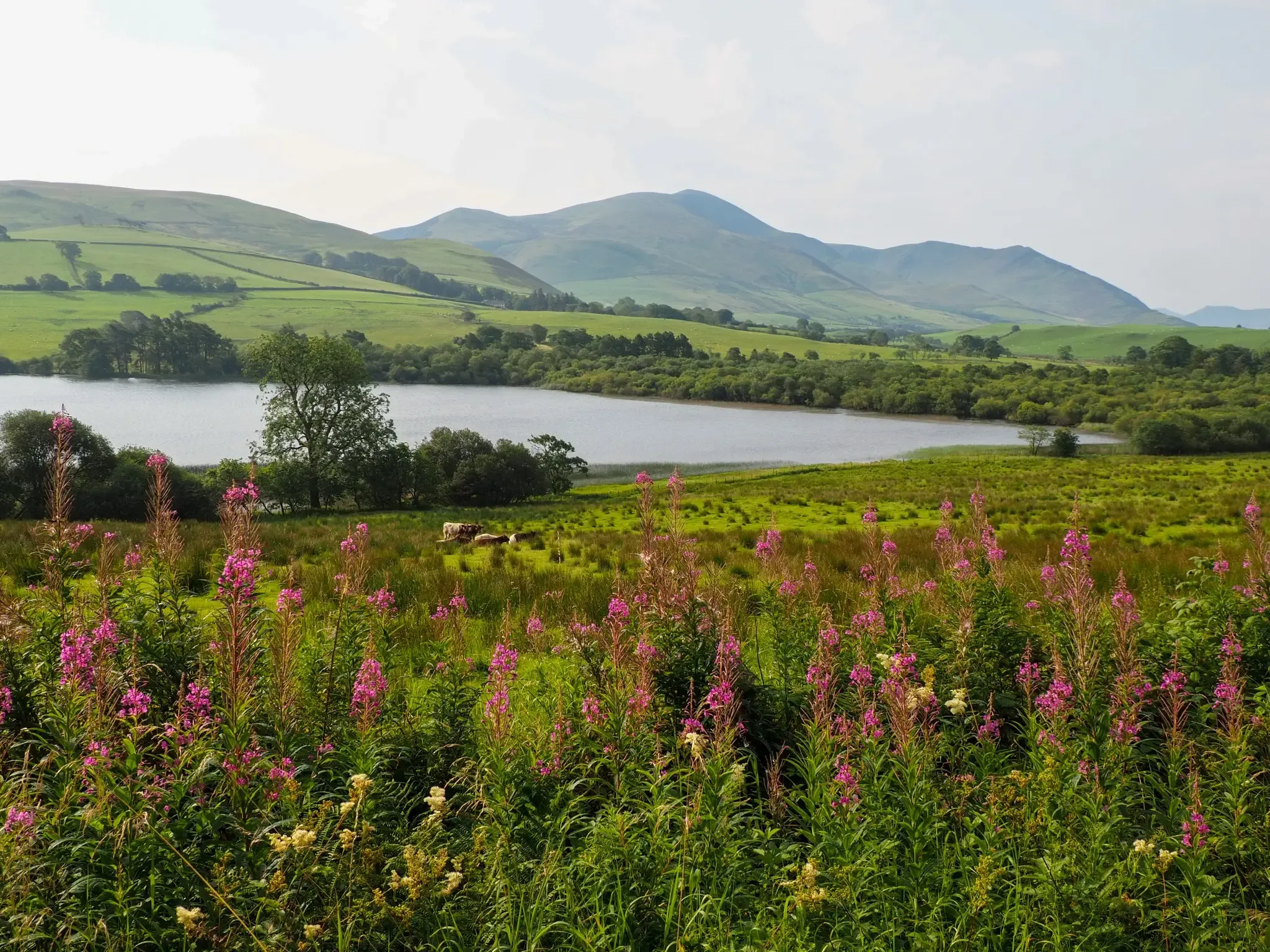
Beautiful, traffic-free cycle path on a former railway line and part of the West Cumbria Cycle Network.
9
0
Millers Bridge, also known as Harris Bridge, is a steel pedestrian bridge over the River Derwent in Cockermouth, Cumbria, connecting the northern and southern parts of the city. The original structure was destroyed by severe flooding in 2009, and the bridge was rebuilt in 2010 with modified foundations to address changes in the riverbank caused by erosion. The reopening by HRH The Princess Royal underscored the importance of this connection to the local community. As a functional infrastructure, the bridge not only provides pedestrian access but also views of the surrounding landscape.
9
0
Wordsworth House rises majestically on Main Street in Cockermouth, a charming town on the edge of the Lake District. Built around 1745, the house reflects the understated grandeur of Georgian architecture: a perfectly symmetrical façade of sand-colored bricks, tall rectangular windows with classically framed woodwork, and an ornate yet understated doorway that evokes the sense of order and proportion characteristic of this period. The poet William Wordsmouth was born here in 1770.
9
0

Frequently Asked Questions
What types of traffic-free touring cycling routes can I find around Workington?
Workington offers a variety of traffic-free touring cycling routes, ranging from coastal paths with expansive views to picturesque riverside trails along the River Derwent. Many routes utilize sections of disused railways, providing flat and safe cycling. You'll find options like the Navvies Bridge – River Derwent loop from Workington, which combines coastal and riverside scenery.
Are there any easy, family-friendly traffic-free cycling routes in Workington?
Yes, Workington has several easy and family-friendly traffic-free cycling routes. A great option is the Workington Cycle Path – Stone Sculpture of a Woman loop from Harrington. This route is 13.5 km long with minimal elevation gain, making it suitable for cyclists of all ages and abilities. The National Cycle Network Route 71 also offers a significant traffic-free section between Workington and Cockermouth, perfect for a relaxed family ride.
What natural features and landmarks can I see along these routes?
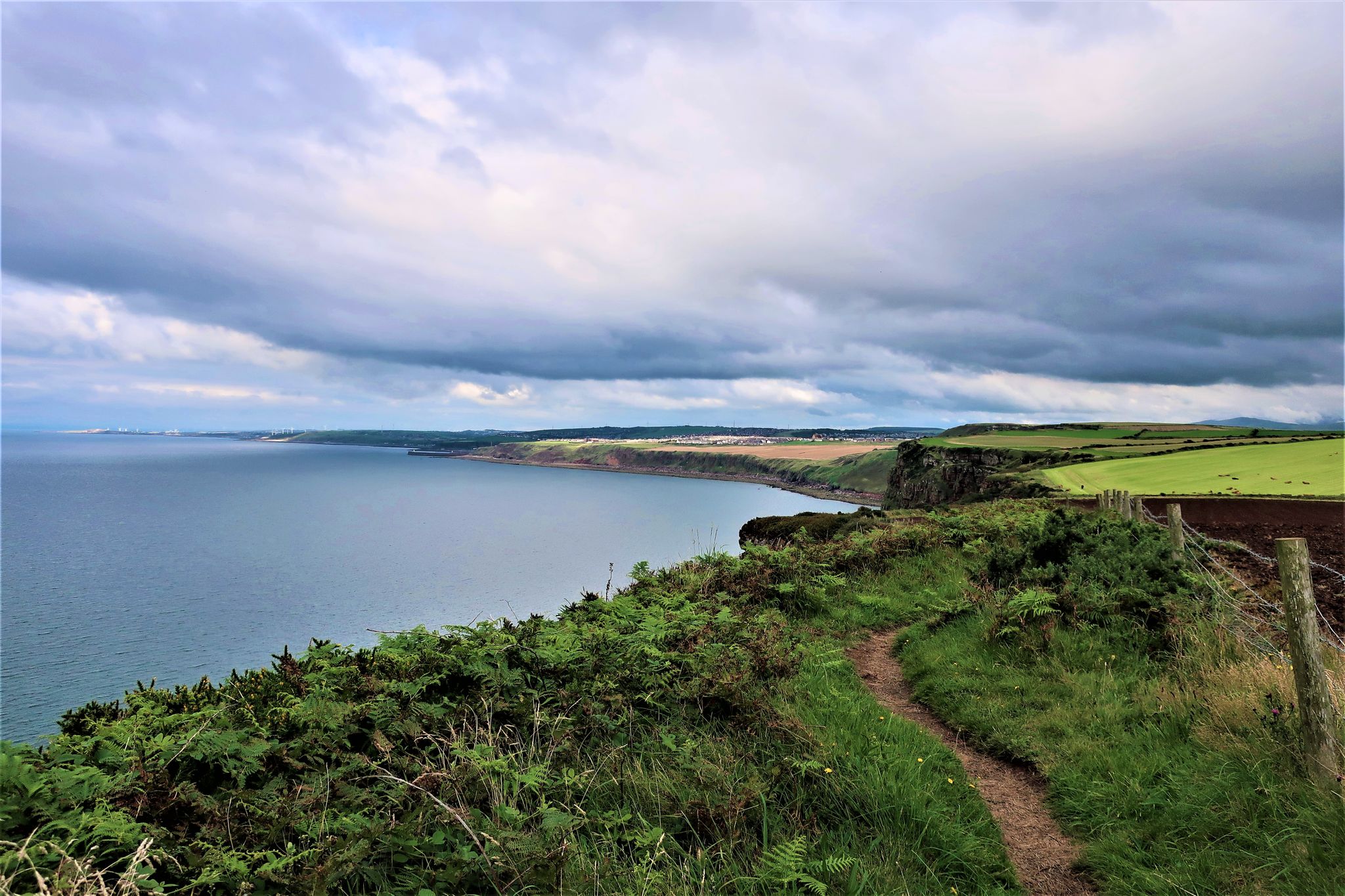
The traffic-free routes around Workington offer diverse scenery. You can enjoy coastal views, including the Solway Firth and an offshore wind farm, as well as tranquil riverside paths along the River Derwent. Notable natural features include Siddick Ponds Nature Reserve, a significant bird site, and Harrington Nature Reserve, known for its diverse habitats. You might also pass by historical sites like Wordsworth House and Garden in nearby Cockermouth, or the remains of Jane Pit, showcasing the town's industrial heritage.
Can I bring my dog on the traffic-free cycling routes?
Generally, dogs are welcome on most public cycle paths and disused railway lines in the UK, provided they are kept under control, ideally on a lead, and you clean up after them. Specific nature reserves or private land sections might have stricter rules, so it's always best to check local signage. The National Cycle Network routes, which form part of the traffic-free network, are usually dog-friendly.
What is the best time of year to go touring cycling in Workington?
The spring and summer months (April to September) are generally the most pleasant for touring cycling in Workington. The weather is milder, and daylight hours are longer, allowing for more extensive rides. Autumn can also be beautiful with changing foliage, though the weather can be more unpredictable. Coastal routes might be windier during certain times of the year, so checking the forecast is always recommended.
Are there any circular traffic-free touring routes available?
Yes, many of the traffic-free routes around Workington are designed as loops, allowing you to start and end at the same point. Examples include the Navvies Bridge – River Derwent loop from Workington and the River Derwent – Workington Cycle Path loop from Harrington. These circular options make planning your day trip more convenient.
Where can I park my car to access these routes?
Workington offers various parking options. For routes starting directly in Workington, town center car parks are available. Many of the coastal and riverside paths, especially those utilizing disused railway lines, often have small parking areas at key access points. For example, routes like the Workington Cycle Path – Stone Sculpture of a Woman loop from Harrington can be accessed from parking in Harrington.
Are there cafes, pubs, or accommodation options along the traffic-free routes?
While some dedicated traffic-free sections might be more rural, many routes pass through or near towns and villages where you can find amenities. Workington itself has numerous cafes, pubs, and accommodation options. Nearby Cockermouth, accessible via the traffic-free NCN 71, also offers places to stop for refreshments. It's advisable to check the specific route you plan to take for facilities along the way, especially on longer rides.
What is the difficulty level of the traffic-free touring cycling routes?
The traffic-free touring cycling routes around Workington cater to various skill levels. You'll find easy routes, such as the Workington Cycle Path – Stone Sculpture of a Woman loop from Harrington, which are relatively flat and short. There are also moderate options like the Workington Cycle Path – View of the Solway Firth loop from Workington, offering a bit more distance and elevation. For those seeking a challenge, routes extending towards the Lake District, though not entirely traffic-free, can be more difficult.
How accessible are the traffic-free routes by public transport?
Workington is served by train services along the Cumbrian Coast Line, making it accessible by public transport. Many of the traffic-free routes, particularly those that are part of the National Cycle Network, can be accessed from Workington's town center or train station. Some local bus services may also allow bikes, but it's best to check with the operator beforehand for specific routes and times.
What do other touring cyclists enjoy most about cycling in Workington?
The komoot community highly rates the touring cycling experience in Workington, with an average score of 4.5 stars. Reviewers often praise the peacefulness of the traffic-free paths, the stunning coastal views, and the opportunity to explore both the industrial heritage and natural beauty of the region. The well-maintained cycle paths and the variety of routes suitable for different abilities are also frequently highlighted.
Most popular routes around Workington
Most popular attractions around Workington

Get inspired with the komoot mobile app


Explore more
Browse the best Cycling routes in other regions.
