The best traffic-free bike rides around Königswiesen
4.7
(101)
864
riders
27
rides
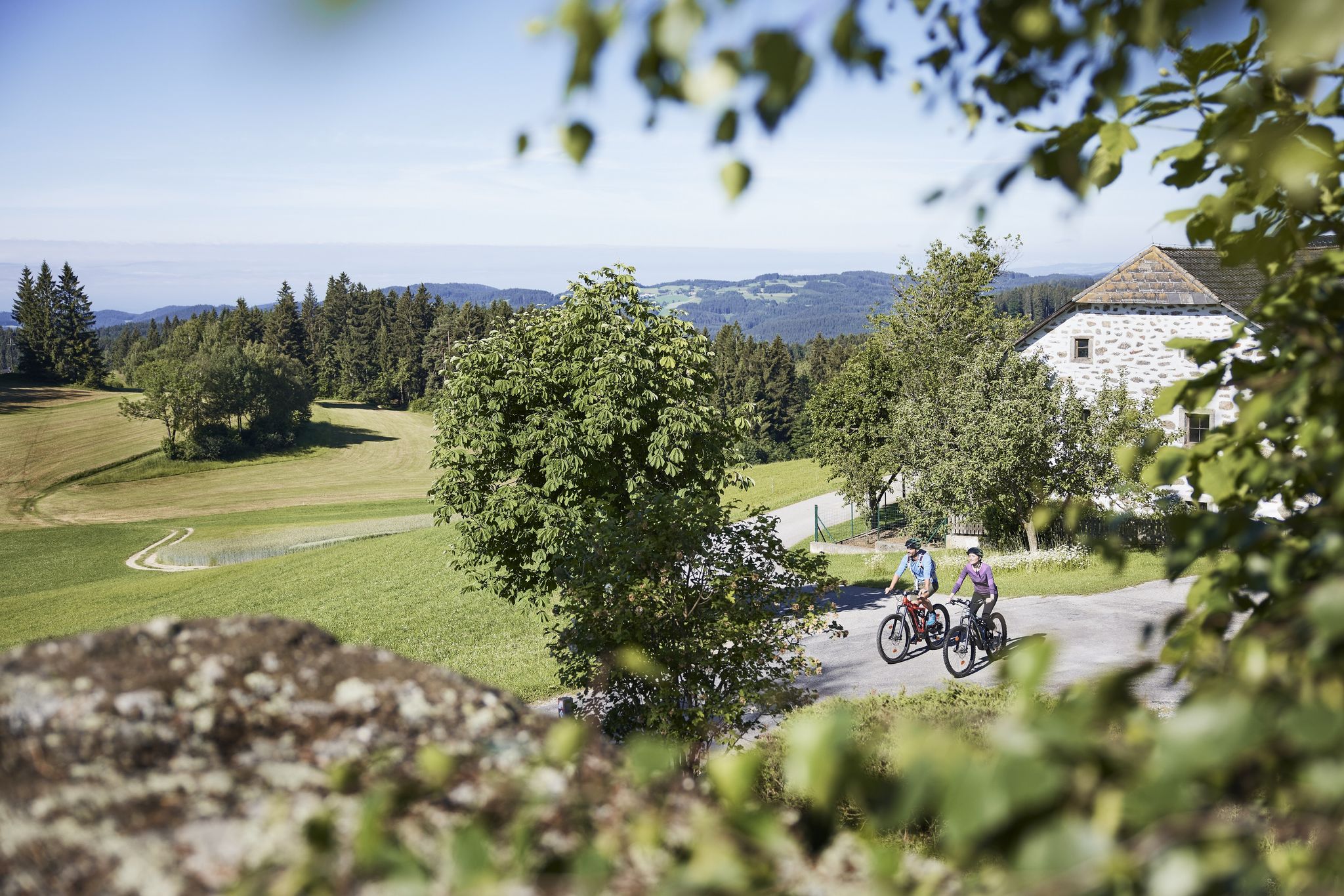
No traffic touring cycling routes around Königswiesen traverse a granite landscape in the Mühlviertel region of Upper Austria, characterized by deeply furrowed valleys and impressive rock formations. The area features predominantly hilly terrain with varied ascents and descents, and many routes wind through dense forests. Clear rivers like the Große Rodl and Kleine Rodl, along with the unique Tannermoor, are integrated into the cycling landscape. This diverse environment provides a range of physical challenges for touring cyclists.
Best no traffic…
Last updated: September 30, 2026
4.6
(25)
99
riders
53.6km
04:00
910m
910m
Hard bike ride. Very good fitness required. Mostly paved surfaces. Suitable for all skill levels.
5.0
(5)
44
riders
Hard bike ride. Very good fitness required. You may need to push your bike for some segments of this route.

4.9
(8)
31
riders
34.9km
02:27
540m
540m
Hard bike ride. Very good fitness required. Mostly paved surfaces. Suitable for all skill levels.
4.7
(6)
25
riders
46.1km
03:32
800m
800m
Hard bike ride. Very good fitness required. You may need to push your bike for some segments of this route.
4.7
(3)
14
riders
41.7km
03:25
1,080m
1,080m
Hard bike ride. Very good fitness required. You may need to push your bike for some segments of this route.
Get access to more routes and recommendations from other explorers.
Already have an account?
Our route recommendations are based on thousands of hikes, rides, and runs completed by other people on komoot.
Start today with a free account
Your next adventure awaits.
Popular around Königswiesen

Other adventures around Königswiesen

Tips from the Community

Arbesbach Castle is a top highlight that you should definitely plan a visit to. Even from a distance, you can recognize the so-called "Waldviertel's fang" (Stockzahn des Waldviertels). Once you arrive at the site, 126 steps lead up to the entrance where admission (currently €2.50) is payable in coins or by card. Then it continues inside upwards to the platform, which offers a fantastic view. There is also a circular path around the tower, which however requires some surefootedness and suitable shoes.
0
0

The village was first mentioned in 1246 and was originally owned by the Kuenring line of Weitra-Rappottenstein. In 1282, the estate passed to the Lords of Falkenberg, and in 1291 to Ulrich von Kapelln. In the 14th century, Arbesbach is mentioned as a freehold property. From 1326 to 1348, it was owned by the Lords of Klingenberg, who in 1347 mortgaged "the castle and the house at Arbesbach" to Weikart and Katharina von Winkl. From 1348, Arbesbach was owned by the Lords of Dachsberg, and from 1423 by the Lords of Starhemberg. In 1480, the castle was destroyed by a Bohemian raiding party and was not rebuilt. In 1600, the estate passed to the Lords of Tschernembl, and in 1604 to Georg Fenzl von... Grueb and as early as 1605 to Georg Kaspar von Neuhaus. From 1614 owned by the Lords von Hackelberg, from 1675 to 1862 by the Countess Dietrichstein. Afterwards, it passed to the Herberstein, Geusau, and Baron Holtz families, and from 1877 onwards to the Altzinger family, who still own the estate today and reside in part of the castle complex. Text by G.R., K.Ki.
3
0

Hinterberg freight road: asphalt, little traffic
0
0


Best roast pork - but you can't get in without a reservation!
0
0

The Arbesbach Castle ruins, also known as the "Molar Tooth of the Waldviertel," are located in the market town of Arbesbach. It was built at the end of the 12th century, presumably around 1180, by Hadmar II von Kuenring and served as a border fortress to secure the Kuenring family's holdings in the Waldviertel region. The most striking remaining structure is the pentagonal keep, which sits atop a granite rock and was originally about 25 meters high. In 1480, the castle was destroyed by Bohemian troops and was not rebuilt. Instead, the Arbesbach Manor House was later built in 1593 as the new administrative center. On the ruins of the keep, the so-called Alexanderwarte, an 18-meter-high observation tower offering panoramic views across the Waldviertel, was built in 1884.
1
0
Frequently Asked Questions
How many no-traffic touring cycling routes are available in Königswiesen?
Königswiesen offers nearly 30 dedicated no-traffic touring cycling routes. The majority, 24 routes, are classified as difficult, while 5 are moderate, catering to cyclists seeking a challenge amidst the region's unique granite landscape.
What is the best time of year for no-traffic touring cycling in Königswiesen?
The best seasons for touring cycling in Königswiesen are spring and autumn. During these times, temperatures are pleasant, and the landscape is particularly vibrant, with colorful flower meadows in spring and rich autumn leaves, making for a scenic and comfortable ride.
Are there any circular no-traffic touring cycling routes in Königswiesen?
Yes, many of the no-traffic touring cycling routes in Königswiesen are circular. For example, you can explore the Forest Trail Near Hörzenschlag – Ruttenstein Castle Ruins loop, which is a challenging 56.9 km ride, or the Rubner Pond in the Tannermoor – Rubner Pond loop, covering 34.8 km through the unique Tannermoor area.
What natural attractions can I see along the no-traffic touring cycling routes?
The routes often pass through the region's distinctive granite landscape, dense forests, and along clear rivers. You can discover impressive granite boulders like the "Wackelstein" and "Wegererstein." The historic Lohnbachfall – Steinerne Stube waterfall is a notable natural attraction, and the unique Tannermoor is also part of the cycling landscape.
Are there any historical landmarks or cultural sites accessible by no-traffic touring cycling routes?
Yes, some routes incorporate historical sites. The Forest Trail Near Hörzenschlag – Ruttenstein Castle Ruins loop, for instance, takes you past the historic Ruttenstein Castle Ruins, offering a blend of natural exploration and historical discovery. Other nearby highlights include the Prandegg Castle Ruins and Tavern.
What is the difficulty level of the no-traffic touring cycling routes in Königswiesen?
The no-traffic touring cycling routes in Königswiesen are predominantly challenging, with 24 out of 29 routes classified as difficult. These routes feature hilly terrain with significant ascents and descents, providing an engaging physical challenge for experienced cyclists. There are also 5 moderate routes for those seeking a slightly less strenuous ride.
What do other touring cyclists enjoy most about the no-traffic routes in Königswiesen?
The komoot community highly rates the touring cycling experience in Königswiesen, with an average score of 4.8 out of 5 stars from 75 ratings. Reviewers often praise the diverse terrain, the unique granite landscape, and the well-maintained paths that offer a truly immersive and traffic-free cycling adventure.
Are there any routes that offer panoramic views?
Absolutely. The region's hilly terrain often provides rewarding vistas. A prime example is the Hügelwelt „Panorama Nord“ – Oberösterreich route, a 53.6 km challenging ride specifically known for its extensive panoramic views of the surrounding Upper Austrian landscape.
Are there any specific routes that pass through the Tannermoor?
Yes, the unique Tannermoor is a significant natural feature in the area. You can experience it directly on routes such as the Rubner Pond – Rubner Pond in the Tannermoor loop from Königswiesen, a 47.3 km difficult route that immerses you in this distinctive landscape.
What kind of landscape can I expect on these no-traffic routes?
You can expect a diverse and picturesque landscape. The region is characterized by a mysterious granite highland north of the Danube, featuring impressive granite formations and deeply furrowed valleys. Routes wind through dense forests, along clear rivers, and over hilly terrain, offering a constantly changing and engaging backdrop for your ride.
Most popular routes around Königswiesen
Most popular attractions around Königswiesen

Get inspired with the komoot mobile app


Explore more
Browse the best Cycling routes in other regions.
