The best traffic-free bike rides around Stazerwald / God da Staz
4.6
(147)
9,784
riders
1
ride
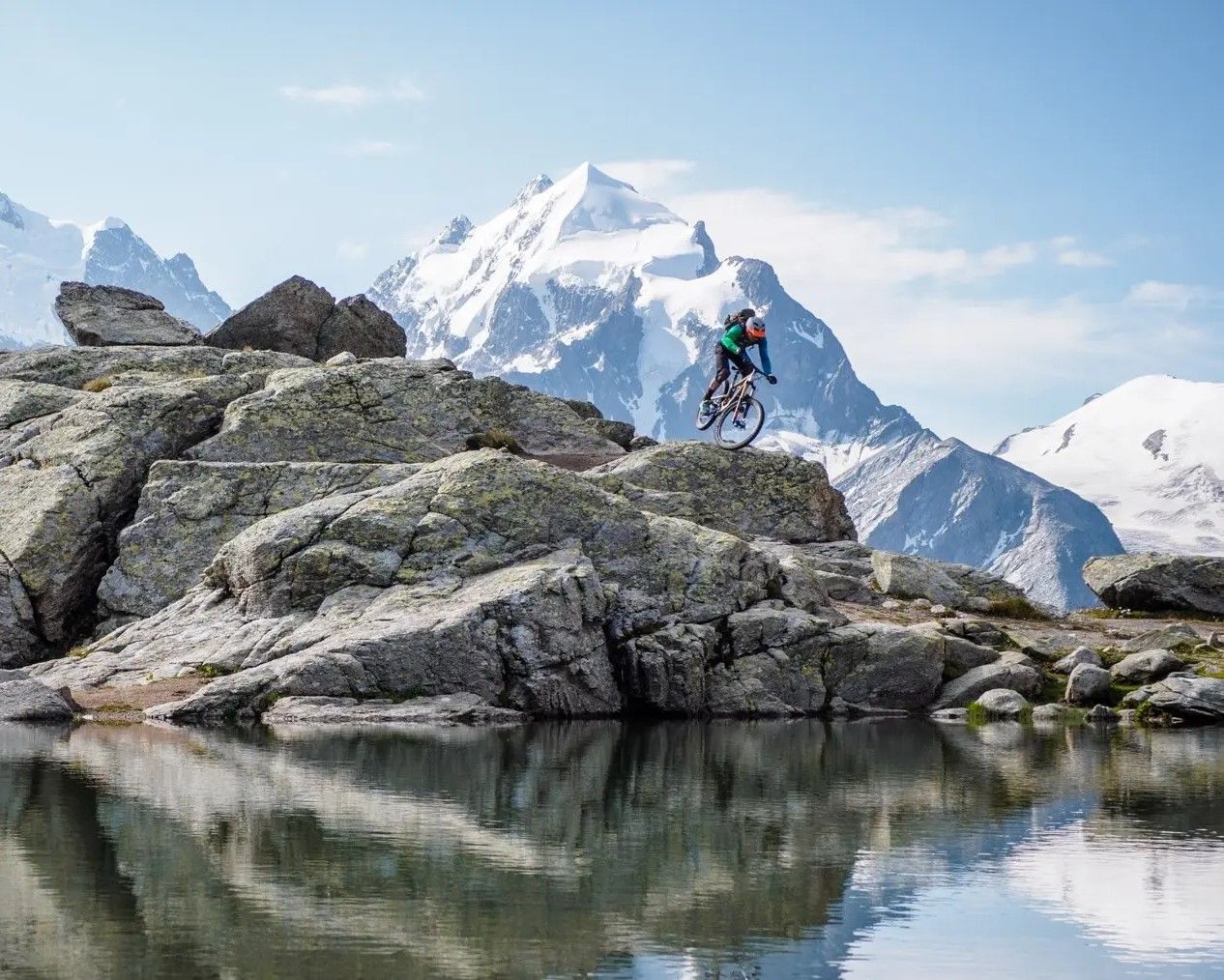
No traffic road cycling routes around Stazerwald / God da Staz traverse a landscape characterized by dense forests, notably the Stazerwald, and a series of interconnected lakes. The region features well-paved surfaces suitable for road cycling, with routes often winding through shaded woodlands and alongside clear waters. Cyclists can expect varied terrain, from relatively flat sections around the lakes to more challenging ascents leading to higher elevations. The area's natural features include ancient upland moors and views of surrounding mountains,…
Last updated: May 18, 2026
30
riders
12.3km
00:39
180m
180m
Easy road ride. Great for any fitness level. Mostly well-paved surfaces and easy to ride.
4.0
(2)
117
riders
30.8km
02:04
1,010m
1,010m
Hard road ride. Very good fitness required. Mostly well-paved surfaces and easy to ride.

Sign up for free
4.4
(8)
107
riders
18.2km
01:15
630m
630m
Moderate road ride. Good fitness required. Mostly well-paved surfaces and easy to ride.
13
riders
Easy road ride. Great for any fitness level. Mostly well-paved surfaces and easy to ride.
Our route recommendations are based on thousands of hikes, rides, and runs completed by other people on komoot.
Start today with a free account
Your next adventure awaits.
Login or Signup
Other adventures around Stazerwald / God da Staz

Tips from the Community

Scenically very great tour. Top Top Top
0
0
scenically very great tour. Top Top Top
0
0
Scenically a great tour. Top Top Top
0
0

A short stop in La Punt is worthwhile. This is mainly due to the striking white house – the Chesa Merleda. This is a prominent example of Engadine architecture.
0
0

The Leaning Tower of St. Moritz A landmark dating back to the 12th century, the Leaning Tower was originally part of St. Mauritius Church, which was demolished in 1890. The tower is 33 meters tall and leans at a 5.5-degree angle—even more than the famous Leaning Tower of Pisa (about 4 degrees less). It is located directly opposite the Kulm Hotel. The tower is not only an impressive architectural feature but also a symbol of St. Moritz's medieval heritage. Visitors can admire and photograph its distinctive tilt from various vantage points in the town center. Its lean is due to the soft ground on which it was built—and yet it has stood steadfast for centuries as one of the most photographed landmarks in the region. The Cresta Rider The life-size bronze Cresta Rider by David Wynne is a gift from the St. Moritz Tobogganing Club to the town for its 100th anniversary. It is located at the foot of the Leaning Tower, near the first streetlamp and opposite the Kulm Hotel. CONFISERIE HANSELMANN, A Sweet Paradise in St. Moritz Café Hanselmann is world-famous for its exquisite cakes, chocolates, and pastries. The beautiful sgraffito facade dates back to 1912, and inside, guests are greeted by an elegant, nostalgic ambiance with artistic details. In addition to classic sweets, Hanselmann also offers select coffee and tea specialties – a must for all lovers of culinary delights. Text / Source: St. Moritz Tourism AG, Via Maistra 12, St. Moritz https://www.stmoritz.com/directory/st-moritz-insider/wenig-zeit-st-moritz-in-zwei-stunden-1
15
0
The story of St. Moritz begins in 1864 The story of St. Moritz, as we know it today, begins in 1864, when hotelier Johannes Badrutt made a bet with his guests from Great Britain. He promised that not only the summer, but also the St. Moritz winter would be so pleasant that on sunny days one could enjoy the sun on the terrace without a jacket. Should his promise prove false, the hotelier would pay for their travel and winter stay. Wrapped head to toe in furs, the group of men crossed the Julier Pass the following December. Upon arriving in St. Moritz, the sky was clear, the sun warm, and Badrutt stood before them to greet them without a jacket and with his shirtsleeves rolled up. Winter tourism was born. More: Pioneer History | St. Moritz, Switzerland (stmoritz.com) Text/Source: ENGADIN ST. MORITZ TOURISMUS AG Via Maistra 1, CH-7500 St. Moritz, www.stmoritz.com https://www.engadintourismus.ch/fileadmin/user_upload/Fakten_ueber_St._Moritz_DE.pdf
15
0
The story of St. Moritz begins in 1864 The story of St. Moritz, as we know it today, begins in 1864, when hotelier Johannes Badrutt made a bet with his guests from Great Britain. He promised that not only the summer, but also the St. Moritz winter would be so pleasant that on sunny days one could enjoy the sun on the terrace without a jacket. Should his promise prove false, the hotelier would pay for their travel and winter stay. Wrapped head to toe in furs, the group of men crossed the Julier Pass the following December. Upon arriving in St. Moritz, the sky was clear, the sun warm, and Badrutt stood before them to greet them without a jacket and with his shirtsleeves rolled up. Winter tourism was born. More: Pioneer History | St. Moritz, Switzerland (stmoritz.com) Text/Source: ENGADIN ST. MORITZ TOURISMUS AG Via Maistra 1, CH-7500 St. Moritz, www.stmoritz.com https://www.engadintourismus.ch/fileadmin/user_upload/Fakten_ueber_St._Moritz_DE.pdf
15
0
Sils Maria is a historic village in the Engadine, known for its connection to Friedrich Nietzsche and its cultural significance. In the beautiful Engadine village of Sils, at 1802 meters above sea level, everything is a little more intense: the tranquility, the changing seasons, the light, nature – happiness. Vacationers who found St. Moritz too hectic continued on to Sils Maria. That's how it was a hundred years ago; and that's how it still is today. It's palpable at every turn: those who come to Sils want to nourish their souls. And in doing so, they want to experience the warmth of a small village with around 810 inhabitants, where tourism has a long tradition and has been a way of life for over 100 years. Two Hearts, One Soul Sils Maria and Sils Baselgia: Our village has two names because it comprises two settlements. Sils Baselgia grew up around the Church of San Lurench. It was first mentioned in 1356 and still stands today. "Baselgia" is derived from basilica (church). In Sils Maria, the larger of the two villages, the large dairy farm once stood. The name "Maria" refers not to a proper name, but to the term "dairy farm." "Sils" means something like "green meadow" or "long strip of land." This also referred to the Sils lake plain. It is still a "green meadow"—thanks to landscape and nature conservation efforts and the awareness of these values that the people of Sils possess. Text / Source: Sils Information Center "Engadin Tourism AG", Via da Marias 38, Sils/Segl Maria https://www.sils.ch/de/guide/sils-im-engadin/dorfportrait
15
0
Frequently Asked Questions
What kind of no-traffic road cycling experiences can I expect in Stazerwald / God da Staz?
The Stazerwald / God da Staz area, nestled in the Engadin region, offers a variety of road cycling experiences, many of which prioritize low-traffic or car-free sections. This guide focuses on routes designed to keep you away from heavy vehicle flow, allowing you to enjoy the stunning natural landscapes, including dense forests and picturesque lakes. You'll find options ranging from easy, scenic loops to more challenging rides with significant elevation gain, all while minimizing encounters with traffic.
Are there any easy, no-traffic road cycling routes suitable for beginners or families?
Yes, Stazerwald / God da Staz offers easy, no-traffic options perfect for a relaxed ride. For instance, the route Leaning Tower of St. Moritz – St. Moritz Town Hall loop from Samedan is an easy 12.3 km loop with minimal elevation, ideal for those looking for a gentle introduction to road cycling in the area. The Stazerwald itself features well-paved paths that are often car-free, making them suitable for families and less experienced cyclists.
What are some of the natural highlights I can see along these no-traffic road cycling routes?
The no-traffic road cycling routes in Stazerwald / God da Staz are rich with natural beauty. You can expect to cycle through the protected stone pine and larch forests of the Stazer Forest, and enjoy views of the surrounding mountains. Many routes pass by the region's beautiful lakes, such as Lake Staz (Lej da Staz), known for its clear waters and mountain panoramas, and the scenic North shore of Lej da San Murezzan. The serene Roseg Valley is another picturesque area with views of glaciers and peaks.
When is the best time of year to enjoy no-traffic road cycling in Stazerwald / God da Staz?
The best time for road cycling in Stazerwald / God da Staz is typically during the warmer months, from late spring through early autumn. During this period, the weather is generally pleasant, and the roads are clear of snow, allowing for optimal cycling conditions. The clear waters of Lake Staz also warm up in summer, making it a popular spot for a refreshing dip after a ride. Always check local weather and road conditions before heading out.
Are there any challenging no-traffic road cycling routes for experienced cyclists?
While this guide emphasizes no-traffic sections, the broader Engadin region offers challenging road cycling experiences. For instance, the Bergünerstein Gorge – Bergün loop from Albulapass is a difficult 30.8 km route with over 1000 meters of elevation gain, providing a significant test for experienced riders. Another option is the Albula Pass (2,315 m) – Albula Plateau loop from Albulapass, a moderate route that still offers substantial climbing.
Can I find circular no-traffic road cycling routes in the Stazerwald / God da Staz area?
Yes, many of the road cycling routes in the Stazerwald / God da Staz area are designed as circular loops, allowing you to start and end at the same point without retracing your path. This guide features several such loops, including the easy Sils in the Engadine – Curtins Village (Val Fex) loop from Sils im Engadin, which offers a scenic ride through the valley.
What do other road cyclists enjoy most about the no-traffic routes in Stazerwald / God da Staz?
The Stazerwald / God da Staz area is highly rated by the komoot community, with an average score of 4.6 stars. Reviewers often praise the tranquility of the car-free sections, the stunning natural scenery, and the well-maintained paths that make for an enjoyable and safe cycling experience. The ability to immerse oneself in the protected forests and enjoy the views of the Engadin lakes without the disturbance of traffic is frequently highlighted.
Are there options for parking near the no-traffic road cycling routes?
Yes, there are various parking options available in the towns surrounding the Stazerwald / God da Staz area, such as St. Moritz, Pontresina, and Samedan. From these points, you can easily access the no-traffic cycling routes. Specific parking information for individual routes can often be found within the detailed route descriptions on komoot.
Is public transport an option for reaching these no-traffic road cycling routes with my bike?
Public transport in the Engadin region, including trains and buses, generally accommodates bicycles, though specific rules and peak hour restrictions may apply. This allows you to reach various starting points for the no-traffic routes without needing a car. It's advisable to check the local public transport schedules and bike carriage policies in advance, especially during busy seasons.
Are there any cafes or places to stop for refreshments along the no-traffic road cycling routes?
Yes, the Stazerwald / God da Staz area is well-equipped with amenities for cyclists. You'll find cafes and restaurants, particularly around popular spots like Lake Staz (Lej da Staz) and in the nearby towns of St. Moritz and Pontresina. These establishments offer opportunities to refuel and relax during or after your ride, often with scenic views.
Are the no-traffic road cycling routes in Stazerwald / God da Staz suitable for dogs?
While the focus of this guide is on road cycling, the Stazerwald / God da Staz area is generally dog-friendly, with many hiking and walking trails where dogs are welcome. If you plan to bring your dog along on a cycling trip, ensure they are well-behaved and accustomed to cycling alongside you or in a trailer. Always keep dogs on a leash where required and be mindful of other trail users. Check specific route details for any restrictions.
Most popular routes around Stazerwald / God da Staz
Most popular attractions around Stazerwald / God da Staz

Get inspired with the komoot mobile app


Explore more
Browse the best Road cycling routes in other regions.
